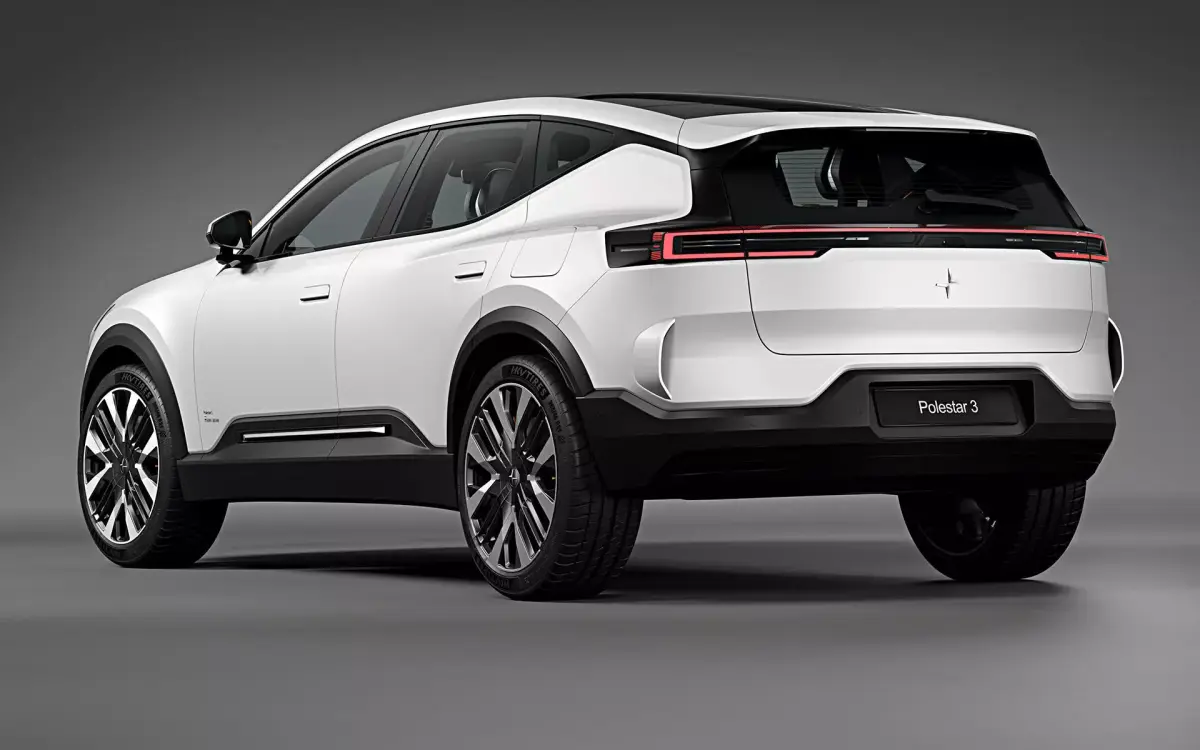
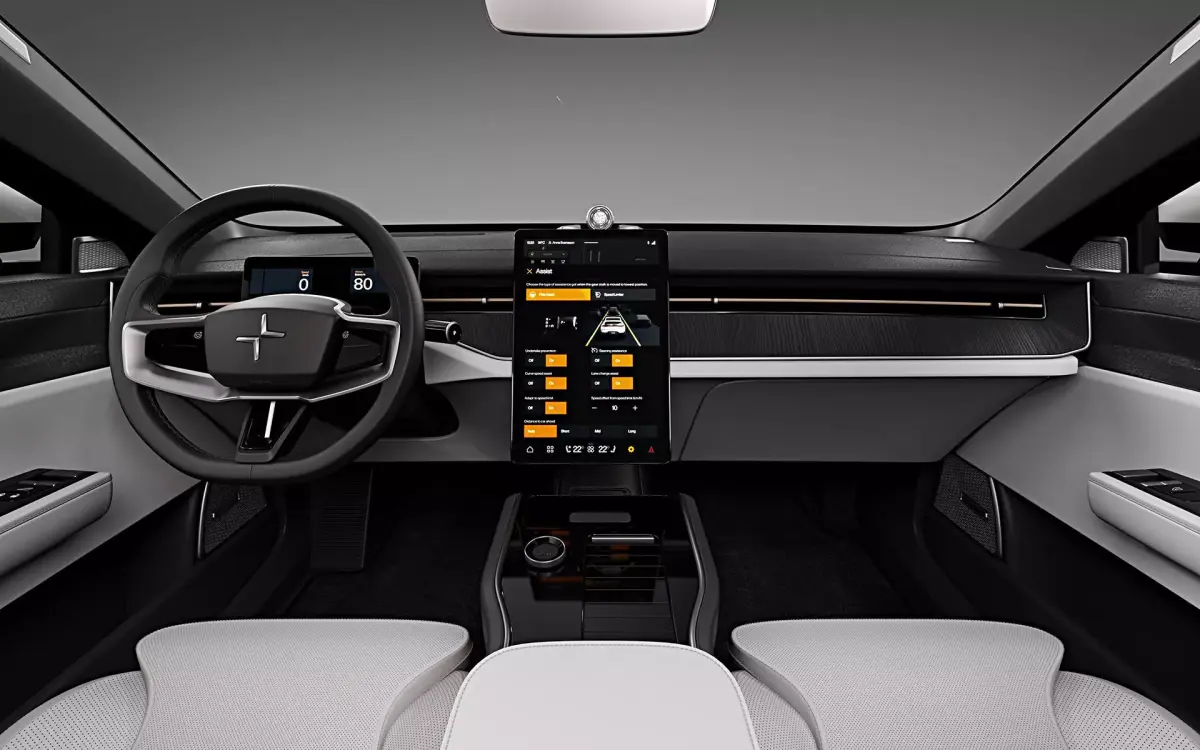
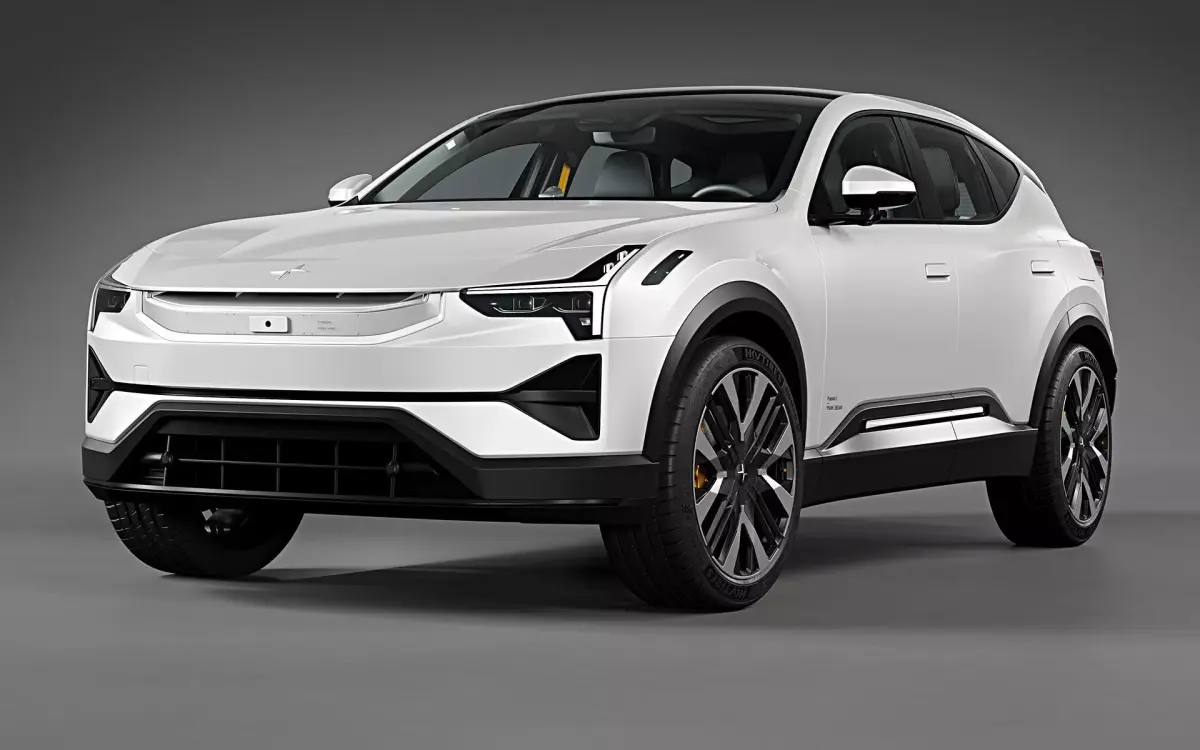
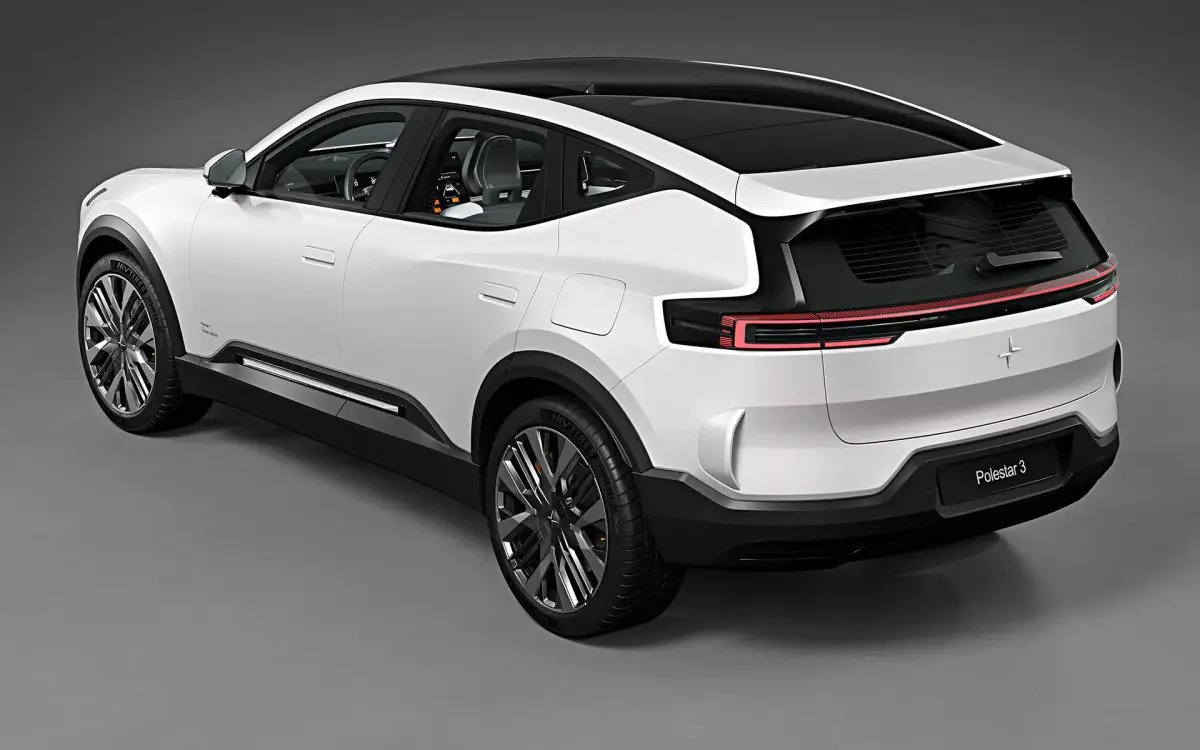
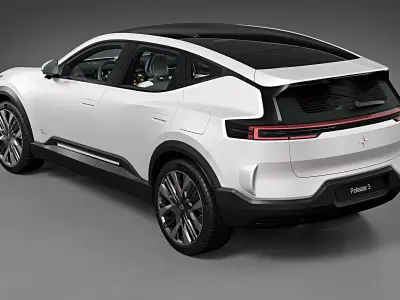
Photorealistic, high-quality and accurate 3D model of 2024 Polestar 3 with high detailed interior. The model is suitable for Ultra HD rendering and further use in broadcast, high-res film close-up, advertising, etc. The model can be also used in real-time applications (Unreal Engine, Unity and etc.) after a number of mesh optimizations, texture backing and other procedures executed on the customer's side.The studio rendering quality shown on product previews is reachable out-of-box with no need of any additional manipulations, if you use 3ds max + Corona native file format.Just download, open the file and hit Render!
Main features:
- Originally created with 3ds Max 2018
- Three MAX files with Corona, V-Ray and Standard 3ds Max materials. V-Ray scene, lighting and materials are similar to native Corona file
- Subdivision modifier is available in the history for MAX, MB and C4D file formats. You can get access to original non-smoothed mesh by deactivating the Subdiv modifier
- Separate objects like body, wheels and doors. Total number of objects is 20
- Doors and trunk can be opened
- Unit system is set to metric (millimeters). Real-world scale
- All textures and materials are included and assigned
- 26 textures, which vary in resolution from 33x796px to 8192x8192px
- Previews rendered in 3ds Max 2018 with Corona 9.0
Special notes:
- FBX and OBJ formats are recommended for import in other 3d software. If your software doesn't support FBX or OBJ format, please use 3DS format; FBX and OBJ formats were exported from 3ds Max. The geometry for FBX and OBJ formats is set to quads
- FBX format is recommended for importing in real-time engines like Unreal Engine, Unity and etc.
- MAX files can be loaded in Autodesk 3ds Max 2018 or higher. In order to use Corona rendering setups and materials, Corona 8.0 or higher is needed
- C4D file can be loaded in MAXON Cinema4D R17 or higher. Only standard Cinema4D materials and standard renderer used
- MB file can be loaded in Autodesk Maya 2018 or higher. Only standard Maya materials and standard Hardware 2.0 renderer used
Polycounts:MAX format (one file included with TurboSmooth iteration 1 applied to all objects): no TurboSmooth: 407,648 faces and 453,374 vertices TurboSmooth iteration 1: 1,627,495 faces and 1,720,022 vertices TurboSmooth iteration 2: 6,509,980 faces and 6,693,012 vertices
MB and C4D formats (only one file for each format included with Subdivision iteration 1 applied to all objects): no Subdiv: 407,648 faces and 453,374 vertices Subdiv iteration 1: 1,627,495 faces and 1,720,022 vertices Subdiv iteration 2: 6,509,980 faces and 6,693,012 vertices
FBX and OBJ formats (3 files included for each format): low: 407,648 faces and 453,374 vertices medium: 1,627,495 faces and 1,720,022 vertices high: 6,509,980 faces and 6,693,012 vertices
3DS format (3 files included): low: 812,199 faces and 482,946 vertices medium: 3,254,990 faces and 1,798,401 vertices high: 13,019,960 faces and 6,938,988 vertices
MAX (Autodesk 3ds Max, filesize: 364 MB), OBJ (OBJ, filesize: 491 MB), FBX (Autodesk FBX, filesize: 491 MB), MAX (Autodesk 3ds Max, filesize: 364 MB), C4D (Cinema 4D, filesize: 99.9 MB), MA (Autodesk Maya, filesize: 113 MB), JPG (JPG, filesize: 1.76 GB), PNG (PNG, filesize: 1.52 GB), 3DS (3D Studio, filesize: 243 MB)