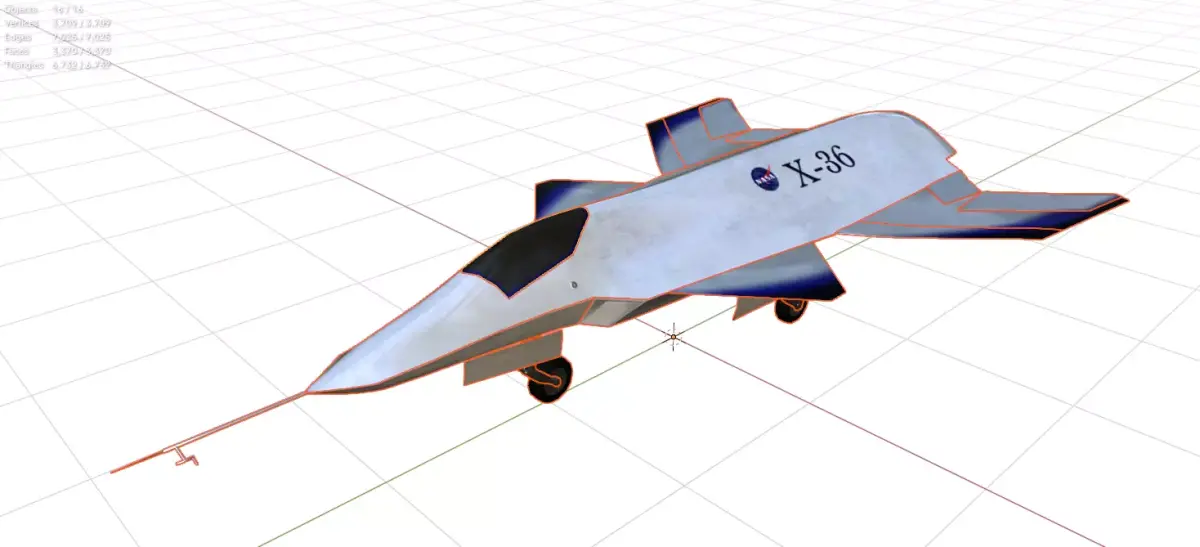
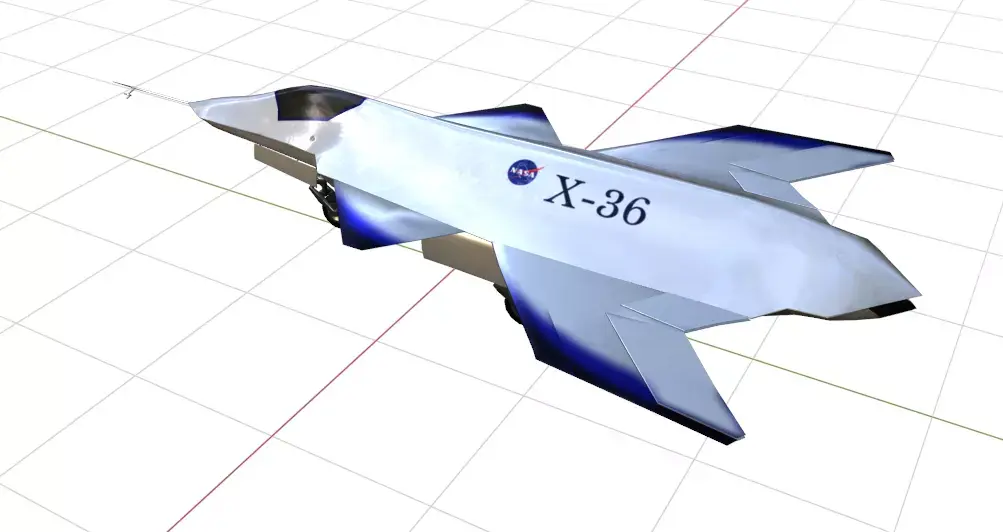
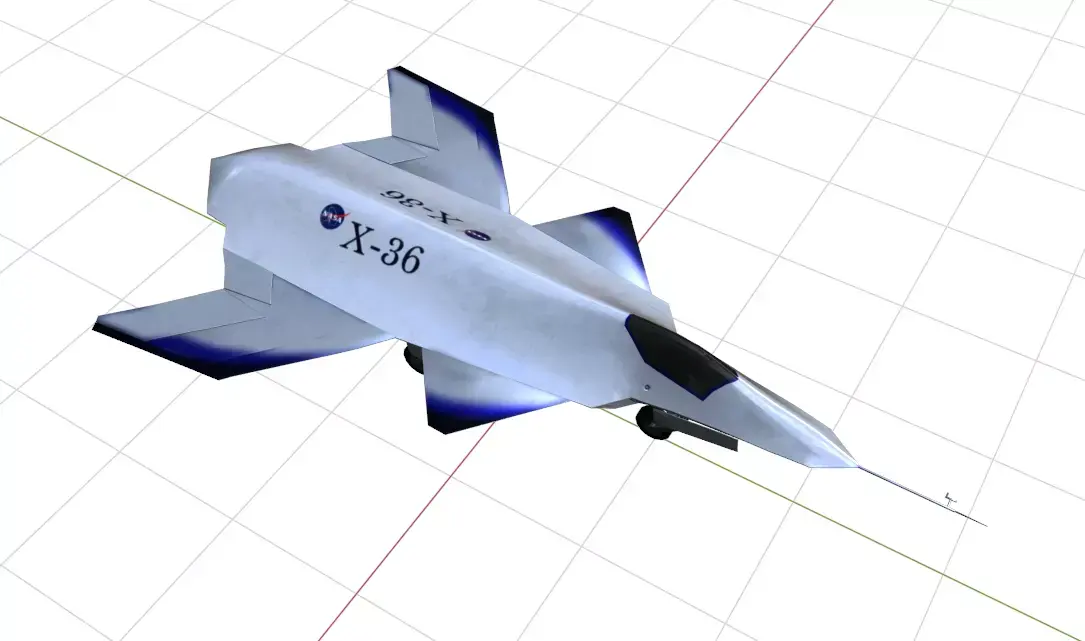
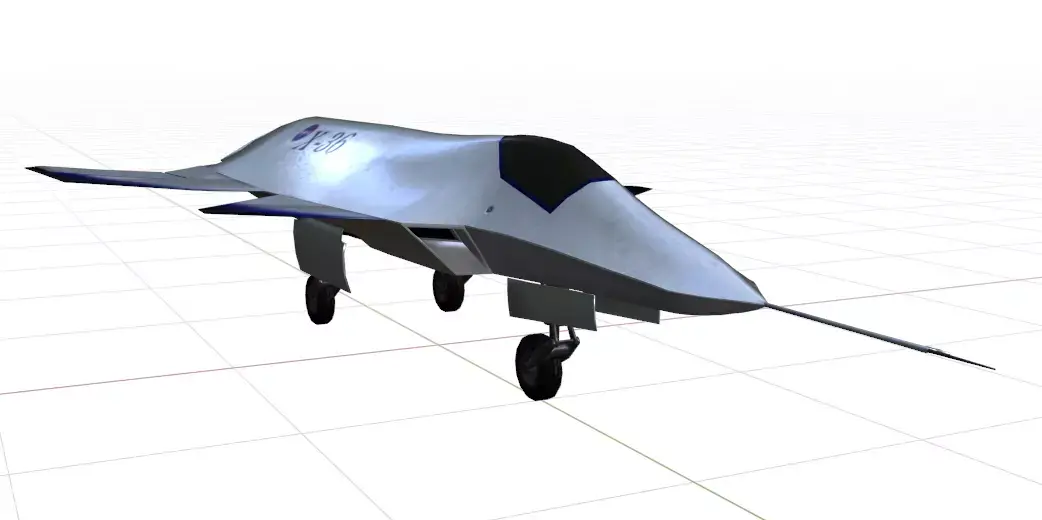
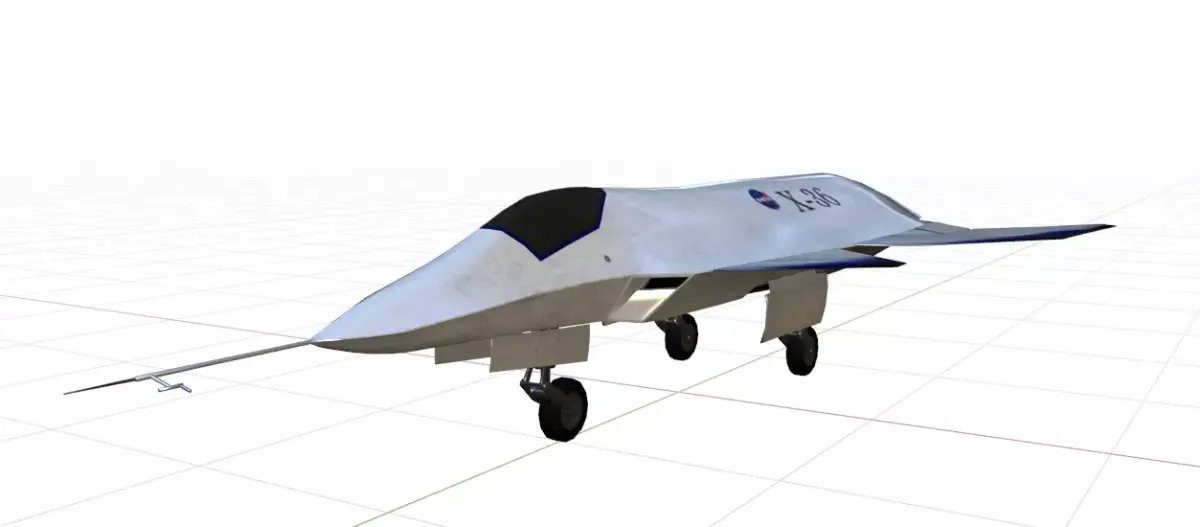
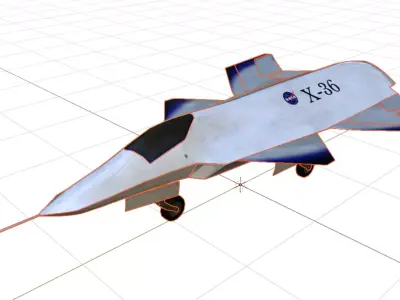
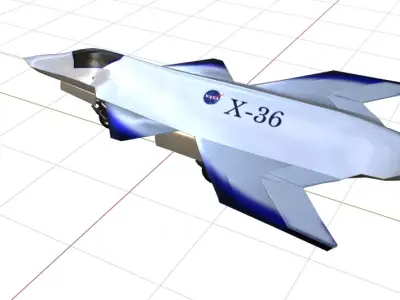
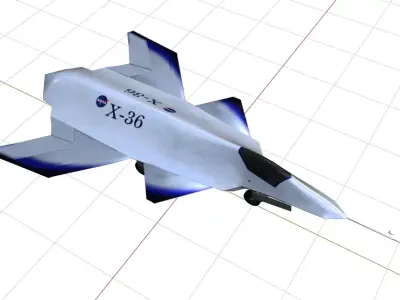
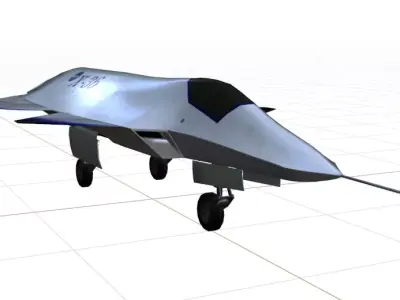
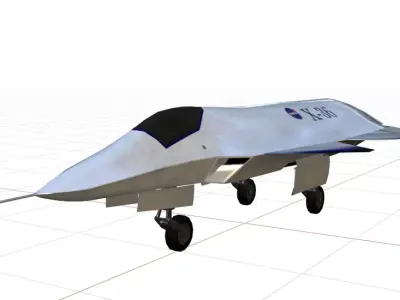
BOEING X-36 - The Tailless MINI STEALTH FIGHTER Low-poly 3D model
Home Catalog BOEING X-36 - The Tailless MINI STEALTH FIGHTER Low-poly 3D model

Publication date: 2025-08-16

BOEING X-36 - The Tailless MINI STEALTH FIGHTER Low-poly 3D model

$9

License: royalty_free

author:

developer20xx

All content related to this 3D asset—including renders, descriptions, and metadata — is credited to its original author, «developer20xx». CGhub does not claim copyright ownership over the content used.
  • Description

Perfect for use in games and simulation projects.

The Boeing X-36 Tailless Fighter Agility Research Aircraft was a highly experimental, remotely piloted testbed developed to explore advanced concepts in fighter aircraft design. Created by Boeing’s Phantom Works in collaboration with NASA’s Dryden Flight Research Center, the X-36 represented a radical departure from traditional fighter aircraft configurations. The program was initiated in the early 1990s, and its flight test phase took place primarily in 1997. The central objective of the X-36 project was to determine whether a tailless fighter aircraft could maintain or even improve on the agility and maneuverability of conventional fighters, while also enhancing stealth characteristics and reducing weight and drag.

Conventional fighter aircraft typically utilize vertical stabilizers (fins) and horizontal stabilizers (tailplanes) to maintain aerodynamic stability and control. These surfaces contribute significantly to radar cross-section (RCS), aerodynamic drag, and weight. The X-36 was designed without these traditional tail surfaces. Instead, it relied on a combination of advanced aerodynamic shaping, canard control surfaces (small wings located near the front of the fuselage), and differential use of split ailerons, sometimes called drag rudders, located on the wing tips. These drag rudders could open asymmetrically to induce yaw moments, replacing the function of a vertical tail fin. This configuration was intentionally unstable from an aerodynamic standpoint, requiring a sophisticated fly-by-wire control system to maintain stable flight. The instability was a feature rather than a flaw, allowing for more agile maneuvering under controlled conditions.

The aircraft itself was a subscale demonstrator, roughly 28 percent the size of a notional full-scale fighter. It measured approximately 5.8 meters (19 feet) in length, with a wingspan of about 3 meters (10 feet), and had a maximum takeoff weight of roughly 1,250 pounds (567 kilograms). It was powered by a single Williams F112 turbofan engine, a small, compact powerplant that provided sufficient thrust for the scale demonstrator. The X-36 was capable of flying at speeds approaching Mach 0.8, allowing it to test flight conditions relevant to air combat maneuvering and agility evaluation.

One of the most innovative aspects of the X-36 program was its use of remote piloting. Rather than placing a human pilot in the aircraft, the X-36 was flown from a ground-based control station that simulated a cockpit environment. The remote pilot used a virtual cockpit display, receiving real-time video and sensor data to fly the aircraft as if on board. This setup allowed Boeing and NASA engineers to assess pilot workload, response time, and control precision while eliminating the risks associated with placing a pilot in an experimental, inherently unstable airframe. The remote operation also made it easier to iterate and evaluate different flight control software configurations quickly and safely.

The flight test program began on May 17, 1997, and consisted of more than 30 flights at NASA’s Dryden Flight Research Center, located at Edwards Air Force Base in California. Throughout these test flights, the X-36 consistently demonstrated excellent maneuverability, dynamic stability under fly-by-wire control, and the ability to execute high-performance flight maneuvers typically expected from modern fighter aircraft. Engineers tested various flight conditions, control strategies, and simulated combat maneuvers to assess how the aircraft responded under different scenarios.

In addition to agility, the tailless design offered significant benefits in terms of radar stealth. By eliminating vertical and horizontal tail surfaces, the aircraft presented fewer radar-reflective surfaces, resulting in a reduced radar cross-section. Combined with its compact airframe and clean aerodynamic lines, the X-36 demonstrated how future fighter aircraft might blend advanced maneuverability with stealth performance. The reduced number of moving parts also implied potential benefits in maintenance, cost, and reliability for operational aircraft inspired by this concept.

Although the X-36 was never intended to enter production, and no full-scale version was built, the data collected from its successful test program has had a lasting influence on advanced aircraft design. Lessons learned from the X-36 program fed into ongoing research and development efforts focused on tailless aircraft, unmanned combat aerial vehicles (UCAVs), and next-generation fighter concepts. Its emphasis on digital flight control, aerodynamic efficiency, stealth shaping, and remote operation foreshadowed many technologies seen in later platforms, including the Boeing X-45, Northrop Grumman X-47B, and various stealth UAV programs.

In summary, the Boeing X-36 was a groundbreaking experimental platform that tested the aerodynamic and control feasibility of a tailless fighter aircraft. Through its innovative design, advanced control systems, and remote piloting, it successfully demonstrated that a tailless configuration could offer significant advantages in agility, stealth, and efficiency. While it never transitioned into an operational aircraft, the X-36 remains a landmark in the evolution of experimental aerospace engineering and a key step toward the future of high-performance, stealth-optimized combat aircraft.

Formats include: OBJ, FBX. Feel free to check out the other models, just click on the user name to see the complete portfolio.

3D Model details

  • cgtrader Platform
  • Animated
  • Rigged
  • Ready for 3D Printing
  • VR / AR / Low-poly
  • PBR
  • Textures
  • Materials
  • UV Mapping
  • Unwrapped UVs: mixed
  • Geometry: Polygon mesh
  • Polygons: 3370
  • Vertices: 3709
  • Plugins used