High-quality 3D assets at affordable prices — trusted by designers, engineers, and creators worldwide. Made with care to be versatile, accessible, and ready for your pipeline.
Included File Formats
This model is provided in 14 widely supported formats, ensuring maximum compatibility:
• - FBX (.fbx) – Standard format for most 3D software and pipelines
• - OBJ + MTL (.obj, .mtl) – Wavefront format, widely used and compatible
• - STL (.stl) – Exported mesh geometry; may be suitable for 3D printing with adjustments
• - STEP (.step, .stp) – CAD format using NURBS surfaces
• - IGES (.iges, .igs) – Common format for CAD/CAM and engineering workflows (NURBS)
• - SAT (.sat) – ACIS solid model format (NURBS)
• - DAE (.dae) – Collada format for 3D applications and animations
• - glTF (.glb) – Modern, lightweight format for web, AR, and real-time engines
• - 3DS (.3ds) – Legacy format with broad software support
• - 3ds Max (.max) – Provided for 3ds Max users
• - Blender (.blend) – Provided for Blender users
• - SketchUp (.skp) – Compatible with all SketchUp versions
• - AutoCAD (.dwg) – Suitable for technical and architectural workflows
• - Rhino (.3dm) – Provided for Rhino users
Model Info
• - All files are checked and tested for integrity and correct content
• - Geometry uses real-world scale; model resolution varies depending on the product (high or low poly)
• • - Scene setup and mesh structure may vary depending on model complexity
• - Rendered using Luxion KeyShot
• - Affordable price with professional detailing
Buy with confidence. Quality and compatibility guaranteed.
If you have any questions about the file formats, feel free to send us a message — we're happy to assist you!
Sincerely,
SURF3D
Trusted source for professional and affordable 3D models.
More Information About 3D Model :
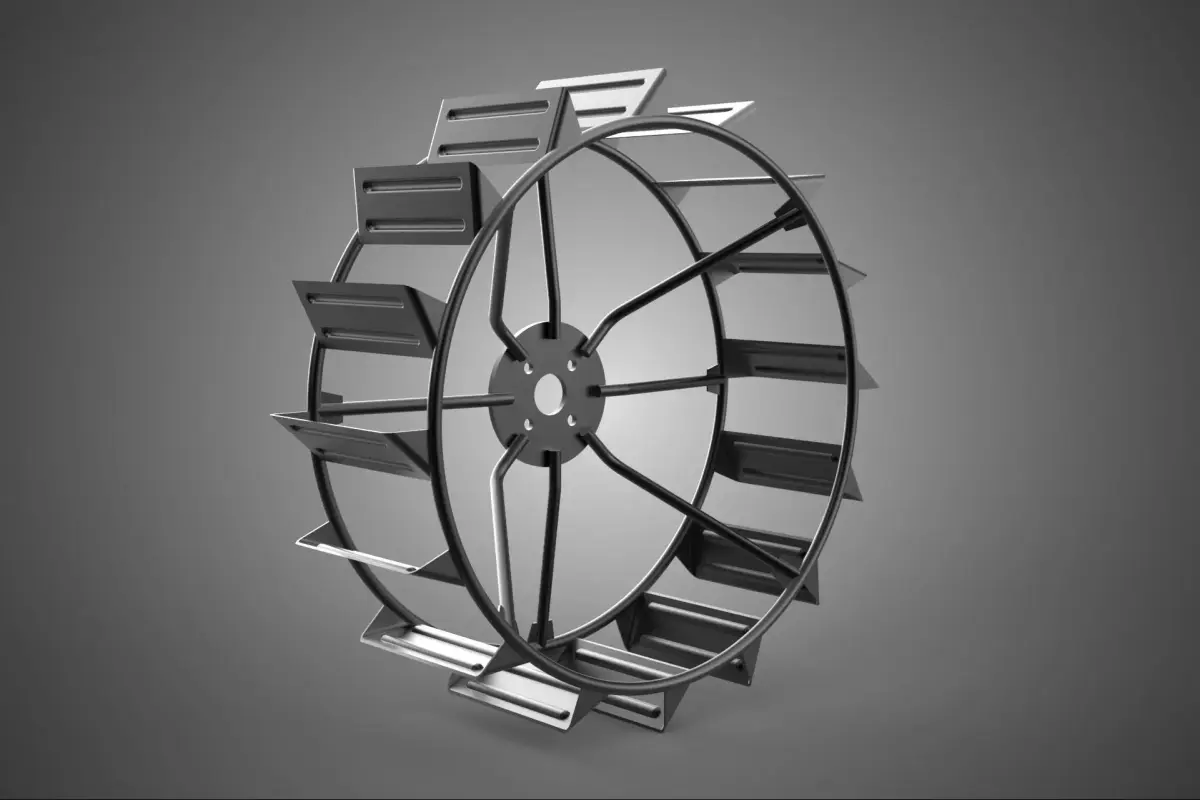
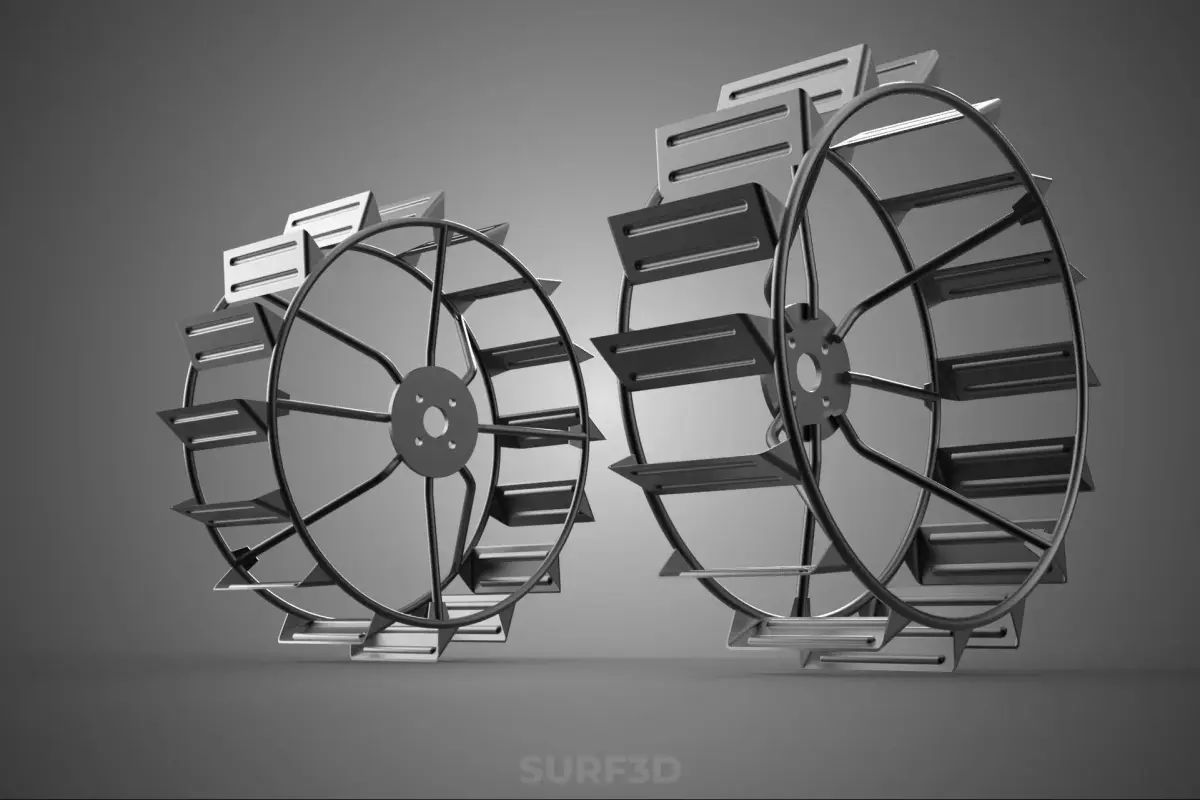
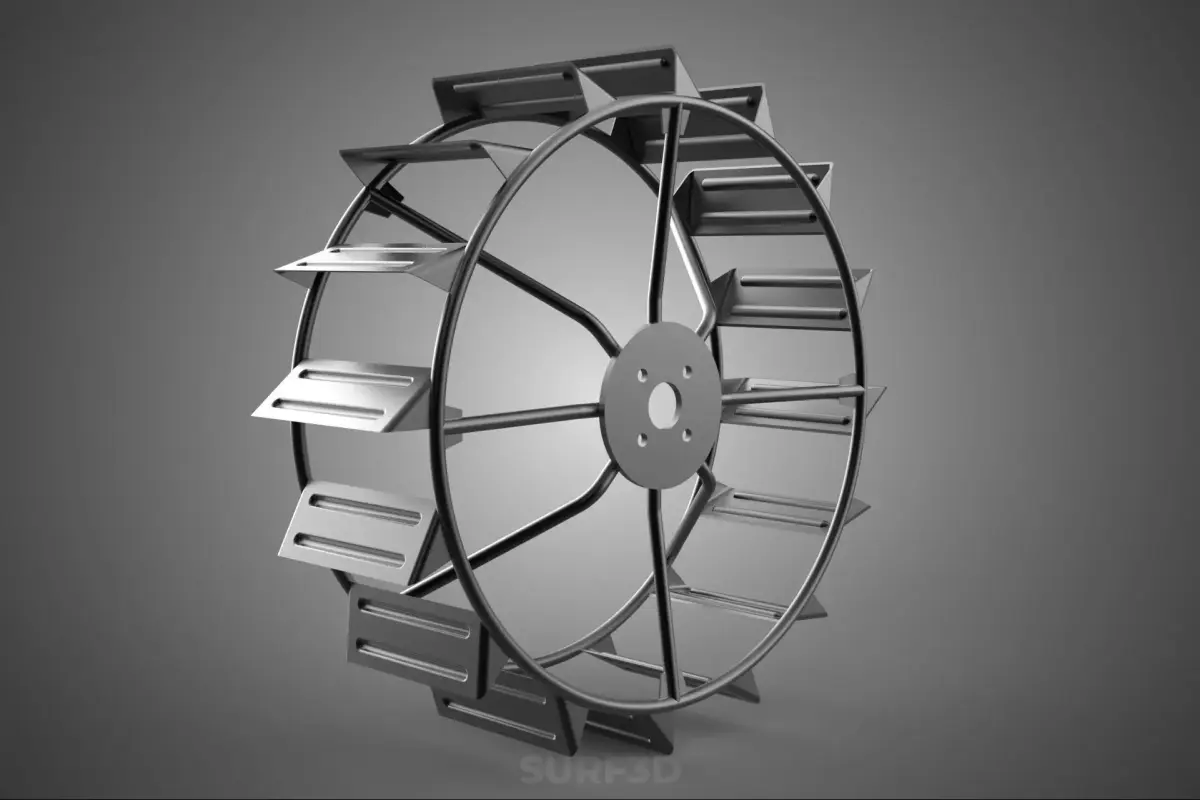
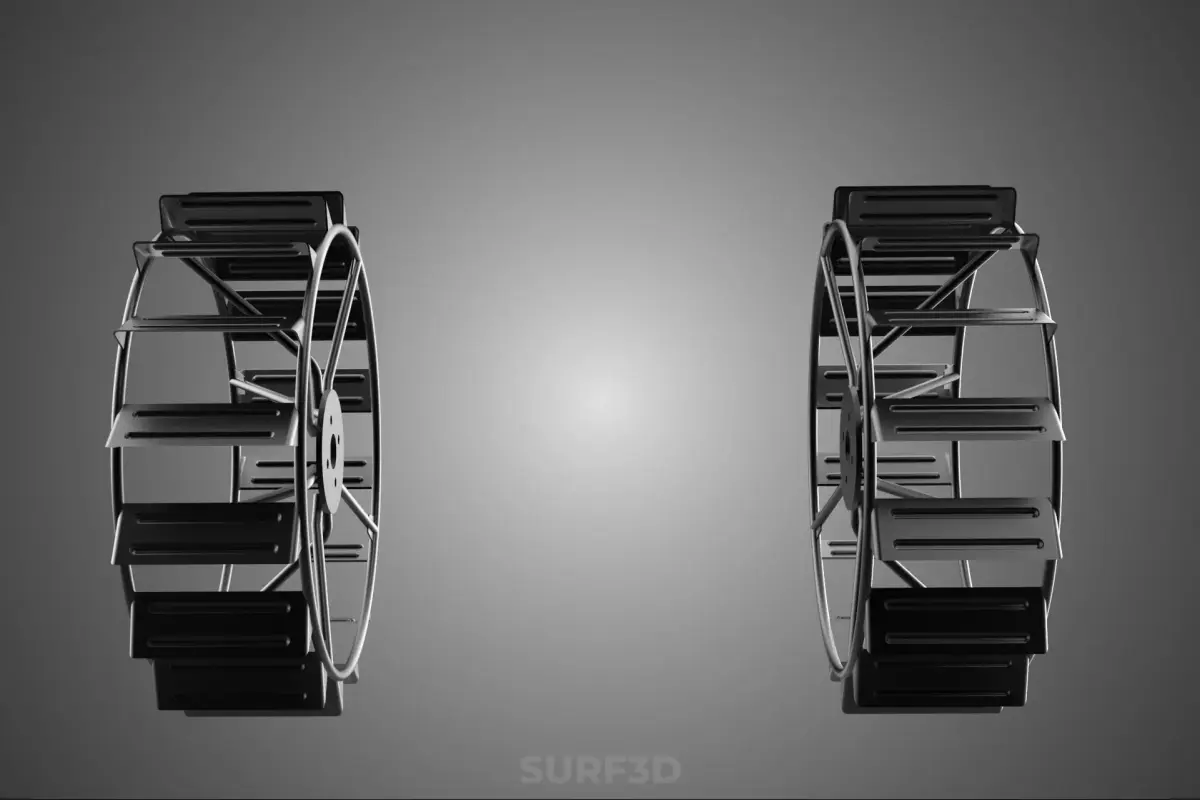
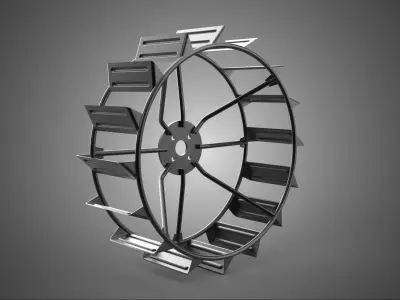
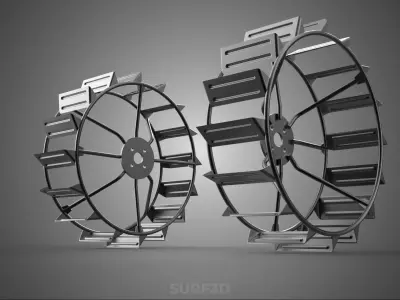
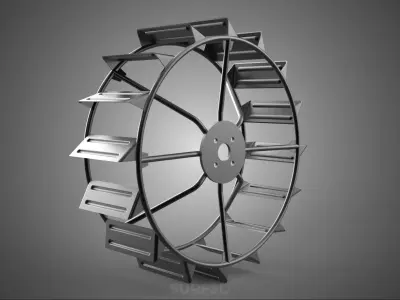
The cage wheel, formally known as a skeleton wheel, metallic traction wheel, or paddy wheel, is a specialized accessory implemented on agricultural tractors primarily for operations in highly saturated, submerged, or extremely soft soil conditions, particularly within traditional paddy rice field farming systems. These metal wheels are engineered to maximize flotation and traction while minimizing soil shear and excessive rut formation, common issues when heavy equipment utilizes standard pneumatic tires in wetland environments.
Design and Nomenclature
The structure is defined by its open, skeletal construction, contrasting sharply with the continuous surface of rubber tires. A typical cage wheel consists of three primary elements:
- Rim/Hub Assembly: A central metallic framework or inner rim facilitates mechanical attachment to the tractor axle or, more commonly, serves as an extension fastened directly outboard of the existing pneumatic rear tire. This system allows for rapid installation and removal, depending on field conditions.
- Radial Lugs (Paddles): These are the critical traction elements. Constructed from high-strength steel, the lugs are radially oriented blades or paddles affixed to the outer circumference. They are typically angled or scoop-shaped to penetrate the semi-liquid soil matrix effectively. The number and spacing of these lugs are calculated to optimize grip while allowing mud and water to pass through the structure.
- Metal Tyre/Spokes: The connection between the inner rim and the peripheral lugs is often achieved via spokes or an outer ring structure, ensuring the integrity of the apparatus. The term metal tyre or metal tire refers to this entire assembly, as it functionally replaces or supplements the standard rubber component.
### Functional Mechanics in Paddy Fields
In flooded rice field environments, the soil often exists in a state of suspension or slurry (known as the puddled layer). Standard tires often lose traction due to insufficient ground pressure relative to the mud’s resistance, leading to excessive slippage (wheel spin) and potential deep sinking.
The cage wheel addresses these challenges through a dual mechanism:
- Flotation: By significantly increasing the overall diameter and width of the contact footprint, the cage wheel reduces the ground pressure exerted by the tractor. The large open areas allow hydrostatic pressure to equalize rapidly, contributing to the lifting effect.
- Positive Traction (Paddling): The steel lugs function similarly to paddles or marine propellers. They penetrate the fluid mud layer to achieve direct mechanical grip (shear resistance) with the harder, less saturated subsurface soil or the plow pan beneath the puddled layer. As the wheel rotates, the angled lugs scoop and push the water and mud backward, propelling the tractor forward with minimal slip ratios necessary for effective soil preparation (e.g., puddling, levelling, and shallow tillage).
### Application Context
The cage wheel is indispensable for pre-transplanting field operations in wet-field rice cultivation across Asia and other tropical regions. Key applications include:
- Puddling: Mixing the wet soil to destroy clods, control weeds, and create an impermeable layer that conserves water.
- Wet Tillage: Preparing a smooth, level seedbed suitable for manual or mechanical transplanting of rice seedlings.
While specialized rubber tracks and highly aggressive radial-ply tire designs have gained prominence, the cost-effectiveness, simplicity, and superior traction capabilities of the basic steel cage wheel ensure its continued utility in demanding, submerged agricultural settings.
KEYWORDS: Skeleton Wheel, Paddy Wheel, Wetland Farming, Agricultural Engineering, Tractor Traction, Soil Mechanics, Puddling, Rice Cultivation, Steel Lug, Metal Paddle, Flotation Device, Mud Traction, Wetland Tillage, Radial Blade, Hub Attachment, Tractor Implement, Soil Preparation, Mechanical Grip, Extension Wheel, Wheel Slip Reduction, Wet Field Operation, Hydrostatic Pressure, Farm Equipment, Agricultural Tyre, Axle Assembly, Shear Strength, Ground Contact, Tractor Rim, Deep Sinking Prevention, Specialized Tyre.
STL (Stereolithography, filesize: 6.1 MB), OBJ (OBJ, filesize: 10.9 MB), 3DM (Rhinoceros 3D, filesize: 24.1 MB), DWG (AutoCAD, filesize: 948 KB), GLTF (glTF, filesize: 3.54 MB), BLEND (Blender, filesize: 11.6 MB), FBX (Autodesk FBX, filesize: 3.57 MB), DAE (Collada, filesize: 19.9 MB), IGE (IGES, filesize: 10.9 MB), SKP (Sketchup, filesize: 12.7 MB), STP (STEP, filesize: 3.84 MB), MAX (Autodesk 3ds Max, filesize: 22.5 MB), SAT (3D ACIS, filesize: 3.39 MB), 3DS (3D Studio, filesize: 3.44 MB)