High-quality 3D assets at affordable prices — trusted by designers, engineers, and creators worldwide. Made with care to be versatile, accessible, and ready for your pipeline.
Included File Formats
This model is provided in 14 widely supported formats, ensuring maximum compatibility:
• - FBX (.fbx) – Standard format for most 3D software and pipelines
• - OBJ + MTL (.obj, .mtl) – Wavefront format, widely used and compatible
• - STL (.stl) – Exported mesh geometry; may be suitable for 3D printing with adjustments
• - STEP (.step, .stp) – CAD format using NURBS surfaces
• - IGES (.iges, .igs) – Common format for CAD/CAM and engineering workflows (NURBS)
• - SAT (.sat) – ACIS solid model format (NURBS)
• - DAE (.dae) – Collada format for 3D applications and animations
• - glTF (.glb) – Modern, lightweight format for web, AR, and real-time engines
• - 3DS (.3ds) – Legacy format with broad software support
• - 3ds Max (.max) – Provided for 3ds Max users
• - Blender (.blend) – Provided for Blender users
• - SketchUp (.skp) – Compatible with all SketchUp versions
• - AutoCAD (.dwg) – Suitable for technical and architectural workflows
• - Rhino (.3dm) – Provided for Rhino users
Model Info
• - All files are checked and tested for integrity and correct content
• - Geometry uses real-world scale; model resolution varies depending on the product (high or low poly)
• • - Scene setup and mesh structure may vary depending on model complexity
• - Rendered using Luxion KeyShot
• - Affordable price with professional detailing
Buy with confidence. Quality and compatibility guaranteed.
If you have any questions about the file formats, feel free to send us a message — we're happy to assist you!
Sincerely,
SURF3D
Trusted source for professional and affordable 3D models.
More Information About 3D Model :
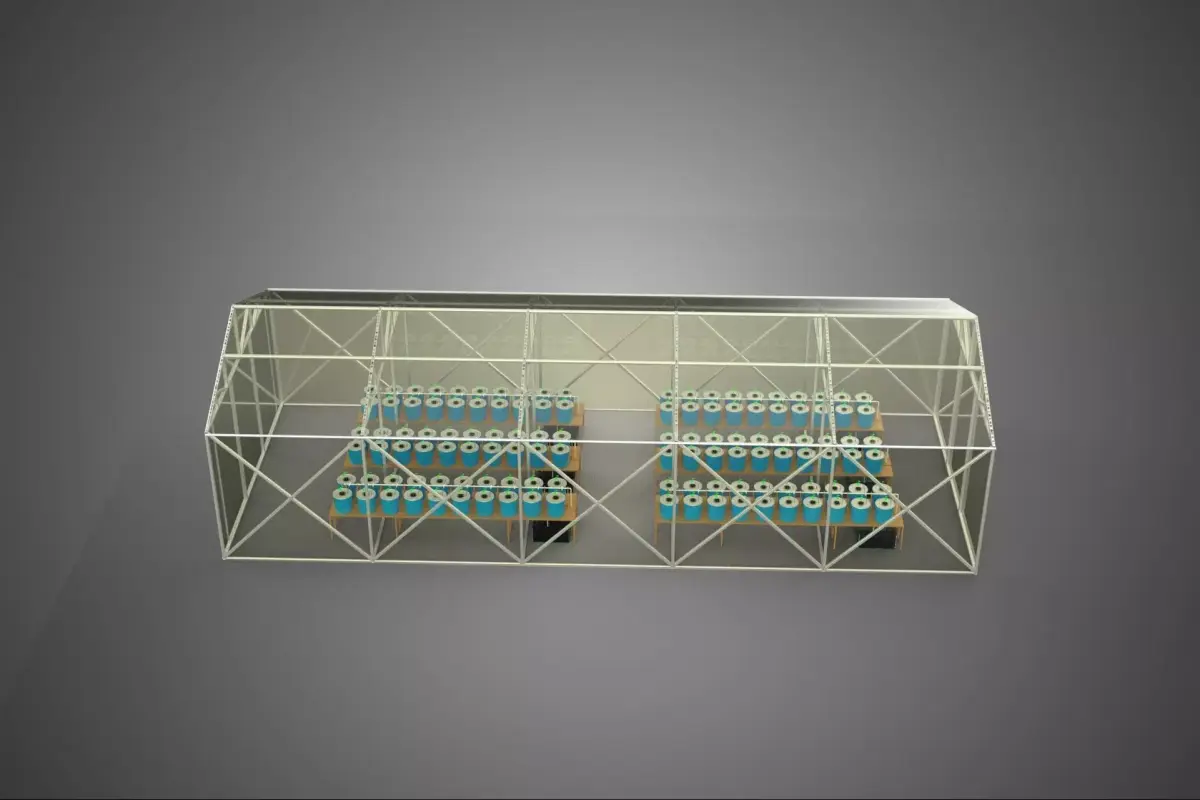
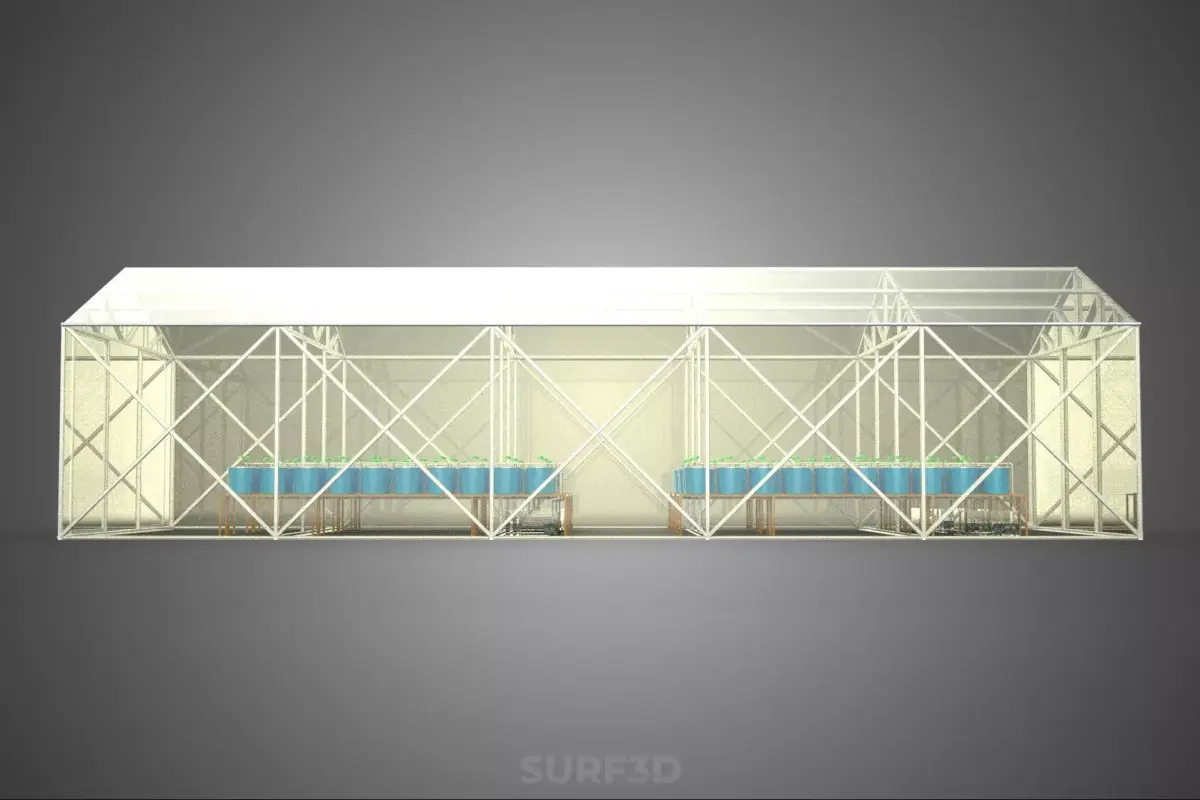
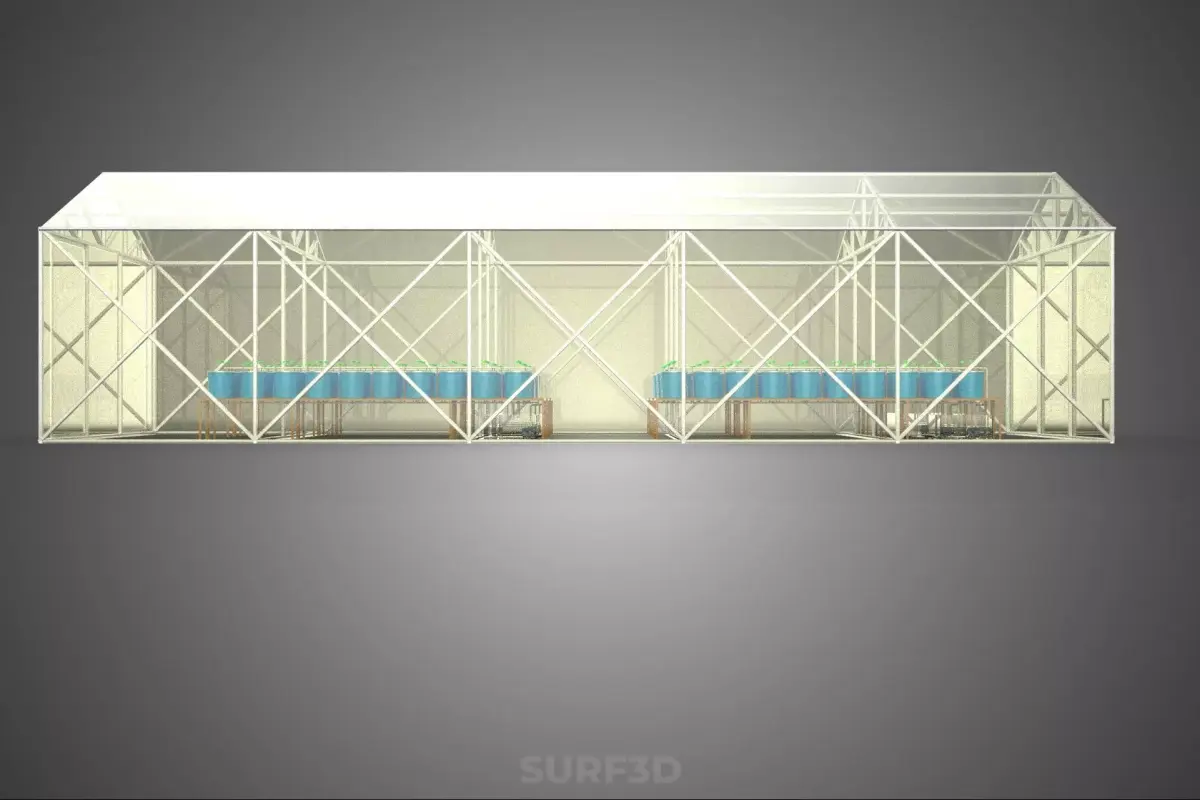
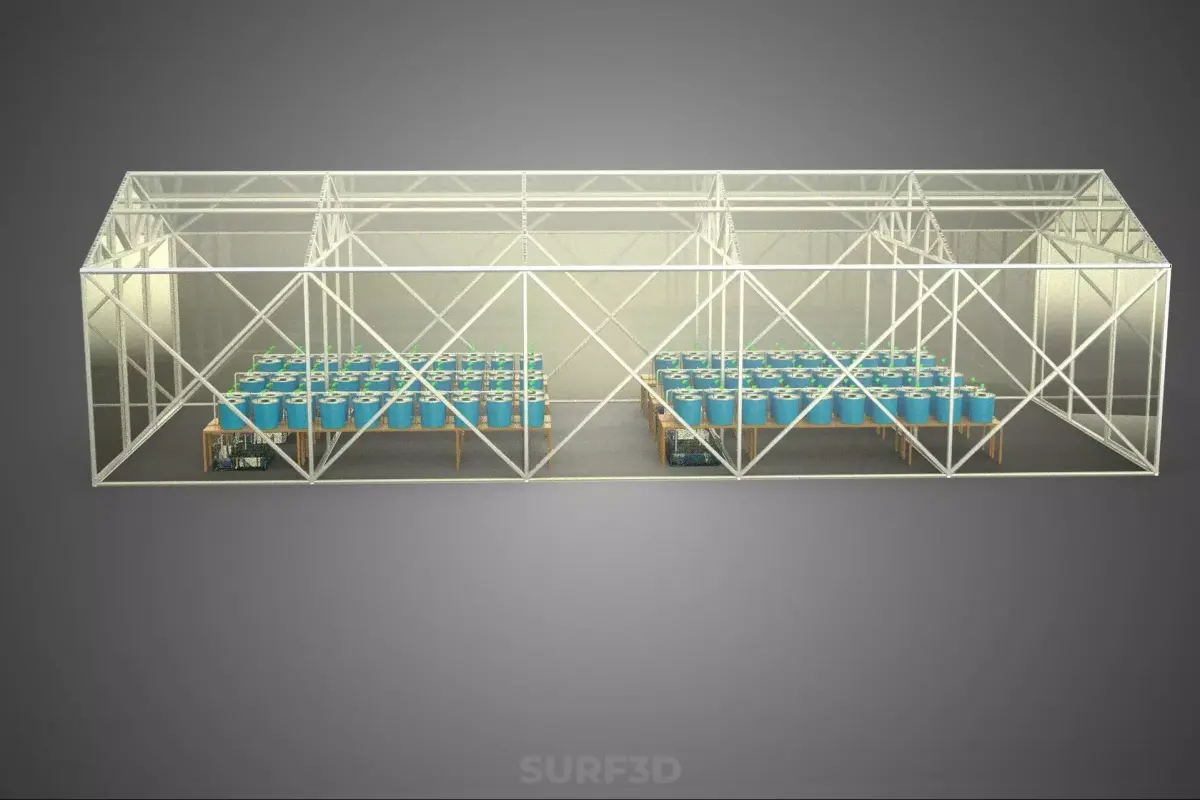
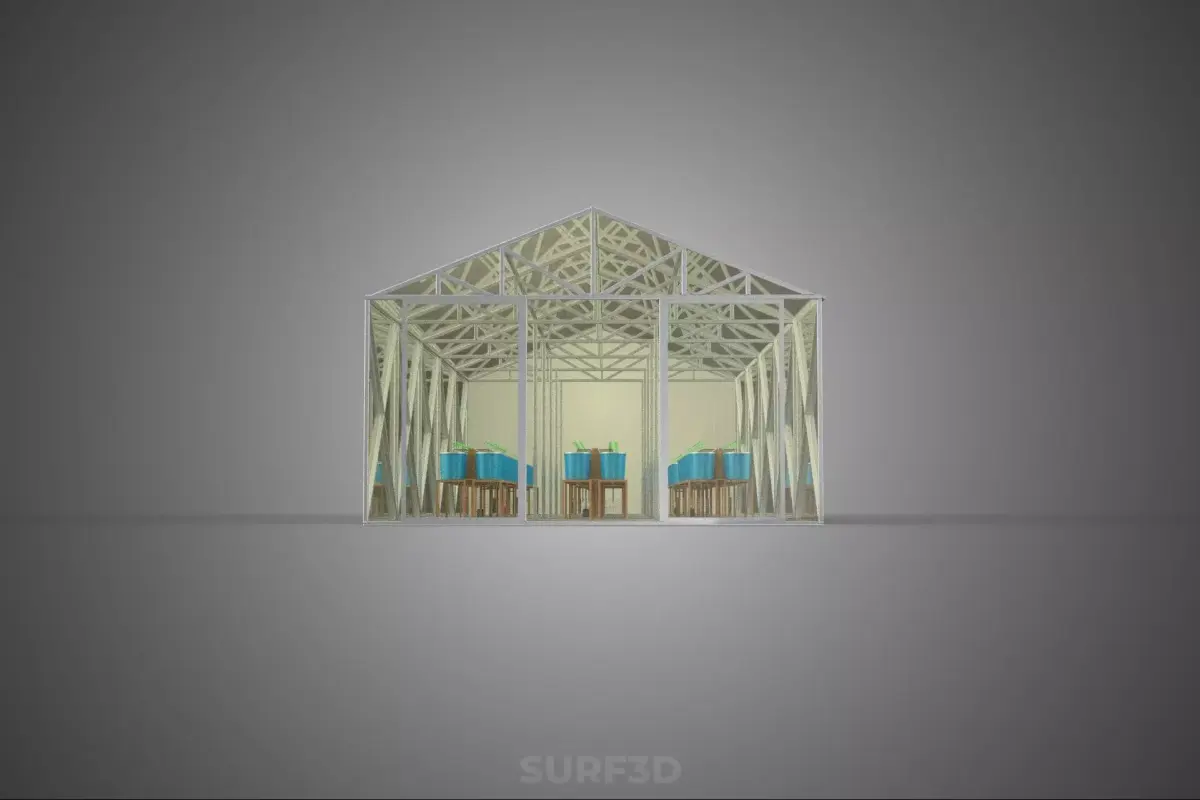
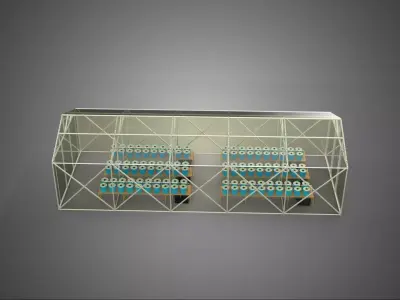
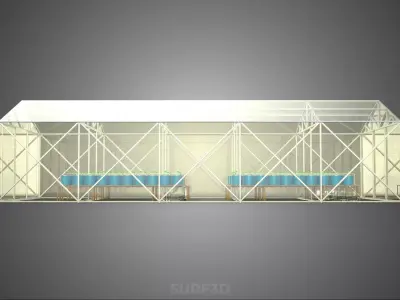
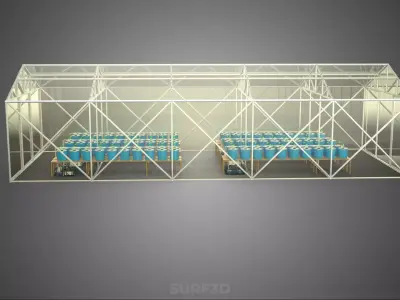
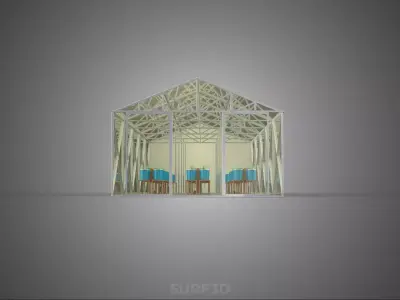
Controlled Environment Agriculture (CEA) Dutch Bucket System (DBS)
The Dutch Bucket System (DBS), also formally known as the Bato Bucket System, is a widely adopted method of recirculating hydroponics employed extensively within Controlled Environment Agriculture (CEA) facilities, including advanced greenhouses and vertical farms. CEA-DBS integrates precise environmental management with a highly efficient substrate-based hydroponic technique, primarily optimized for the cultivation of large, vine-fruiting crops requiring substantial root support and prolonged growing cycles.
Foundational Principles and Operation
The DBS operates as a closed-loop, top-drip, drain-to-waste-or-recirculate system, though modern CEA implementations overwhelmingly favor recirculation to maximize water and nutrient efficiency.
The system utilizes individual, standardized containers—the eponymous Dutch or Bato buckets—typically constructed from UV-resistant plastic. These buckets are filled with an inert, non-soil growing medium (substrate), such as perlite, coco coir, rockwool, or a blend thereof, which provides physical support and aeration but contributes minimal inherent nutrition.
Nutrient delivery is managed through automated fertigation. A precisely formulated hydroponic solution, containing essential macro- and micronutrients, is stored in a central reservoir. This solution is pumped via a main header line to smaller lateral lines, where individual drip emitters (often pressure-compensating types) deliver the solution to the base of each plant, typically 3 to 6 times per day, depending on the crop stage, light intensity, and evapotranspiration demands.
A defining characteristic of the Dutch Bucket is its specialized drainage mechanism, often a siphon elbow or an angled drain port located a few centimeters above the bottom of the bucket. This design ensures that a shallow reserve layer of nutrient solution remains at the base of the container, preventing complete desiccation of the root mass while ensuring rapid drainage of excess solution. The drained solution, known as runoff, is collected in return troughs or pipes running beneath the buckets and gravity-fed back to the central reservoir. Here, the solution is sterilized, pH and Electrical Conductivity (EC) are adjusted, and water is supplemented before being recirculated, resulting in minimal environmental discharge.
Integration within Controlled Environment Agriculture
Within the CEA framework, the DBS benefits from synergistic technologies that optimize growth:
- Climate Control: Temperature, humidity, and airflow are maintained within precise set points, minimizing plant stress and maximizing photosynthetic efficiency.
- CO2 Enrichment: Carbon dioxide levels are often artificially elevated (up to 1200 ppm) to further boost crop yields, especially important for high-light demanding crops suitable for DBS.
- Supplemental Lighting: High-intensity discharge (HID) lamps or modern Light-Emitting Diode (LED) fixtures are used to ensure optimal Daily Light Integral (DLI), particularly during periods of low natural sunlight or in indoor layered systems.
- Precision Nutrient Management: The recirculation loop allows for continuous monitoring and fine-tuning of the nutrient profile, ensuring the exact chemical needs of the crop are met in real-time, leading to superior consistency and quality.
### Advantages and Applications
The CEA-DBS is highly valued for several attributes:
- Adaptability: It effectively bridges the gap between simple, short-term hydroponic methods (like NFT) and complex, high-volume methods (like Deep Water Culture), offering robust support for large plants.
- Disease Management: The use of individual buckets helps isolate root diseases, preventing rapid spread across the entire system.
- Water Use Efficiency: Recirculation minimizes water and nutrient consumption, often achieving 90% savings compared to traditional field farming.
- Scalability: Systems can be easily expanded horizontally in greenhouses or vertically in rack-based configurations, maintaining structural integrity for heavy crops.
The primary crops cultivated using the CEA Dutch Bucket System are indeterminate vine varieties, including large-fruiting tomatoes (beefsteak and cluster types), bell peppers, cucumbers, eggplant, and various melon species.
KEYWORDS: Hydroponics, Controlled Environment Agriculture, CEA, Dutch Bucket, Bato Bucket, Recirculating System, Fertigation, Substrate Culture, Inert Medium, Perlite, Coco Coir, Tomatoes, Cucumbers, Peppers, Solanaceae, Precision Agriculture, Water Efficiency, Nutrient Solution, Electrical Conductivity, pH Monitoring, Drip Emitter, Grow Light, Greenhouse Technology, Indeterminate Crops, Root Zone Management, Closed-Loop System, Runoff, Water Conservation, Crop Yield, Environmental Control, High-Density Planting.
STL (Stereolithography, filesize: 331 MB), OBJ (OBJ, filesize: 779 MB), BLEND (Blender, filesize: 596 MB), 3DS (3D Studio, filesize: 205 MB), DWG (AutoCAD, filesize: 164 MB), SKP (Sketchup, filesize: 18.1 MB), FBX (Autodesk FBX, filesize: 217 MB), STP (STEP, filesize: 20.2 MB), IGE (IGES, filesize: 39.9 MB), GLTF (glTF, filesize: 220 MB), SAT (3D ACIS, filesize: 802 MB), 3DM (Rhinoceros 3D, filesize: 53.9 MB), DAE (Collada, filesize: 1.1 GB), MAX (Autodesk 3ds Max, filesize: 1.43 GB)