High-quality 3D assets at affordable prices — trusted by designers, engineers, and creators worldwide. Made with care to be versatile, accessible, and ready for your pipeline.
Included File Formats
This model is provided in 14 widely supported formats, ensuring maximum compatibility:
• - FBX (.fbx) – Standard format for most 3D software and pipelines
• - OBJ + MTL (.obj, .mtl) – Wavefront format, widely used and compatible
• - STL (.stl) – Exported mesh geometry; may be suitable for 3D printing with adjustments
• - STEP (.step, .stp) – CAD format using NURBS surfaces
• - IGES (.iges, .igs) – Common format for CAD/CAM and engineering workflows (NURBS)
• - SAT (.sat) – ACIS solid model format (NURBS)
• - DAE (.dae) – Collada format for 3D applications and animations
• - glTF (.glb) – Modern, lightweight format for web, AR, and real-time engines
• - 3DS (.3ds) – Legacy format with broad software support
• - 3ds Max (.max) – Provided for 3ds Max users
• - Blender (.blend) – Provided for Blender users
• - SketchUp (.skp) – Compatible with all SketchUp versions
• - AutoCAD (.dwg) – Suitable for technical and architectural workflows
• - Rhino (.3dm) – Provided for Rhino users
Model Info
• - All files are checked and tested for integrity and correct content
• - Geometry uses real-world scale; model resolution varies depending on the product (high or low poly)
• • - Scene setup and mesh structure may vary depending on model complexity
• - Rendered using Luxion KeyShot
• - Affordable price with professional detailing
Buy with confidence. Quality and compatibility guaranteed.
If you have any questions about the file formats, feel free to send us a message — we're happy to assist you!
Sincerely,
SURF3D
Trusted source for professional and affordable 3D models.
More Information About 3D Model :
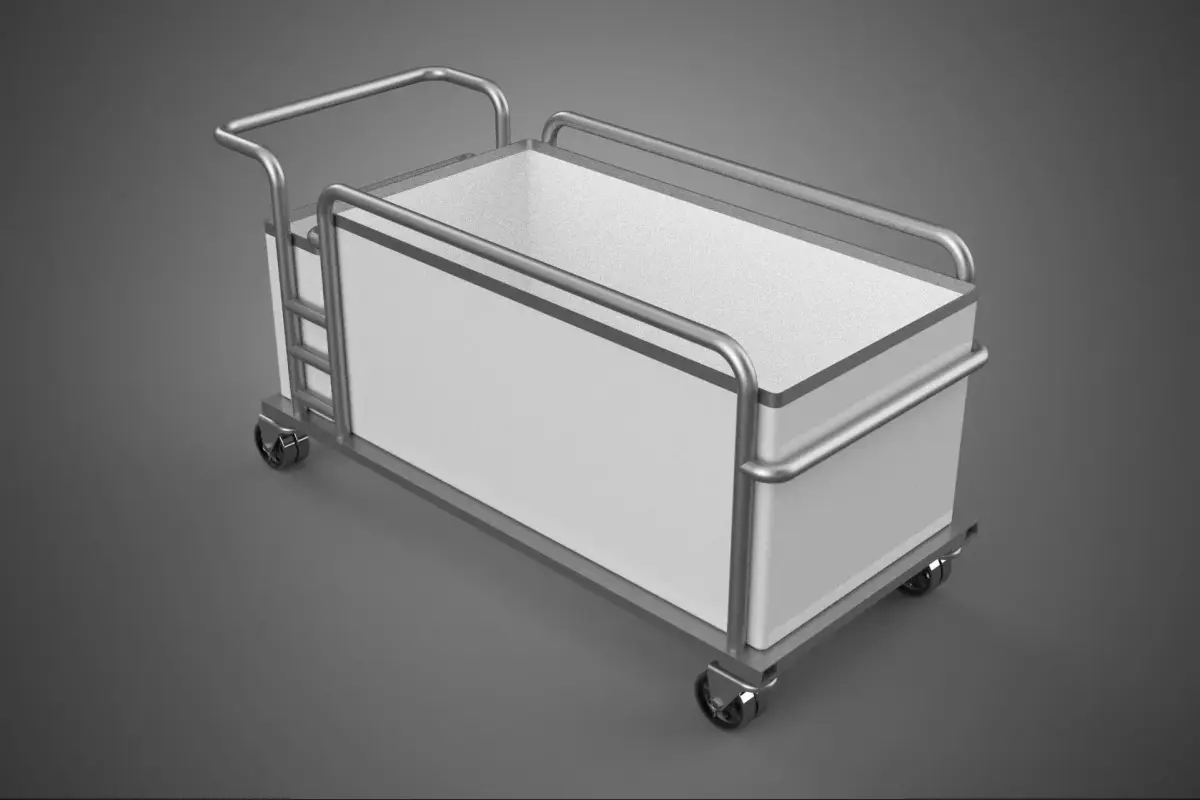
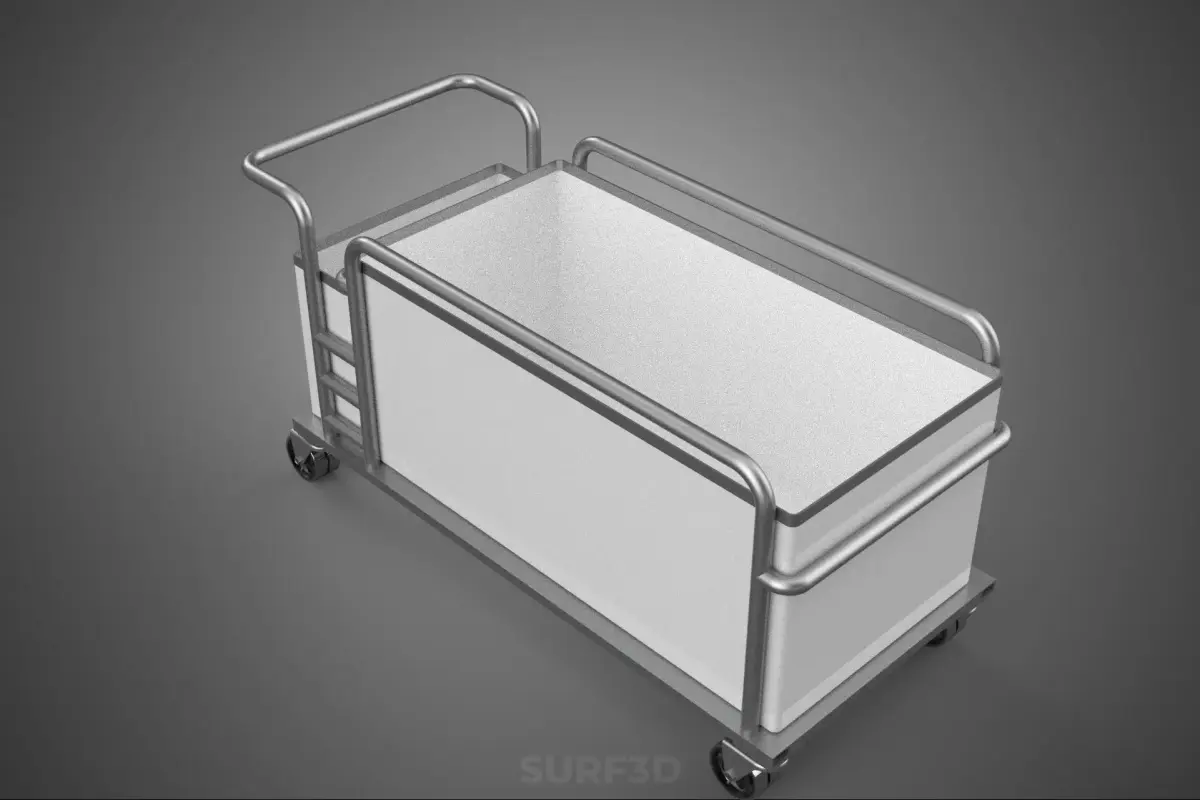
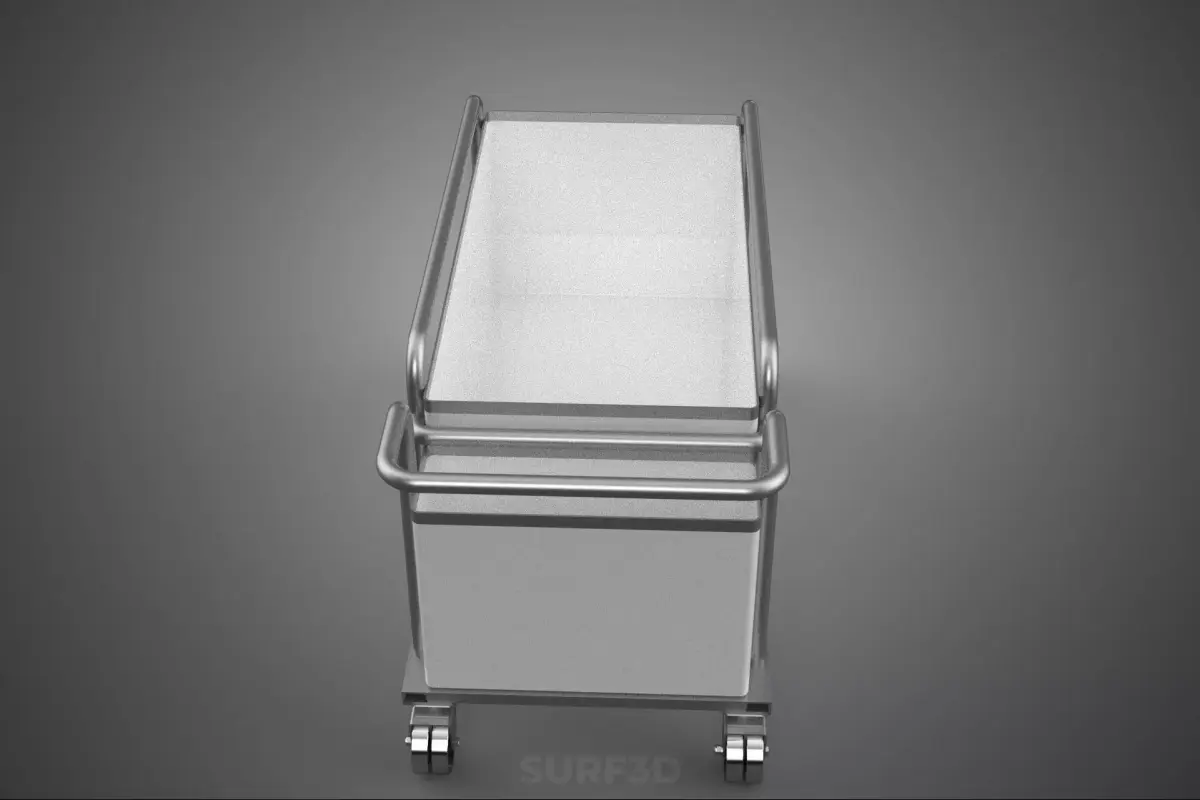
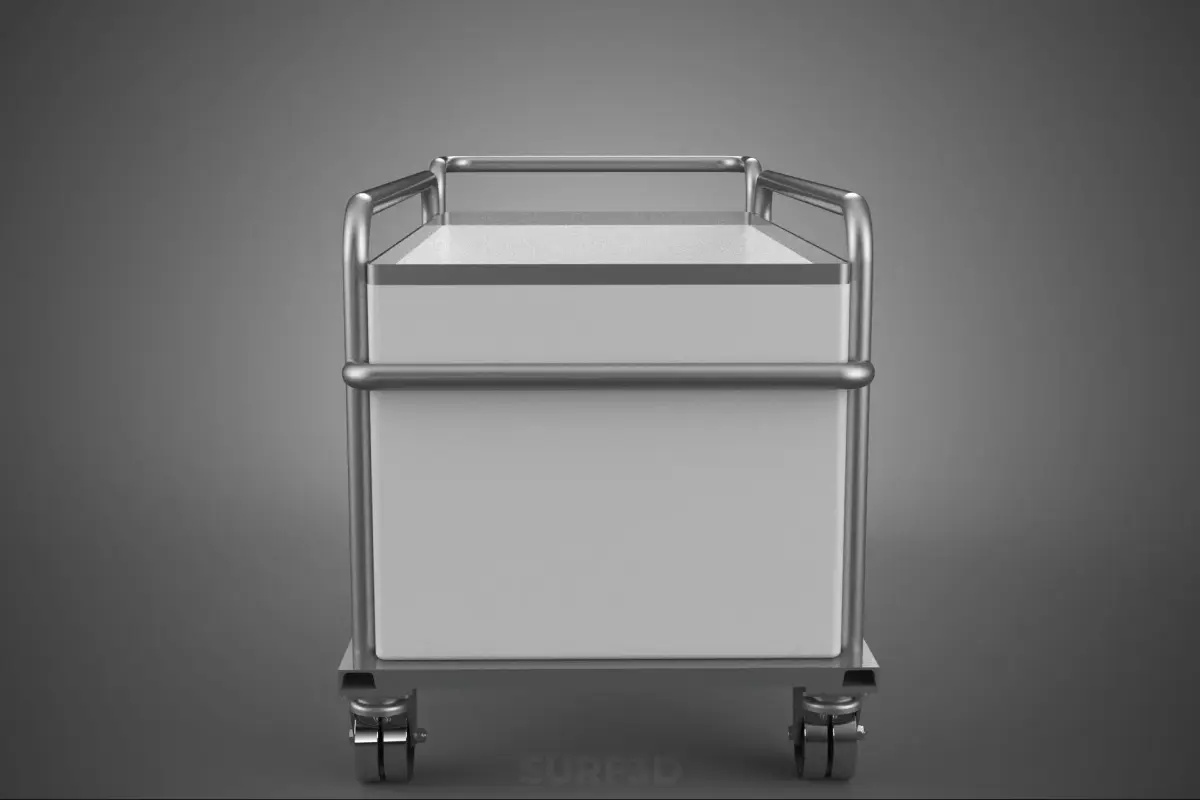
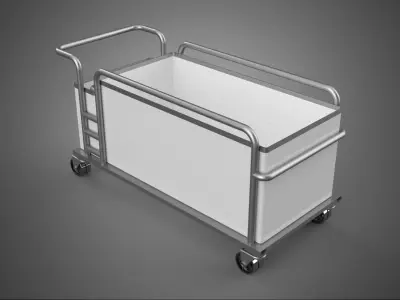
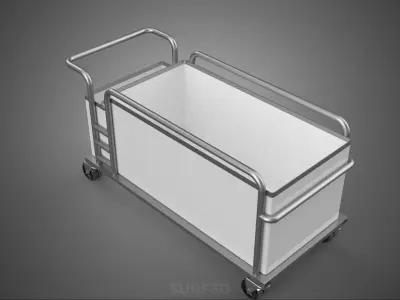
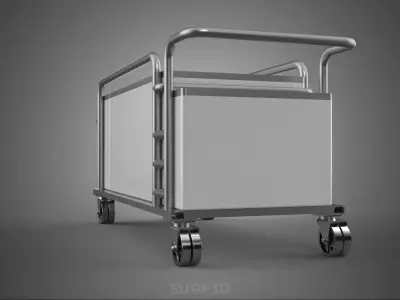
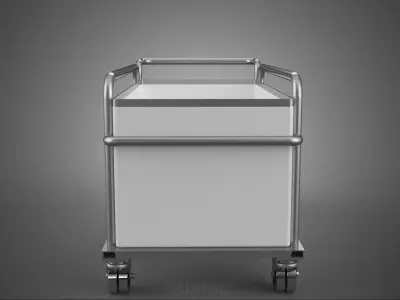
A mobile institutional laundry collection unit, generically referred to as a laundry cart, trolley, or hamper bin, is a specialized piece of equipment engineered for the efficient bulk collection, containment, and conveyance of soiled linens, garments, and reusable textiles within commercial, medical, and hospitality environments. Distinguished significantly from residential hampers by its capacity, material durability, and inherent mobility, this equipment is central to efficient facility management and sanitation logistics.
Nomenclature and Definition
The precise terminology varies depending on the operating sector and design features. The term cart or trolley emphasizes the wheeled structure necessary for high-volume transport over large distances within multi-story buildings, such as hospitals or major hotels. Hamper or bin describes the containment vessel itself, which is typically removable or collapsible. Official designations often include Soiled Linen Cart, Utility Laundry Trolley, or Mobile Textile Collector.
Design and Construction
Institutional laundry trolleys are constructed to withstand rigorous daily use, frequent sterilization, and exposure to cleaning chemicals.
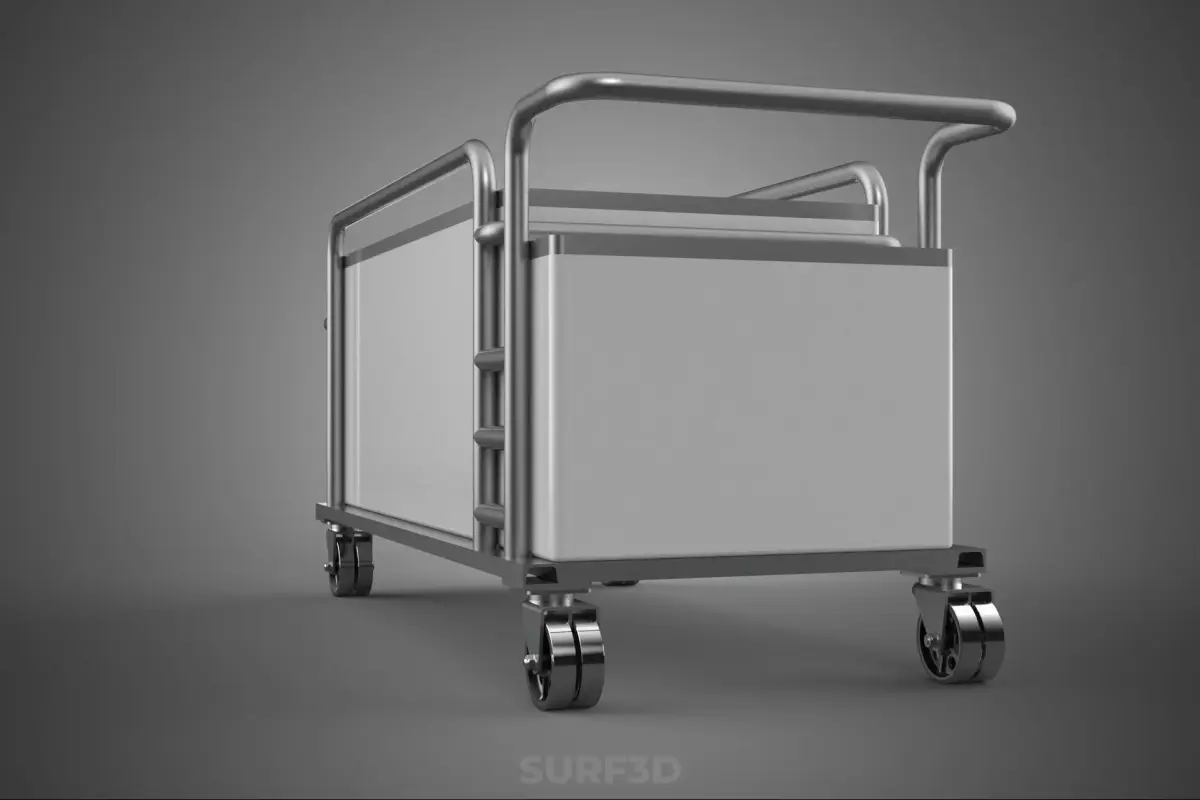
Frame: The supporting frame is typically fabricated from lightweight yet high-strength materials chosen for their corrosion resistance. Common materials include chrome-plated steel, powder-coated steel alloys, or, in sensitive clinical areas, medical-grade stainless steel. Frames are often designed to be easily assembled, disassembled, or folded (collapsible units) for compact storage when not in use.
Containment Vessel (Basket/Bin): The vessel is the primary receptacle for the soiled materials. It may consist of a solid, durable plastic bin (polyethylene or polypropylene) for non-porous hygiene, or, more commonly, a heavy-duty fabric bag or liner. These liners are engineered from robust, washable materials such as vinyl, nylon, or thick canvas. Liners often feature drawstrings or zipper closures to secure contents during transit, minimizing spillage and aerosolization of contaminants.
Mobility: Mobility is achieved through the use of heavy-duty, industrial swivel casters. These casters typically feature non-marking polyurethane or rubber wheels to protect floor surfaces. For safety and operational control, at least two of the casters are equipped with locking brakes, ensuring stability when the cart is stationary during loading or unloading procedures.
Institutional Applications
Healthcare and Hospital Settings: In clinical environments, the laundry hamper bin functions as a critical component of infection control protocols. Carts used for potentially contaminated or infectious materials often incorporate features designed to minimize human contact, such as foot-pedal operated lids and secure, liquid-proof vinyl liners. Protocols frequently mandate the use of specific color-coded bags (e.g., red for infectious waste, yellow for isolation laundry, blue/white for general soiled linen) to streamline sorting and ensure proper handling procedures are followed immediately upon collection.
Hospitality and Hotel Management: Within the hotel industry, these carts are utilized extensively by housekeeping staff. Design priorities include high-volume capacity to service multiple rooms efficiently, silent operation (often achieved through precision casters), and a profile that allows for easy maneuverability through guest hallways and service elevators. They are essential for the rapid collection of used bedding, towels, and guest laundry, facilitating prompt turnaround times.
Commercial Laundry Operations: Large-scale laundries utilize these carts for internal staging, sorting, and movement of textiles between processing zones (washing, drying, folding, storage). Robustness and volume capacity are the primary design considerations in this sector.
Ergonomics and Utility
Modern institutional laundry carts often incorporate ergonomic features to enhance staff safety and efficiency, including adjustable frame heights to reduce bending, multiple bag compartments for pre-sorting waste streams, and protective bumpers to prevent damage to walls and doorways during transit. The design must balance maximum capacity with the practical constraints of elevator sizes and hallway widths specific to the operational facility.
KEYWORDS: Laundry cart, soiled linen collector, institutional hamper, utility trolley, laundry bin, mobile basket, housekeeping cart, textile transport, hospital laundry, hotel linen management, commercial laundromat, healthcare logistics, janitorial equipment, hospitality service, stainless steel frame, chrome plating, vinyl liner, heavy-duty canvas, swivel casters, locking wheels, corrosion resistant, mobile unit, collapsible design, foot pedal operation, infection control, high capacity, durable equipment, ergonomic design, material handling.
STL (Stereolithography, filesize: 10.5 MB), OBJ (OBJ, filesize: 20.6 MB), 3DM (Rhinoceros 3D, filesize: 15 MB), DAE (Collada, filesize: 35.4 MB), FBX (Autodesk FBX, filesize: 6.53 MB), SAT (3D ACIS, filesize: 15.7 MB), STP (STEP, filesize: 5.54 MB), 3DS (3D Studio, filesize: 6.4 MB), DWG (AutoCAD, filesize: 3.42 MB), GLTF (glTF, filesize: 6.84 MB), BLEND (Blender, filesize: 19.7 MB), IGE (IGES, filesize: 10.7 MB), SKP (Sketchup, filesize: 9.06 MB), MAX (Autodesk 3ds Max, filesize: 42.3 MB)