High-quality 3D assets at affordable prices — trusted by designers, engineers, and creators worldwide. Made with care to be versatile, accessible, and ready for your pipeline.
Included File Formats
This model is provided in 14 widely supported formats, ensuring maximum compatibility:
• - FBX (.fbx) – Standard format for most 3D software and pipelines
• - OBJ + MTL (.obj, .mtl) – Wavefront format, widely used and compatible
• - STL (.stl) – Exported mesh geometry; may be suitable for 3D printing with adjustments
• - STEP (.step, .stp) – CAD format using NURBS surfaces
• - IGES (.iges, .igs) – Common format for CAD/CAM and engineering workflows (NURBS)
• - SAT (.sat) – ACIS solid model format (NURBS)
• - DAE (.dae) – Collada format for 3D applications and animations
• - glTF (.glb) – Modern, lightweight format for web, AR, and real-time engines
• - 3DS (.3ds) – Legacy format with broad software support
• - 3ds Max (.max) – Provided for 3ds Max users
• - Blender (.blend) – Provided for Blender users
• - SketchUp (.skp) – Compatible with all SketchUp versions
• - AutoCAD (.dwg) – Suitable for technical and architectural workflows
• - Rhino (.3dm) – Provided for Rhino users
Model Info
• - All files are checked and tested for integrity and correct content
• - Geometry uses real-world scale; model resolution varies depending on the product (high or low poly)
• • - Scene setup and mesh structure may vary depending on model complexity
• - Rendered using Luxion KeyShot
• - Affordable price with professional detailing
Buy with confidence. Quality and compatibility guaranteed.
If you have any questions about the file formats, feel free to send us a message — we're happy to assist you!
Sincerely,
SURF3D
Trusted source for professional and affordable 3D models.
More Information About 3D Model :
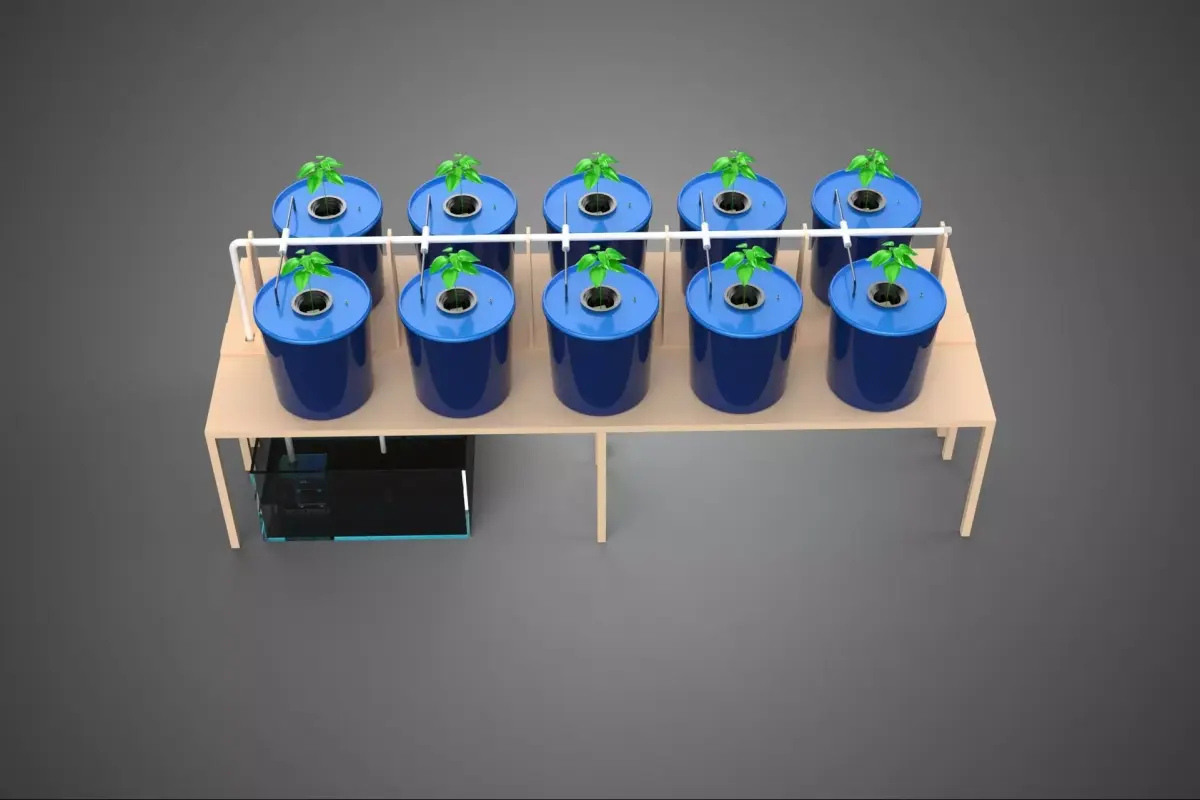
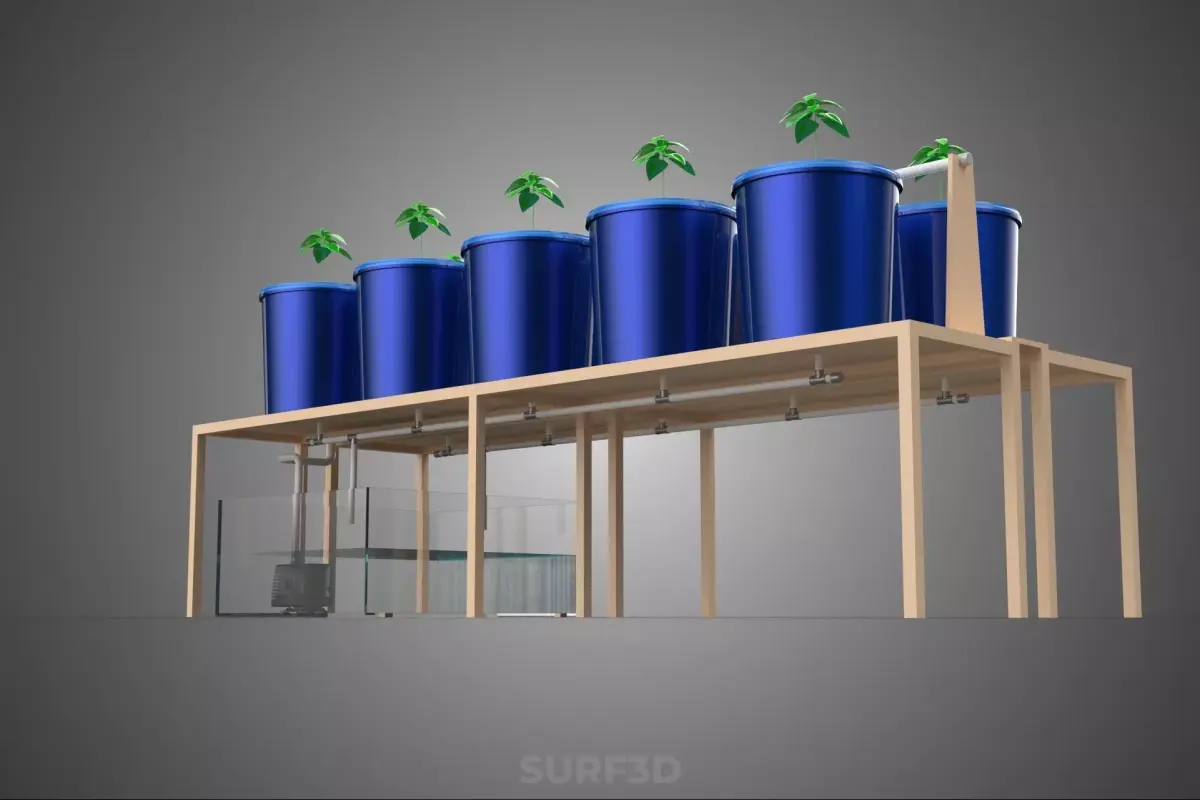
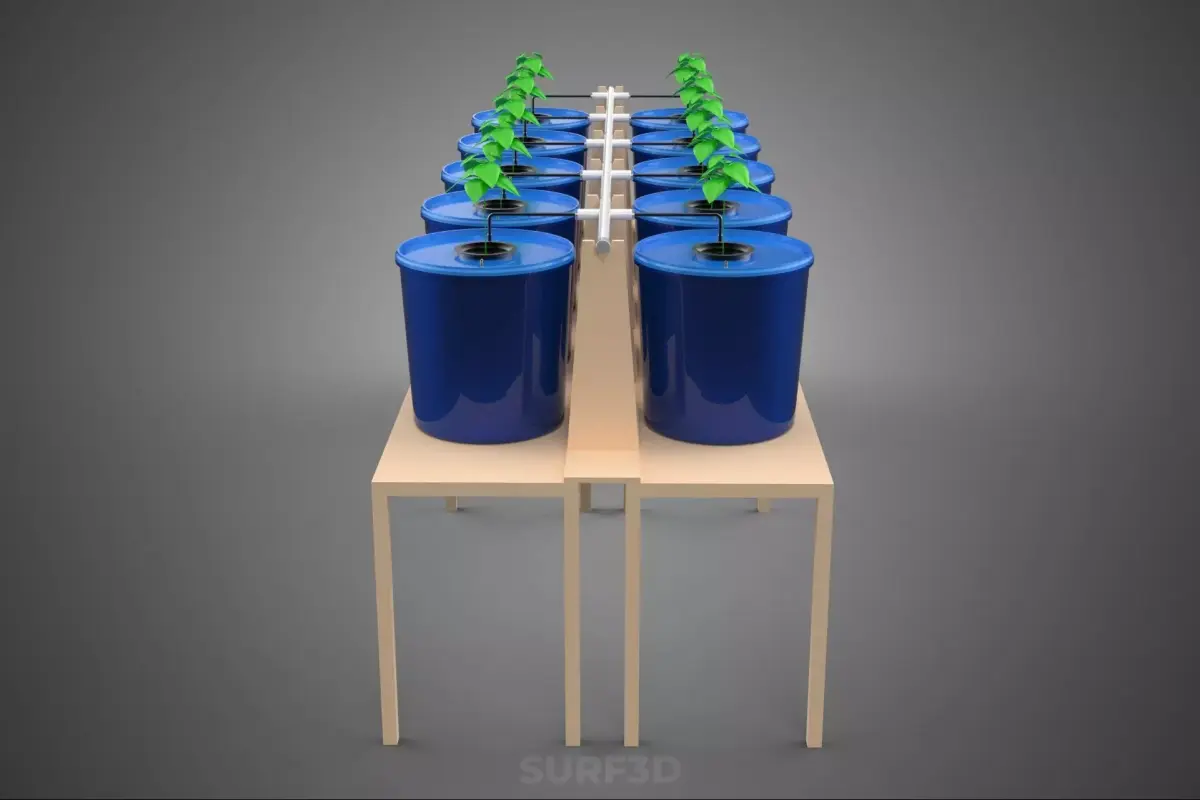
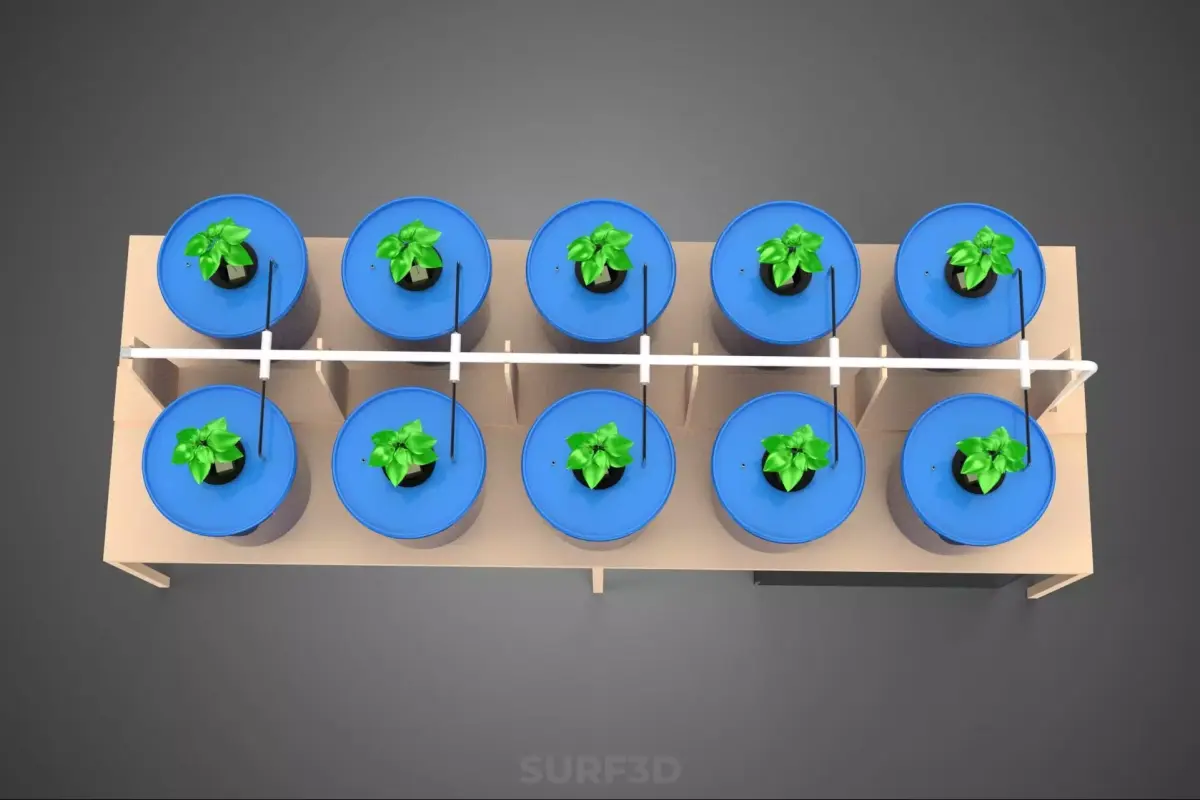
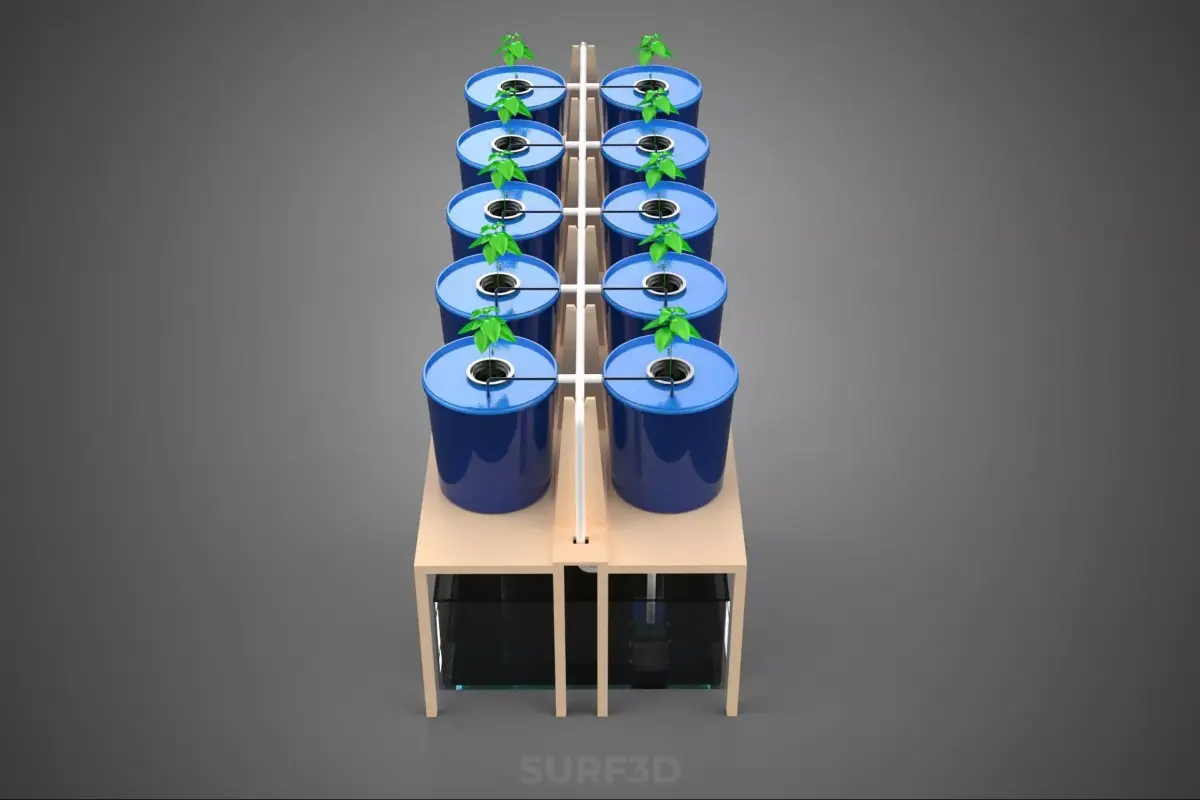
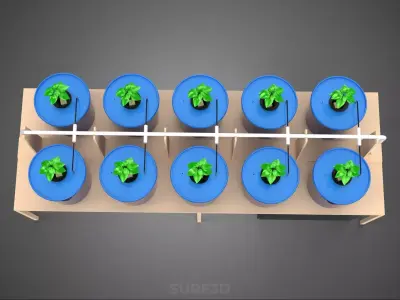
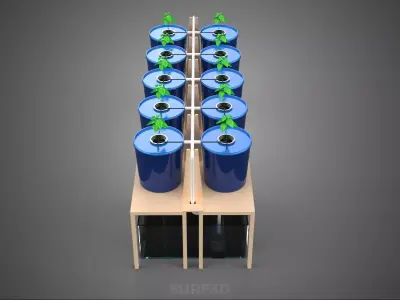
The DIY Greenhouse Bato Dutch Bucket Hydroponic System Plant Array is a comprehensive apparatus integrating Controlled Environment Agriculture (CEA) principles with a high-efficiency, recirculating substrate-based cultivation technique. Specifically designed for accessible self-construction (DIY), this system enables the precision farming of medium-to-large perennial or fruiting vegetable crops, such as tomatoes, cucumbers, peppers, and eggplants, within a protected environmental enclosure.
I. System Architecture and Integration
The apparatus is defined by the integration of three primary components: the Greenhouse structure, the modular Bato Bucket array, and the nutrient delivery infrastructure.
A. The DIY Greenhouse Structure
The external structure provides necessary environmental control independent of local climate fluctuations. DIY implementations typically utilize affordable materials such as PVC piping or wooden frames clad with polyethylene film (poly-tunnel configuration) or polycarbonate panels. Essential environmental modifications include passive or active ventilation systems (fans, louvers), supplemental heating or cooling units (HVAC), and automated or manual shading systems to manage photosynthetically active radiation (PAR). The structure serves to optimize temperature, humidity, and CO2 levels conducive to accelerated plant growth.
B. The Plant Array Configuration
The system is arranged as a scalable array where individual Bato Buckets are positioned linearly on benches or directly on the ground. The arrangement is dictated by the specific crop requirements for spacing and light penetration, ensuring maximum yield density while facilitating ease of access for maintenance and harvesting.
II. The Bato (Dutch) Bucket Hydroponic Technique
The Bato Bucket system is classified as a closed-loop, drain-to-waste or recirculating drip system, characterized by its efficiency and suitability for large plants that require substantial root support and isolation.
A. Bucket Design and Substrate
Each bucket, typically constructed from opaque, food-grade plastic, holds an inert growing substrate. Common media include perlite, coco coir, expanded clay pellets (hydroton), or a mixture thereof. These substrates provide physical anchorage and excellent aeration while remaining chemically inert.
B. Nutrient Delivery and Drainage
Nutrient solution is delivered to the top of the substrate via individual micro-tubing drip emitters, scheduled according to plant physiological demands (DLI—Daily Light Integral) and developmental stage. The defining feature of the Bato Bucket is the overflow mechanism. An inverted elbow or siphon tube is situated near the bottom, maintaining a shallow reservoir of nutrient solution (approximately 1-2 cm) at all times. This reservoir prevents complete desiccation of the lower roots.
Excess nutrient solution that drains through the substrate is collected by the elbow and flows out of the bucket into a shared, sloped return channel (gully or trough). This runoff is directed back to the main nutrient reservoir.
C. Recirculation Loop
The system operates on a continuous recirculation model. A submersible pump in the nutrient reservoir pushes the solution through the main delivery line, branching into the drip emitters. The drained return solution is filtered before rejoining the reservoir. Electrical conductivity (EC) and pH levels of the recirculating solution are continuously monitored and adjusted to ensure optimal nutrient bioavailability and concentration. This minimizes water and nutrient consumption compared to open-system (drain-to-waste) hydroponics.
III. Operational Benefits and DIY Adaptability
The DIY Bato Dutch Bucket system offers significant advantages, particularly for home growers transitioning from passive or small-scale systems.
- Water and Nutrient Efficiency: Recirculation minimizes waste, achieving substantial reductions in resource usage.
- Disease Isolation: Since each plant is contained in an independent bucket, the risk of rapid spread of root-borne pathogens across the entire array is mitigated.
- Scalability and Modularity: The system is inherently modular; additional buckets and associated plumbing can be added or removed without disrupting the operation of the existing array.
- Crop Versatility: The robust support offered by the substrate and the capacity for precise nutrient dosing make it ideal for high-yield vine crops that require structured trellising (e.g., indeterminate tomatoes).
DIY implementation relies on readily available materials, including standard plumbing fittings (PVC pipe, vinyl tubing), common nutrient reservoirs (totes or barrels), and simple timers/pumps, making sophisticated hydroponics accessible to non-commercial operators.
KEYWORDS: Hydroponics, DIY, Bato Bucket, Dutch Bucket, Recirculating System, Controlled Environment Agriculture, Greenhouse, Plant Array, Substrate, Perlite, Coco Coir, Nutrient Film Technique, Drip Irrigation, Crop Yield, Modularity, CEA, Water Efficiency, Precision Agriculture, Closed-Loop, Siphon Drain, Vine Crops, Tomatoes, Cucumbers, Poly-tunnel, Emitters, pH Control, EC Monitoring, Hydroton, Root Zone, Aeration, Home Growing.
STL (Stereolithography, filesize: 36.4 MB), OBJ (OBJ, filesize: 78.5 MB), DWG (AutoCAD, filesize: 17.5 MB), 3DM (Rhinoceros 3D, filesize: 32.3 MB), BLEND (Blender, filesize: 66.2 MB), GLTF (glTF, filesize: 23.2 MB), 3DS (3D Studio, filesize: 21.9 MB), MAX (Autodesk 3ds Max, filesize: 148 MB), SKP (Sketchup, filesize: 20.9 MB), SAT (3D ACIS, filesize: 75 MB), STP (STEP, filesize: 12.8 MB), DAE (Collada, filesize: 121 MB), IGE (IGES, filesize: 21.6 MB), FBX (Autodesk FBX, filesize: 24.3 MB)