High-quality 3D assets at affordable prices — trusted by designers, engineers, and creators worldwide. Made with care to be versatile, accessible, and ready for your pipeline.
Included File Formats
This model is provided in 14 widely supported formats, ensuring maximum compatibility:
• - FBX (.fbx) – Standard format for most 3D software and pipelines
• - OBJ + MTL (.obj, .mtl) – Wavefront format, widely used and compatible
• - STL (.stl) – Exported mesh geometry; may be suitable for 3D printing with adjustments
• - STEP (.step, .stp) – CAD format using NURBS surfaces
• - IGES (.iges, .igs) – Common format for CAD/CAM and engineering workflows (NURBS)
• - SAT (.sat) – ACIS solid model format (NURBS)
• - DAE (.dae) – Collada format for 3D applications and animations
• - glTF (.glb) – Modern, lightweight format for web, AR, and real-time engines
• - 3DS (.3ds) – Legacy format with broad software support
• - 3ds Max (.max) – Provided for 3ds Max users
• - Blender (.blend) – Provided for Blender users
• - SketchUp (.skp) – Compatible with all SketchUp versions
• - AutoCAD (.dwg) – Suitable for technical and architectural workflows
• - Rhino (.3dm) – Provided for Rhino users
Model Info
• - All files are checked and tested for integrity and correct content
• - Geometry uses real-world scale; model resolution varies depending on the product (high or low poly)
• • - Scene setup and mesh structure may vary depending on model complexity
• - Rendered using Luxion KeyShot
• - Affordable price with professional detailing
Buy with confidence. Quality and compatibility guaranteed.
If you have any questions about the file formats, feel free to send us a message — we're happy to assist you!
Sincerely,
SURF3D
Trusted source for professional and affordable 3D models.
More Information About 3D Model :
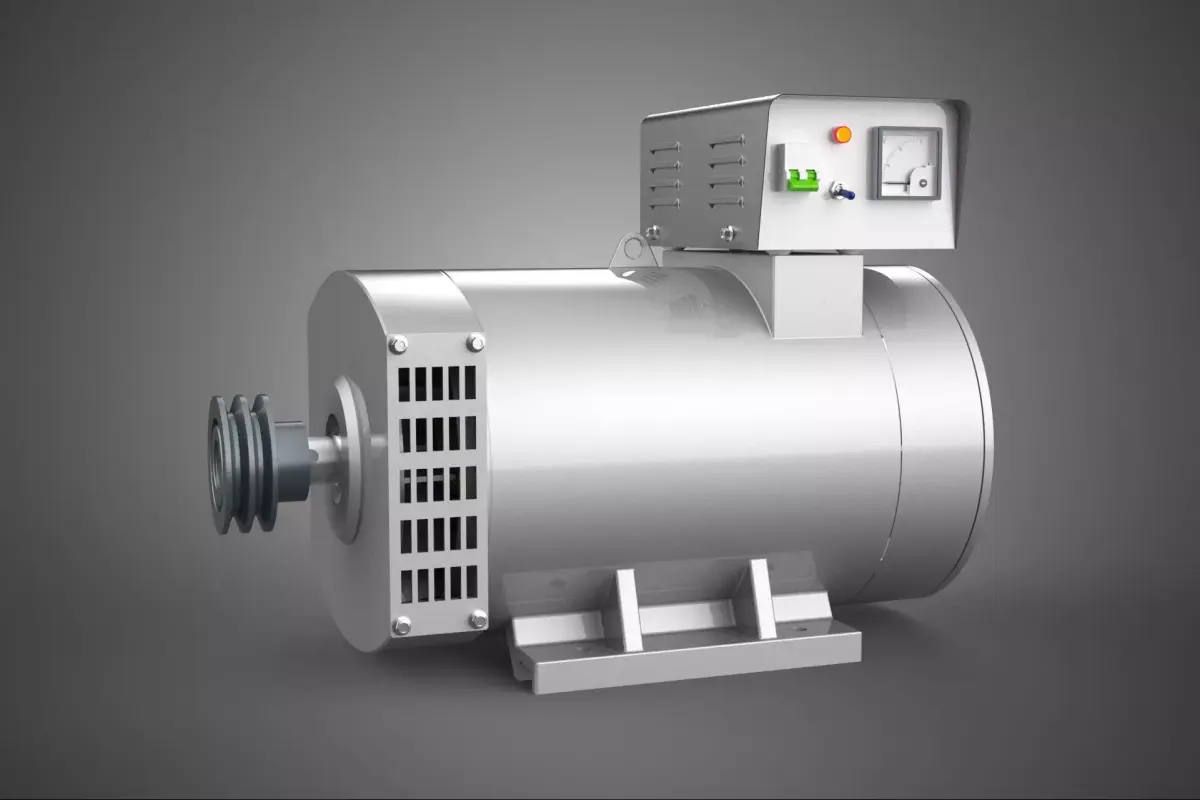
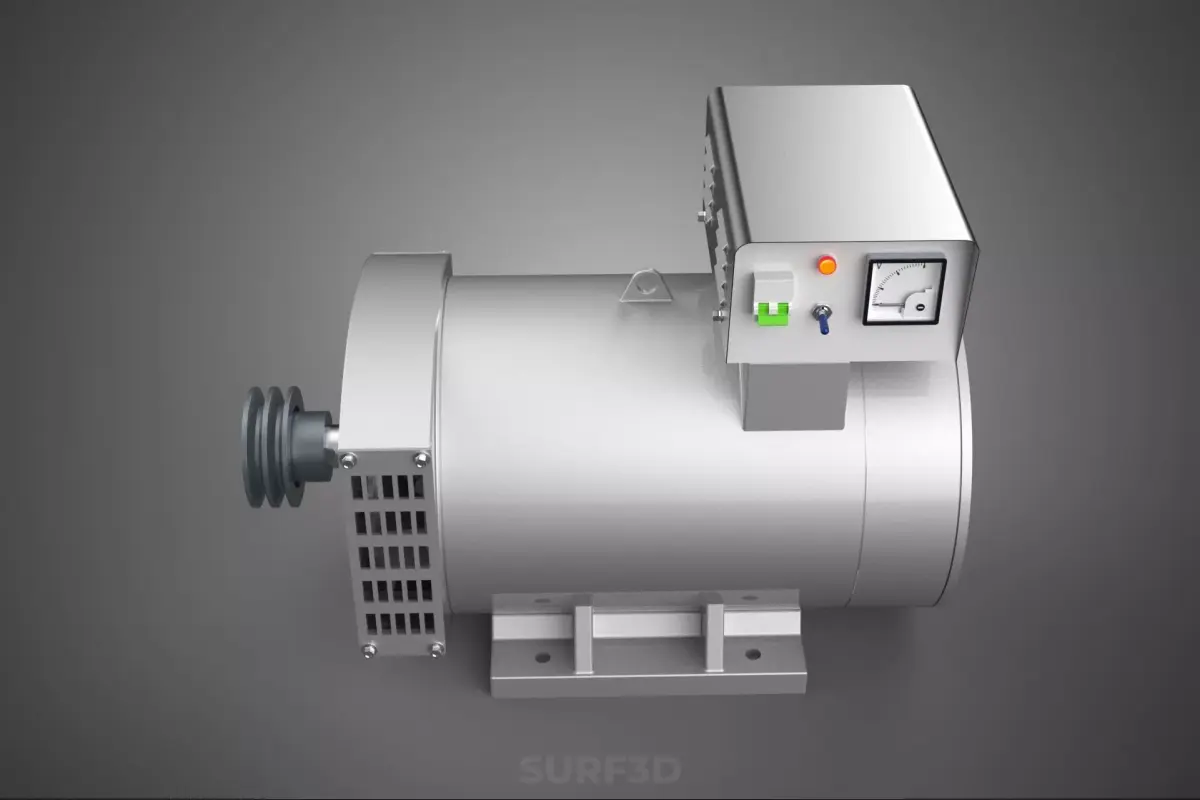
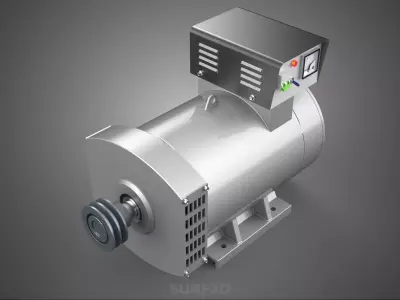
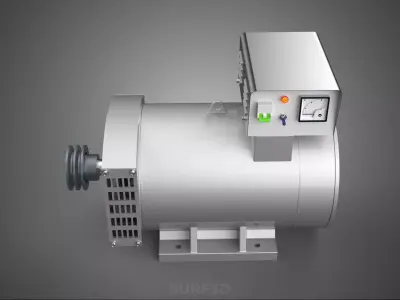
The terms Engine, Motor, Generator, Alternator, Dynamo, Genset, Control Panel, and KW collectively describe the integrated components, operational mechanics, control infrastructure, and power metrics essential to electromechanical power generation systems. These systems are fundamental in providing primary power, standby resilience, or peak-shaving capacity across industrial, commercial, and utility sectors.
I. Prime Movers and Mechanical Energy Conversion
The ENGINE serves as the prime mover, converting thermal energy derived from combustion (typically diesel fuel, natural gas, or propane) into rotational mechanical energy. This mechanical output (torque and speed) is the input required by the electrical conversion device.
The term MOTOR primarily defines a machine that converts electrical energy into mechanical energy, frequently utilized within this context as a starter motor to initiate the engine's rotation and subsequent combustion cycle. In some hybrid or specialized generation systems, a motor might operate concurrently with the engine to provide power stability or transient load support.
II. Electromechanical Transduction (Generator Systems)
GENERATOR is the umbrella term for any machine that utilizes mechanical energy to produce electrical energy via electromagnetic induction.
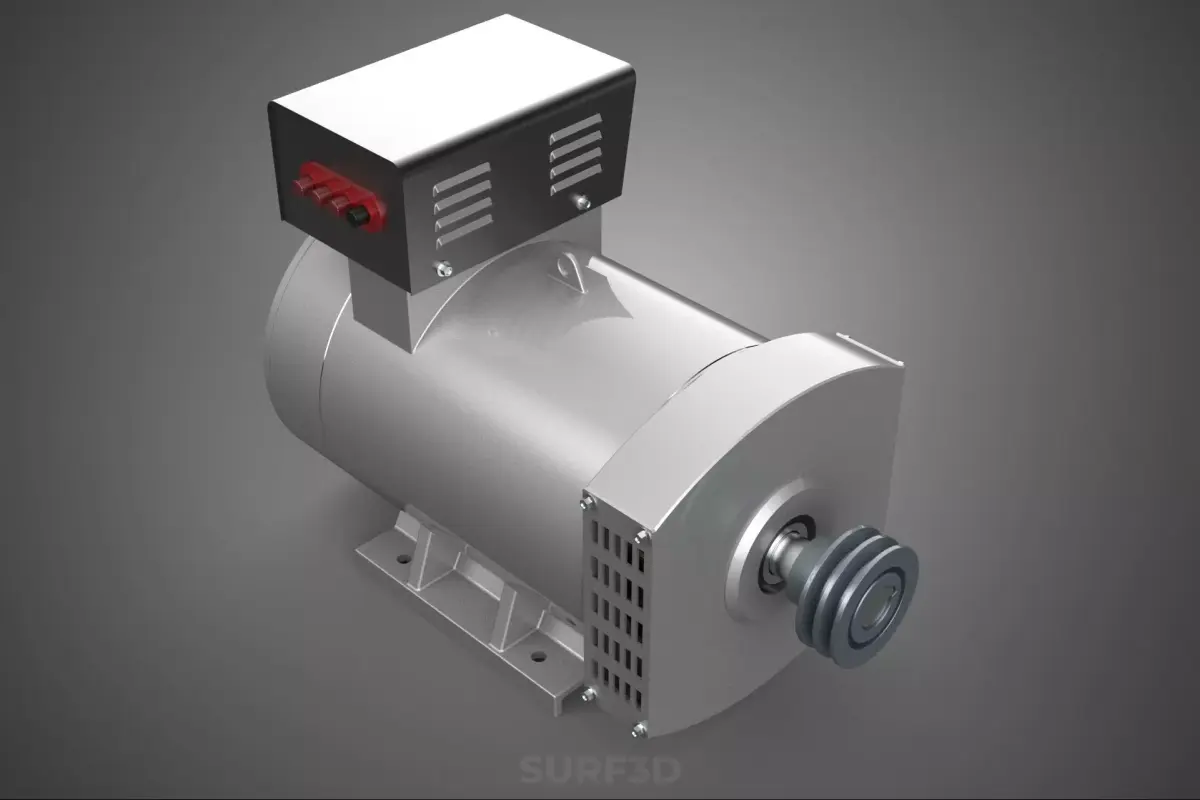
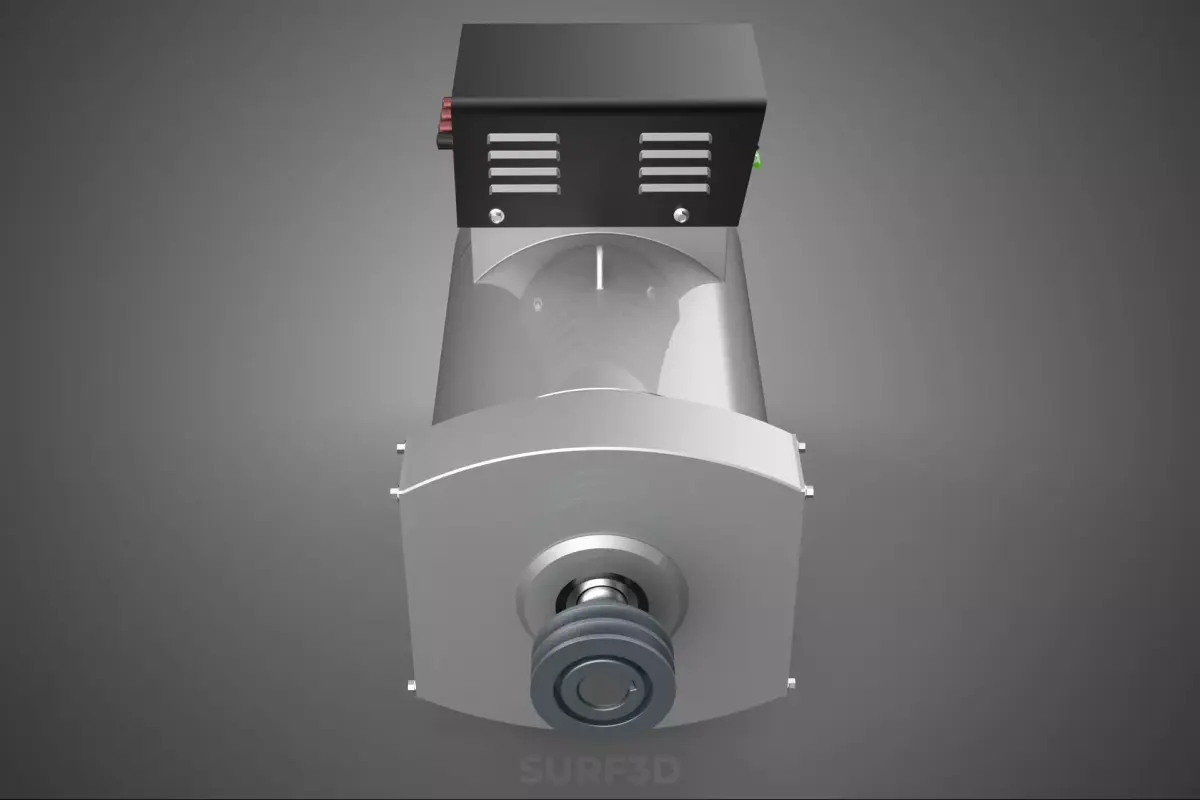
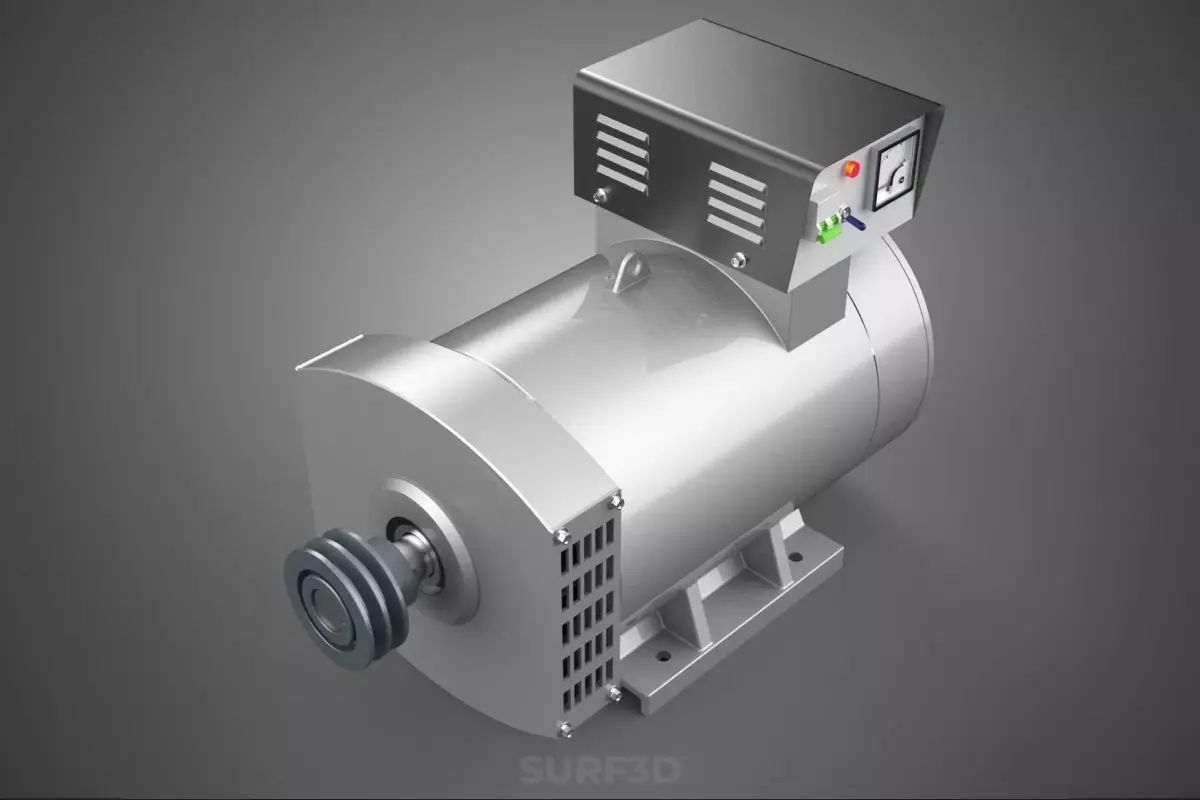
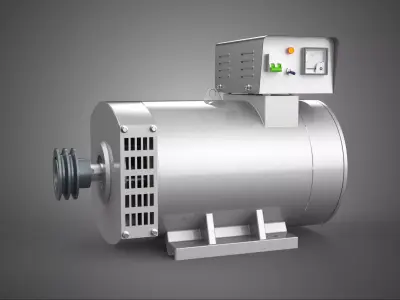
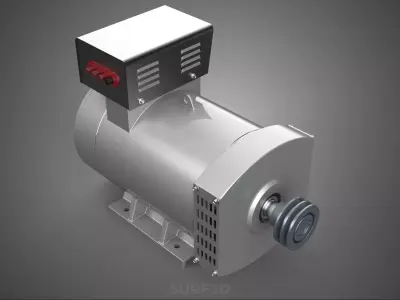
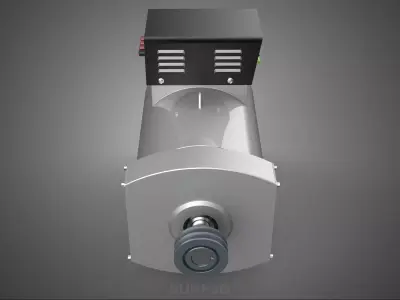
The ALTERNATOR is the standard conversion device used in modern power generation sets. It produces Alternating Current (AC) electricity, characterized by its rotating magnetic field (rotor) inducing current in stationary conductors (stator). Alternators are favored due to the efficiency of AC transmission and transformation.
The DYNAMO, a historical predecessor to the alternator, refers specifically to a generator that produces Direct Current (DC) electricity using a mechanical commutator. While largely superseded for utility-scale power, dynamos remain relevant in niche applications requiring pure DC output.
III. The Generating Set (Genset)
A GENSET (Generating Set) is a unified, standardized piece of equipment composed of the prime mover (engine) and the electromechanical converter (generator/alternator), mounted together on a rigid skid or frame, often incorporating peripheral systems such as cooling, lubrication, and fuel storage. Gensets are classified by their mode of operation (e.g., continuous, prime power, standby) and power output capacity.
IV. Control and Monitoring Infrastructure
The CONTROL PANEL serves as the central interface for operation, monitoring, safety, and synchronization of the genset. It houses critical electronic modules, displays, and protective relays. Key functions of a modern control panel include:
- Monitoring: Tracking engine parameters (oil pressure, coolant temperature, RPM), electrical output (voltage, frequency, amperage), and fuel levels.
- Protection: Implementing automatic shutdown sequences in response to critical faults (over-speed, low oil pressure, high voltage), safeguarding the asset and connected load.
- Synchronization: In multi-unit installations, the panel manages synchronization capabilities, ensuring the generator's phase angle, voltage, and frequency match those of the grid or other parallel generators before closing the circuit breaker.
- Automatic Voltage Regulation (AVR): Maintaining stable output voltage despite varying load conditions.
- Automatic Transfer Switch (ATS) Integration: Managing the transfer of the electrical load between the utility grid and the standby genset upon power loss detection.
### V. Power Metrics and Capacity
KW (Kilowatt) is the standard unit of measurement for real power (active power). It quantifies the actual rate at which electrical energy is converted into useful work (e.g., heat, motion, light). KW ratings are essential for defining the usable capacity of the genset.
KW is often presented alongside KVA (Kilovolt-Ampere), which measures apparent power (the total power flow). The relationship between them is defined by the power factor (PF): $\text = \text \times \text$. The genset’s capacity is typically rated in both standby and prime KW/KVA.
KEYWORDS: Power Generation, Prime Mover, Internal Combustion Engine, Diesel Engine, Electromechanical Conversion, Alternating Current, Direct Current, AC Power, Genset Synchronization, Control System, Protective Relays, Automatic Transfer Switch, AVR, Real Power, Apparent Power, Kilowatt, Kilovolt-Ampere, Power Factor, Electrical Grid, Standby Power, Peak Shaving, Industrial Equipment, Voltage Regulation, Frequency Control, Electromagnetism, Engine Starting, Skidded Unit, Thermal Efficiency, Load Management.
STL (Stereolithography, filesize: 8.31 MB), OBJ (OBJ, filesize: 15.7 MB), 3DM (Rhinoceros 3D, filesize: 30 MB), BLEND (Blender, filesize: 16.2 MB), DAE (Collada, filesize: 28.1 MB), 3DS (3D Studio, filesize: 5.07 MB), DWG (AutoCAD, filesize: 6.24 MB), GLTF (glTF, filesize: 5.37 MB), IGE (IGES, filesize: 23.8 MB), STP (STEP, filesize: 13.2 MB), SAT (3D ACIS, filesize: 14.5 MB), SKP (Sketchup, filesize: 13.6 MB), FBX (Autodesk FBX, filesize: 5.28 MB), MAX (Autodesk 3ds Max, filesize: 36.6 MB)