High-quality 3D assets at affordable prices — trusted by designers, engineers, and creators worldwide. Made with care to be versatile, accessible, and ready for your pipeline.
Included File Formats
This model is provided in 14 widely supported formats, ensuring maximum compatibility:
• - FBX (.fbx) – Standard format for most 3D software and pipelines
• - OBJ + MTL (.obj, .mtl) – Wavefront format, widely used and compatible
• - STL (.stl) – Exported mesh geometry; may be suitable for 3D printing with adjustments
• - STEP (.step, .stp) – CAD format using NURBS surfaces
• - IGES (.iges, .igs) – Common format for CAD/CAM and engineering workflows (NURBS)
• - SAT (.sat) – ACIS solid model format (NURBS)
• - DAE (.dae) – Collada format for 3D applications and animations
• - glTF (.glb) – Modern, lightweight format for web, AR, and real-time engines
• - 3DS (.3ds) – Legacy format with broad software support
• - 3ds Max (.max) – Provided for 3ds Max users
• - Blender (.blend) – Provided for Blender users
• - SketchUp (.skp) – Compatible with all SketchUp versions
• - AutoCAD (.dwg) – Suitable for technical and architectural workflows
• - Rhino (.3dm) – Provided for Rhino users
Model Info
• - All files are checked and tested for integrity and correct content
• - Geometry uses real-world scale; model resolution varies depending on the product (high or low poly)
• • - Scene setup and mesh structure may vary depending on model complexity
• - Rendered using Luxion KeyShot
• - Affordable price with professional detailing
Buy with confidence. Quality and compatibility guaranteed.
If you have any questions about the file formats, feel free to send us a message — we're happy to assist you!
Sincerely,
SURF3D
Trusted source for professional and affordable 3D models.
More Information About 3D Model :
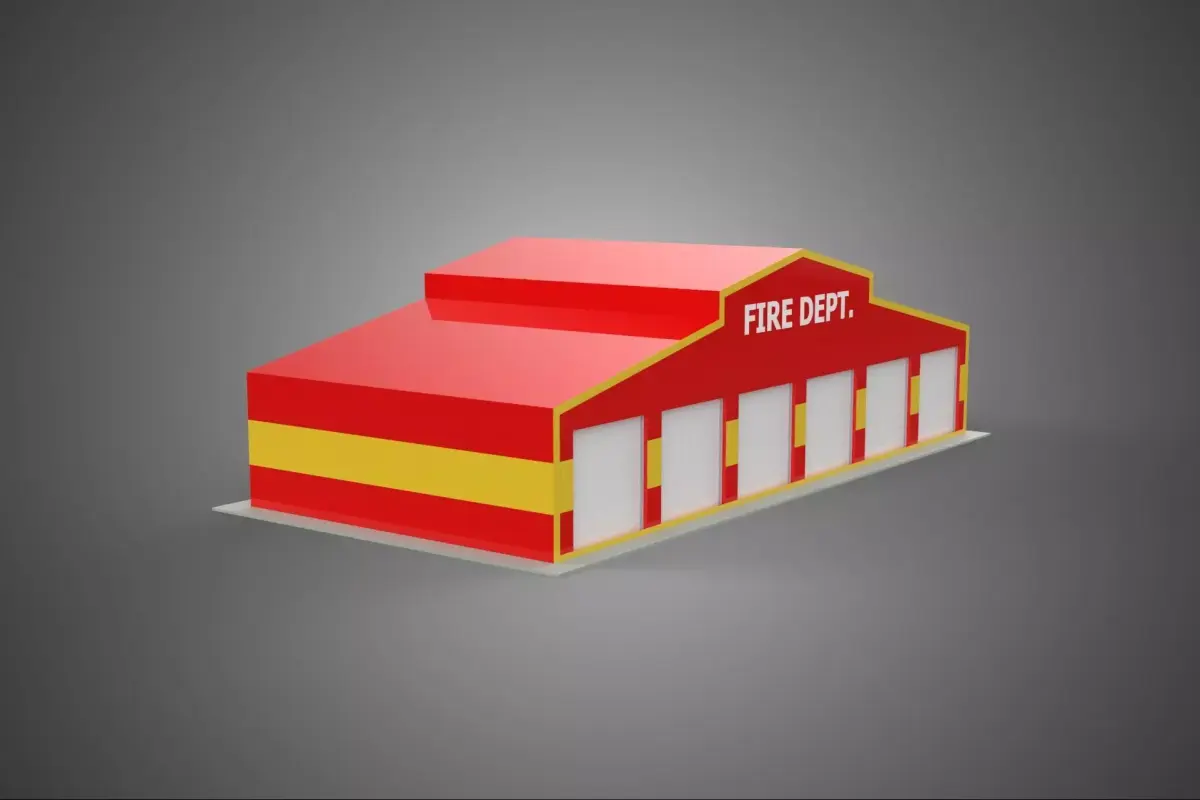
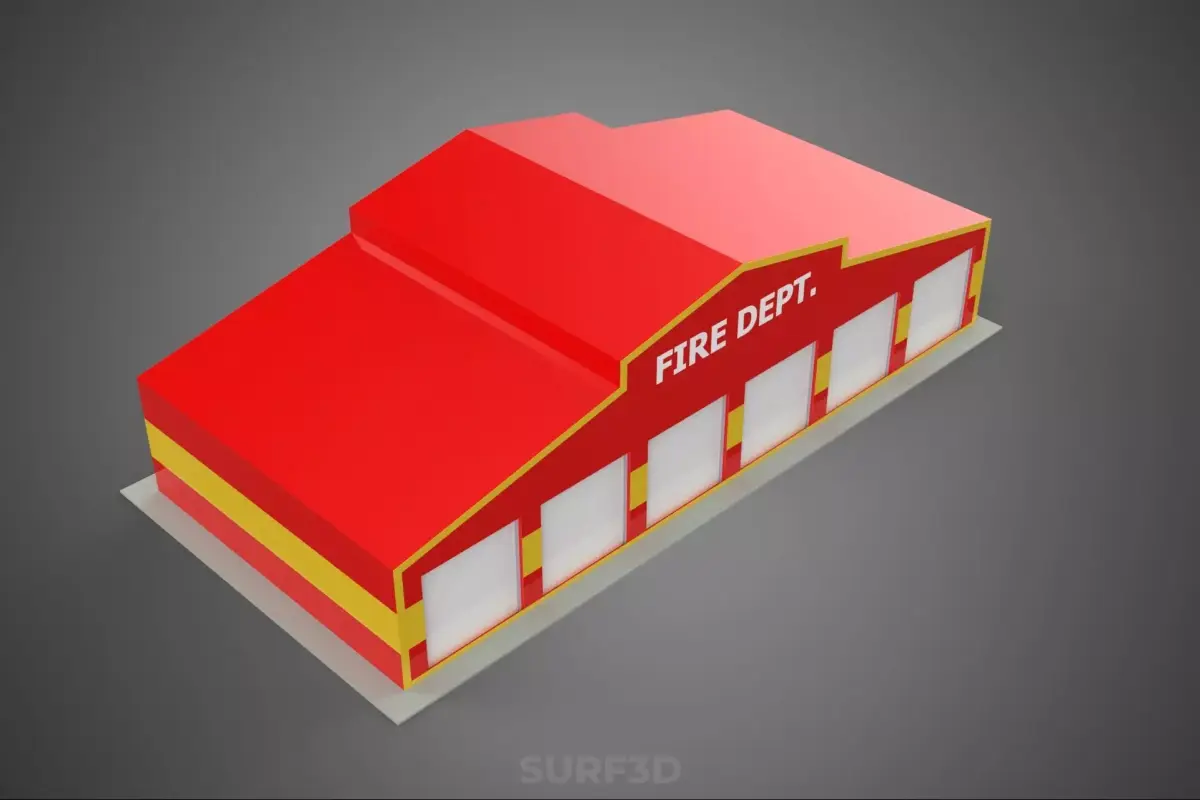
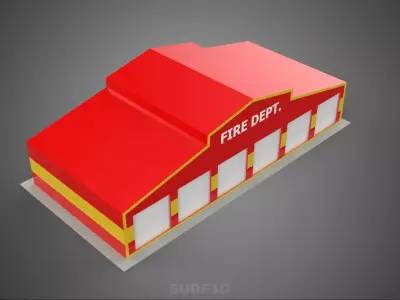
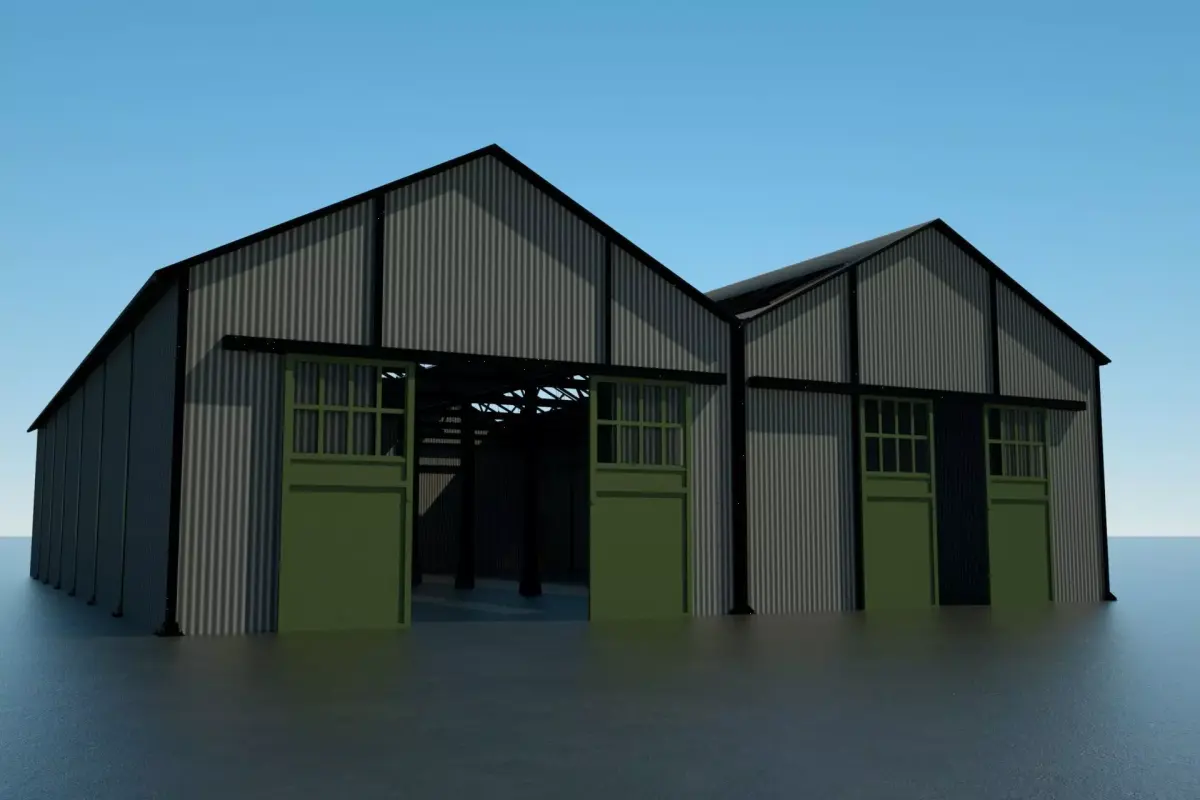
The structure referred to by the title FIRE ENGINE GARAGE STATION FIREHOUSE DOOR BAY GATE DEPARTMENT is formally known as a Fire Station Apparatus Bay, or more colloquially, a Firehouse Bay. This term encompasses the architectural and functional components related to the storage, rapid deployment, and maintenance of emergency response vehicles, primarily fire apparatus (fire engines, ladder trucks, rescue vehicles, etc.).
Architecture and Nomenclature
A Fire Station is generally divided into living/administrative quarters (the residential/office space for firefighters) and the Apparatus Bay. The Apparatus Bay is the primary functional space, characterized by its large, open interior and the distinctive oversized access points.
Apparatus Bay (Garage Station): This area functions as a specialized garage designed to house vehicles ranging from Type I pumpers to large aerial platforms. Key requirements include high ceilings, durable flooring capable of supporting significant vehicle weight (often reinforced concrete), specialized drainage systems for vehicle washing and fluid management, and direct access to utility connections (compressed air, shore power, battery chargers). Modern bays often incorporate positive pressure ventilation systems to manage diesel exhaust fumes.
The Bay Door/Gate: This component is the critical interface between the stored apparatus and the public thoroughfare, ensuring rapid exit upon alarm activation.
- Nomenclature: While often referred to simply as the firehouse door or bay gate, the correct architectural term is the Apparatus Bay Door.
- Functionality: These doors must offer reliability, durability, and, critically, speed of operation. They are typically much larger than standard commercial garage doors, accommodating vehicles often exceeding 12 feet (3.7 meters) in height and 10 feet (3 meters) in width.
- Types:
- Overhead Sectional Doors: The most common modern type, these doors roll up vertically on tracks. They are motorized and often integrated into the station’s automated alerting system (CAD/Paging), initiating opening procedures immediately upon alarm dispatch.
- Four-Fold Doors (Bifold or Stack Doors): Historically popular, and seeing a resurgence due to their rapid opening speed. These doors consist of two panels on each side that fold outwards or inwards, achieving a full opening clearance in under five seconds, significantly faster than typical sectional doors.
- Sliding Doors: Less common in modern high-traffic stations, but found in older or smaller facilities.
Departmental Integration: The Apparatus Bay and its access points are central to the operational readiness of the Fire Department (or Fire Rescue Department). The design of the bay layout—including drive-through capabilities (front entry and rear exit) or angled parking—is dictated by departmental standard operating procedures and the urban or rural environment in which the station operates. Safety features, such as audible alerts and flashing lights activated when the doors open or close, are mandatory to protect pedestrians and civilian traffic.
### Historical Context
Early firehouses utilized wooden carriage house doors, often manually operated, suitable for horse-drawn steam pumpers. The transition to motorized apparatus in the early 20th century necessitated larger, more robust openings. The modern standardization of the apparatus bay door began post-World War II, driven by increased vehicle size and the need for quicker deployment times, leading to the adoption of fast-acting motorized systems.
The entire structure—the apparatus bay and its specialized door—is paramount to the timely execution of emergency response protocols, defining the building’s function as a critical piece of municipal infrastructure.
KEYWORDS: Fire Station, Apparatus Bay, Firehouse Door, Emergency Response, Fire Apparatus, Garage Station, Deployment, Municipal Infrastructure, Overhead Door, Sectional Door, Four-Fold Door, Fire Engine, Fire Department, Bay Gate, Vehicle Storage, Rescue Vehicle, Architectural Design, Rapid Exit, Operational Readiness, Motorized Door, Utility Connections, Drive-Through Bay, Safety Features, Vehicle Maintenance, Structural Concrete, Historical Firehouse, Pumper Truck, Fire Services, Dispatch System, Building Access.