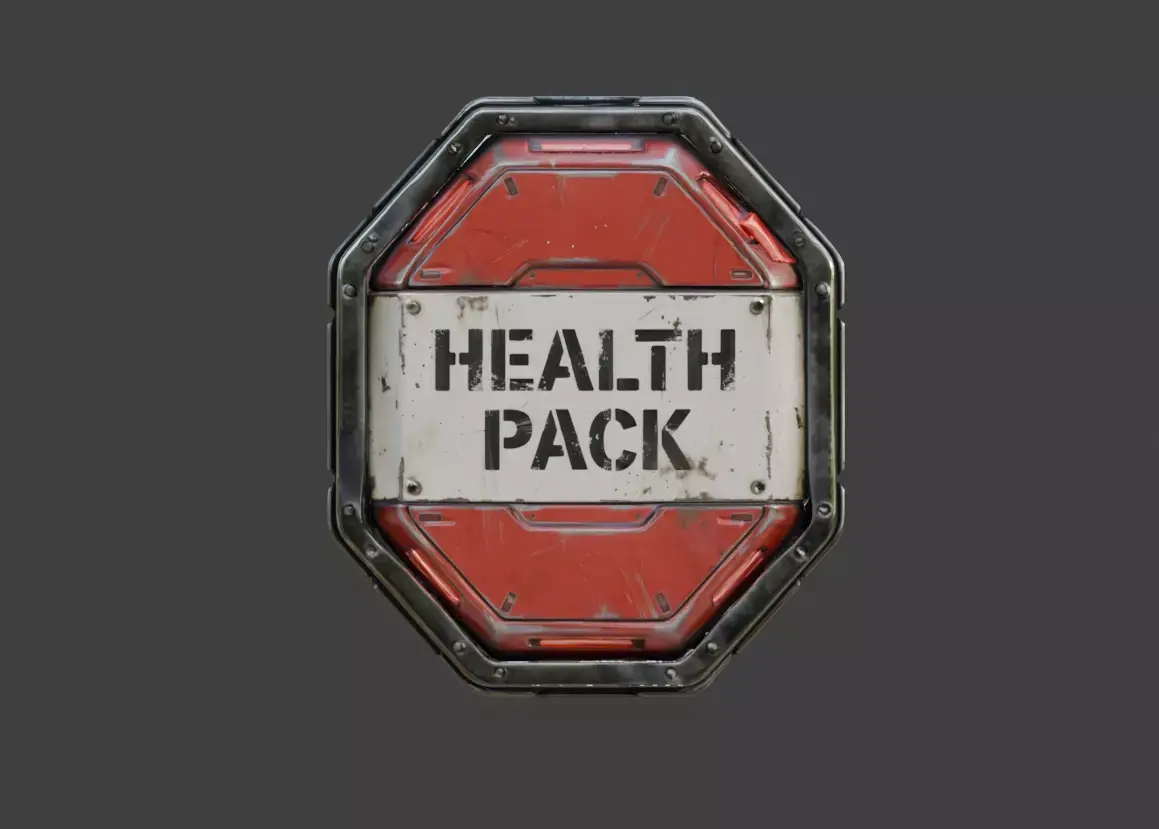
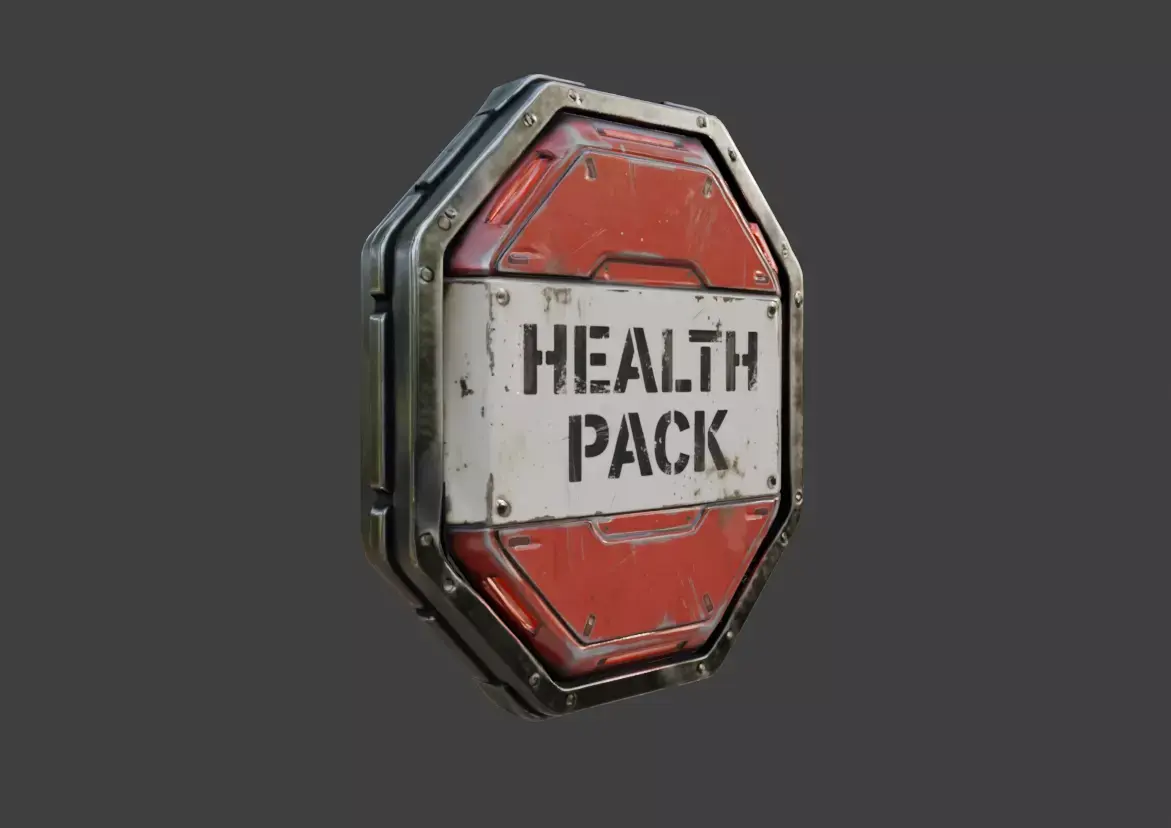
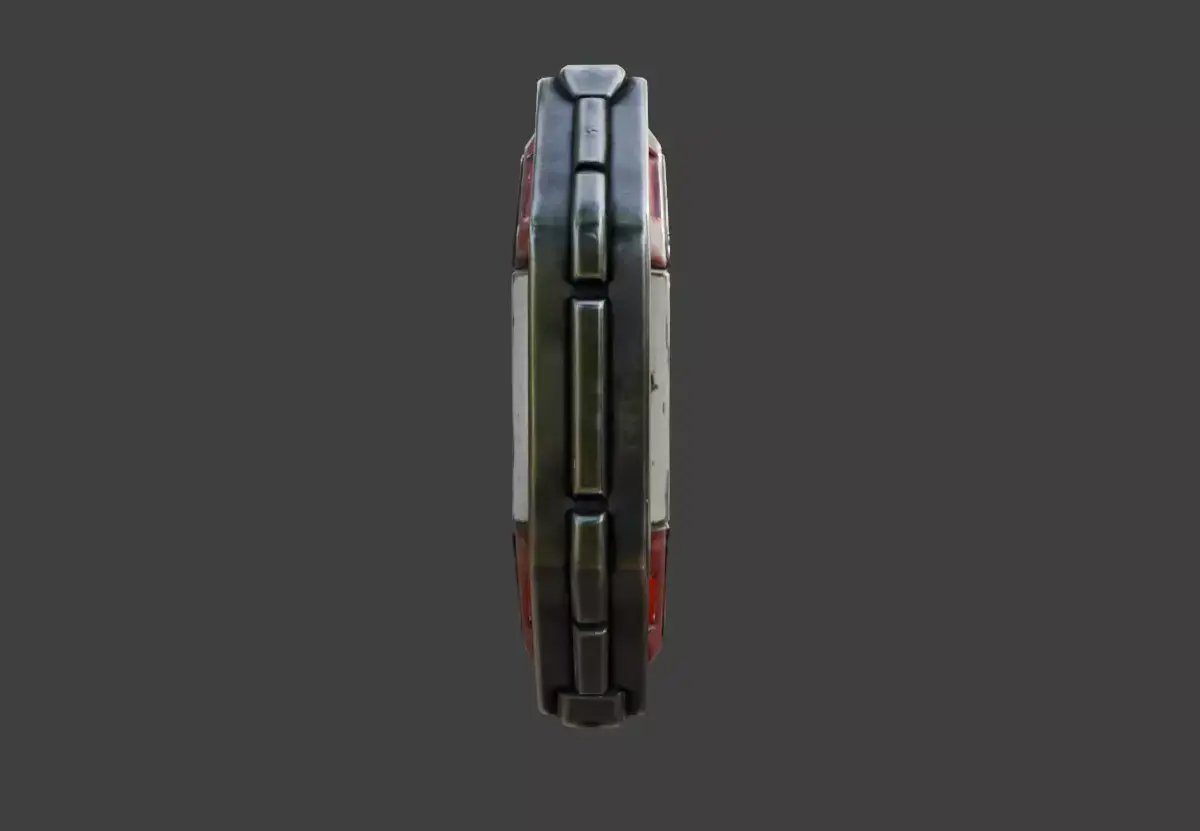
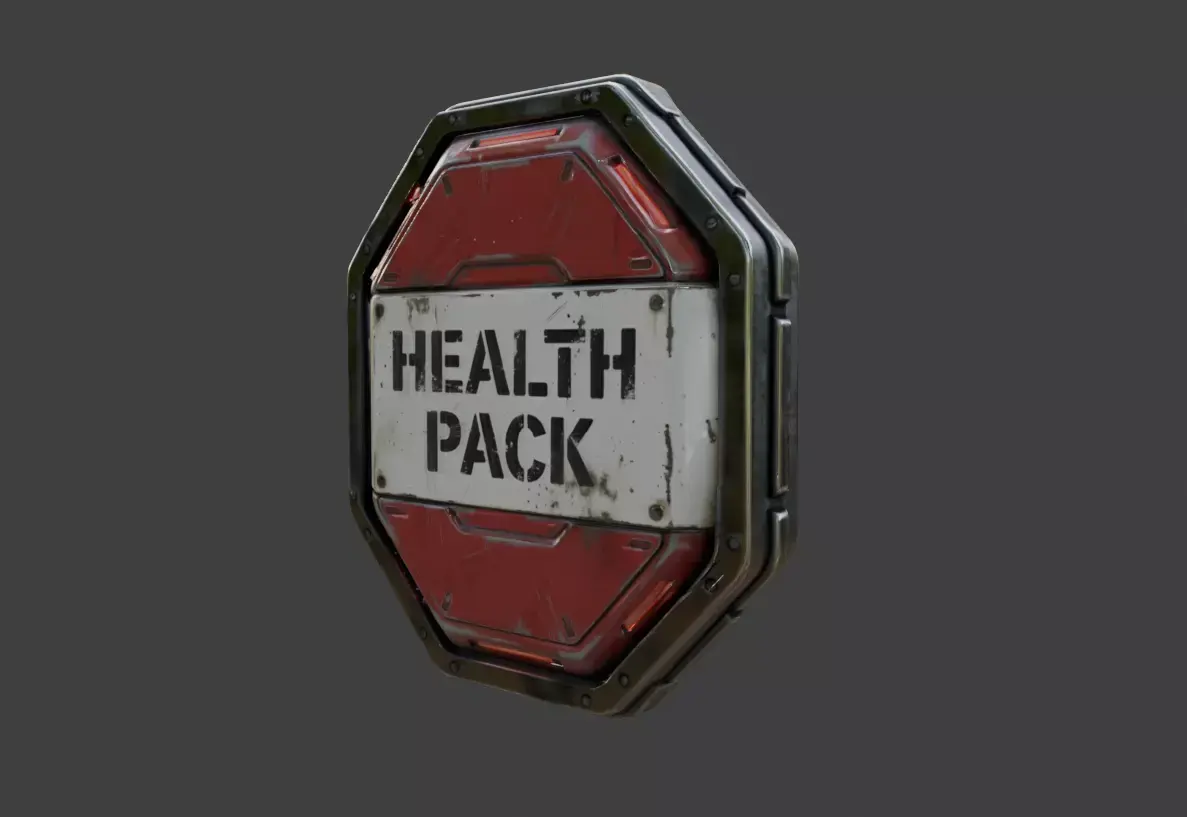
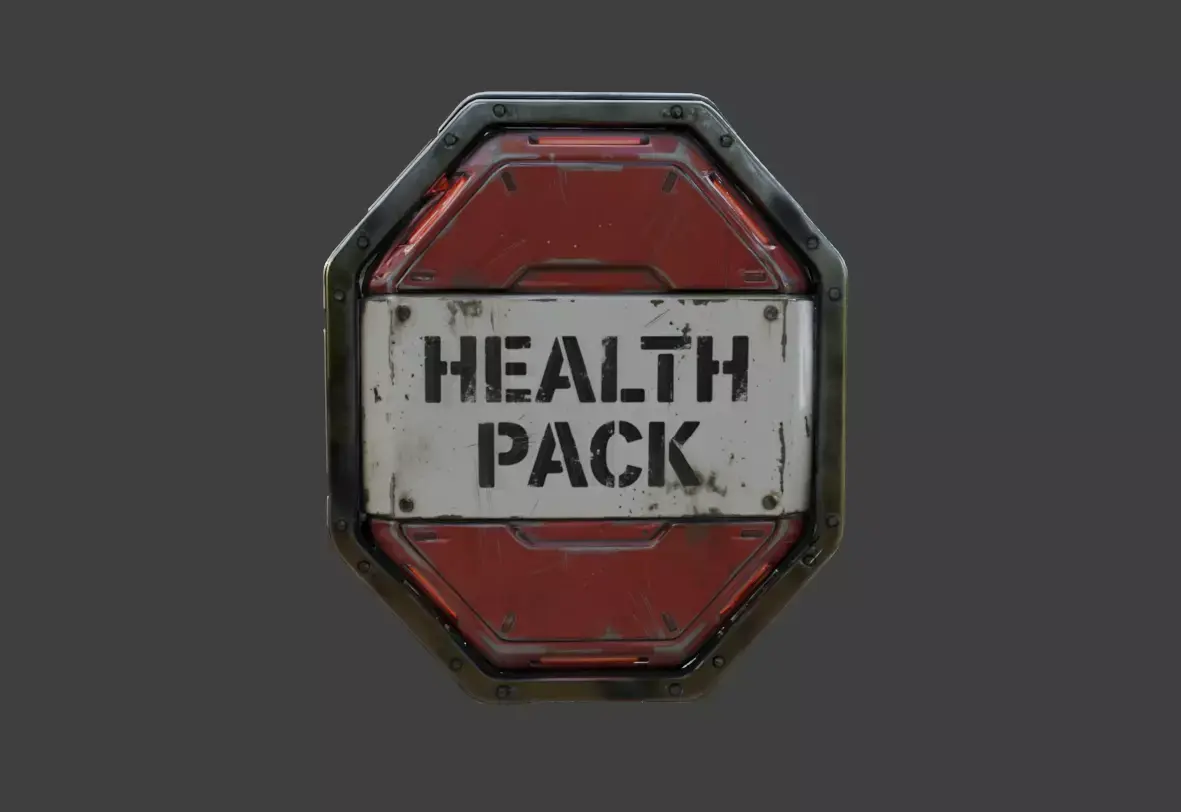
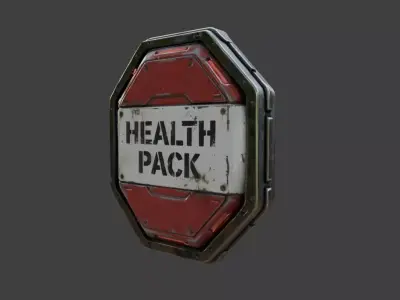
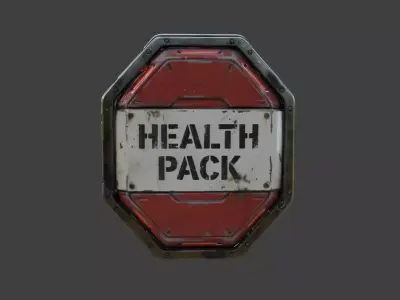
Health Pack is a universally recognizable gameplay and environmental asset designed to represent recovery, survival, and second chances. Instantly associated with healing and restoration, this object plays a critical role in game mechanics while also serving as a strong visual symbol of hope during moments of danger or exhaustion. Its clear purpose and iconic presence make it an essential asset for a wide variety of interactive and cinematic projects.
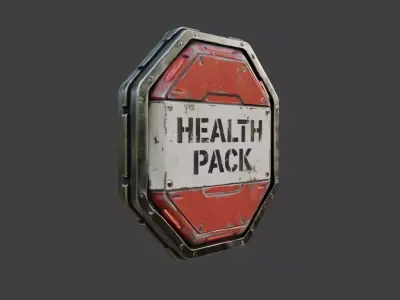
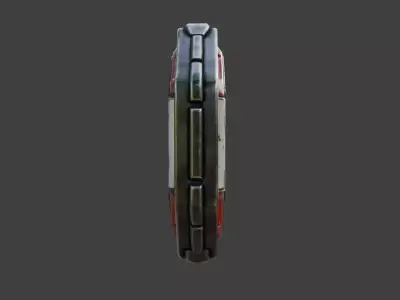
The design of the Health Pack emphasizes clarity and accessibility. Clean, bold forms ensure it is easily identifiable at a glance, even in fast-paced or low-visibility scenarios. Surface details suggest durability and practicality, indicating that the pack is built to withstand harsh conditions and repeated use. Whether designed with a modern medical aesthetic or a more stylized interpretation, it communicates function, safety, and reliability.
As an environmental storytelling element, the Health Pack conveys urgency and relief. Its placement within a scene can signal recent conflict, ongoing danger, or strategic preparation. In survival and action games, it becomes a lifeline during intense encounters. In narrative-driven environments, it can imply humanitarian presence, emergency response, or remnants of past activity. Its existence alone can shape player behavior and emotional response.
This asset is ideal for FPS games, RPGs, survival games, sci-fi and military settings, arcade-style projects, mobile games, and cinematic sequences. It integrates seamlessly into modern, futuristic, post-apocalyptic, and stylized worlds. The Health Pack works effectively as a pickup item, background prop, or HUD-related visual element, making it highly versatile across different design needs.
Health Pack is more than a functional object—it is a core gameplay symbol. By incorporating this asset, creators enhance clarity, immersion, and player engagement. It reinforces intuitive mechanics while adding narrative depth, ensuring that moments of recovery feel meaningful, earned, and visually satisfying within the broader experience.
STL (Stereolithography, filesize: 569 KB), OBJ (OBJ, filesize: 2.77 MB), 3MF (3D Manufacturing File, filesize: 115 KB), FBX (Autodesk FBX, filesize: 12.2 MB), PNG (PNG, filesize: 14.6 MB), TEXTURES (Textures, filesize: 12.6 MB), BLEND (Blender, filesize: 8.55 MB), GLTF (glTF, filesize: 7.64 MB), USDZ (USDZ, filesize: 7.93 MB), JPG (JPG, filesize: 858 KB)