High-quality 3D assets at affordable prices — trusted by designers, engineers, and creators worldwide. Made with care to be versatile, accessible, and ready for your pipeline.
Included File Formats
This model is provided in 14 widely supported formats, ensuring maximum compatibility:
• - FBX (.fbx) – Standard format for most 3D software and pipelines
• - OBJ + MTL (.obj, .mtl) – Wavefront format, widely used and compatible
• - STL (.stl) – Exported mesh geometry; may be suitable for 3D printing with adjustments
• - STEP (.step, .stp) – CAD format using NURBS surfaces
• - IGES (.iges, .igs) – Common format for CAD/CAM and engineering workflows (NURBS)
• - SAT (.sat) – ACIS solid model format (NURBS)
• - DAE (.dae) – Collada format for 3D applications and animations
• - glTF (.glb) – Modern, lightweight format for web, AR, and real-time engines
• - 3DS (.3ds) – Legacy format with broad software support
• - 3ds Max (.max) – Provided for 3ds Max users
• - Blender (.blend) – Provided for Blender users
• - SketchUp (.skp) – Compatible with all SketchUp versions
• - AutoCAD (.dwg) – Suitable for technical and architectural workflows
• - Rhino (.3dm) – Provided for Rhino users
Model Info
• - All files are checked and tested for integrity and correct content
• - Geometry uses real-world scale; model resolution varies depending on the product (high or low poly)
• • - Scene setup and mesh structure may vary depending on model complexity
• - Rendered using Luxion KeyShot
• - Affordable price with professional detailing
Buy with confidence. Quality and compatibility guaranteed.
If you have any questions about the file formats, feel free to send us a message — we're happy to assist you!
Sincerely,
SURF3D
Trusted source for professional and affordable 3D models.
More Information About 3D Model :
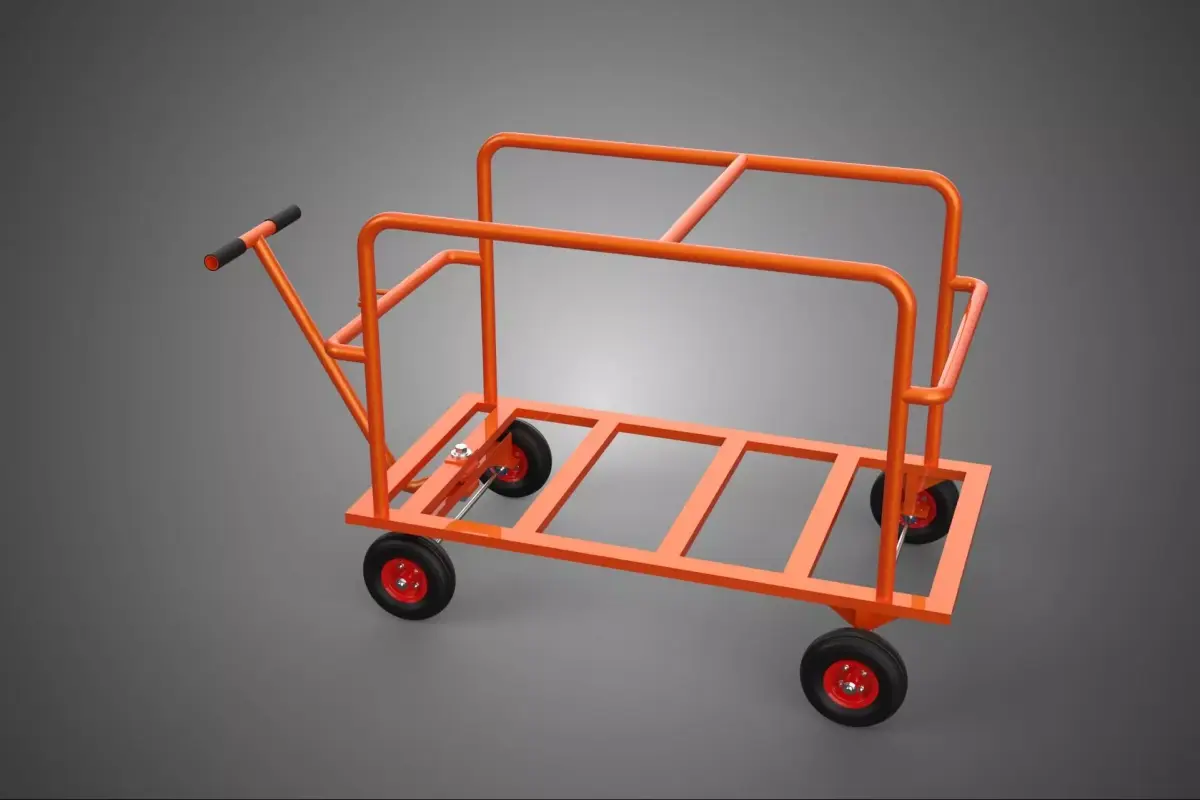
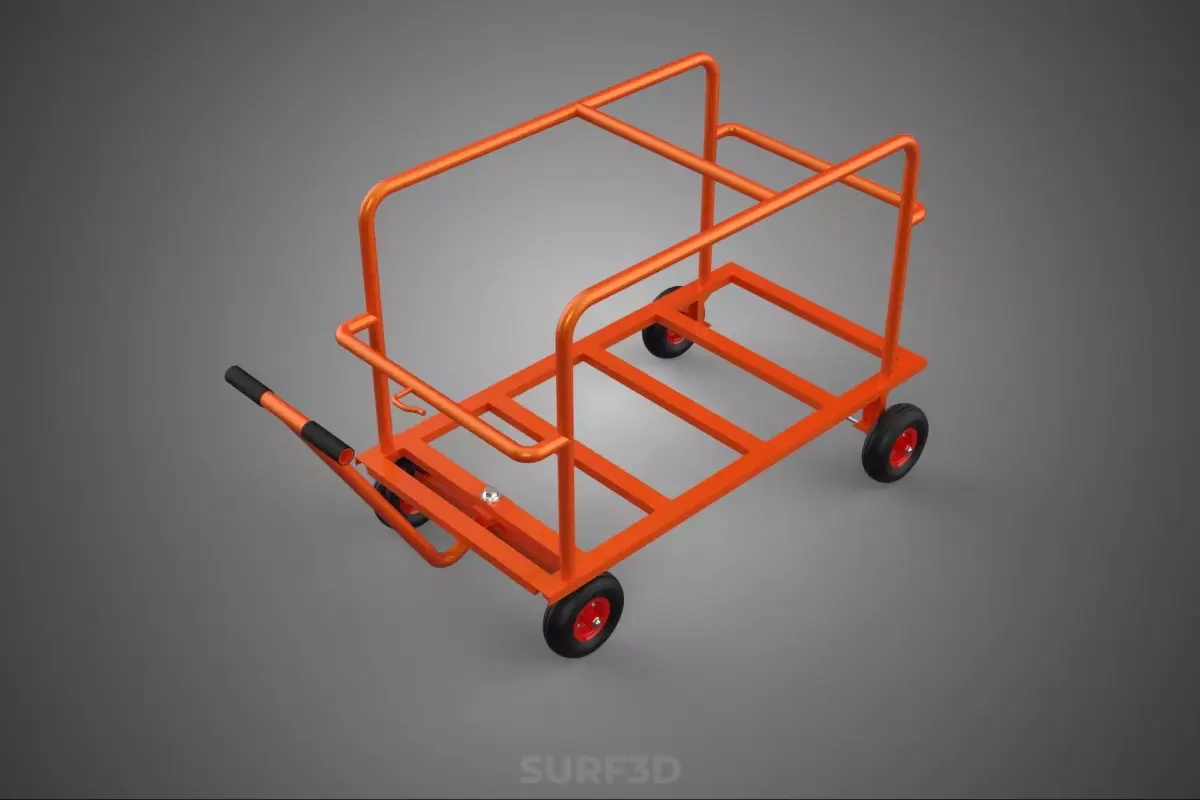
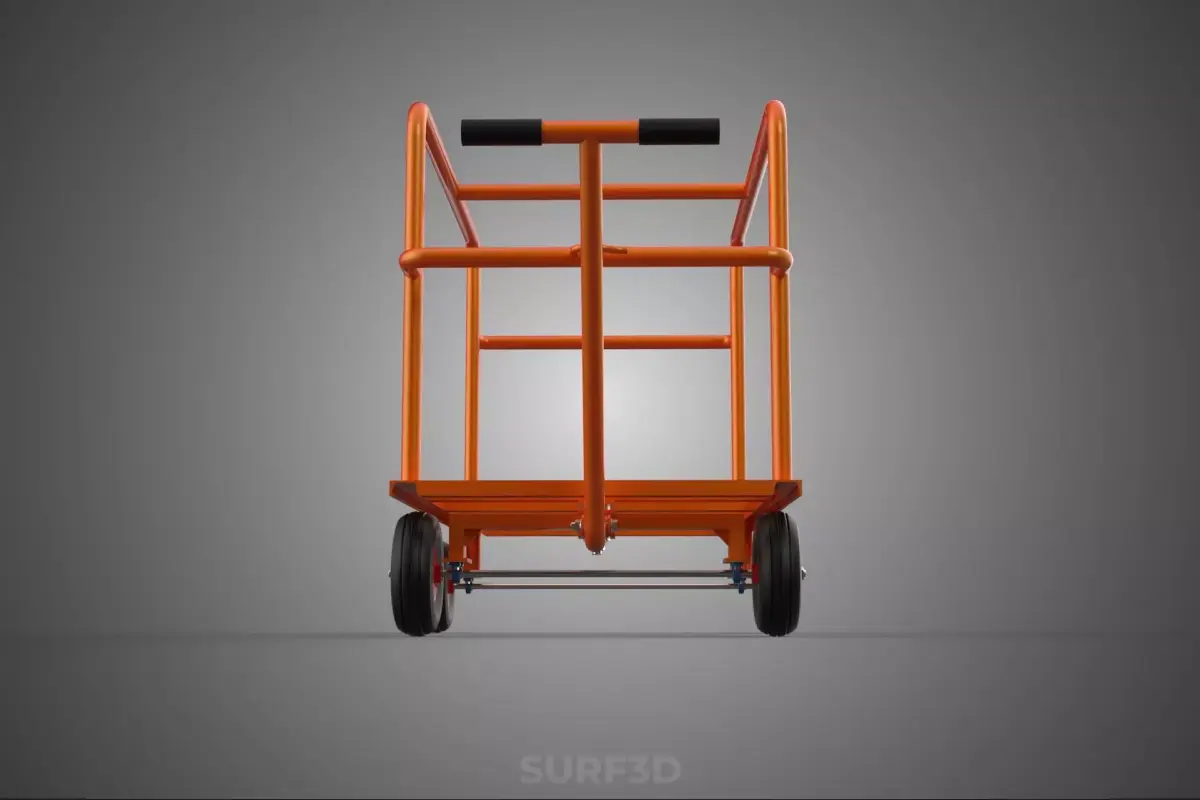
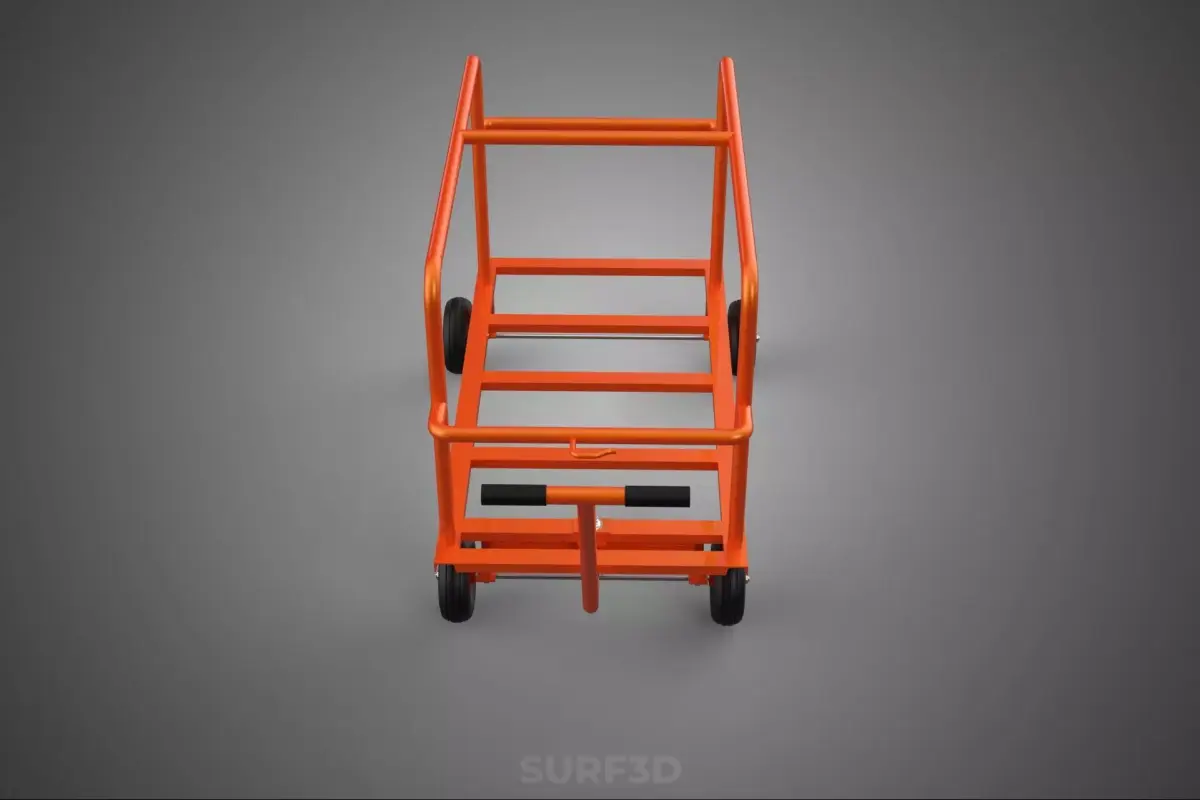
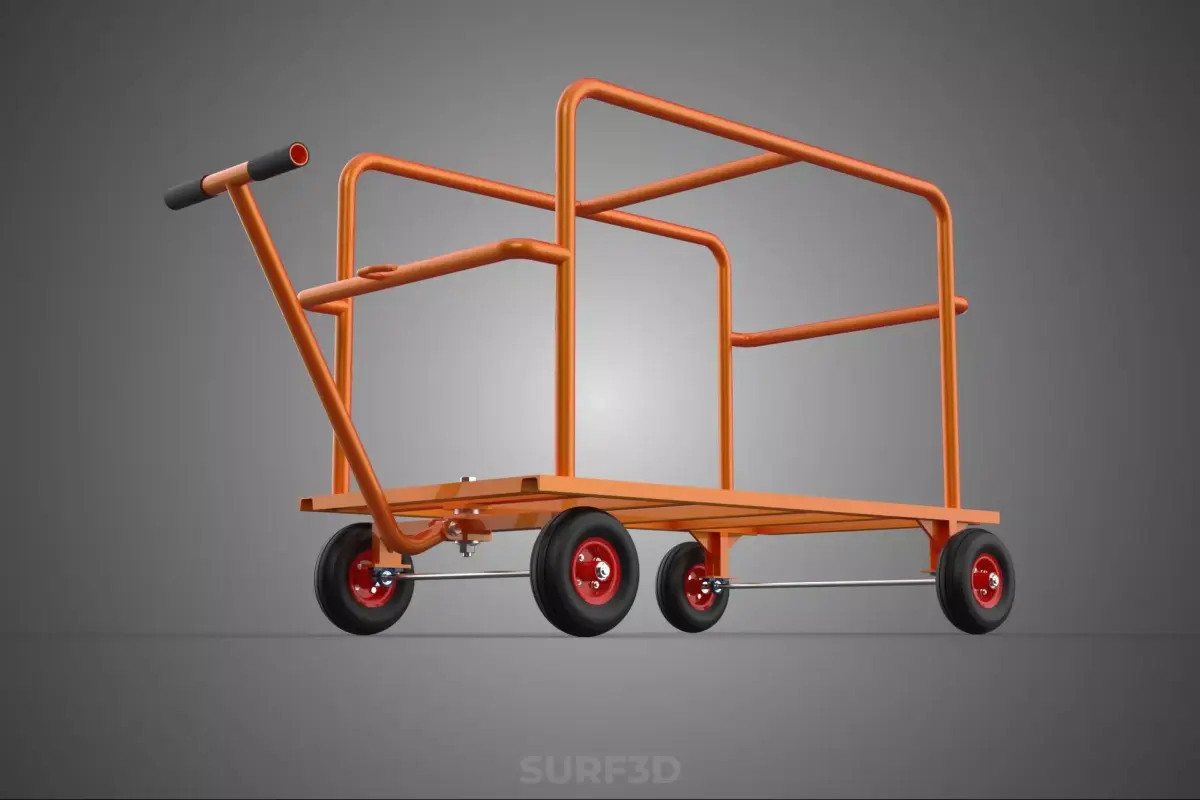
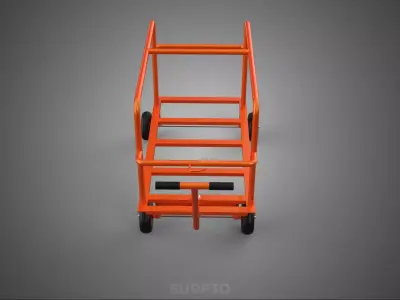
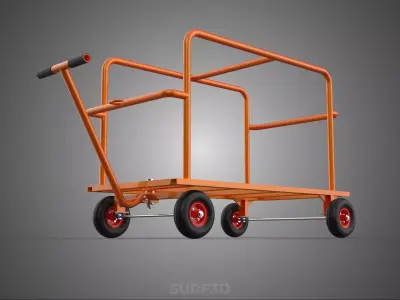
HEAVY DUTY INDUSTRIAL MATERIAL HANDLING PLATFORMS: CARTS, DOLLIES, TROLLEYS, TRAILERS, AND PALLET PLATFORMS
Heavy Duty Industrial Carts, Dollies, Trolleys, Trailers, and Pallet Platforms constitute a family of essential, non-powered or passively mechanized wheeled equipment engineered for the efficient internal transport and temporary staging of substantial payloads within rigorous industrial environments. These devices are foundational components of intralogistics systems, utilized extensively in manufacturing, warehousing, distribution centers, aerospace, and heavy engineering facilities.
I. Definition and Nomenclature Differentiation
The collective terminology refers to material handling apparatuses characterized by robust construction, elevated load capacity, and reliance on manual propulsion or mechanical towing (tuggers, tow motors, Automated Guided Vehicles (AGVs), or Autonomous Mobile Robots (AMRs)). The specific designation of the unit often reflects its primary function, configuration, and method of movement:
- Dolly: A low-profile, often minimalist platform, typically featuring four swivel casters or fixed wheels, designed for moving exceptionally heavy or bulky items over short distances, particularly when low ground clearance is required for stability.
- Cart/Trolley: Generally characterized by the incorporation of handles, rails, or containment structures, facilitating manual pushing or steering. Trolleys often feature multiple tiers or specialized shelving for component organization (e.g., assembly carts or order picking trolleys).
- Trailer/Tow Cart: Designed explicitly with hitches or coupling mechanisms (such as pintle hooks, E-frame, or A-frame attachments) to be linked in a convoy or train configuration for mechanical towing over medium to long distances within a facility. These units are critical to the Tugger Train System (TTS) methodology.
- Pallet Platform: A specialized, often flat-decked variant designed specifically to interface with and transport standard industrial pallets (e.g., EUR-pallets, GMA-pallets), lifting fixtures, or customized load carriers.
### II. Design and Heavy-Duty Construction
The designation Heavy Duty necessitates adherence to rigorous engineering standards, focusing on durability, fatigue resistance, and high static/dynamic load ratings, typically starting at 1,000 kg (2,200 lbs) and often exceeding 5,000 kg (11,000 lbs).
A. Materials:
The frame and chassis are predominantly constructed from structural steel (e.g., high-tensile carbon steel, often tube or channel sections) fabricated via welding or robust bolting. Decking materials vary based on application: reinforced steel plate for maximum load resilience, structural foam or high-density polymers for corrosive environments, or hardwood planking where noise reduction is critical.
B. Running Gear (Casters and Wheels):
The selection of casters is paramount to heavy-duty performance. Standard industrial wheels are replaced by ruggedized versions capable of sustaining high radial and thrust loads. Common materials include:
- Polyurethane (PU) on Steel: Offers high load capacity coupled with floor protection and shock absorption.
- Phenolic: Suitable for extremely heavy, non-marking applications.
- Cast Iron or Forged Steel: Utilized for maximum load capacity and resistance to rough surfaces, though they can damage concrete floors if not coupled with specialized suspension.
Caster arrangements often employ configurations like diamond (four fixed wheels), swivel (four independent swivels), or specialized six-wheel configurations to optimize maneuverability versus tracking stability during towing. Precision sealed bearings (e.g., tapered roller bearings) are standard to minimize rolling resistance under heavy loads.
### III. Operational Environments and Specialized Applications
Heavy duty platforms are designed to handle irregular loads, harsh operational conditions (e.g., temperature extremes, corrosive chemicals, abrasive debris), and continuous, multi-shift usage.
A. Manufacturing and Assembly: Used for kitting, line-side replenishment (Kanban systems), and transporting sub-assemblies through sequential workstations (flow racks).
B. Warehousing and Distribution: Facilitate the movement of bulk material, returns processing, and consolidation of specialized freight that exceeds standard pallet limits.
C. Specialized Trailer Systems: Modern industrial practice increasingly integrates these platforms with automation. Towable trailers are frequently configured for automated loading/unloading sequences via rollers, lifting platforms, or integration with AGV/AMR fleets, supporting lean manufacturing principles and reducing reliance on traditional forklifts for horizontal transport.
D. Key Technical Features:
Features essential to heavy duty operation include dead-man braking systems, floor locks, directional locks on casters for stable positioning, integrated stake pockets for modular containment, and robust powder-coat finishes for chemical and abrasion resistance. Compliance with industrial safety standards (e.g., ANSI B56.1 and local ergonomic guidelines) dictates minimum structural integrity and operational safety features.
KEYWORDS: Industrial transport, Material handling equipment, Heavy duty, Industrial cart, Warehouse dolly, Assembly trolley, Towable trailer, Pallet platform, Intralogistics, Tugger train, AGV interface, Load capacity, Structural steel, Caster wheel, Phenolic wheel, Polyurethane, Welded chassis, Flatbed platform, Manufacturing logistics, Line-side delivery, Kitting cart, Non-powered transport, Internal conveyance, Distribution center, Factory automation, Manual push, Load stabilization, Cargo platform, High-tensile steel, Running gear.
STL (Stereolithography, filesize: 25.8 MB), OBJ (OBJ, filesize: 53 MB), DAE (Collada, filesize: 82.8 MB), MAX (Autodesk 3ds Max, filesize: 68.1 MB), FBX (Autodesk FBX, filesize: 15 MB), 3DS (3D Studio, filesize: 14.1 MB), 3DM (Rhinoceros 3D, filesize: 13.5 MB), BLEND (Blender, filesize: 46.5 MB), SAT (3D ACIS, filesize: 14.1 MB), GLTF (glTF, filesize: 13.4 MB), STP (STEP, filesize: 4.1 MB), SKP (Sketchup, filesize: 10.2 MB), DWG (AutoCAD, filesize: 3.21 MB), IGE (IGES, filesize: 8.22 MB)