High-quality 3D assets at affordable prices — trusted by designers, engineers, and creators worldwide. Made with care to be versatile, accessible, and ready for your pipeline.
Included File Formats
This model is provided in 14 widely supported formats, ensuring maximum compatibility:
• - FBX (.fbx) – Standard format for most 3D software and pipelines
• - OBJ + MTL (.obj, .mtl) – Wavefront format, widely used and compatible
• - STL (.stl) – Exported mesh geometry; may be suitable for 3D printing with adjustments
• - STEP (.step, .stp) – CAD format using NURBS surfaces
• - IGES (.iges, .igs) – Common format for CAD/CAM and engineering workflows (NURBS)
• - SAT (.sat) – ACIS solid model format (NURBS)
• - DAE (.dae) – Collada format for 3D applications and animations
• - glTF (.glb) – Modern, lightweight format for web, AR, and real-time engines
• - 3DS (.3ds) – Legacy format with broad software support
• - 3ds Max (.max) – Provided for 3ds Max users
• - Blender (.blend) – Provided for Blender users
• - SketchUp (.skp) – Compatible with all SketchUp versions
• - AutoCAD (.dwg) – Suitable for technical and architectural workflows
• - Rhino (.3dm) – Provided for Rhino users
Model Info
• - All files are checked and tested for integrity and correct content
• - Geometry uses real-world scale; model resolution varies depending on the product (high or low poly)
• • - Scene setup and mesh structure may vary depending on model complexity
• - Rendered using Luxion KeyShot
• - Affordable price with professional detailing
Buy with confidence. Quality and compatibility guaranteed.
If you have any questions about the file formats, feel free to send us a message — we're happy to assist you!
Sincerely,
SURF3D
Trusted source for professional and affordable 3D models.
More Information About 3D Model :
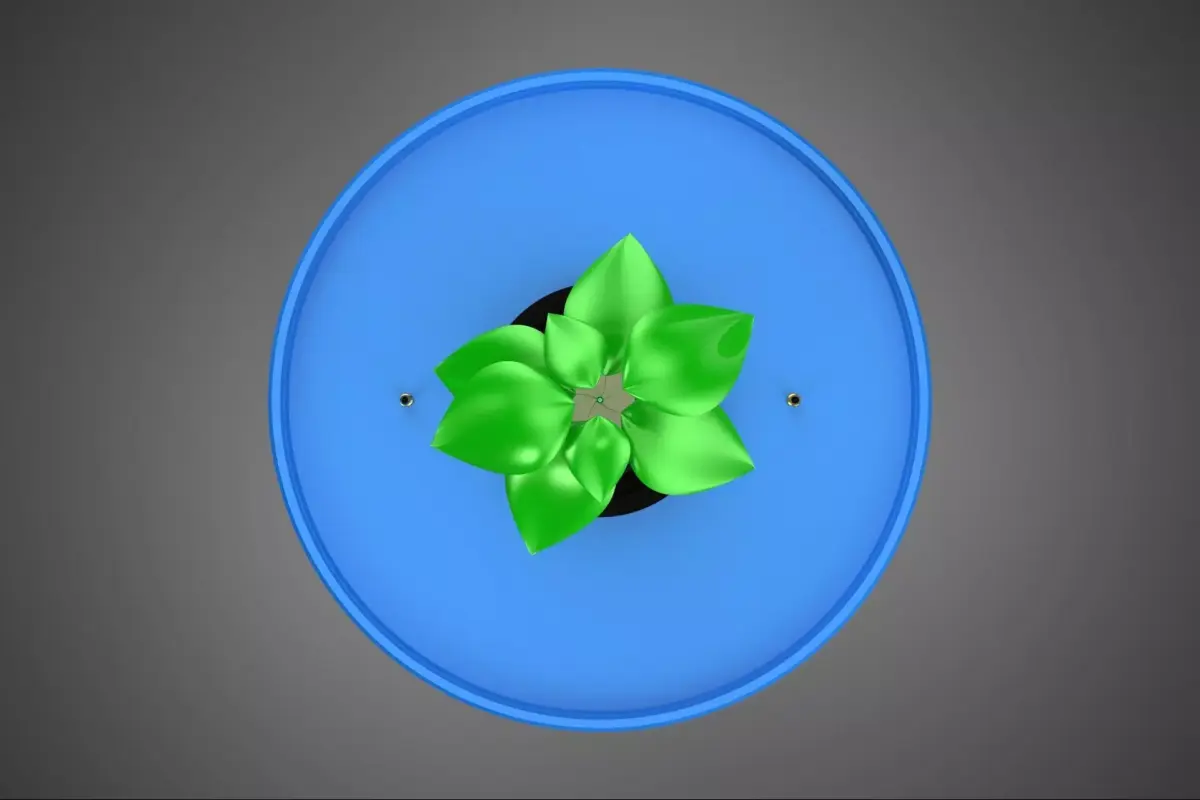
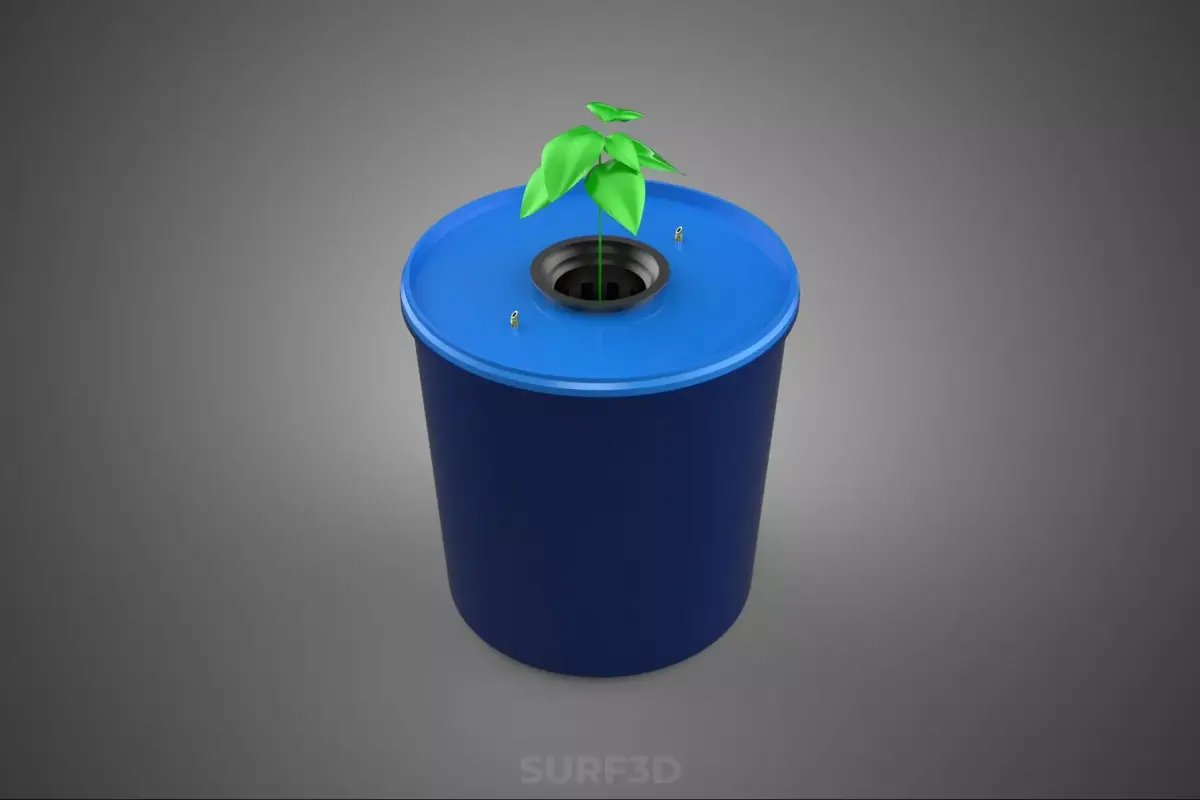
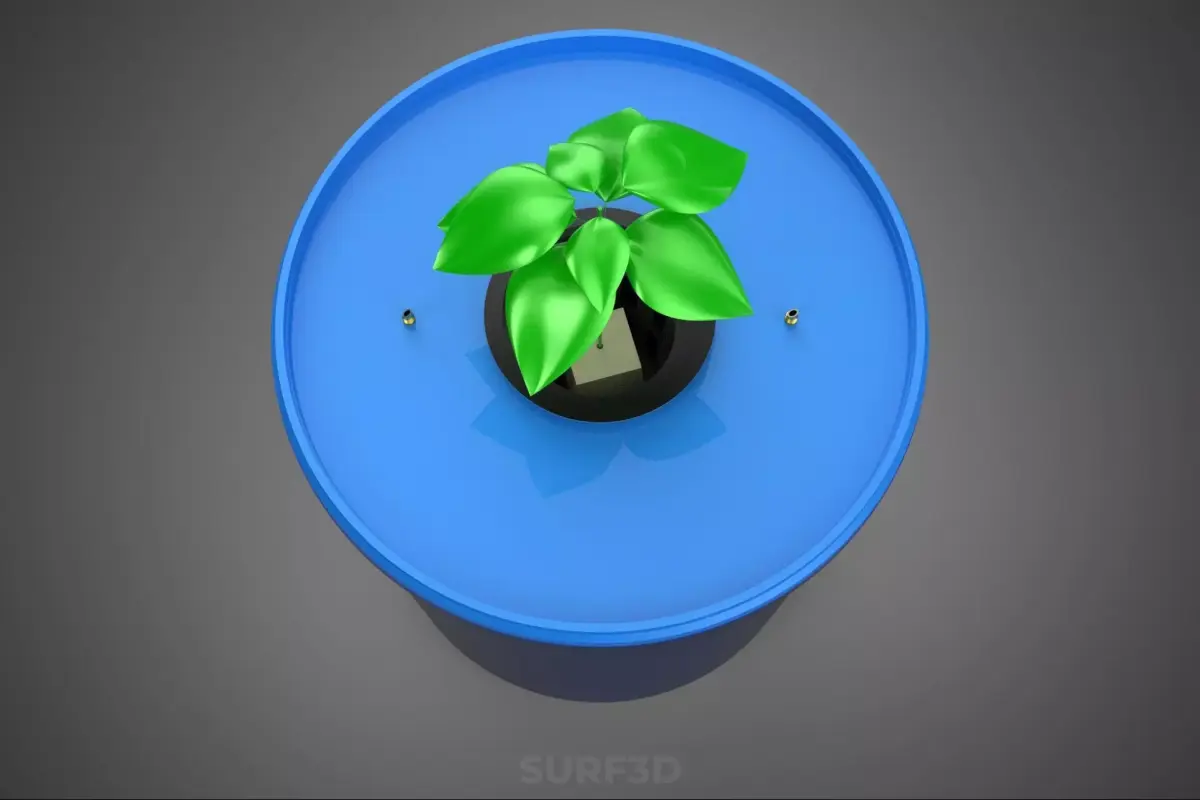
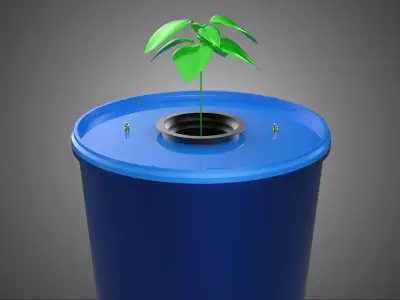
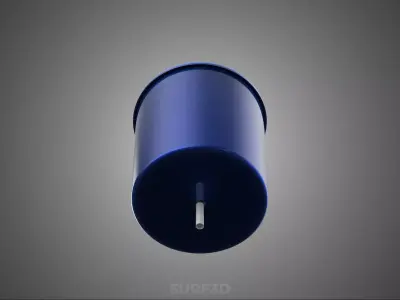
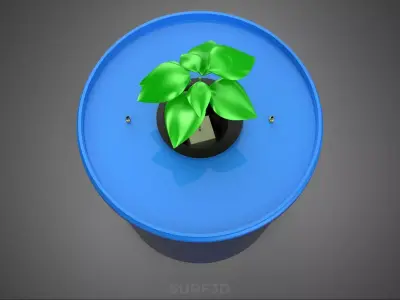
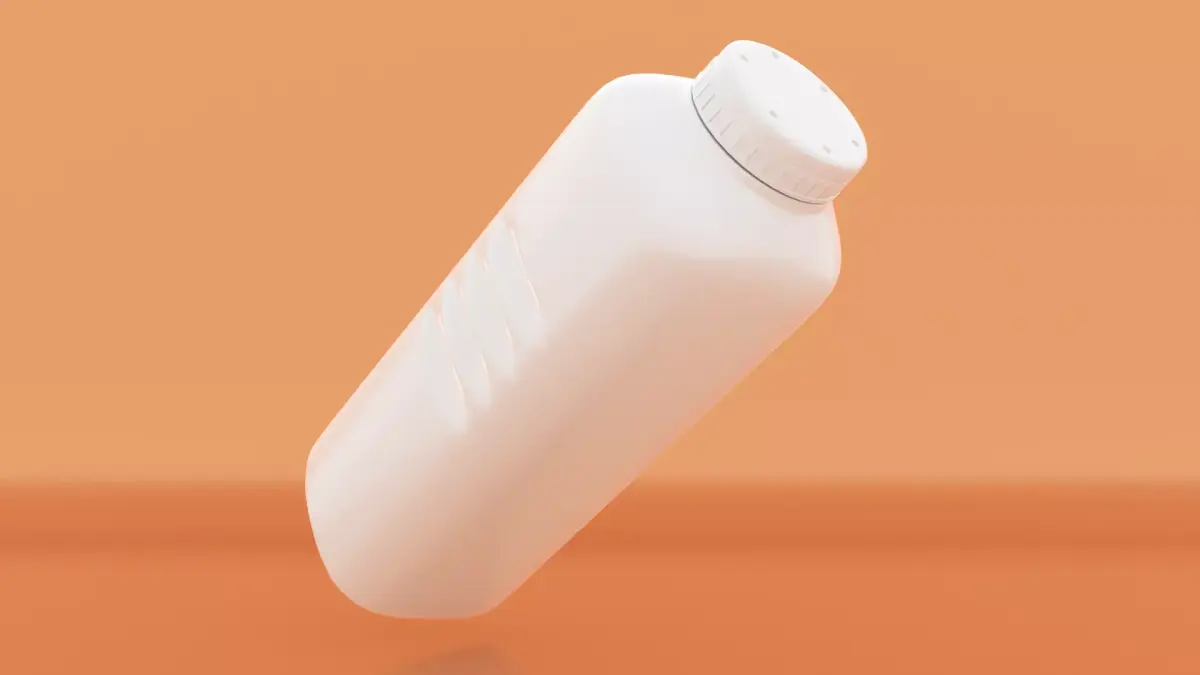
The Dutch Bucket System (DBS), frequently referred to by its generic commercial nomenclature as the Bato Bucket System, is a highly specific and efficient methodology within the discipline of soilless agriculture. It functions as a specialized, typically recirculating (or drain-to-waste) hydroponic system designed primarily for the commercial cultivation of large, vine-bearing, or long-term fruiting crops that require substantial root zone volume and structural support.
Operational Mechanism and Design
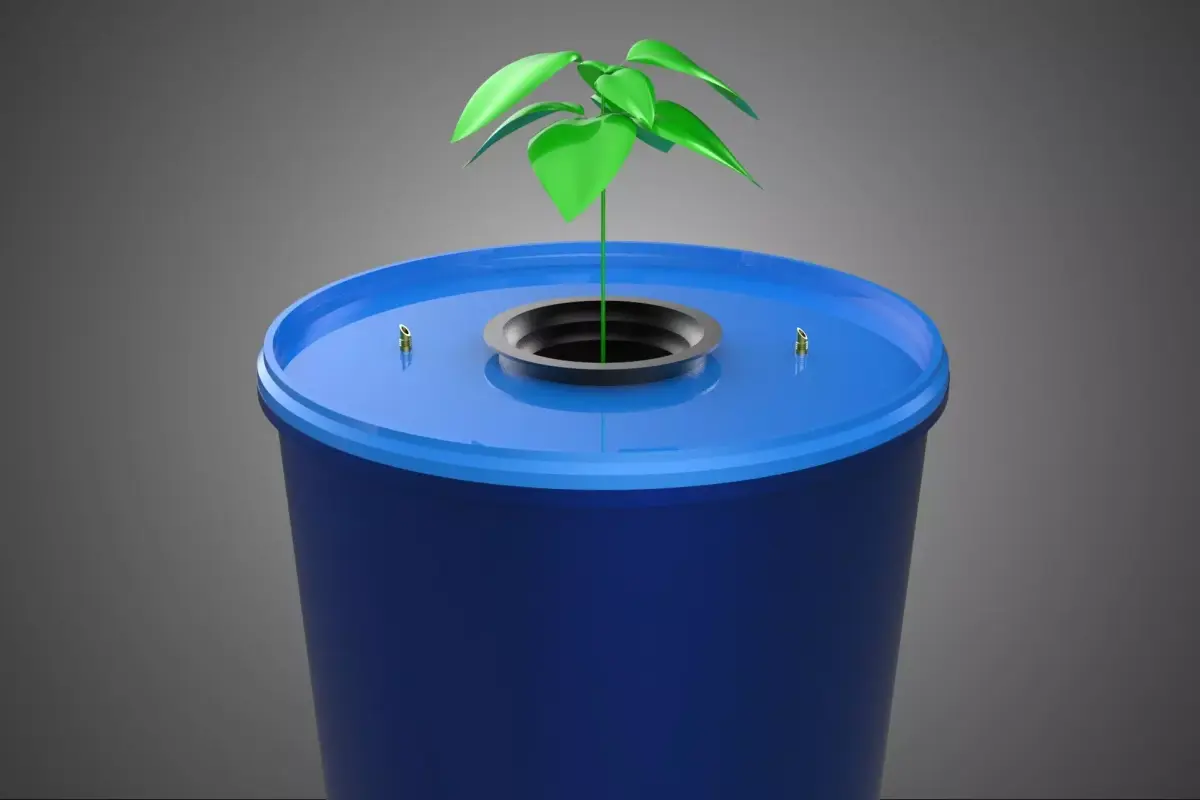
The fundamental unit of the DBS is an individual container, commonly fabricated from food-grade plastic, which serves as both the plant support and localized nutrient reservoir. Unlike continuous flow methods such as Nutrient Film Technique (NFT), the DBS employs cyclical, pulsed irrigation. Nutrient solution is delivered to the top of the grow medium via drip emitters connected to a pressurized main header line.
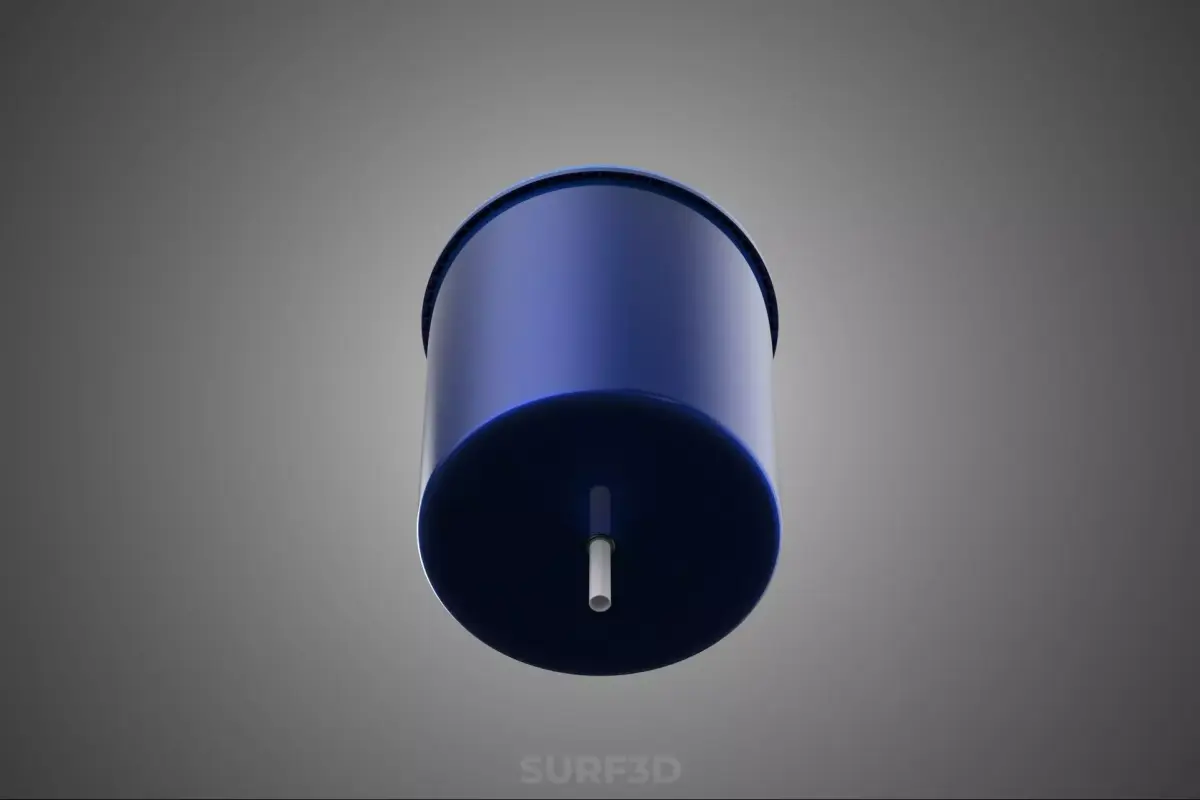
A critical design feature of the Dutch Bucket is the integrated drain elbow or siphon mechanism, positioned several centimeters above the base of the container. This intentional elevation ensures that a shallow reservoir of nutrient solution remains constantly within the bottom layer of the bucket. This retained liquid prevents total desiccation of the root mass and guarantees localized humidity and nutrient availability during periods between irrigation cycles.
Excess nutrient solution that saturates the medium drains out via the elbow, flows into a communal collection channel (e.g., PVC pipe or specialized gutter), and is either returned to the main nutrient reservoir for filtration, pH adjustment, and replenishment (recirculating system) or collected and disposed of (drain-to-waste system). The constant flushing action inherent in this design prevents the accumulation of localized salt concentrations, a common challenge in other types of static media culture.
The Role of Grow Medium and Media
The title specifies Plant Grow Medium Media, highlighting the necessity of an inert physical substrate in the DBS, differentiating it structurally from techniques like Deep Water Culture (DWC) or true aeroponics. The primary function of the grow medium is to provide stable physical anchorage for the plant, minimize root damage, and maintain sufficient moisture and oxygen levels within the root zone.
The selection criteria for appropriate media emphasize inertness (pH neutrality), excellent drainage, high cation exchange capacity (CEC), and optimal air porosity. Commonly utilized substrates include:
- Perlite: Lightweight volcanic glass, providing superior aeration and drainage.
- Coconut Coir (Coco Coir): A renewable byproduct offering high water retention and balanced aeration.
- Rockwool (Mineral Wool): Highly inert, fibrous material used for both propagation and bulk support.
- Expanded Clay Aggregate (Hydroton): Spherical, porous clay pebbles known for superior reusability and drainage.
### Contextualizing Hydroponics and Aeroponics
The DBS is firmly categorized as a hydroponic technique. Hydroponics encompasses all methods of cultivating plants in mineral nutrient solutions without the use of terrestrial soil.
The inclusion of the term Aeroponic in the system description relates to the broader conceptual family of advanced soilless culture but does not accurately describe the DBS mechanism. True aeroponics involves suspending the plant roots entirely in an air environment, with nutrient delivery achieved through atomized misting or fogging nozzles operating at high pressure. This technique maximizes root oxygenation but requires no solid media. Conversely, the Dutch Bucket System relies fundamentally on the physical support and moderate moisture buffering provided by the inert grow media.
### Applications and Advantages
The Dutch Bucket System is particularly advantageous for crops requiring extensive growth periods and high nutrient management precision. Primary crops suitable for DBS include:
- Tomatoes (especially vining varieties)
- Cucumbers
- Bell Peppers and Chili Peppers
- Eggplants
- Melons
Advantages of the DBS include highly controlled nutrient delivery, significant water use efficiency compared to traditional agriculture, ease of scaling commercial operations, and the capability to isolate individual plants for disease control without compromising the entire growing infrastructure.
KEYWORDS: Hydroponics, Bato Bucket, Dutch Bucket, Soilless Culture, Recirculating Hydroponics, Perlite, Coco Coir, Rockwool, Expanded Clay Aggregate, Nutrient Solution, Drip Irrigation, Grow Medium, Media, Commercial Agriculture, Tomatoes, Peppers, Cucumbers, Vine Crops, Controlled Environment Agriculture, Drain-to-Waste, Aeroponics, Root Zone Management, Inert Substrate, Nutrient Delivery System, Water Efficiency, pH Control, Greenhouse Operations, Siphon Drain, Crop Yield.
STL (Stereolithography, filesize: 2.39 MB), OBJ (OBJ, filesize: 4.73 MB), FBX (Autodesk FBX, filesize: 1.68 MB), DAE (Collada, filesize: 7.96 MB), 3DM (Rhinoceros 3D, filesize: 9.11 MB), DWG (AutoCAD, filesize: 2.06 MB), IGE (IGES, filesize: 7.48 MB), 3DS (3D Studio, filesize: 1.46 MB), BLEND (Blender, filesize: 4.96 MB), GLTF (glTF, filesize: 1.55 MB), MAX (Autodesk 3ds Max, filesize: 10.5 MB), STP (STEP, filesize: 3.76 MB), SKP (Sketchup, filesize: 9.94 MB), SAT (3D ACIS, filesize: 5.01 MB)