High-quality 3D assets at affordable prices — trusted by designers, engineers, and creators worldwide. Made with care to be versatile, accessible, and ready for your pipeline.
Included File Formats
This model is provided in 14 widely supported formats, ensuring maximum compatibility:
• - FBX (.fbx) – Standard format for most 3D software and pipelines
• - OBJ + MTL (.obj, .mtl) – Wavefront format, widely used and compatible
• - STL (.stl) – Exported mesh geometry; may be suitable for 3D printing with adjustments
• - STEP (.step, .stp) – CAD format using NURBS surfaces
• - IGES (.iges, .igs) – Common format for CAD/CAM and engineering workflows (NURBS)
• - SAT (.sat) – ACIS solid model format (NURBS)
• - DAE (.dae) – Collada format for 3D applications and animations
• - glTF (.glb) – Modern, lightweight format for web, AR, and real-time engines
• - 3DS (.3ds) – Legacy format with broad software support
• - 3ds Max (.max) – Provided for 3ds Max users
• - Blender (.blend) – Provided for Blender users
• - SketchUp (.skp) – Compatible with all SketchUp versions
• - AutoCAD (.dwg) – Suitable for technical and architectural workflows
• - Rhino (.3dm) – Provided for Rhino users
Model Info
• - All files are checked and tested for integrity and correct content
• - Geometry uses real-world scale; model resolution varies depending on the product (high or low poly)
• • - Scene setup and mesh structure may vary depending on model complexity
• - Rendered using Luxion KeyShot
• - Affordable price with professional detailing
Buy with confidence. Quality and compatibility guaranteed.
If you have any questions about the file formats, feel free to send us a message — we're happy to assist you!
Sincerely,
SURF3D
Trusted source for professional and affordable 3D models.
More Information About 3D Model :
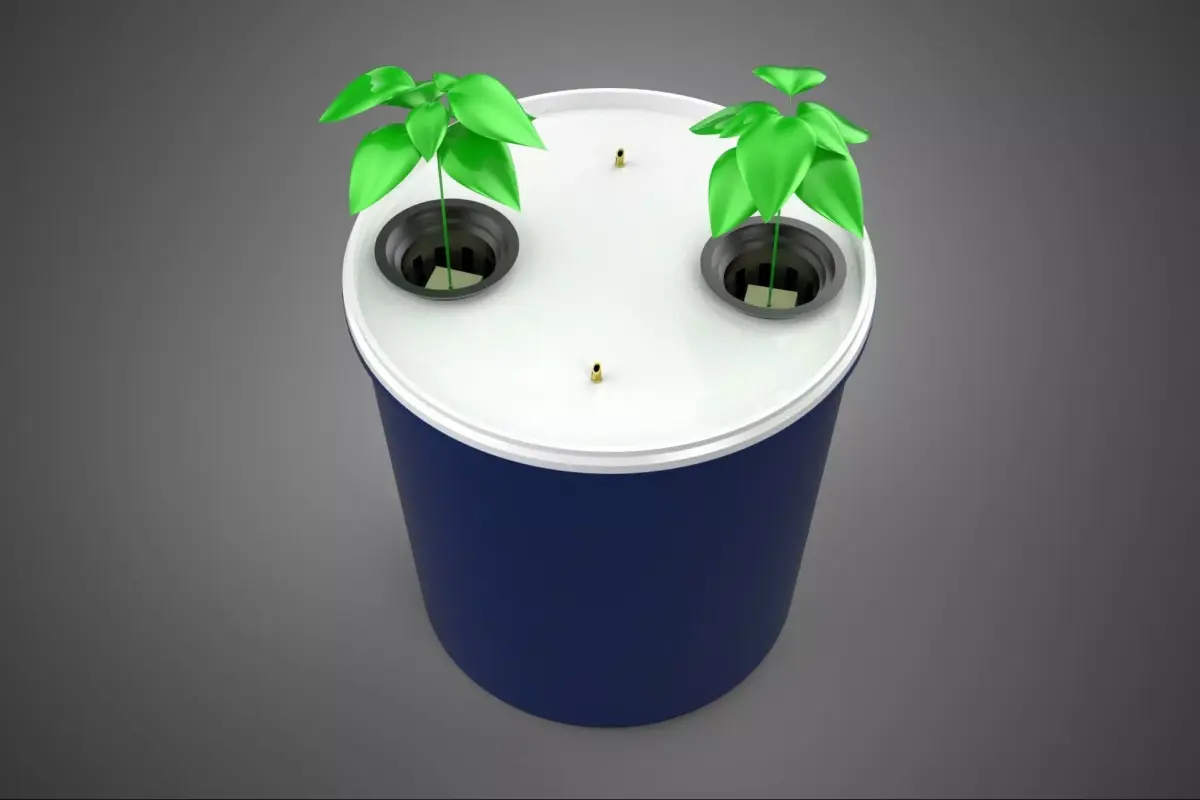
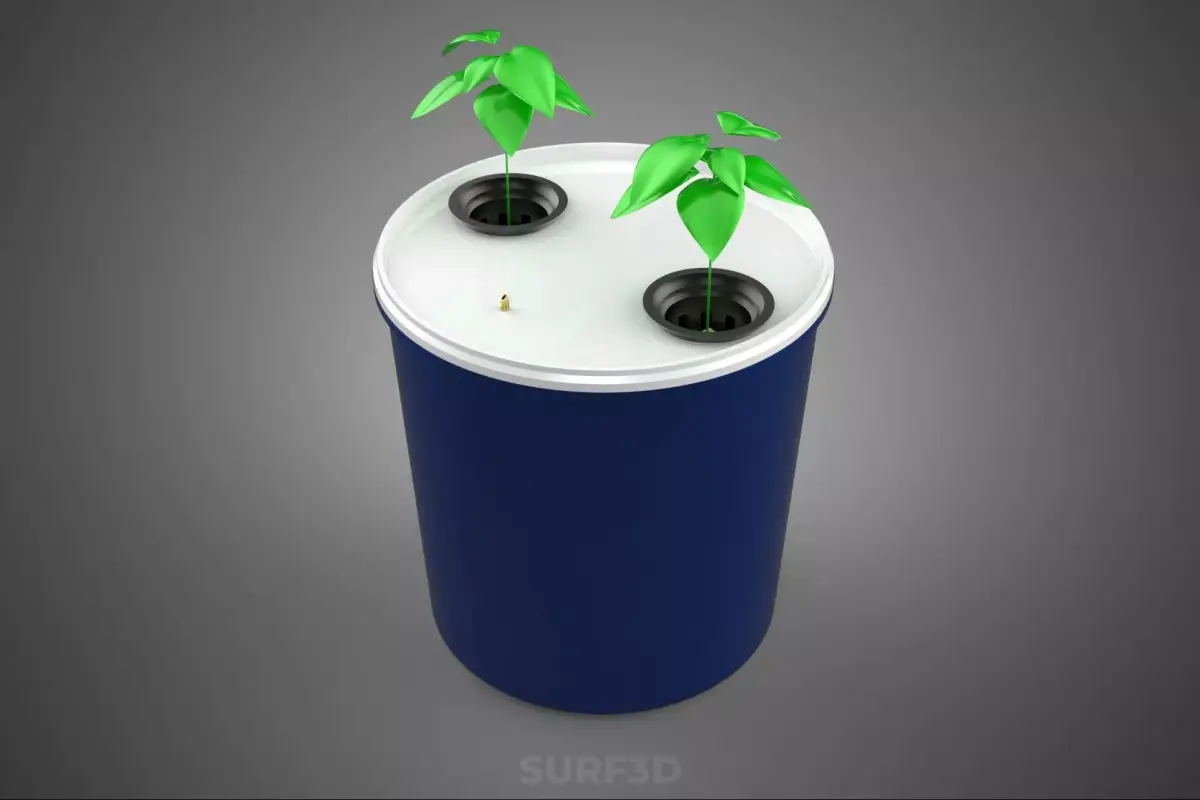
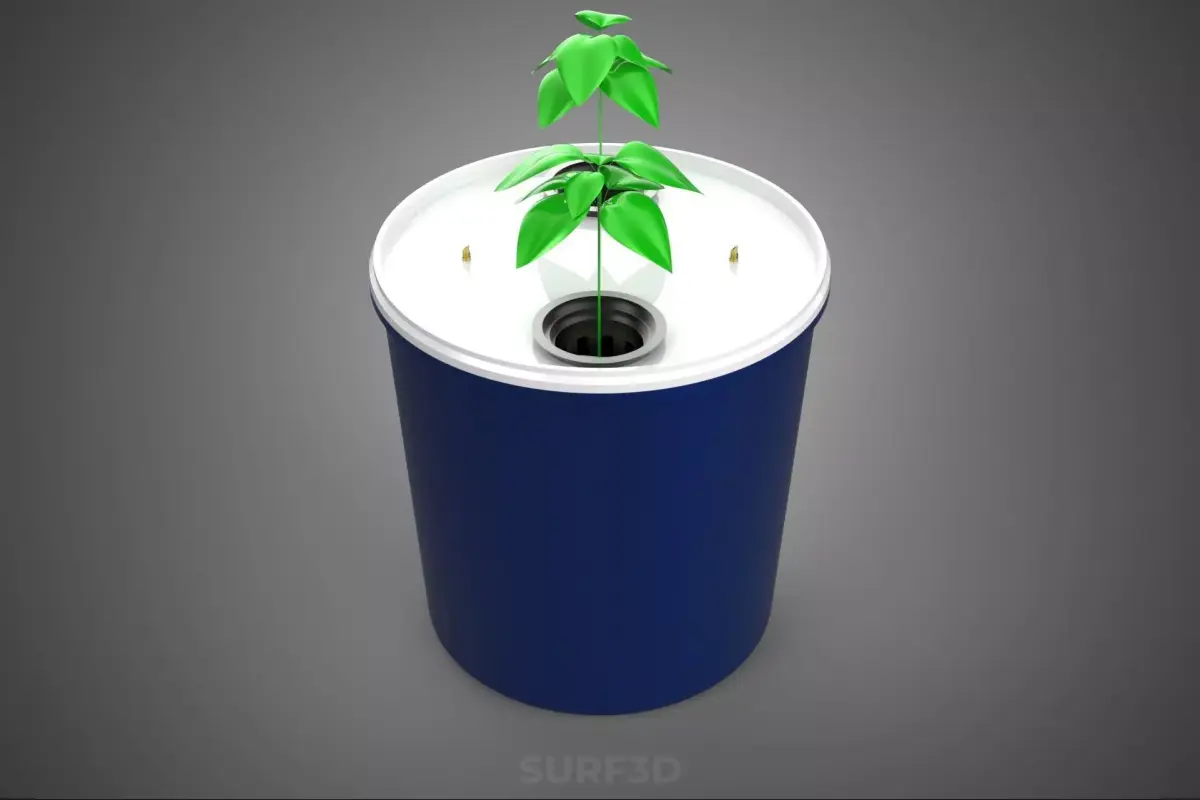
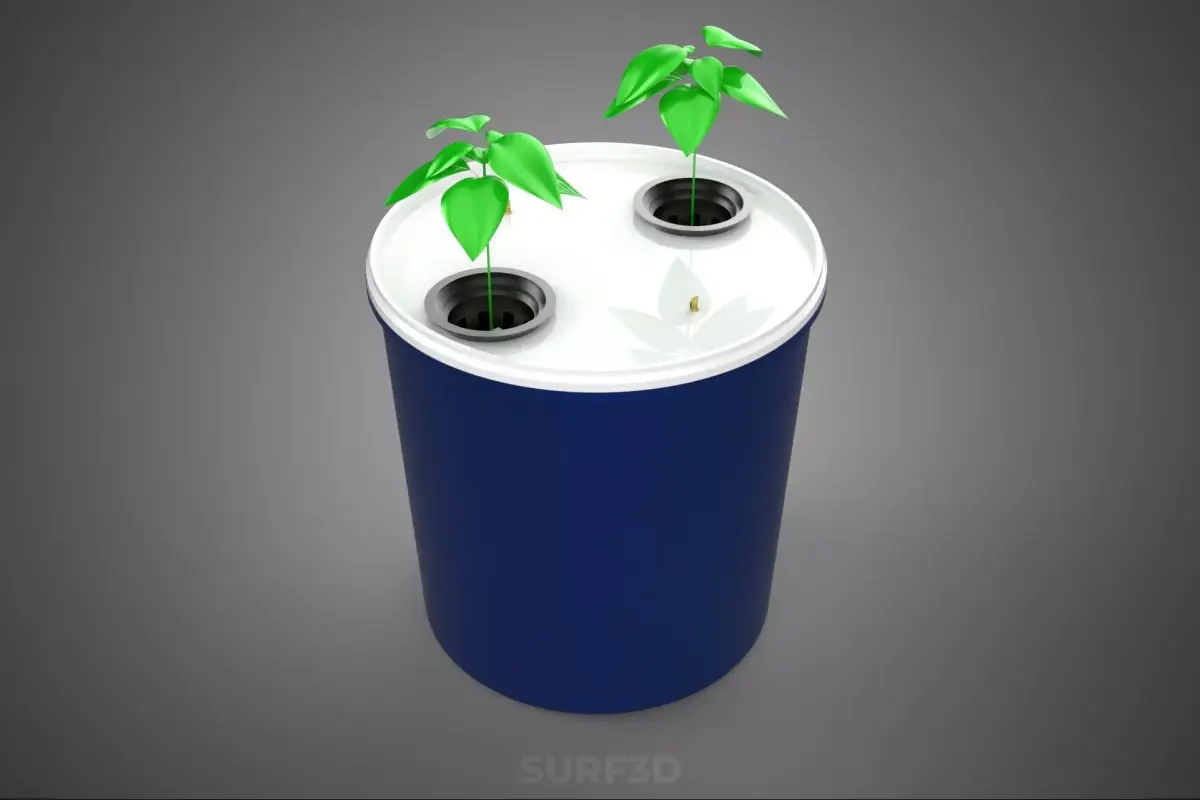
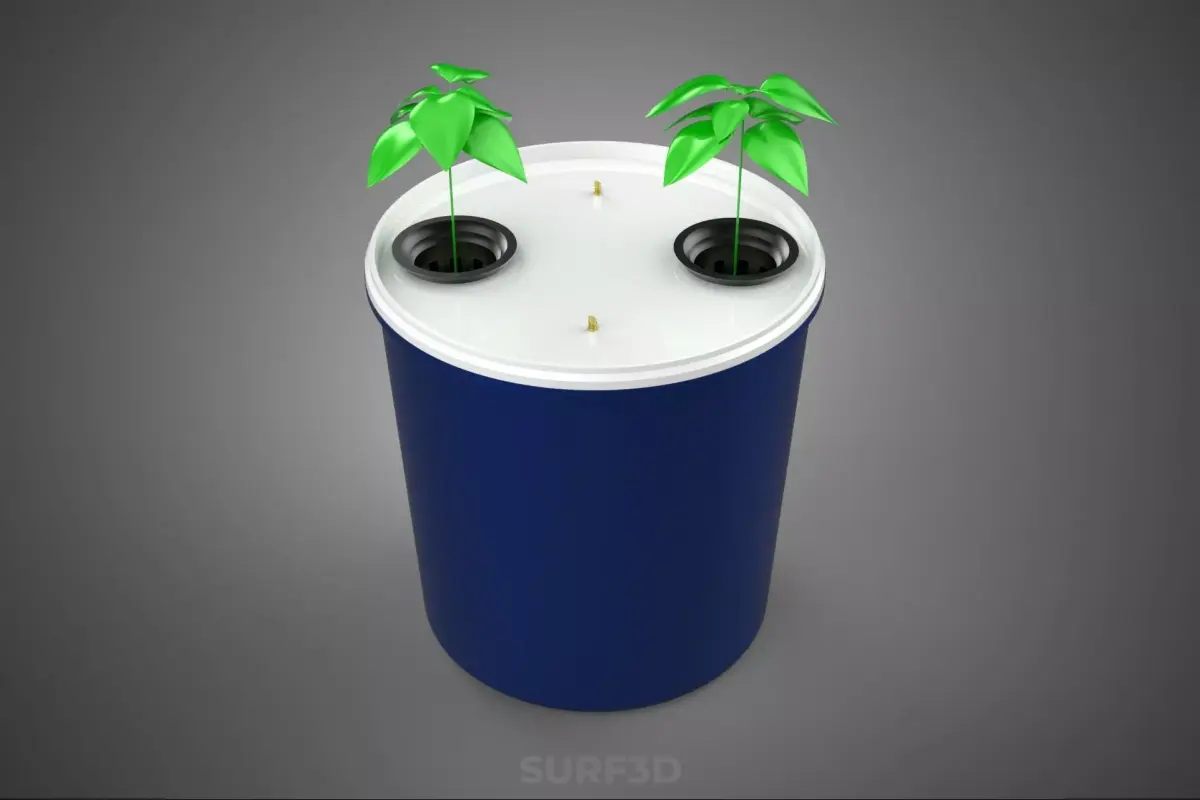
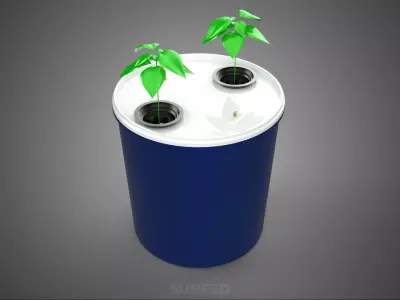
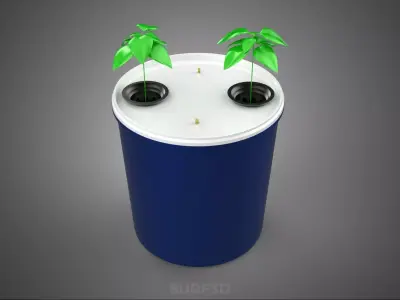
The Dual Dutch Bucket Chamber Plant DIY system describes a specialized, recirculating hydroponic methodology optimized for the cultivation of large, vining, or long-duration fruiting crops, implemented using accessible, Do-It-Yourself (DIY) construction techniques within a controlled environmental chamber. This system is technically a variation of the Bato Bucket or Tip Bucket system, renowned for its efficiency in growing plants such as tomatoes (Solanum lycopersicum), peppers (Capsicum annuum), cucumbers (Cucumis sativus), and various melons and squash.
System Nomenclature and Function
The core mechanism relies on individual growing containers—the Dutch Buckets—typically constructed from durable, opaque plastic pails (often five-gallon capacity) filled with an inert, non-soil substrate such as perlite, coco coir, rockwool cubes, or hydroton (expanded clay aggregates).
Hydroponic Principle: The system operates as a closed-loop, recirculating culture. A nutrient-rich solution is delivered to the base of each plant via a low-pressure, timed drip irrigation line originating from a centralized reservoir.
The Dutch Bucket Mechanism: Unlike systems that suspend roots directly in water (like Deep Water Culture, DWC), the Dutch Bucket maintains a small buffer of nutrient solution at the bottom of the container, while the majority of the solution drains out. This drainage is managed by a siphoning elbow or a specialized drain fitting positioned several centimeters above the container floor. This design provides aeration to the root zone while preventing complete desiccation of the substrate.
The Dual Aspect: The term Dual frequently refers to one of two structural enhancements:
- Dual Drainage: Implementing redundant or segregated drain lines to ensure efficient return of spent nutrient solution to the main reservoir, crucial in large-scale installations.
- Dual Feed Lines: Utilizing separate primary and secondary nutrient distribution manifolds, allowing for precise zone feeding or redundancy in nutrient delivery to handle different developmental stages or specific crop requirements.
### DIY Implementation and Components
The DIY nature of the system emphasizes using readily available, cost-effective components, making it popular among hobbyists and small-scale commercial growers.
Essential Components:
- Growing Containers (Buckets): Standard food-grade plastic pails.
- Reservoir: A large, light-proof container for holding the nutrient solution.
- Submersible Pump: Used to lift the nutrient solution from the reservoir to the manifold.
- Plumbing: PVC or polyethylene tubing for the main supply line (manifold) and the return drain line.
- Drip Emitters: Adjustable or fixed-flow emitters inserted near the base of each plant.
- Siphon Elbows/Drain Ports: Specialized fittings installed in the lower portion of the bucket for regulating drainage level.
Construction involves drilling holes in the pails for the feed lines and drain ports, establishing a main return line that runs slightly downhill (relying on gravity), and configuring a timing system for the pump cycles.
### Chamber Plant Environment
The addition of the term Chamber Plant signifies cultivation within a dedicated, enclosed growth environment (such as a grow tent, converted room, or small greenhouse). Controlled Environment Agriculture (CEA) is necessary for high-yield fruiting crops cultivated hydroponically to ensure optimal conditions throughout the plant lifecycle. Critical environmental factors managed within the chamber include:
- Lighting: Utilizing high-intensity discharge (HID), LED, or plasma lighting to simulate optimal photoperiods and light spectrums necessary for flowering and fruit development.
- Climate Control: Regulation of temperature, humidity, and airflow (using HVAC systems, fans, and dehumidifiers) to prevent fungal diseases and maximize plant transpiration rates.
- CO2 Supplementation: Injecting carbon dioxide to accelerate photosynthesis and biomass production, significantly increasing fruit yield.
The combination of the efficient, water-saving Dutch Bucket design with the precision afforded by a controlled chamber allows for high-density, highly productive cultivation of fruits and vegetables irrespective of external climate conditions.
KEYWORDS: Hydroponics, Bato Bucket, Dutch Bucket, Recirculating System, Drip Irrigation, Controlled Environment Agriculture, CEA, DIY Hydroponics, Fruiting Crops, Vining Plants, Tomatoes, Peppers, Cucumbers, Substrate Culture, Inert Media, Perlite, Coco Coir, Nutrient Solution, Reservoir Management, pH Control, EC Monitoring, Closed-Loop System, Modular System, Greenhouse Technology, Plant Chamber, Soil-less Cultivation, Deep Water Culture, Hydroton, Vertical Farming.
STL (Stereolithography, filesize: 3.35 MB), OBJ (OBJ, filesize: 6.65 MB), DAE (Collada, filesize: 11.1 MB), IGE (IGES, filesize: 7.66 MB), SAT (3D ACIS, filesize: 6.73 MB), 3DS (3D Studio, filesize: 2.01 MB), 3DM (Rhinoceros 3D, filesize: 9.1 MB), DWG (AutoCAD, filesize: 2.35 MB), MAX (Autodesk 3ds Max, filesize: 14 MB), GLTF (glTF, filesize: 2.12 MB), BLEND (Blender, filesize: 6.68 MB), FBX (Autodesk FBX, filesize: 2.37 MB), STP (STEP, filesize: 3.74 MB), SKP (Sketchup, filesize: 9.76 MB)