
Publication date: 2026-01-30
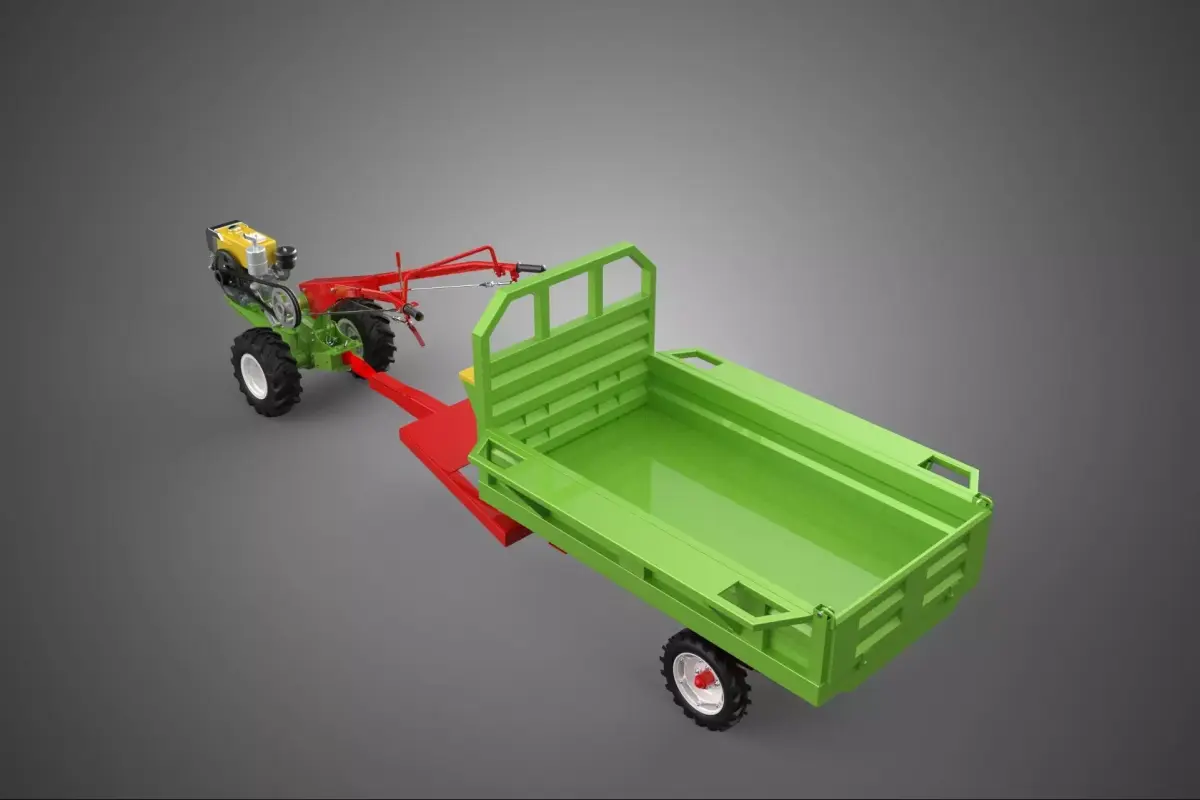
Buy IMPLEMENT HAULAGE TRAILER FARM AGRICULTURAL VEHICLE TRACTOR CART 3D model
$39
License: Royalty Free
Rigged
PBR
Realtime
Animated
Free

author:
SURF3D
Renders and source materials belong to the author SURF3D.
Specifications
- Platform
- cgtrader
- Animated
- Rigged
- 3D Print ready
- VR / AR / Low-poly
- PBR
- Textures
- Materials
- UV Mapping
- Polygons
- 1223475
- Vertices
- 999437
- Geometry
- No N-gons | No faceted geometry | Manifold geometry |
Usage recommendations
Realtime rendering
✕
PC Game development
✕
Mobile Game Development
✕
VR/AR applications
✕
Visualisation
✓
Cinema
✓
Advertising
✓
3D Printing
✕
CAD Engineering
✕
E-Commerce & Interactive 3D Web
✕
FAQ
Is this a free 3D model?
No, this model costs $39.
How do I download this 3D model?
Use the "Go to purchase" button below to get this model.
What license applies to this model?
The Royalty Free license applies to this model. More details are available via the "Go to purchase" button.
Does it include rigging and animation?
This model has no rig or animation. It is a static 3D object.
Does this model have UV mapping?
No, this model does not have UV mapping.
What textures and materials does this 3D model include?
This model has materials, but no textures. See the Specifications block for more information.
Can I use it for 3D printing?
No, this model is not intended for 3D printing.
Additional information
High-quality 3D assets at affordable prices — trusted by designers, engineers, and creators worldwide. Made with care to be versatile, accessible, and ready for your pipeline.
Included File Formats
This model is provided in 14 widely supported formats, ensuring maximum compatibility:
• - FBX (.fbx) – Standard format for most 3D software and pipelines
• - OBJ + MTL (.obj, .mtl) – Wavefront format, widely used and compatible
• - STL (.stl) – Exported mesh geometry; may be suitable for 3D printing with adjustments
• - STEP (.step, .stp) – CAD format using NURBS surfaces
• - IGES (.iges, .igs) – Common format for CAD/CAM and engineering workflows (NURBS)
• - SAT (.sat) – ACIS solid model format (NURBS)
• - DAE (.dae) – Collada format for 3D applications and animations
• - glTF (.glb) – Modern, lightweight format for web, AR, and real-time engines
• - 3DS (.3ds) – Legacy format with broad software support
• - 3ds Max (.max) – Provided for 3ds Max users
• - Blender (.blend) – Provided for Blender users
• - SketchUp (.skp) – Compatible with all SketchUp versions
• - AutoCAD (.dwg) – Suitable for technical and architectural workflows
• - Rhino (.3dm) – Provided for Rhino users
Model Info
• - All files are checked and tested for integrity and correct content
• - Geometry uses real-world scale; model resolution varies depending on the product (high or low poly)
• • - Scene setup and mesh structure may vary depending on model complexity
• - Rendered using Luxion KeyShot
• - Affordable price with professional detailing
Buy with confidence. Quality and compatibility guaranteed.
If you have any questions about the file formats, feel free to send us a message — we're happy to assist you!
Sincerely,
SURF3D
Trusted source for professional and affordable 3D models.
More Information About 3D Model :
Agricultural Haulage Trailer (Farm Cart/Wagon): Implement Description
An agricultural haulage trailer, commonly designated as a farm cart or wagon, is a non-self-propelled agricultural implement designed exclusively for the large-scale conveyance (haulage) of materials, produce, livestock, and operational inputs across diverse agricultural terrains and public roadways. These implements are fundamentally dependent upon a prime mover, typically a farm tractor, for propulsion, constituting an essential component of mechanized farming logistics.
Nomenclature and Typology
The terminology associated with these implements reflects their design and specialized function. While farm cart often refers to smaller, single-axle utility models, agricultural wagon or trailer denotes larger, multi-axle units engineered for high capacity and specialized operations.
Major classifications based on function include:
General Utility Trailers: Versatile units with fixed or removable sides, suitable for varied tasks such as moving tools, fencing, or miscellaneous farm debris.
Dump Trailers (Tip Trailers): Characterized by a hinged chassis and hydraulic cylinders that elevate the front of the bed, enabling rapid, gravity-assisted unloading of bulk materials (e.g., silage, gravel, grain). These frequently feature a monocoque body design for structural rigidity.
Specialized Carriers: Implements tailored for specific commodities, such as high-capacity grain carts (often incorporating augers for efficient transfer), bale trailers (flatbed designs for stacked hay or straw), tanker trailers (for liquid manures or water), and forage/silage wagons (equipped with moving floors or compression systems).
Engineering and Design Features
The construction of a modern agricultural haulage trailer emphasizes durability, payload capacity, and operational safety, adhering to principles of agricultural engineering focused on robust structural integrity under heavy dynamic loads.
Chassis and Body: The foundation is a high-tensile steel chassis designed to withstand significant torsional forces. Trailer bodies can be constructed from steel, aluminum, or composite materials. Dump trailers utilize reinforced underframes to manage the forces exerted during hydraulic tipping.
Hitch Mechanism (Drawbar): The trailer attaches to the tractor via a heavy-duty drawbar and a standardized hitch system (e.g., pin hitch, ball hitch, or articulated coupling). The design must accommodate substantial vertical and horizontal load transfer, particularly during acceleration and braking.
Axle Systems: Trailers utilize single, tandem, or tridem axle configurations. Tandem and tridem systems (multiple axles) are employed to distribute the heavy weight of the payload over a greater ground area, reducing soil compaction and improving stability. Many high-capacity units incorporate bogie or suspension systems to absorb shocks from uneven terrain, enhancing road speed capability.
Braking Systems: Due to the substantial kinetic energy of fully laden trailers, safety regulations mandate robust braking systems for public road use. These commonly utilize air brakes or oil/hydraulic brakes, synchronized with the tractor’s braking system to ensure simultaneous and proportional deceleration.
Hydraulic and Electrical Integration: Modern agricultural trailers require connection to the tractor's hydraulic circuit, primarily to power the tipping mechanism, tailgate actuation, and specialized functions like auger drives. Electrical connectivity supplies power for regulatory lighting, signaling, and potentially integrated electronic control units (ECUs).
Operational Significance
The agricultural haulage trailer is critical for optimizing farm logistics, particularly during high-intensity periods like harvest. By facilitating high-volume, rapid transport of crops from the field to storage or processing centers, it minimizes downtime for harvesting machinery, thereby maximizing overall efficiency and yield preservation. Capacity ratings for modern trailers often exceed 30 metric tonnes, requiring precise load management and operational care, especially when maneuvering across slopes or soft ground.
Regulatory and Safety Compliance
Given their size and road presence, agricultural haulage trailers are subject to stringent regulatory oversight concerning dimensions, gross vehicle weight (GVW), axle load limits, tire specification, and mandatory safety features (e.g., conspicuity markings, anti-lock braking systems in advanced models, and fail-safe breakaway brakes). Operator training is essential to manage the complex dynamics associated with towing heavy, articulated implements at operational speeds.
KEYWORDS: Agricultural machinery, Haulage, Farm implement, Tractor, Trailer, Cart, Wagon, Towed implement, Drawbar, Hydraulics, Dump trailer, Tip trailer, Grain cart, Silage wagon, Bale trailer, Chassis, Axle system, Braking system, Load capacity, Transport logistics, Agricultural engineering, Prime mover, Field operation, Road safety, Monocoque, Tandem axle, Drawbar hitch, Bulk material, Harvest logistics, Utility vehicle.
Included File Formats
This model is provided in 14 widely supported formats, ensuring maximum compatibility:
• - FBX (.fbx) – Standard format for most 3D software and pipelines
• - OBJ + MTL (.obj, .mtl) – Wavefront format, widely used and compatible
• - STL (.stl) – Exported mesh geometry; may be suitable for 3D printing with adjustments
• - STEP (.step, .stp) – CAD format using NURBS surfaces
• - IGES (.iges, .igs) – Common format for CAD/CAM and engineering workflows (NURBS)
• - SAT (.sat) – ACIS solid model format (NURBS)
• - DAE (.dae) – Collada format for 3D applications and animations
• - glTF (.glb) – Modern, lightweight format for web, AR, and real-time engines
• - 3DS (.3ds) – Legacy format with broad software support
• - 3ds Max (.max) – Provided for 3ds Max users
• - Blender (.blend) – Provided for Blender users
• - SketchUp (.skp) – Compatible with all SketchUp versions
• - AutoCAD (.dwg) – Suitable for technical and architectural workflows
• - Rhino (.3dm) – Provided for Rhino users
Model Info
• - All files are checked and tested for integrity and correct content
• - Geometry uses real-world scale; model resolution varies depending on the product (high or low poly)
• • - Scene setup and mesh structure may vary depending on model complexity
• - Rendered using Luxion KeyShot
• - Affordable price with professional detailing
Buy with confidence. Quality and compatibility guaranteed.
If you have any questions about the file formats, feel free to send us a message — we're happy to assist you!
Sincerely,
SURF3D
Trusted source for professional and affordable 3D models.
More Information About 3D Model :
Agricultural Haulage Trailer (Farm Cart/Wagon): Implement Description
An agricultural haulage trailer, commonly designated as a farm cart or wagon, is a non-self-propelled agricultural implement designed exclusively for the large-scale conveyance (haulage) of materials, produce, livestock, and operational inputs across diverse agricultural terrains and public roadways. These implements are fundamentally dependent upon a prime mover, typically a farm tractor, for propulsion, constituting an essential component of mechanized farming logistics.
Nomenclature and Typology
The terminology associated with these implements reflects their design and specialized function. While farm cart often refers to smaller, single-axle utility models, agricultural wagon or trailer denotes larger, multi-axle units engineered for high capacity and specialized operations.
Major classifications based on function include:
General Utility Trailers: Versatile units with fixed or removable sides, suitable for varied tasks such as moving tools, fencing, or miscellaneous farm debris.
Dump Trailers (Tip Trailers): Characterized by a hinged chassis and hydraulic cylinders that elevate the front of the bed, enabling rapid, gravity-assisted unloading of bulk materials (e.g., silage, gravel, grain). These frequently feature a monocoque body design for structural rigidity.
Specialized Carriers: Implements tailored for specific commodities, such as high-capacity grain carts (often incorporating augers for efficient transfer), bale trailers (flatbed designs for stacked hay or straw), tanker trailers (for liquid manures or water), and forage/silage wagons (equipped with moving floors or compression systems).
Engineering and Design Features
The construction of a modern agricultural haulage trailer emphasizes durability, payload capacity, and operational safety, adhering to principles of agricultural engineering focused on robust structural integrity under heavy dynamic loads.
Chassis and Body: The foundation is a high-tensile steel chassis designed to withstand significant torsional forces. Trailer bodies can be constructed from steel, aluminum, or composite materials. Dump trailers utilize reinforced underframes to manage the forces exerted during hydraulic tipping.
Hitch Mechanism (Drawbar): The trailer attaches to the tractor via a heavy-duty drawbar and a standardized hitch system (e.g., pin hitch, ball hitch, or articulated coupling). The design must accommodate substantial vertical and horizontal load transfer, particularly during acceleration and braking.
Axle Systems: Trailers utilize single, tandem, or tridem axle configurations. Tandem and tridem systems (multiple axles) are employed to distribute the heavy weight of the payload over a greater ground area, reducing soil compaction and improving stability. Many high-capacity units incorporate bogie or suspension systems to absorb shocks from uneven terrain, enhancing road speed capability.
Braking Systems: Due to the substantial kinetic energy of fully laden trailers, safety regulations mandate robust braking systems for public road use. These commonly utilize air brakes or oil/hydraulic brakes, synchronized with the tractor’s braking system to ensure simultaneous and proportional deceleration.
Hydraulic and Electrical Integration: Modern agricultural trailers require connection to the tractor's hydraulic circuit, primarily to power the tipping mechanism, tailgate actuation, and specialized functions like auger drives. Electrical connectivity supplies power for regulatory lighting, signaling, and potentially integrated electronic control units (ECUs).
Operational Significance
The agricultural haulage trailer is critical for optimizing farm logistics, particularly during high-intensity periods like harvest. By facilitating high-volume, rapid transport of crops from the field to storage or processing centers, it minimizes downtime for harvesting machinery, thereby maximizing overall efficiency and yield preservation. Capacity ratings for modern trailers often exceed 30 metric tonnes, requiring precise load management and operational care, especially when maneuvering across slopes or soft ground.
Regulatory and Safety Compliance
Given their size and road presence, agricultural haulage trailers are subject to stringent regulatory oversight concerning dimensions, gross vehicle weight (GVW), axle load limits, tire specification, and mandatory safety features (e.g., conspicuity markings, anti-lock braking systems in advanced models, and fail-safe breakaway brakes). Operator training is essential to manage the complex dynamics associated with towing heavy, articulated implements at operational speeds.
KEYWORDS: Agricultural machinery, Haulage, Farm implement, Tractor, Trailer, Cart, Wagon, Towed implement, Drawbar, Hydraulics, Dump trailer, Tip trailer, Grain cart, Silage wagon, Bale trailer, Chassis, Axle system, Braking system, Load capacity, Transport logistics, Agricultural engineering, Prime mover, Field operation, Road safety, Monocoque, Tandem axle, Drawbar hitch, Bulk material, Harvest logistics, Utility vehicle.
Similar models

Find the models you need