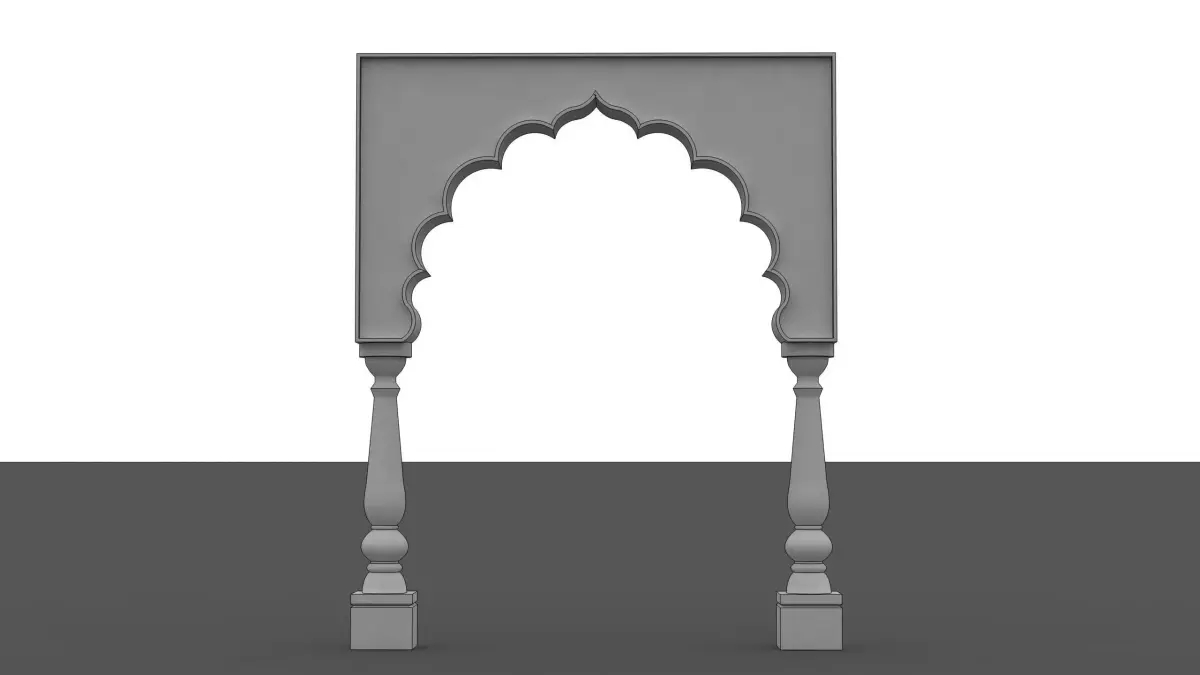
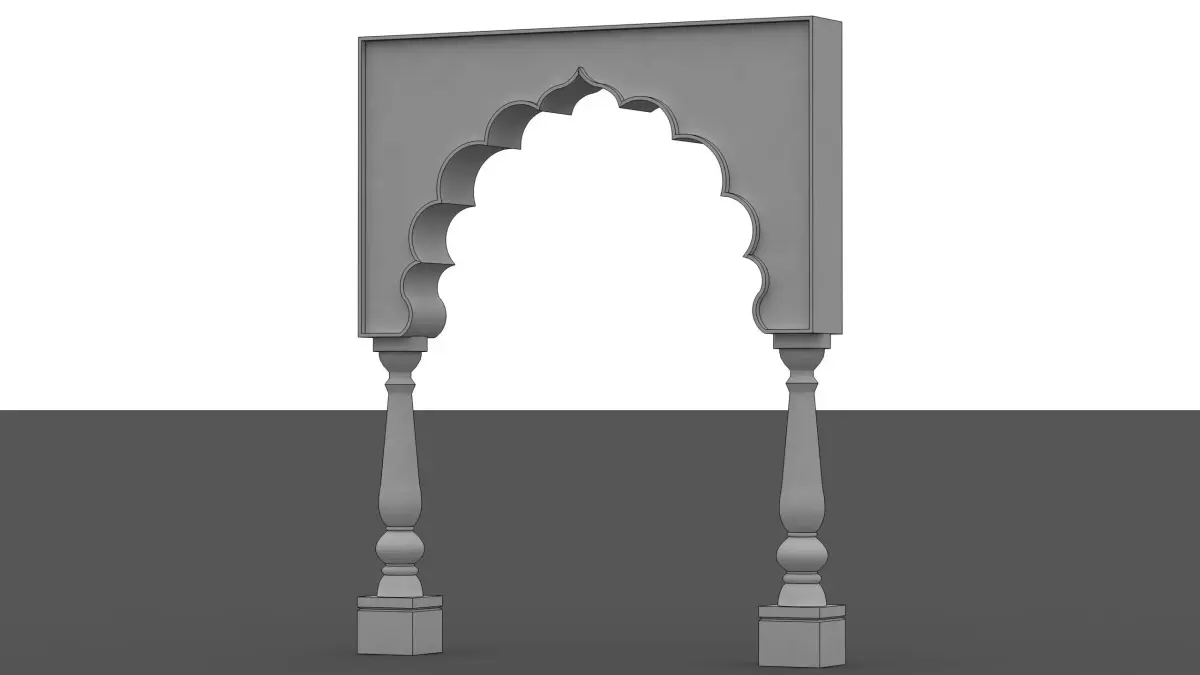
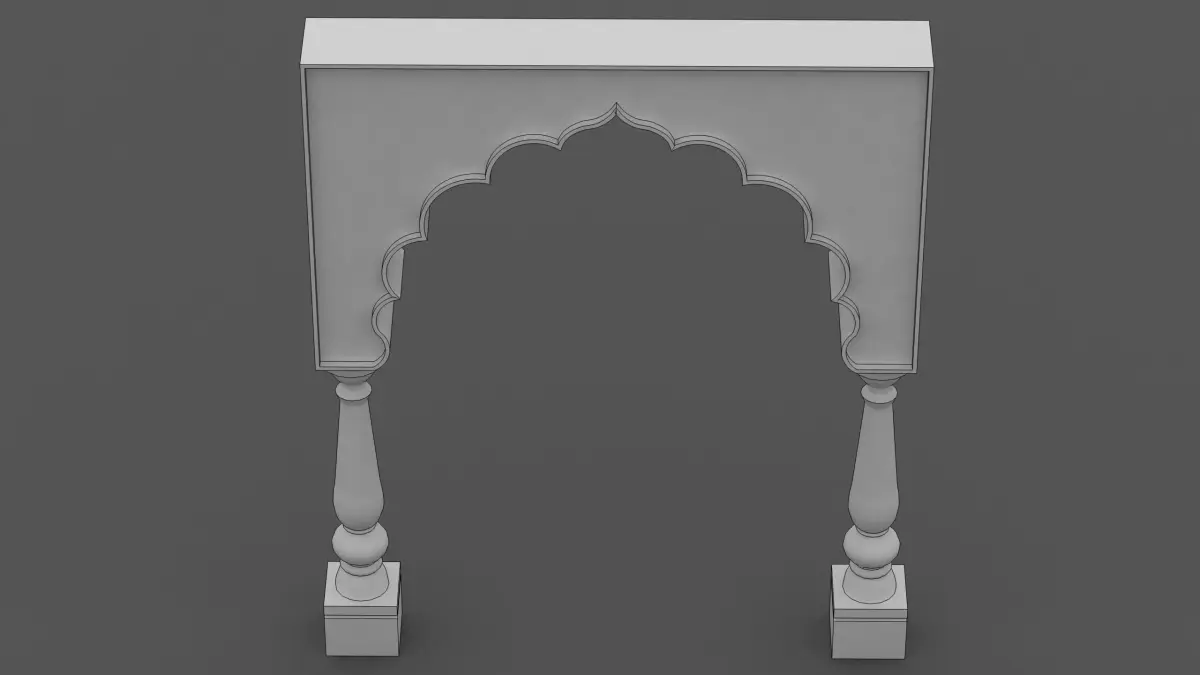
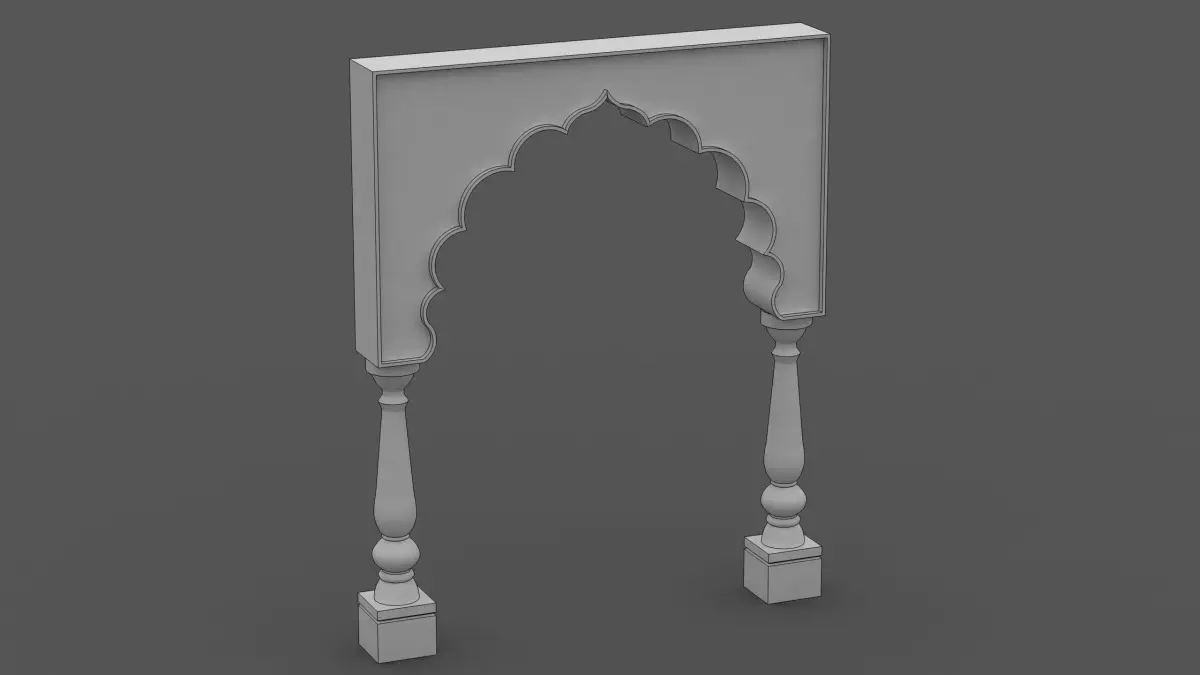
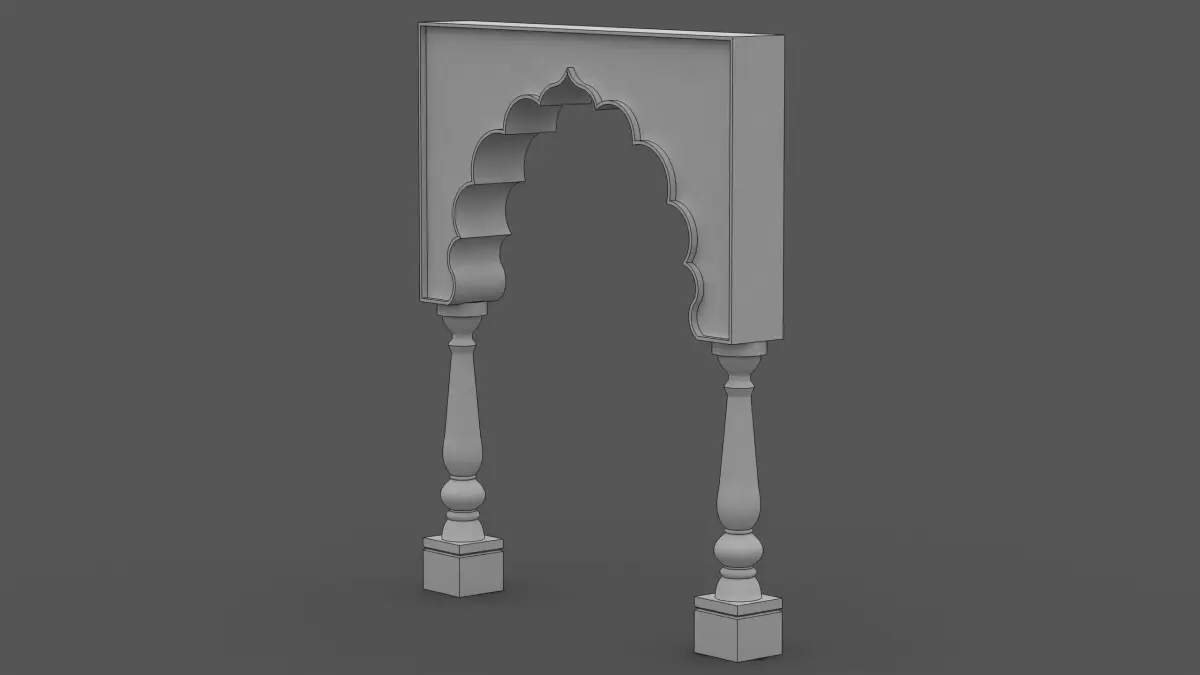
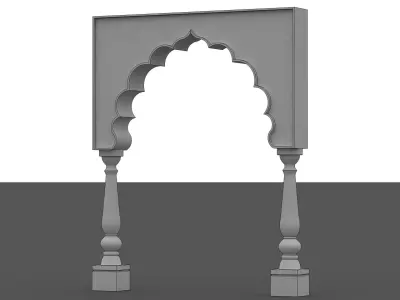
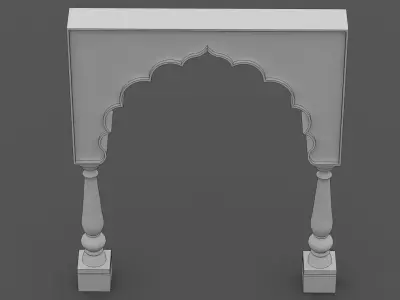
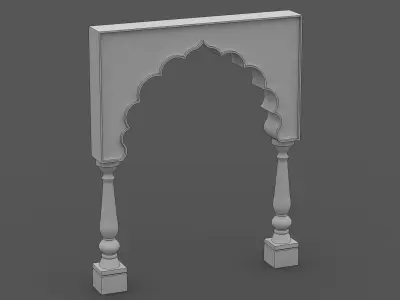
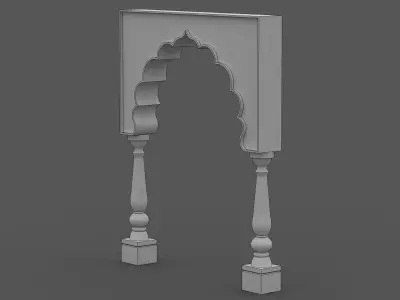
An Indian arch is a graceful architectural element deeply rooted in traditional Indian design, reflecting a blend of strength, symmetry, and artistic expression. Commonly seen in palaces, temples, forts, mosques, and heritage gateways, the arch serves both structural and decorative purposes.The form of the arch often varies—from cusped and scalloped profiles to pointed, horseshoe, or semi-circular shapes—creating a visually rich rhythm. Its surface is frequently enhanced with intricate carvings, floral motifs, geometric patterns, and traditional jaali work, showcasing skilled craftsmanship. Moldings, bands, and recessed layers add depth and grandeur to the structure.Materials such as stone, sandstone, marble, or plaster are traditionally used, finished in natural tones or soft pastel colors, sometimes highlighted with gold detailing or painted borders. The arch is usually supported by ornamental columns or piers, often topped with brackets or capitals inspired by regional styles.Overall, an Indian arch symbolizes heritage, elegance, and timeless craftsmanship, making it a prominent focal point in both traditional and contemporary Indian architectural designs.
STL (Stereolithography, filesize: 480 KB), 3DS (3D Studio, filesize: 196 KB), FBX (Autodesk FBX, filesize: 352 KB), MAX (Autodesk 3ds Max, filesize: 736 KB)