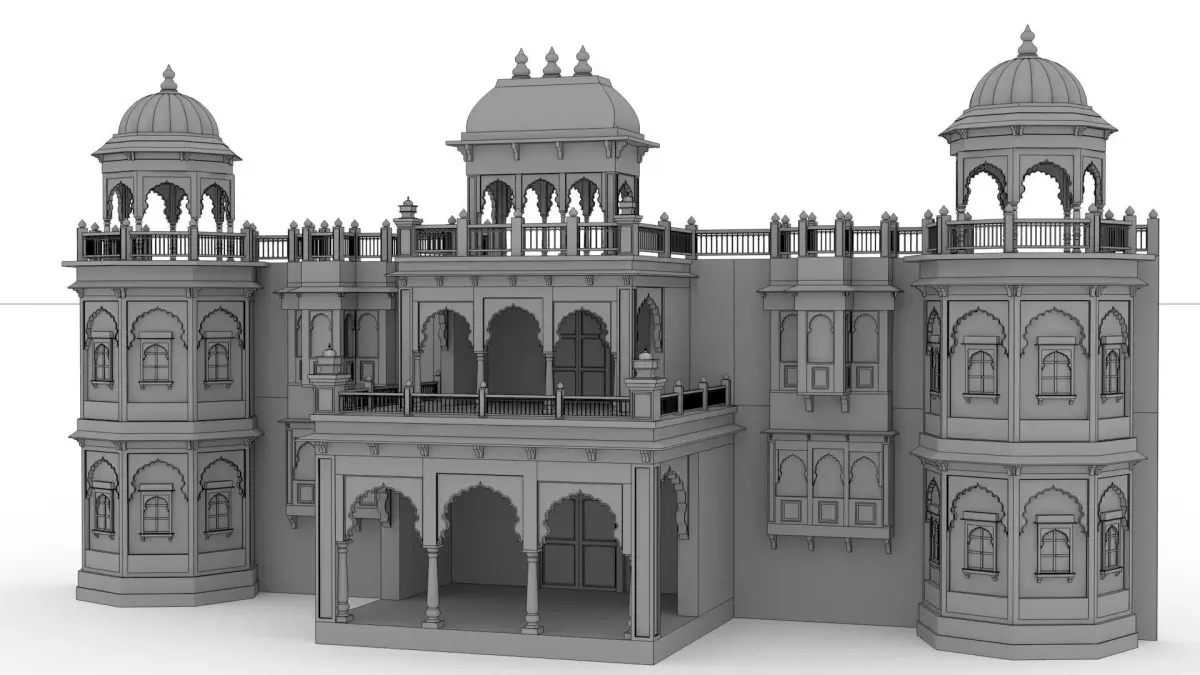
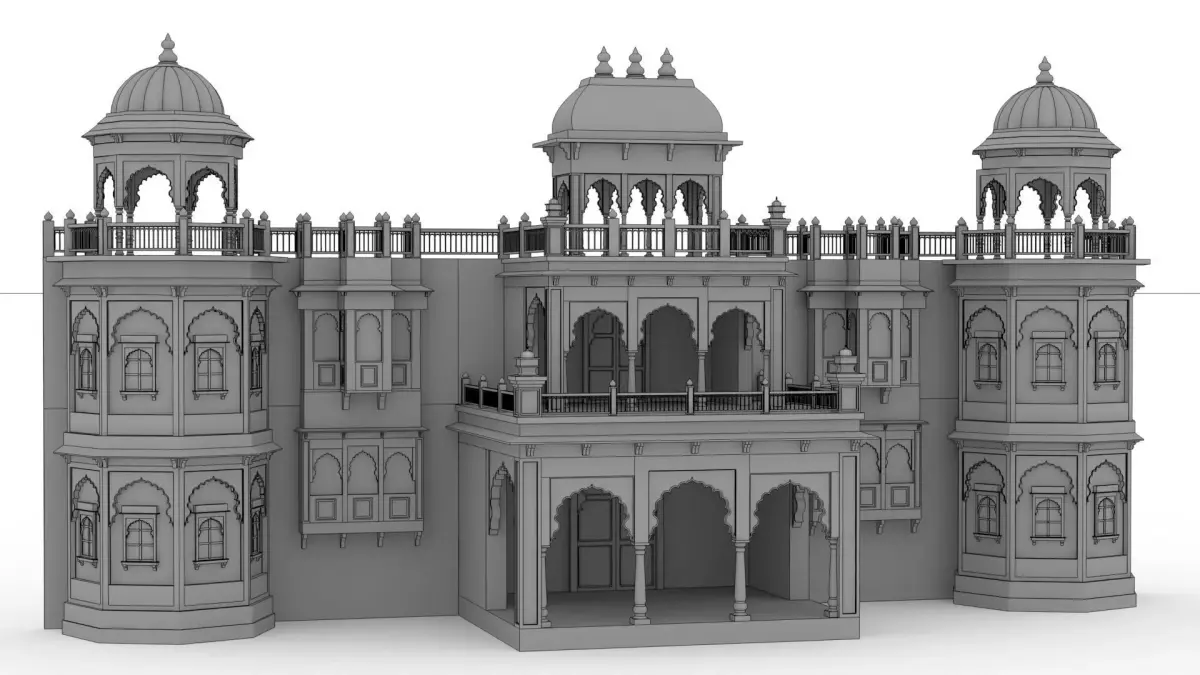
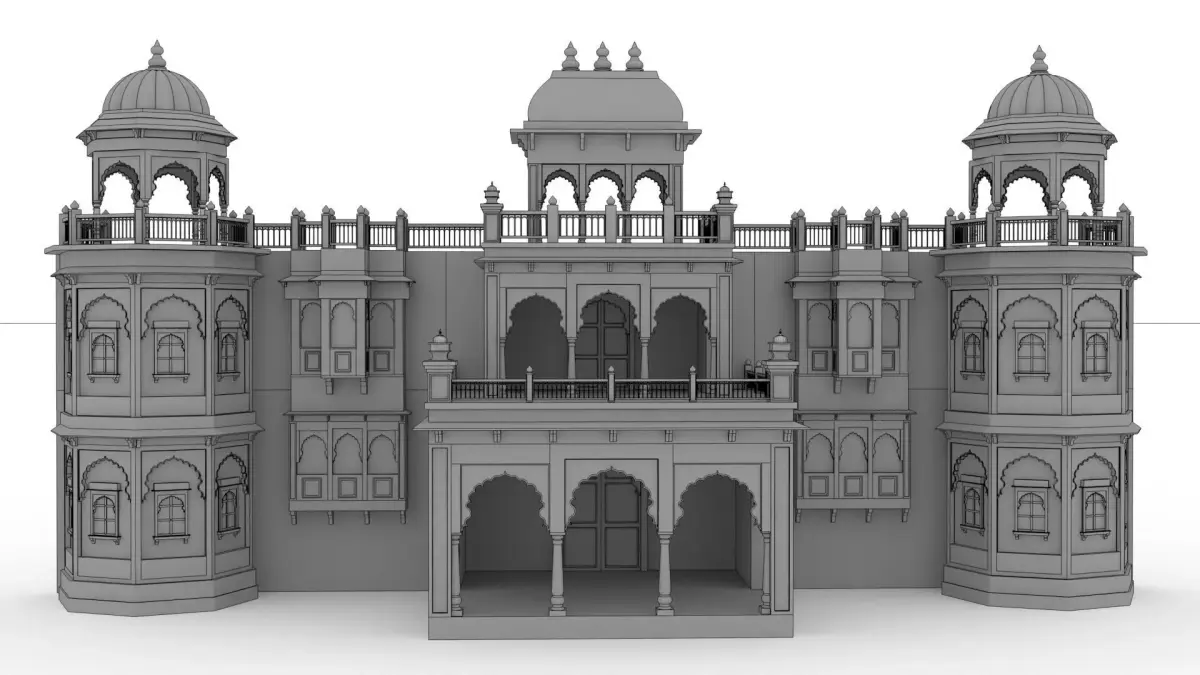
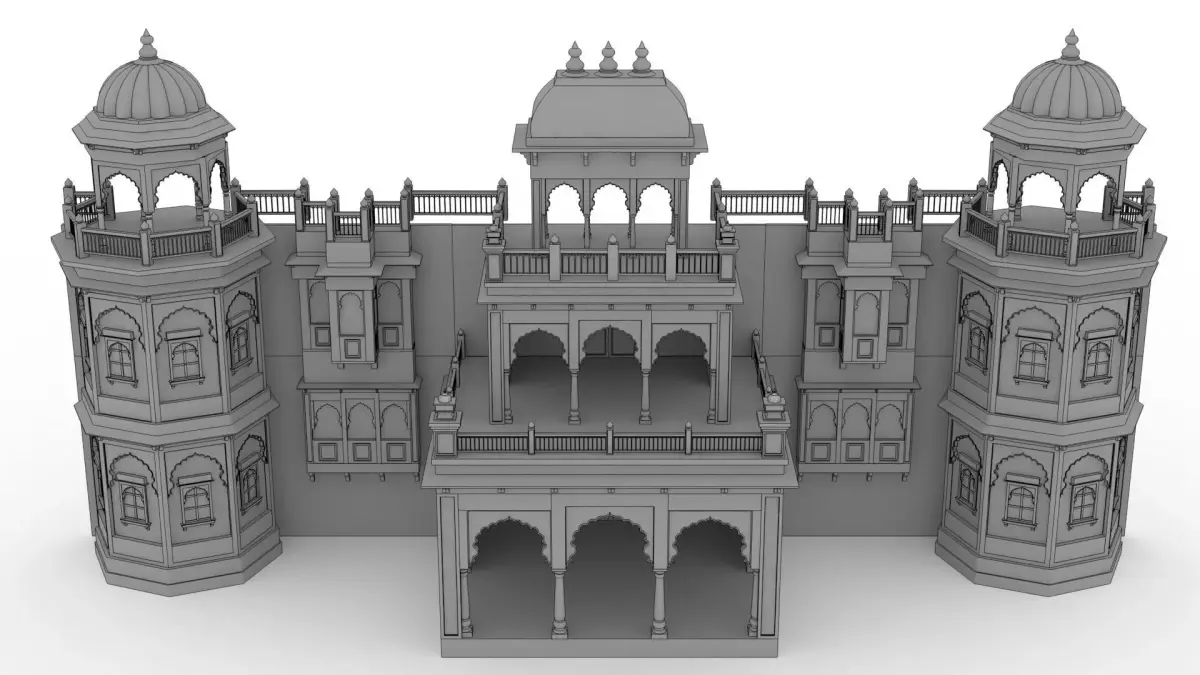
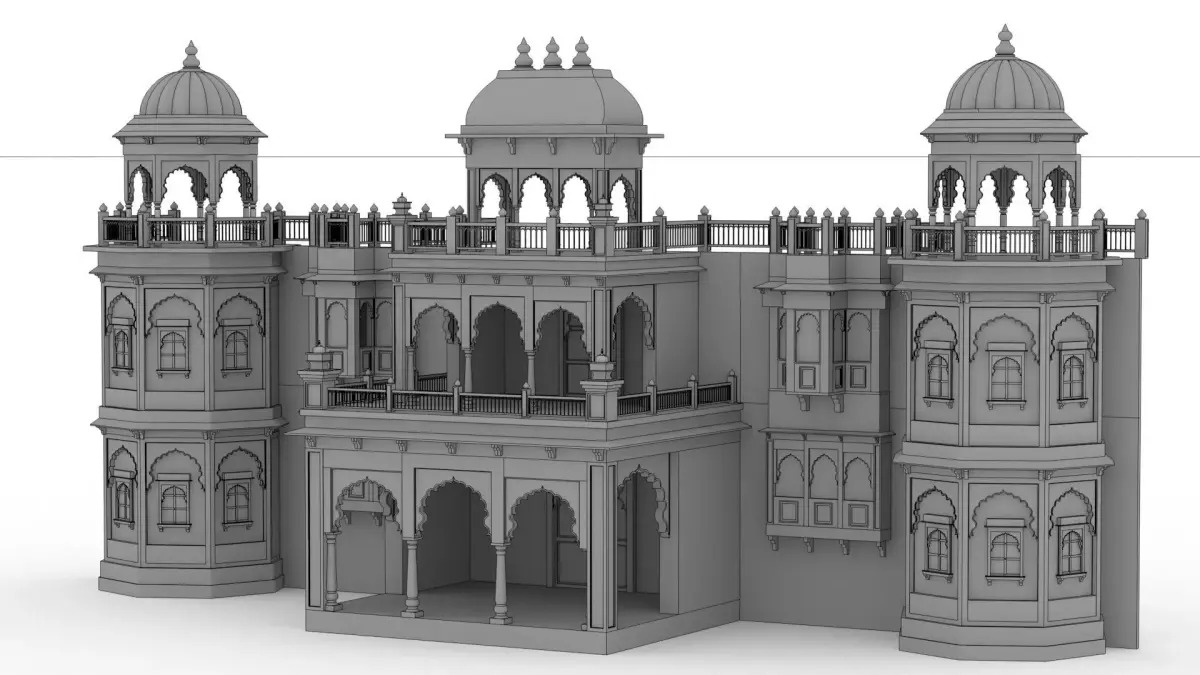
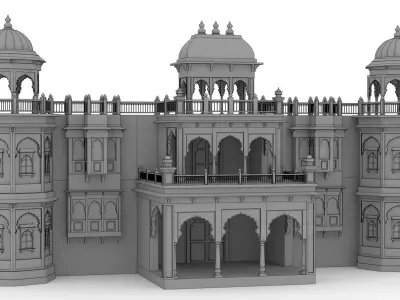
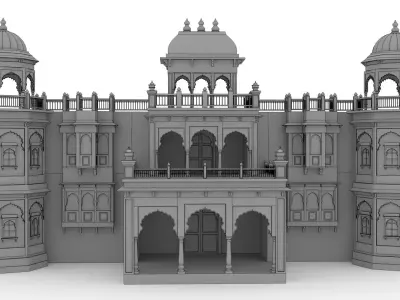
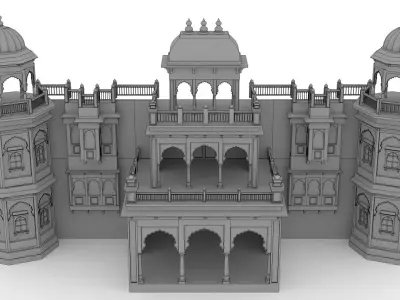
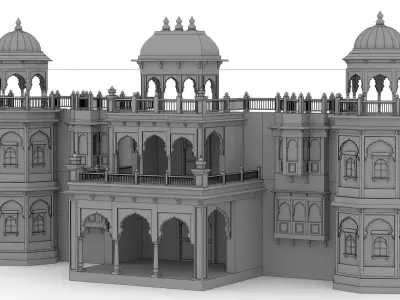
An Indian Palace is a majestic architectural expression of royal heritage, blending grandeur, artistry, and cultural symbolism. Designed as a seat of power and luxury, these palaces reflect India’s rich history, diverse regional styles, and refined craftsmanship.
Indian palaces are typically characterized by grand courtyards, monumental gateways, ornate arches, and majestic domes, creating a strong visual axis and ceremonial approach. The structures often follow symmetrical planning, emphasizing balance and harmony. Jharokhas (overhanging balconies), chhatris (domed pavilions), and colonnaded corridors enhance both aesthetics and climate comfort.
Materials such as sandstone, marble, lime plaster, and carved stone are widely used, finished with intricate floral motifs, geometric patterns, and traditional carvings. Interiors are equally opulent, featuring decorative ceilings, wall frescoes, mirror work, jaali screens, and richly detailed columns. Color palettes range from warm earthy tones to royal whites, gold accents, and pastel hues.
Overall, an Indian Palace stands as a symbol of royalty, elegance, and timeless architectural beauty, seamlessly combining function, ornamentation, and cultural identity—making it an enduring inspiration for heritage architecture, stage sets, and ceremonial designs
STL (Stereolithography, filesize: 49 MB), 3DS (3D Studio, filesize: 14.9 MB), FBX (Autodesk FBX, filesize: 16 MB), MAX (Autodesk 3ds Max, filesize: 18.4 MB)