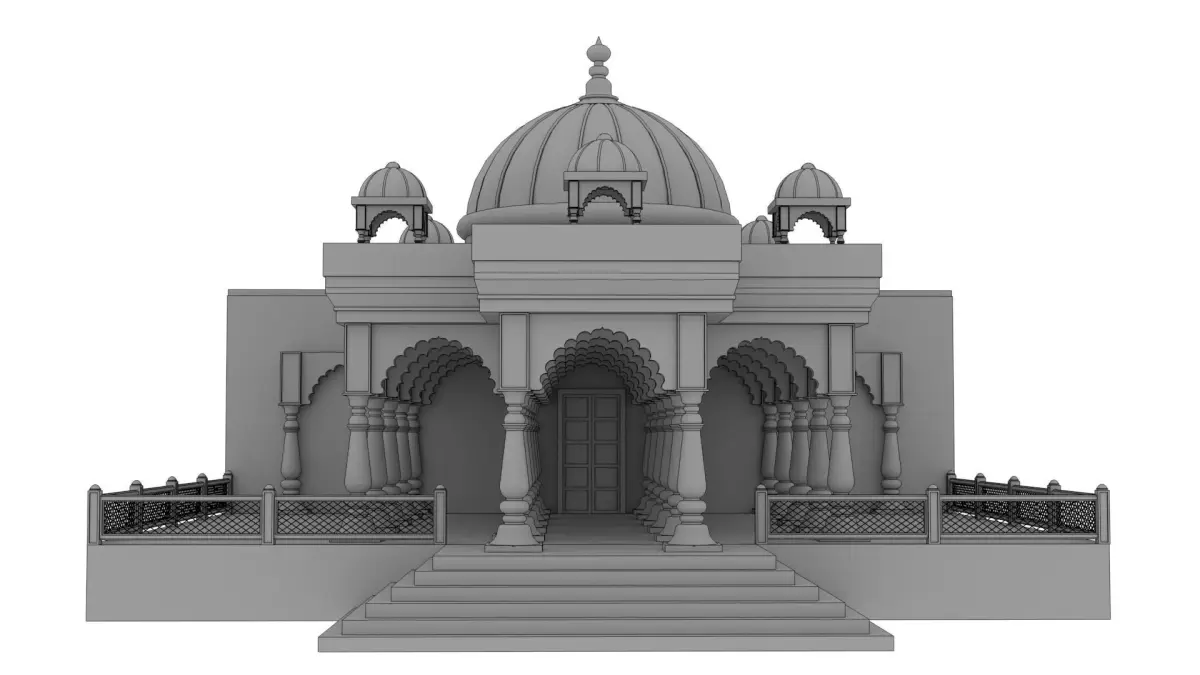
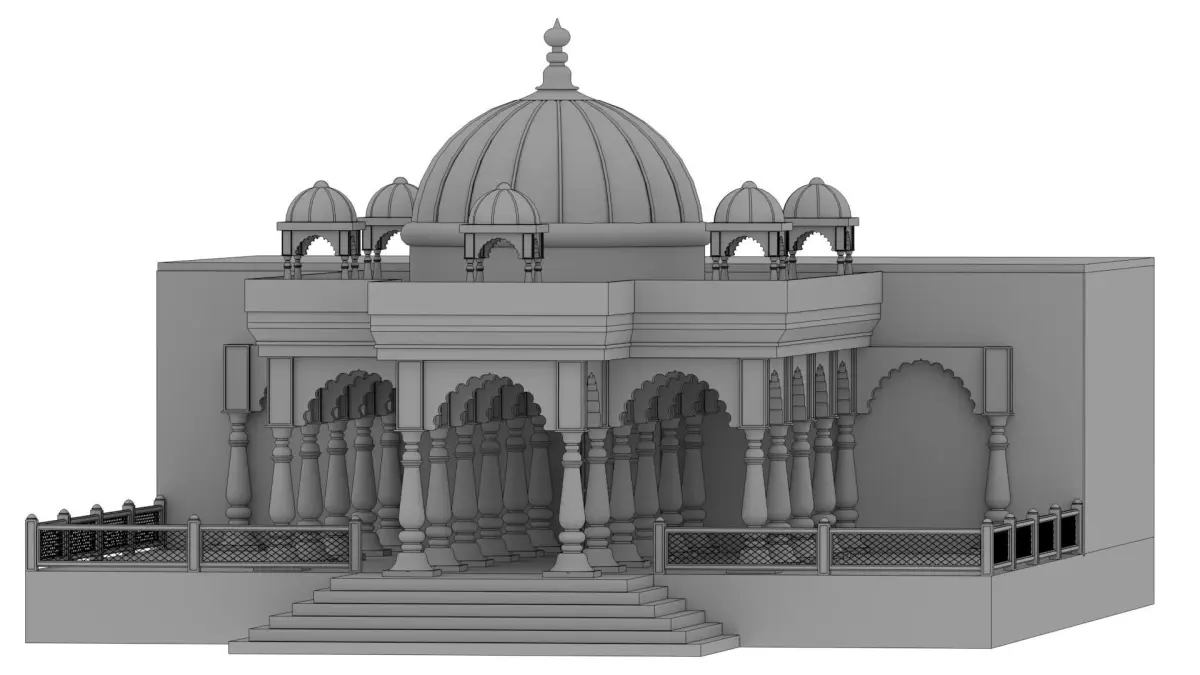
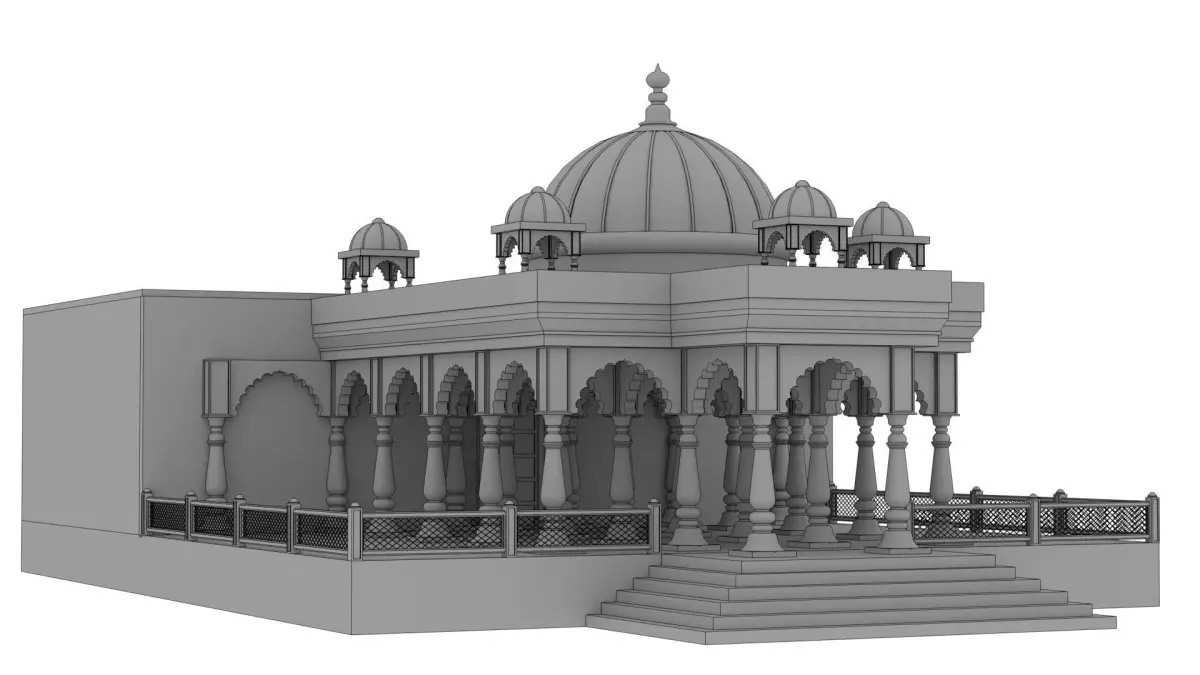
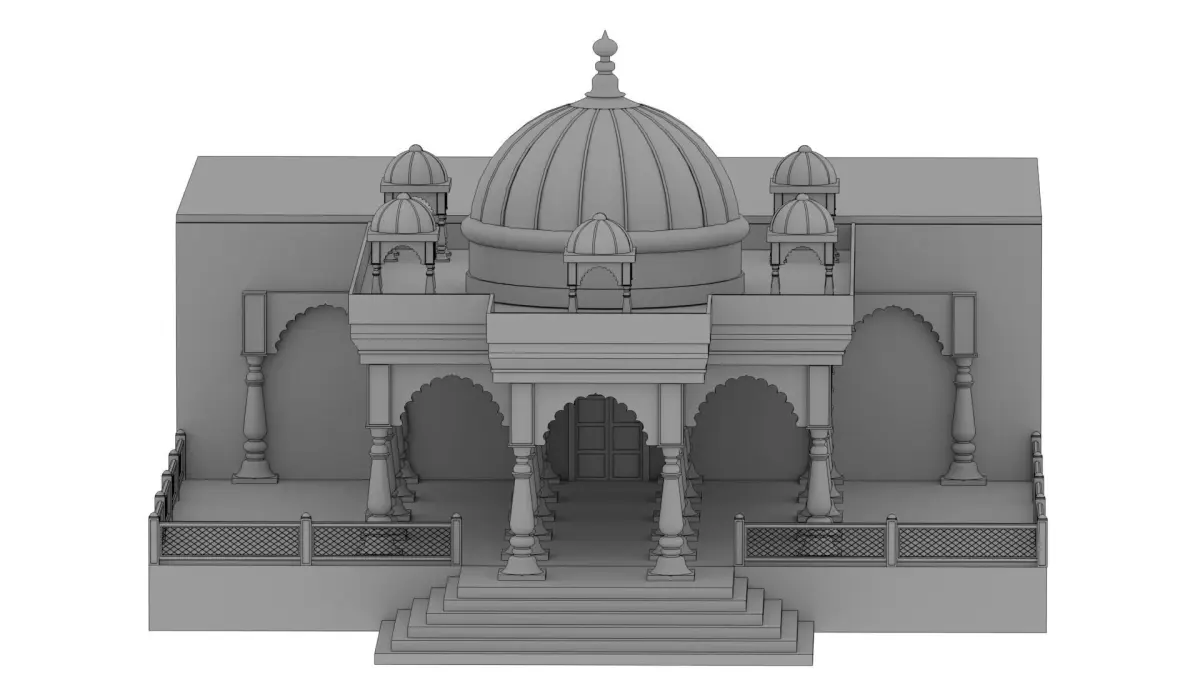
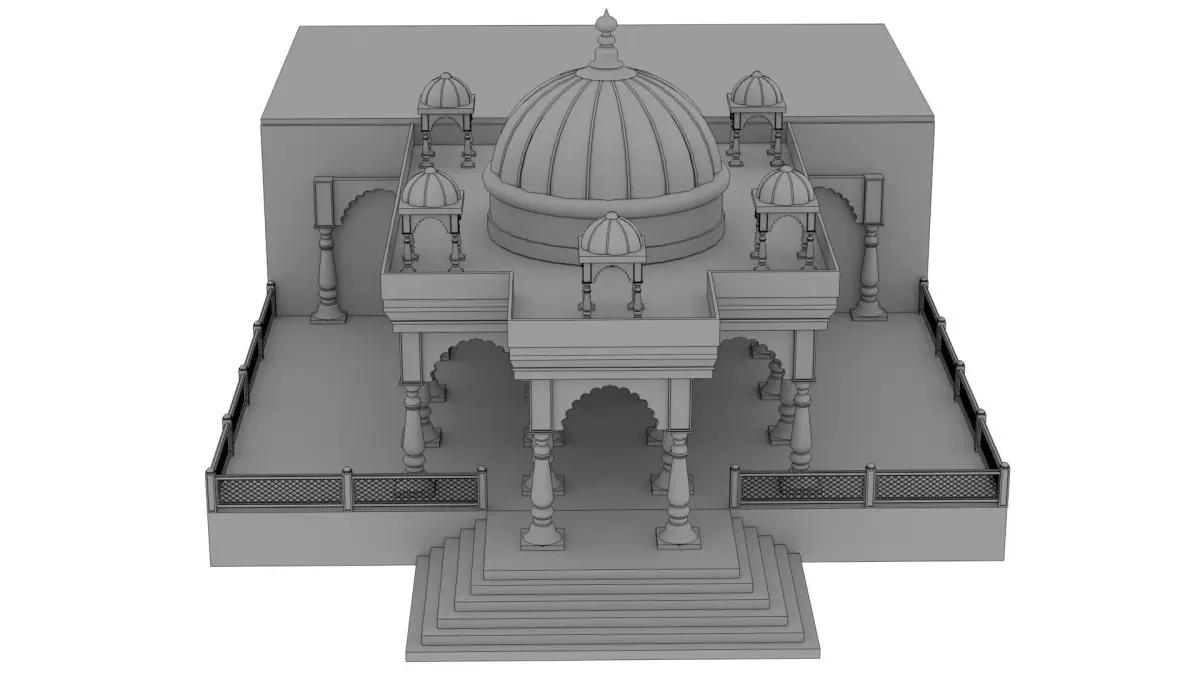
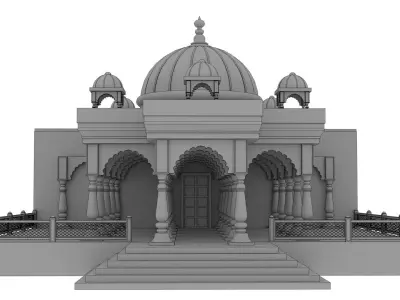
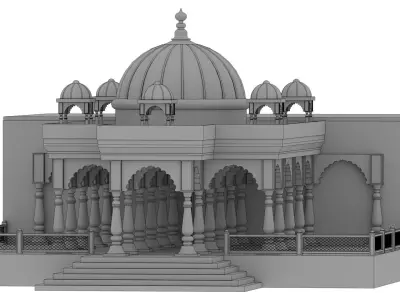
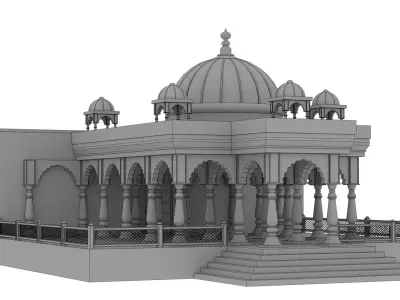
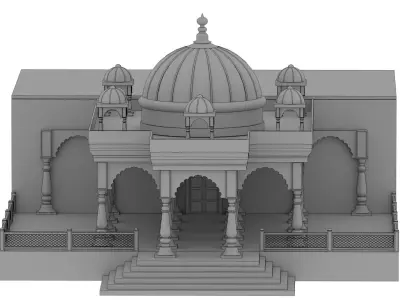
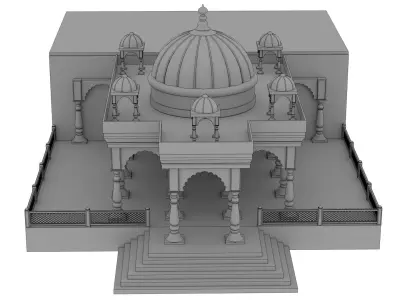
An Indian Palace is a magnificent architectural structure that reflects the royal heritage, cultural richness, and artistic excellence of India. Designed as the residence of kings and queens, these palaces combine grandeur, symmetry, and intricate craftsmanship. They are known for their imposing scale, luxurious spaces, and strong connection to traditional Indian art and culture.
The palace façade typically features ornate arches, carved stone columns, decorative jharokhas (balconies), and large wooden doors, often embellished with metalwork. Grand domes and chhatris crown the structure, symbolizing power and divinity, while adding a dramatic skyline presence. Inside, the palace unfolds into spacious courtyards, durbar halls, and ceremonial chambers, designed for royal gatherings and public audiences.
Walls and ceilings are enriched with detailed carvings, fresco paintings, mirror work, and floral or geometric motifs, showcasing the skills of master artisans. Materials such as sandstone, marble, lime plaster, and natural pigments are traditionally used, ensuring durability and elegance. Gardens, water bodies, and colonnaded corridors further enhance the palace’s regal atmosphere, creating a harmonious blend of architecture and landscape.
Overall, an Indian Palace stands as a symbol of royalty, tradition, and timeless beauty, representing the architectural brilliance and historical legacy of India.
STL (Stereolithography, filesize: 31 MB), 3DS (3D Studio, filesize: 11.5 MB), MAX (Autodesk 3ds Max, filesize: 4.61 MB), FBX (Autodesk FBX, filesize: 26.8 MB)