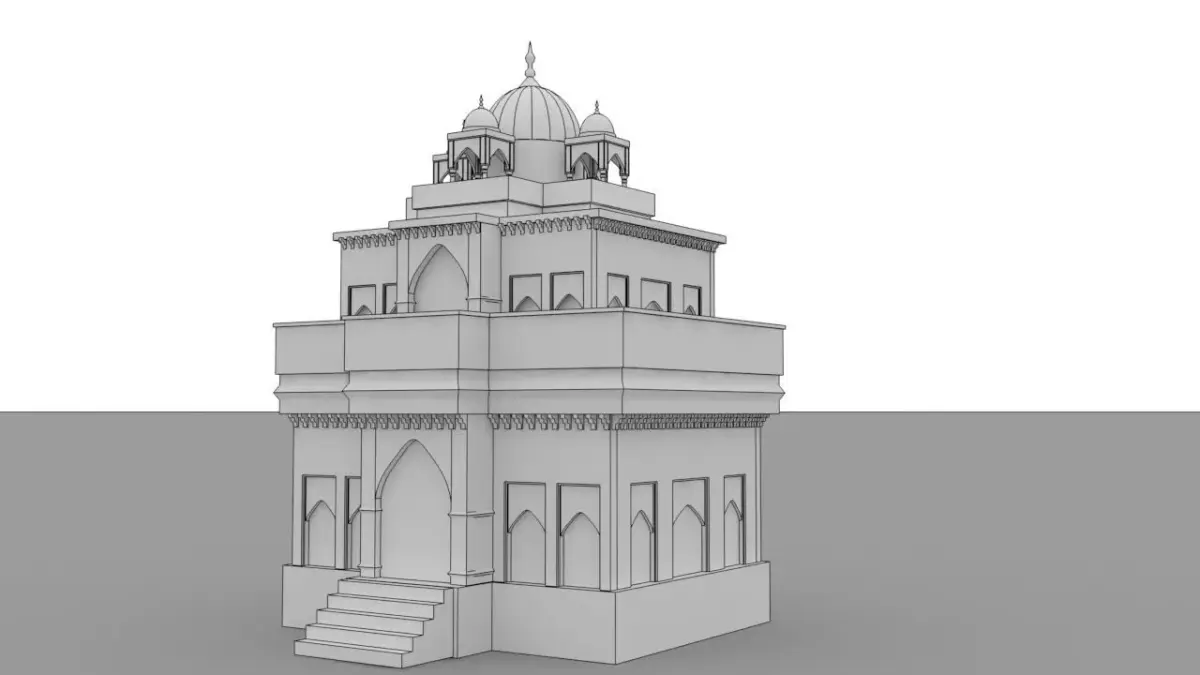
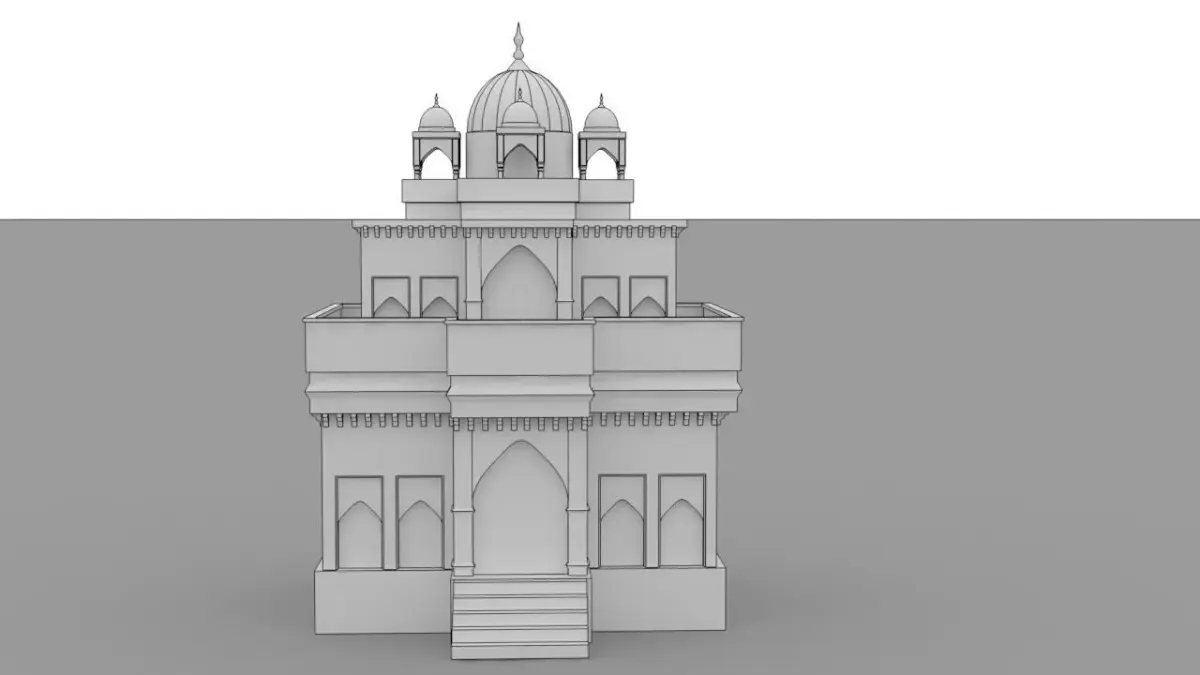
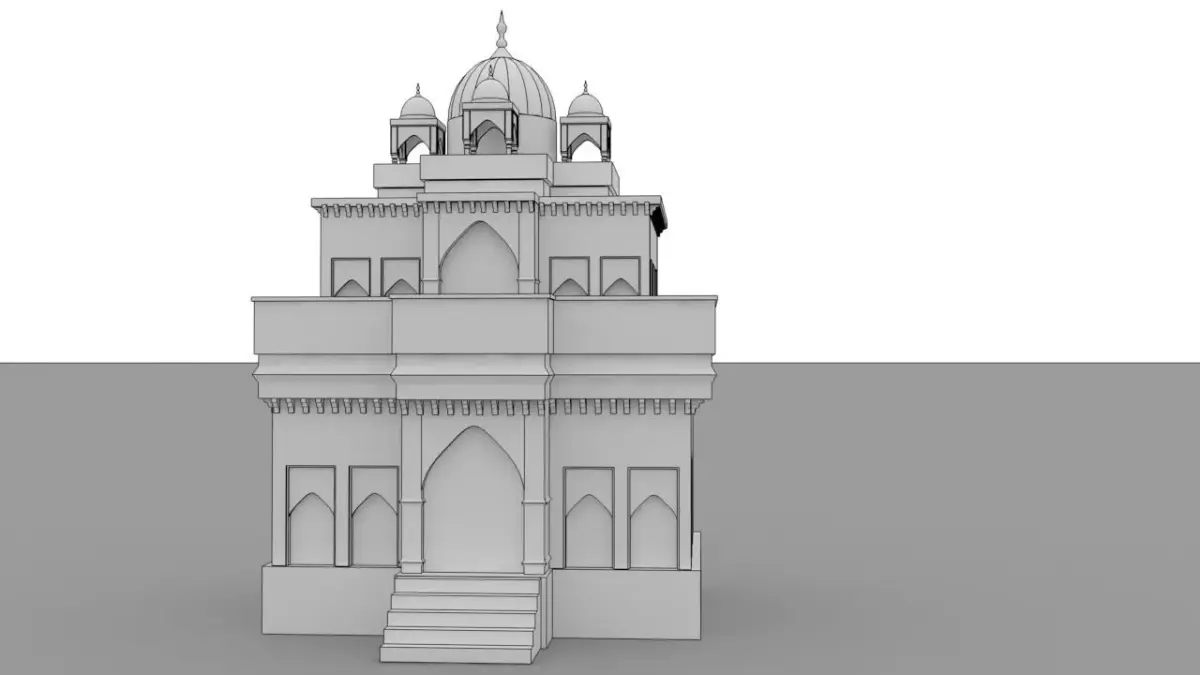
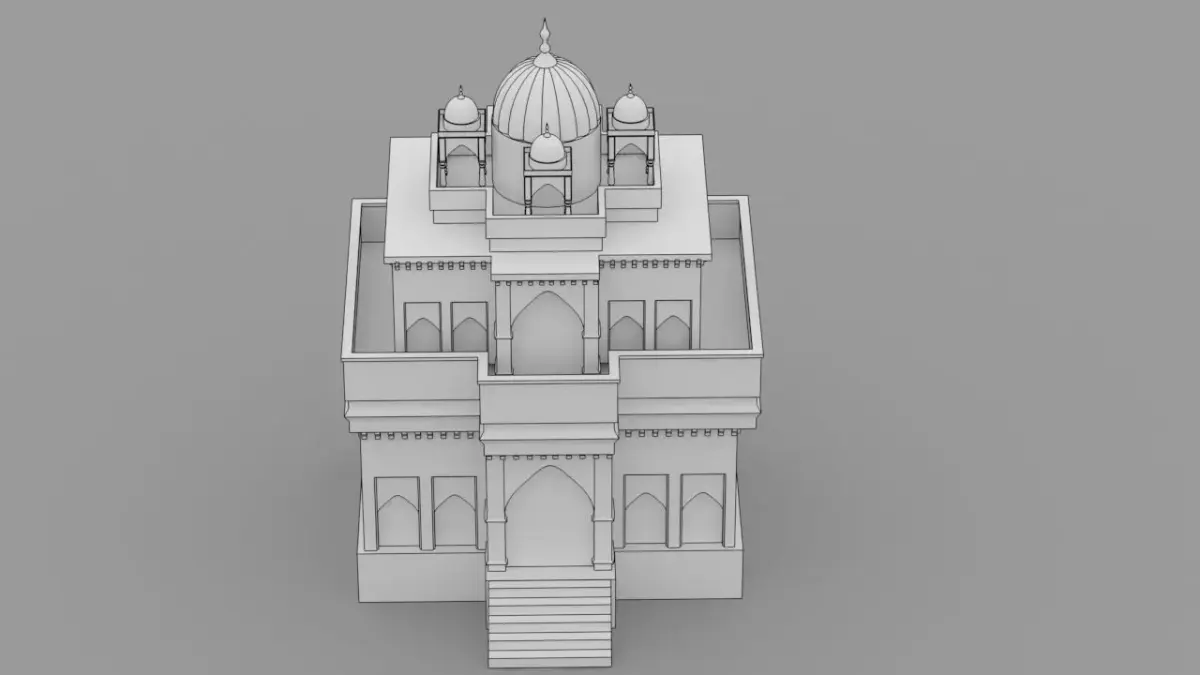
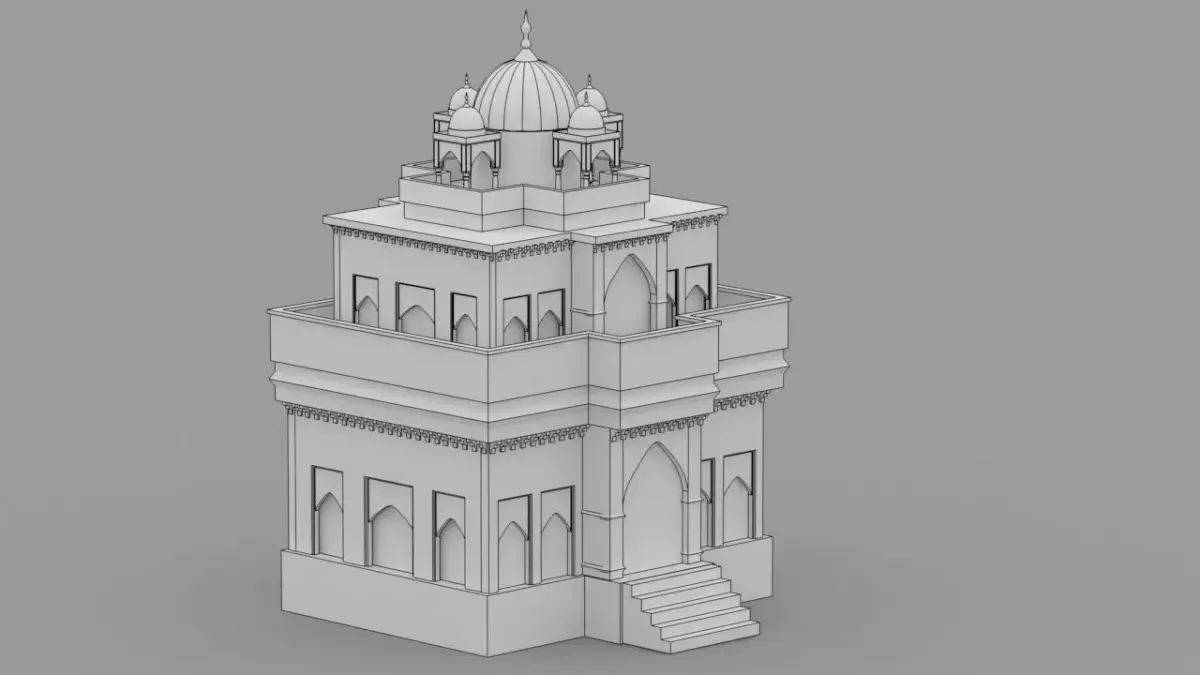
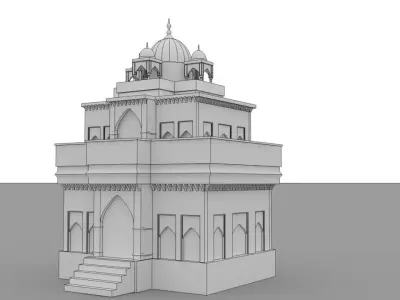
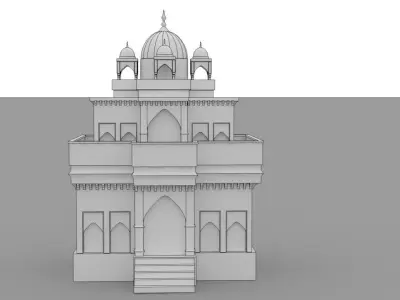
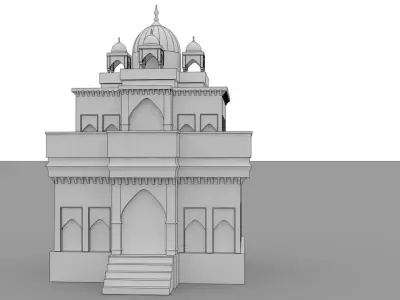
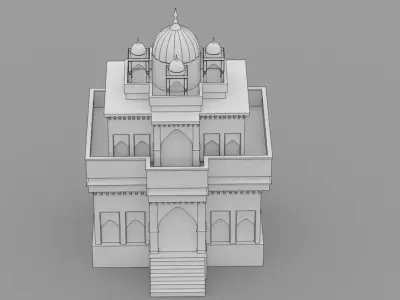
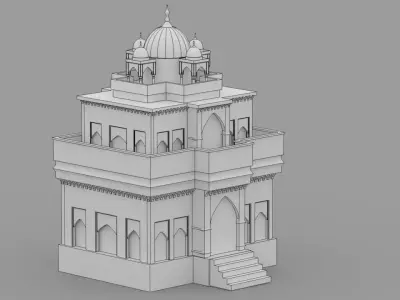
An Indian palace dome structure is a majestic architectural element that symbolizes royalty, spirituality, and artistic excellence. Rooted in Mughal, Rajput, and Indo-Islamic architecture, the dome acts as a visual crown over palaces, courts, durbar halls, and ceremonial spaces.
The dome typically rises from a circular or octagonal base, supported by thick masonry walls or elegantly carved pillars. Its form ranges from perfect hemispherical domes to slightly bulbous profiles, often accentuated with a kalash, finial, or lotus motif at the apex. The exterior surface is richly finished with stone cladding, marble, lime plaster, or decorative ribs, sometimes enhanced with gold detailing or colored in traditional hues like ivory, sandstone red, or pastel blue.
Inside, the dome is adorned with intricate carvings, floral motifs, geometric patterns, and traditional jaali work. The inner ceiling often features concentric rings, medallions, or painted frescoes, creating depth and grandeur. Small arched openings or perforated screens allow soft natural light to filter in, producing a calm and regal ambiance.
Structurally, the dome showcases advanced ancient engineering, using squinches or pendentives to smoothly transition from square halls to circular domes. This not only ensures stability but also enhances the spatial harmony of the palace interior.
Overall, the Indian palace dome structure stands as a timeless expression of royal elegance, cultural heritage, and architectural mastery, making it a focal point of any traditional or heritage-inspired design
STL (Stereolithography, filesize: 6.19 MB), FBX (Autodesk FBX, filesize: 35.5 MB), 3DS (3D Studio, filesize: 3.4 MB), MAX (Autodesk 3ds Max, filesize: 7.18 MB)