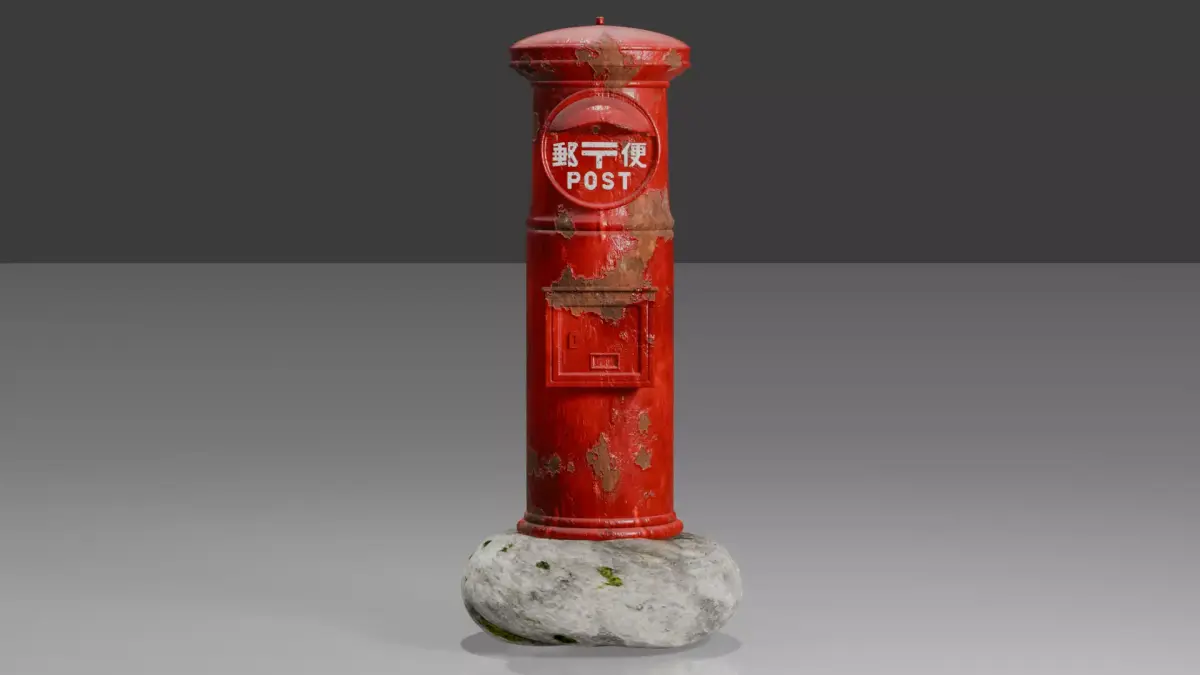
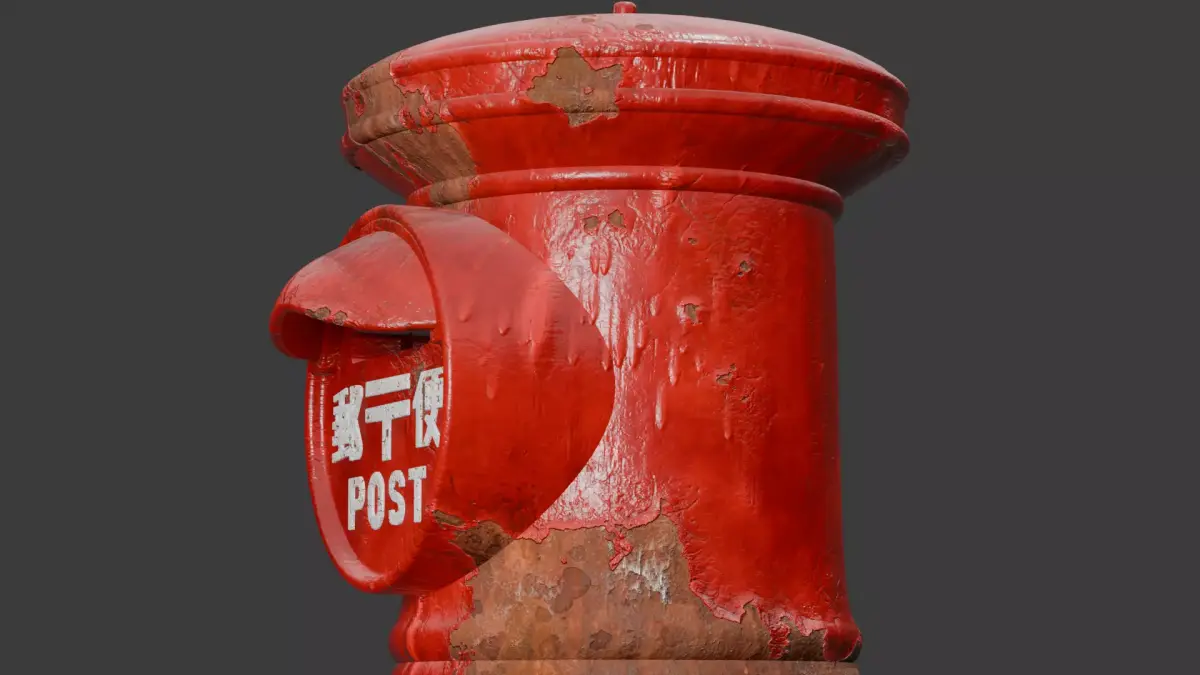
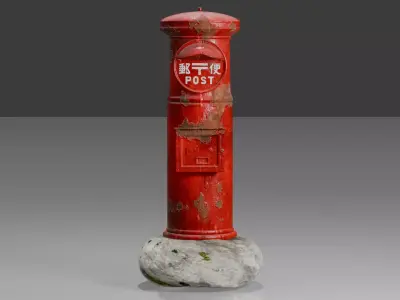
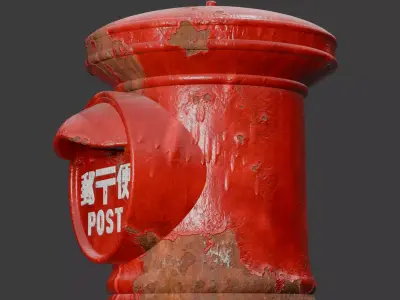
This is a classic Japanese post box known in Japan as a maru-gata posuto (丸型ポスト), which literally means “round-shaped post.” It is one of the most iconic and nostalgic symbols of Japan’s postal system.
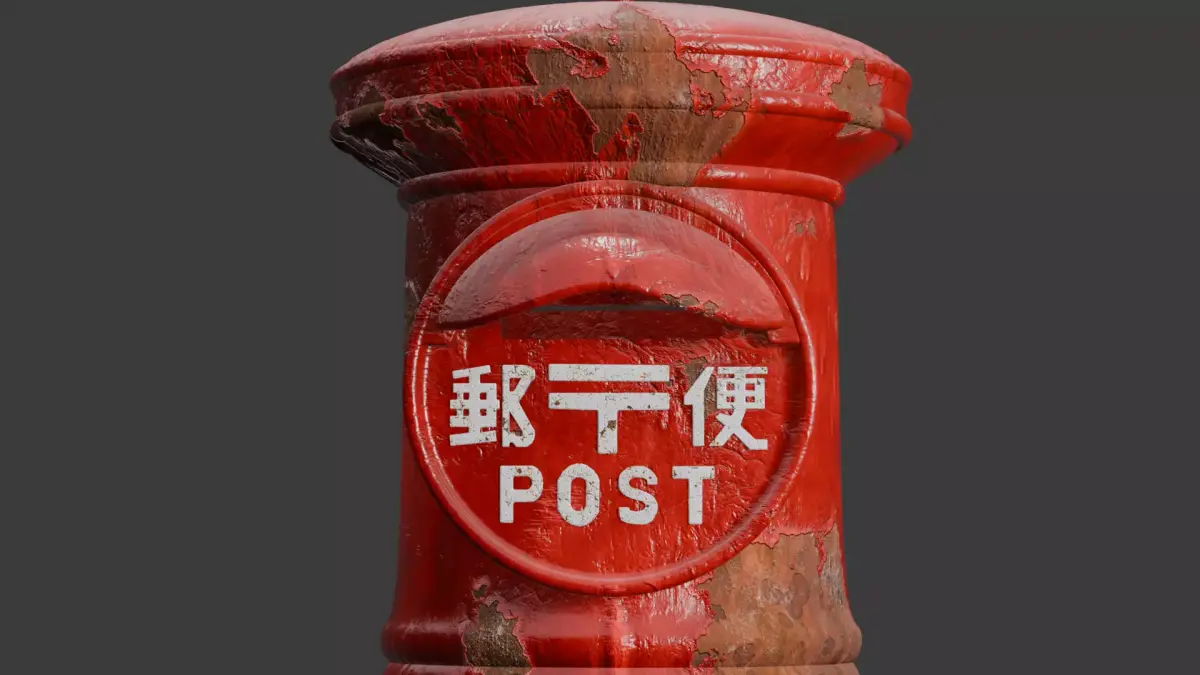
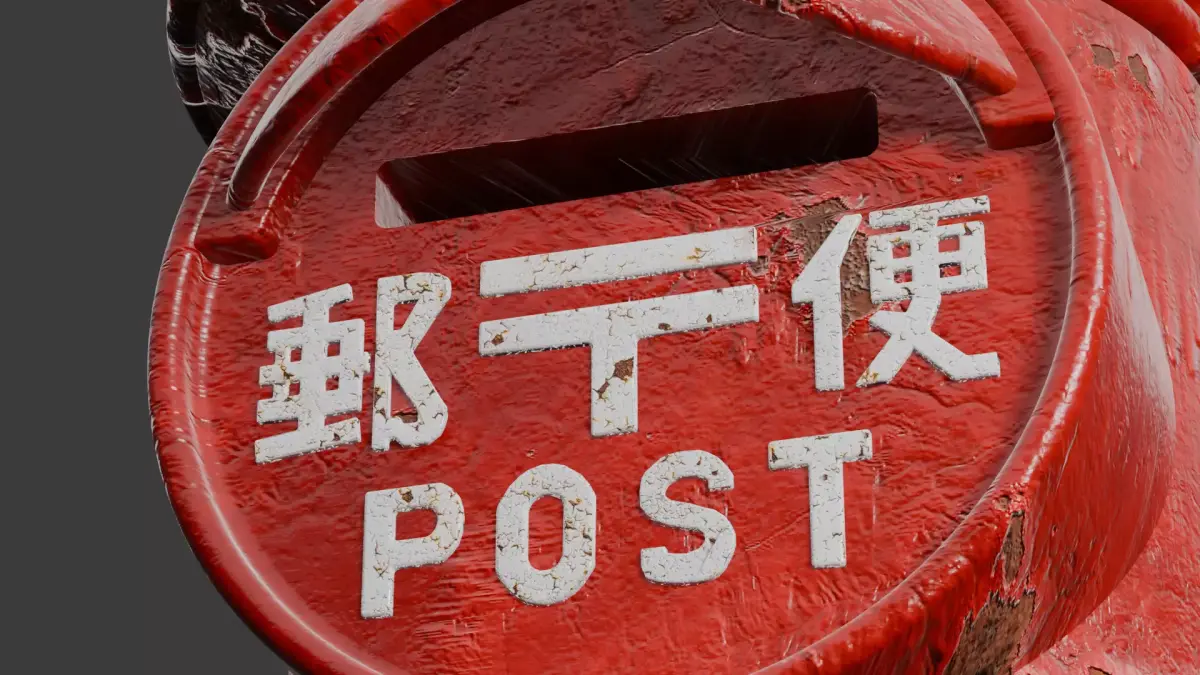
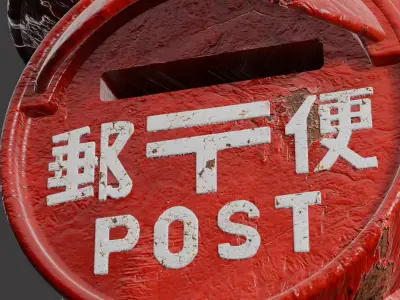
The post box is cylindrical in shape, made of metal (traditionally cast iron or steel), and painted in a vivid red color. Red has long been the standard color for mailboxes in Japan because it is highly visible and immediately associated with the postal service. On the upper front section, you can see the Japanese characters “郵便” (yūbin), meaning “mail” or “postal service,” and beneath them the word “POST” in English. The lettering is typically raised or embossed, giving the surface a solid, durable look.
The structure is vertically elongated and stands independently on a heavy base, often made of stone or concrete. The base is wide and rounded to provide stability and to protect the metal body from moisture and ground contact. The top is domed, which helps rainwater run off easily and prevents water from collecting on the surface. This design reflects practical considerations for Japan’s rainy climate.
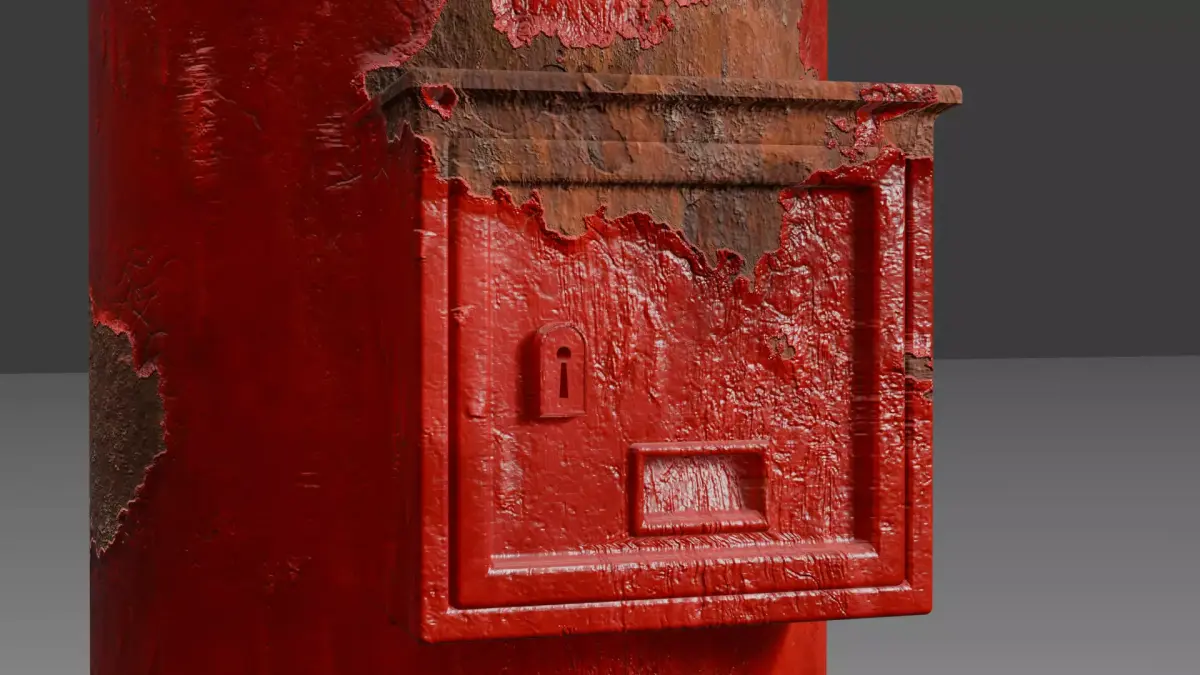
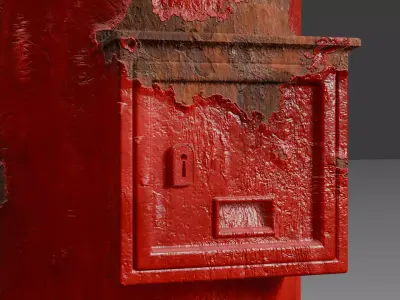
Letters are inserted through a horizontal slot located on the front of the box. Beneath the slot is usually a small collection door, which postal workers open to retrieve the mail. Older versions of these post boxes were quite simple inside, consisting of a single large compartment. Modern rectangular mailboxes often have separate compartments for different mail categories, but the traditional round post box usually has a single chamber.
This design became common in Japan during the early 20th century, especially from the Taishō period (1912–1926) into the early Shōwa period (1926 onward). At the time, Japan was modernizing rapidly, and a standardized national postal system was an important part of infrastructure development. The round metal post box was durable, weather-resistant, and easy to manufacture in large quantities.
In terms of size, these post boxes are generally about 1.2 to 1.5 meters (roughly 4 to 5 feet) tall, making them easy for adults to use comfortably while still being accessible to older children. Their cylindrical body gives them a distinctive silhouette that stands out on streets, especially against urban or rural backgrounds.
Although Japan has largely transitioned to more modern, rectangular mailboxes that can handle larger volumes of mail and improved sorting systems, many of these traditional round post boxes still remain. Some are still in active use, while others are preserved for historical or aesthetic reasons. They are often found in older neighborhoods, near traditional shopping streets, in rural towns, or in tourist areas where they add to a nostalgic atmosphere.
For many Japanese people, this style of post box evokes feelings of the past—handwritten letters, New Year’s cards (nengajō), and a time before digital communication became dominant. It is not just a functional object but also a cultural icon that represents an earlier era of everyday life in Japan.
To someone unfamiliar with Japan, this post box may look charmingly old-fashioned. But within Japan, it carries historical significance and emotional value, symbolizing reliability, tradition, and the long history of the country’s postal service.
BLEND (Blender, filesize: 15.8 MB), OBJ (OBJ, filesize: 21.9 MB), FBX (Autodesk FBX, filesize: 8.21 MB), GLTF (glTF, filesize: 24.7 MB), STL (Stereolithography, filesize: 14.6 MB)