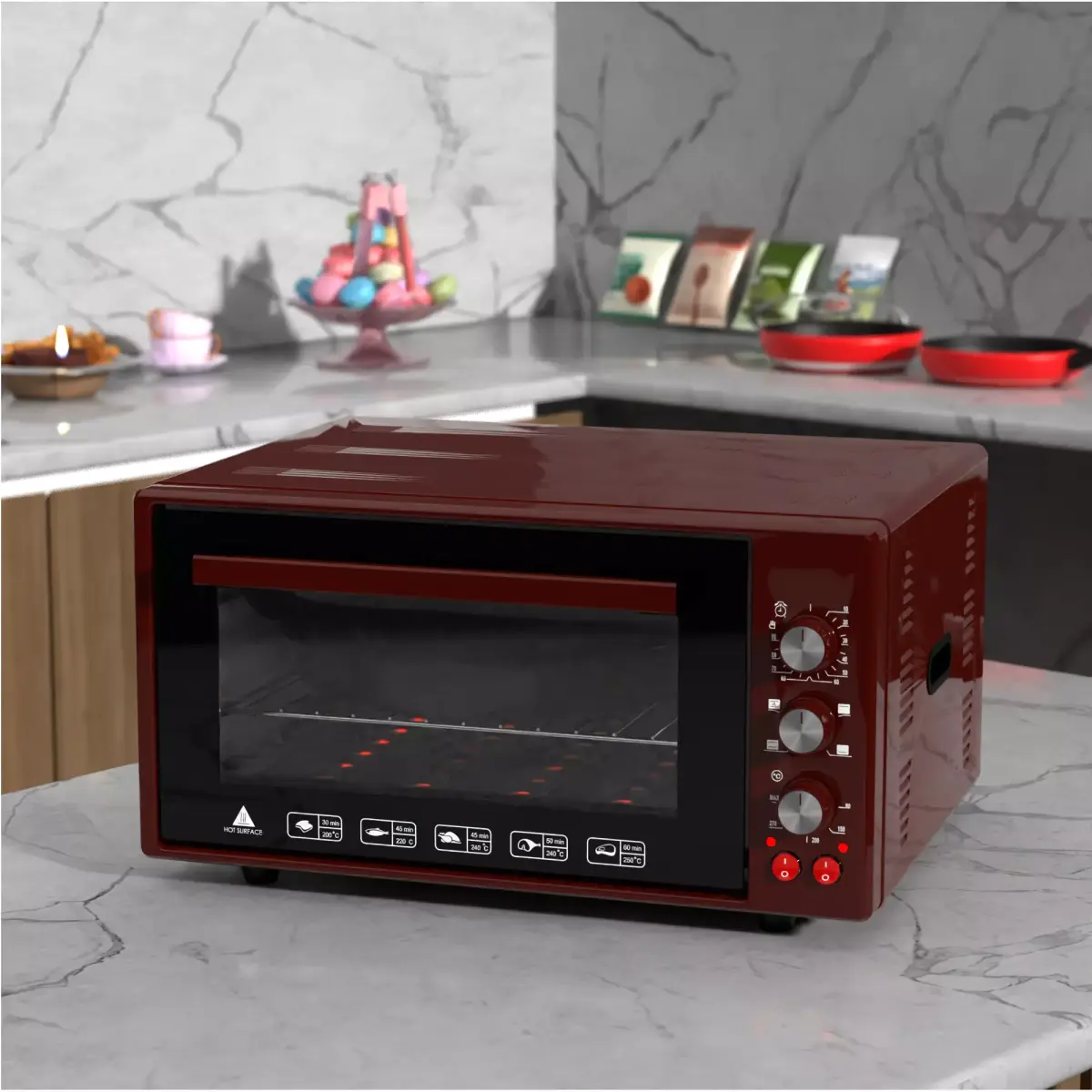
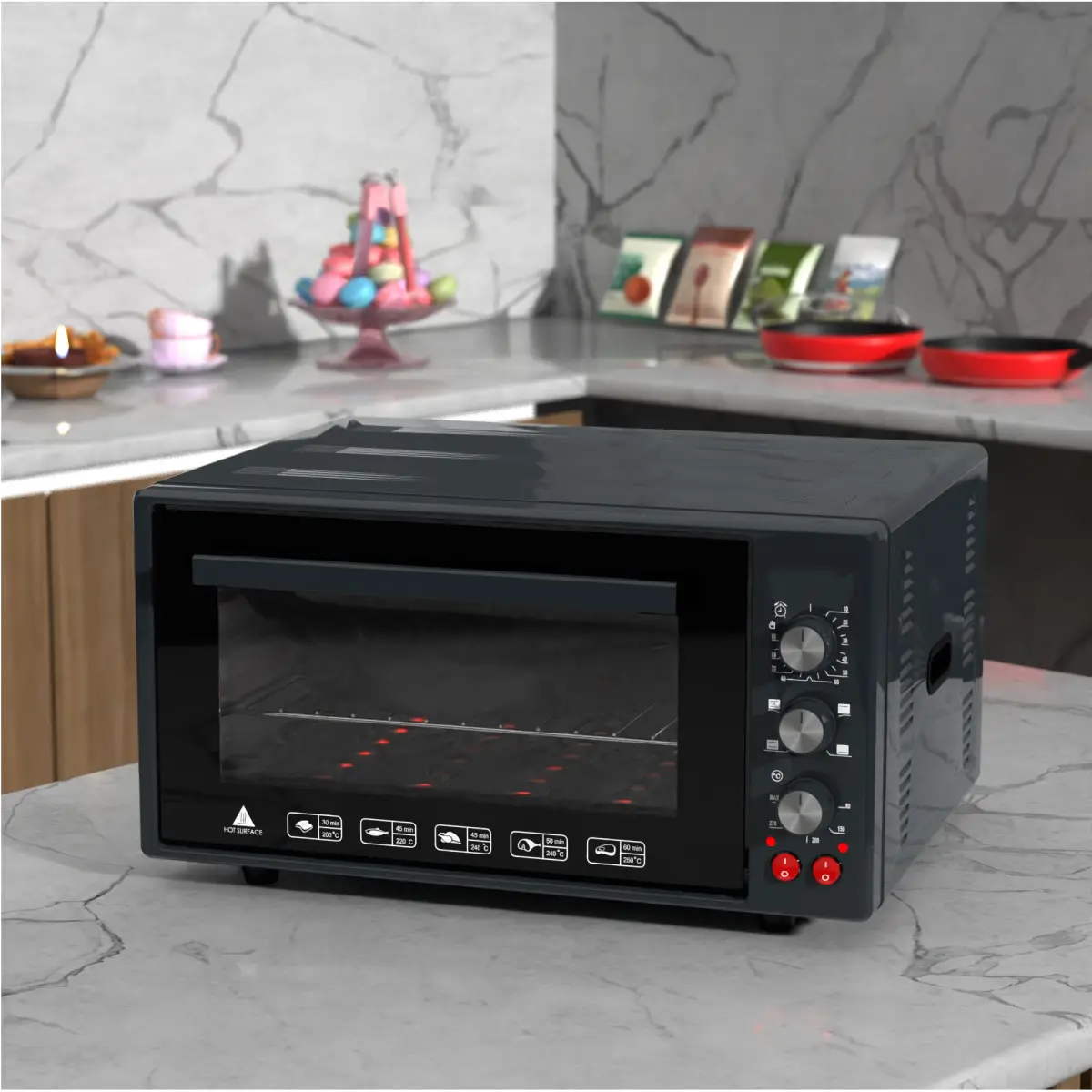
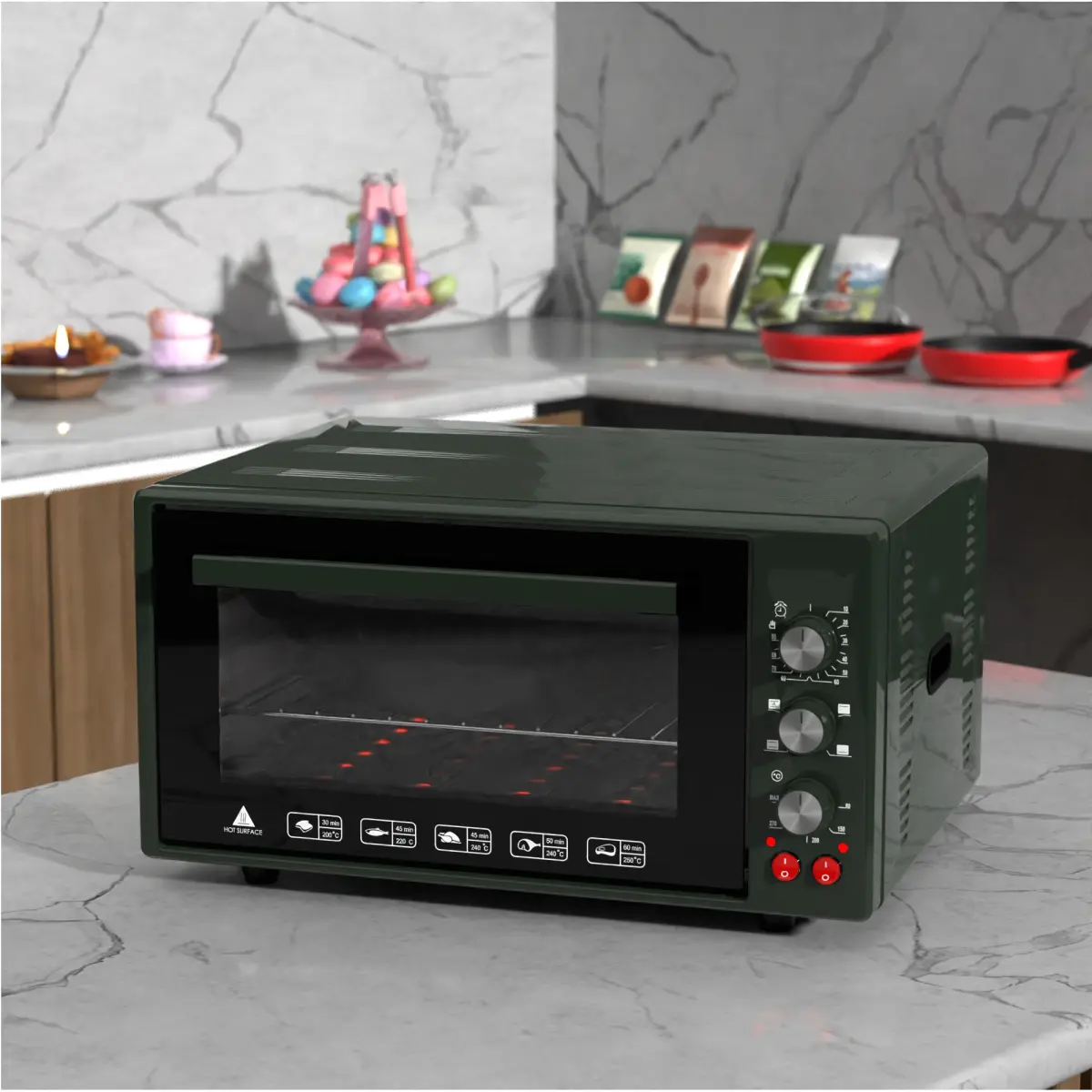
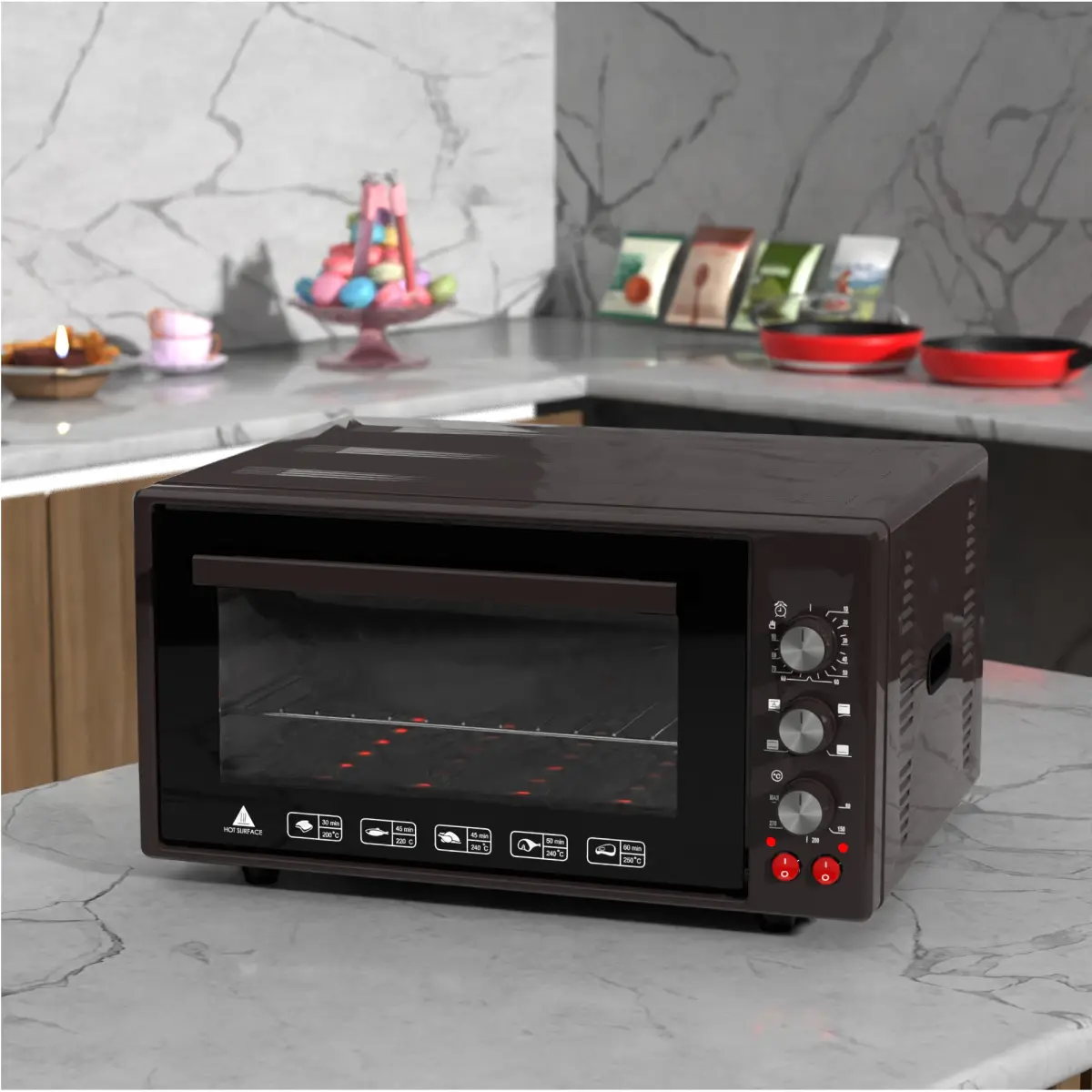
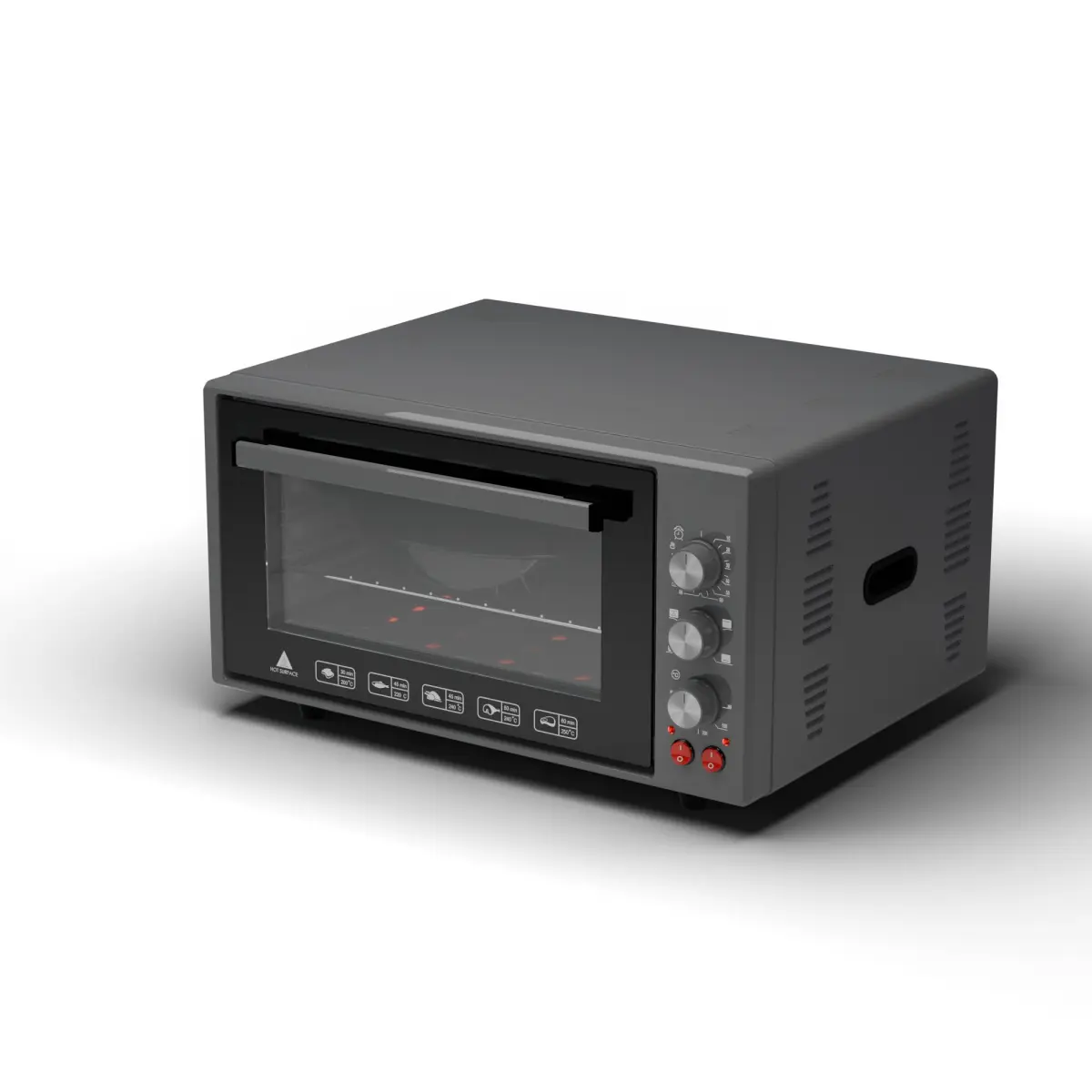
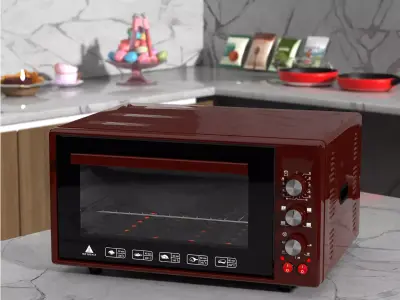
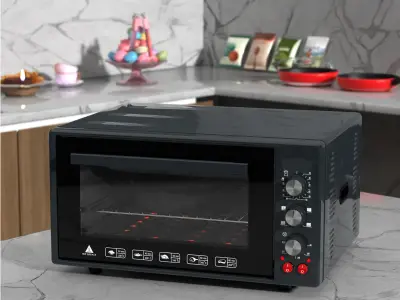
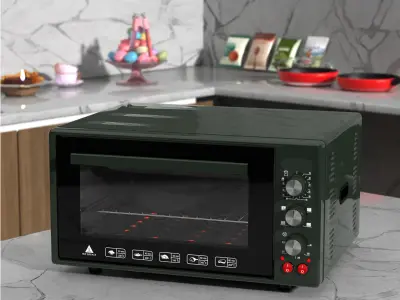
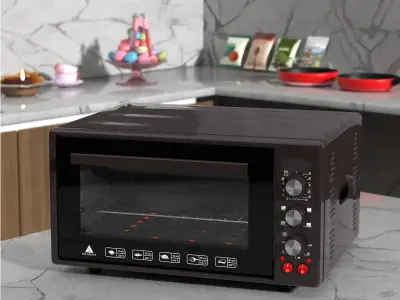
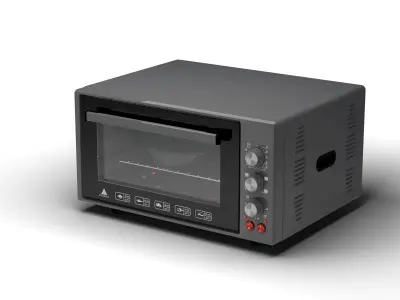
A 3D model of a mini oven typically represents the compact design of a countertop appliance with realistic proportions and detailed features. Below is a general description of what such a model might include:
General Shape:
- Body: Rectangular or slightly rounded at the corners to mimic the compact and space-saving design of a mini oven. The body is typically made of metal (often simulated as stainless steel, black, or white) and may have a smooth texture with visible seams.
- Size: Small enough to fit on a countertop, typically measuring between 12-18 inches wide, 10-12 inches deep, and 8-12 inches high.
Front Features:
- Door: A clear, glass door (often with a tinted or transparent texture) that allows visibility of the interior. The door may have a black or metallic frame and can open by swinging outward, often hinged on one side.
- Control Panel: Located above or below the door, the control panel may feature:
- Temperature Dial/Buttons: Digital or mechanical knobs to set the temperature, often labeled with a temperature range (e.g., 100-250°C).
- Function Dial/Buttons: Various cooking settings such as bake, toast, broil, or defrost.
- Timer Dial/Buttons: For setting cooking time.
- Indicator Lights: Small LED lights or icons to show when the oven is preheated or when it's in operation.
Interior Features:
- Rack: A removable wire rack (or two) is positioned inside for placing cooking items, often shown in 3D with grid-like textures.
- Baking Tray: A small, flat baking tray or pan that fits inside the oven, often included in the model to showcase versatility.
- Heating Elements: Horizontal or vertical bars can be visible inside the oven (modeled with realistic textures for wire or metal).
- Interior Surface: The interior may be represented with a reflective or matte finish to simulate an oven's cooking chamber, sometimes with heat-resistant materials depicted.
Side and Top Features:
- Ventilation Slots: Small vents or grilles on the sides or top of the mini oven, which allow air circulation and prevent overheating.
- Handles: The door may have a sturdy handle or a recessed grip, designed for ease of opening.
Textures and Materials:
- Surface Texture: The surface could be smooth with slight reflections or matte, depending on whether it simulates metal, plastic, or a combination.
- Glass: The door window is typically modeled with transparency and a slight reflection, using a glossy material for the glass.
- Knobs/Buttons: These could be modeled as simple cylinders or more complex mechanical dials, depending on the oven's design.
Additional Features:
- Digital Display: Some modern mini ovens may include a digital display for time, temperature, and function settings.
- Cable and Plug: In some models, a simple power cable and plug might be included to add realism.
This 3D model would typically be designed with a focus on realism, using software like Blender, Maya, or 3ds Max, and it could be used for product visualization, gaming, animation, or 3D printing.
BLEND (Blender, filesize: 31.6 MB), OBJ (OBJ, filesize: 29.5 MB), FBX (Autodesk FBX, filesize: 10.1 MB), C4D (Cinema 4D, filesize: 21.8 MB), GLTF (glTF, filesize: 11.3 MB), SLDPRT (SolidWorks, filesize: 31.4 MB), OTHER (Other, filesize: 31.4 MB), STL (Stereolithography, filesize: 16.4 MB), DAE (Collada, filesize: 45.4 MB)