High-quality 3D assets at affordable prices — trusted by designers, engineers, and creators worldwide. Made with care to be versatile, accessible, and ready for your pipeline.
Included File Formats
This model is provided in 14 widely supported formats, ensuring maximum compatibility:
• - FBX (.fbx) – Standard format for most 3D software and pipelines
• - OBJ + MTL (.obj, .mtl) – Wavefront format, widely used and compatible
• - STL (.stl) – Exported mesh geometry; may be suitable for 3D printing with adjustments
• - STEP (.step, .stp) – CAD format using NURBS surfaces
• - IGES (.iges, .igs) – Common format for CAD/CAM and engineering workflows (NURBS)
• - SAT (.sat) – ACIS solid model format (NURBS)
• - DAE (.dae) – Collada format for 3D applications and animations
• - glTF (.glb) – Modern, lightweight format for web, AR, and real-time engines
• - 3DS (.3ds) – Legacy format with broad software support
• - 3ds Max (.max) – Provided for 3ds Max users
• - Blender (.blend) – Provided for Blender users
• - SketchUp (.skp) – Compatible with all SketchUp versions
• - AutoCAD (.dwg) – Suitable for technical and architectural workflows
• - Rhino (.3dm) – Provided for Rhino users
Model Info
• - All files are checked and tested for integrity and correct content
• - Geometry uses real-world scale; model resolution varies depending on the product (high or low poly)
• • - Scene setup and mesh structure may vary depending on model complexity
• - Rendered using Luxion KeyShot
• - Affordable price with professional detailing
Buy with confidence. Quality and compatibility guaranteed.
If you have any questions about the file formats, feel free to send us a message — we're happy to assist you!
Sincerely,
SURF3D
Trusted source for professional and affordable 3D models.
More Information About 3D Model :
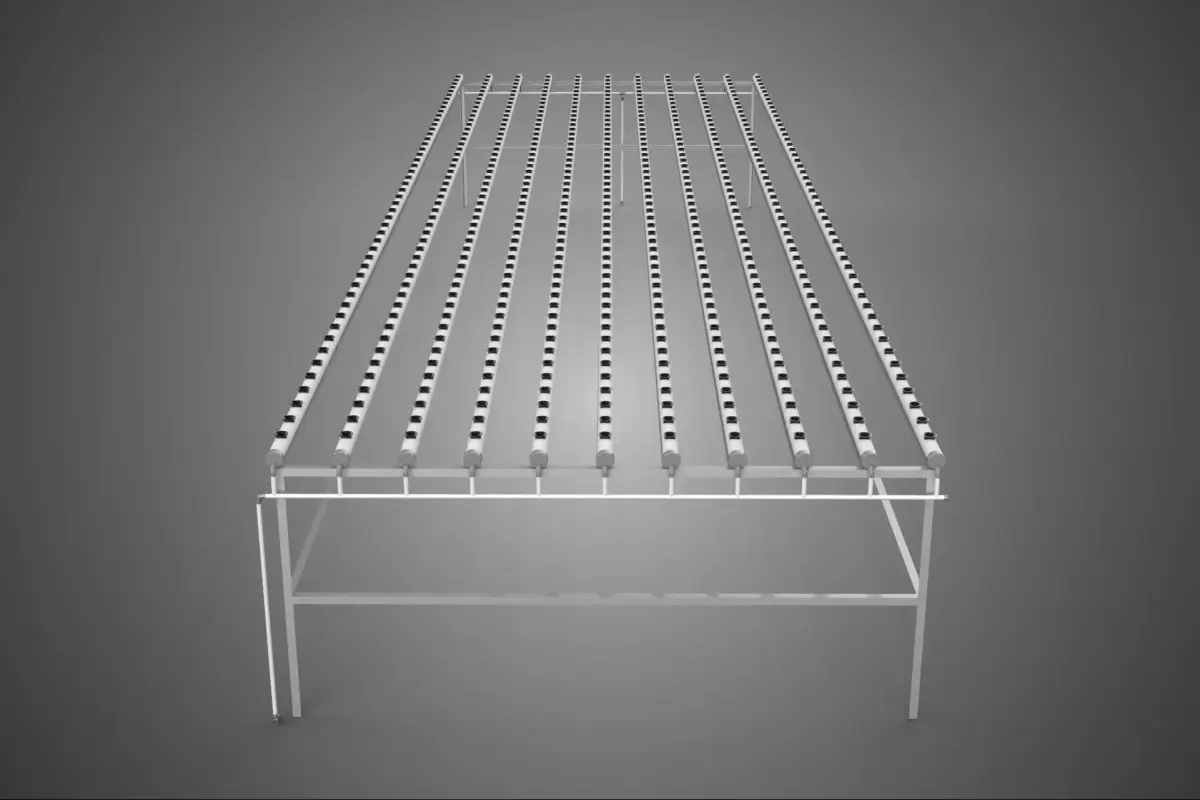
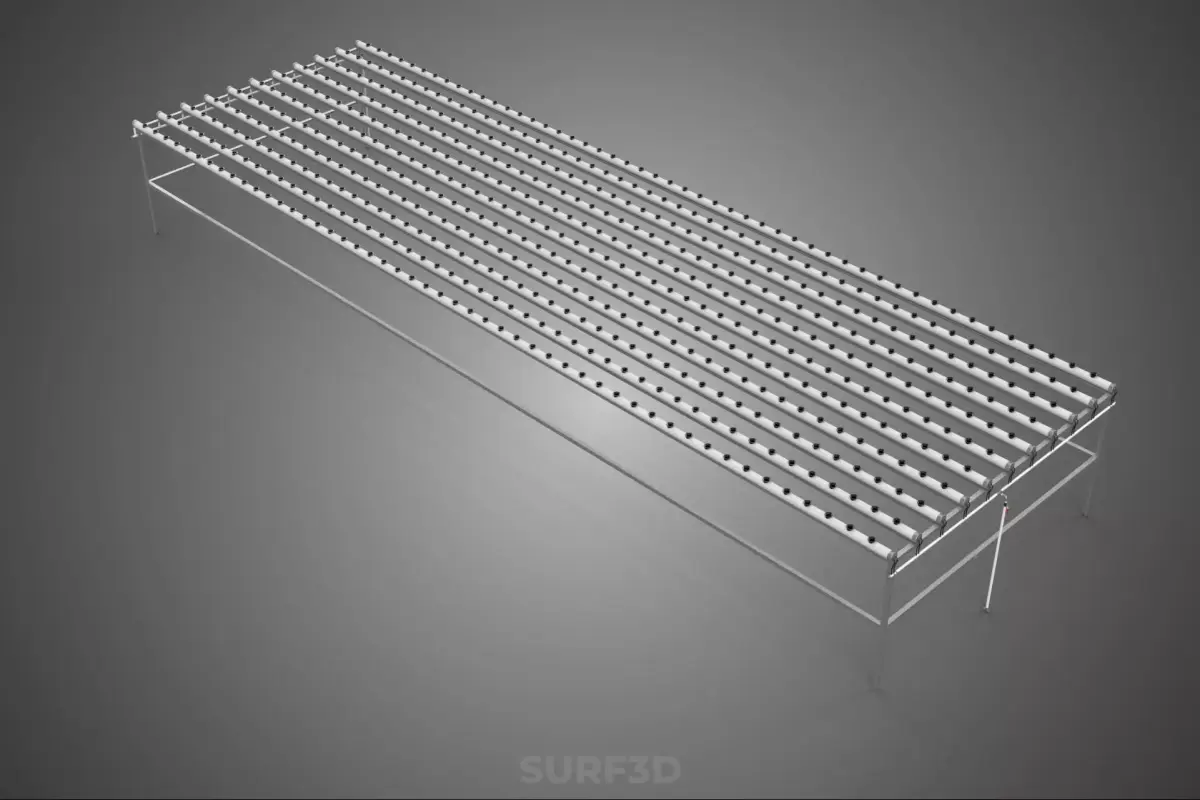
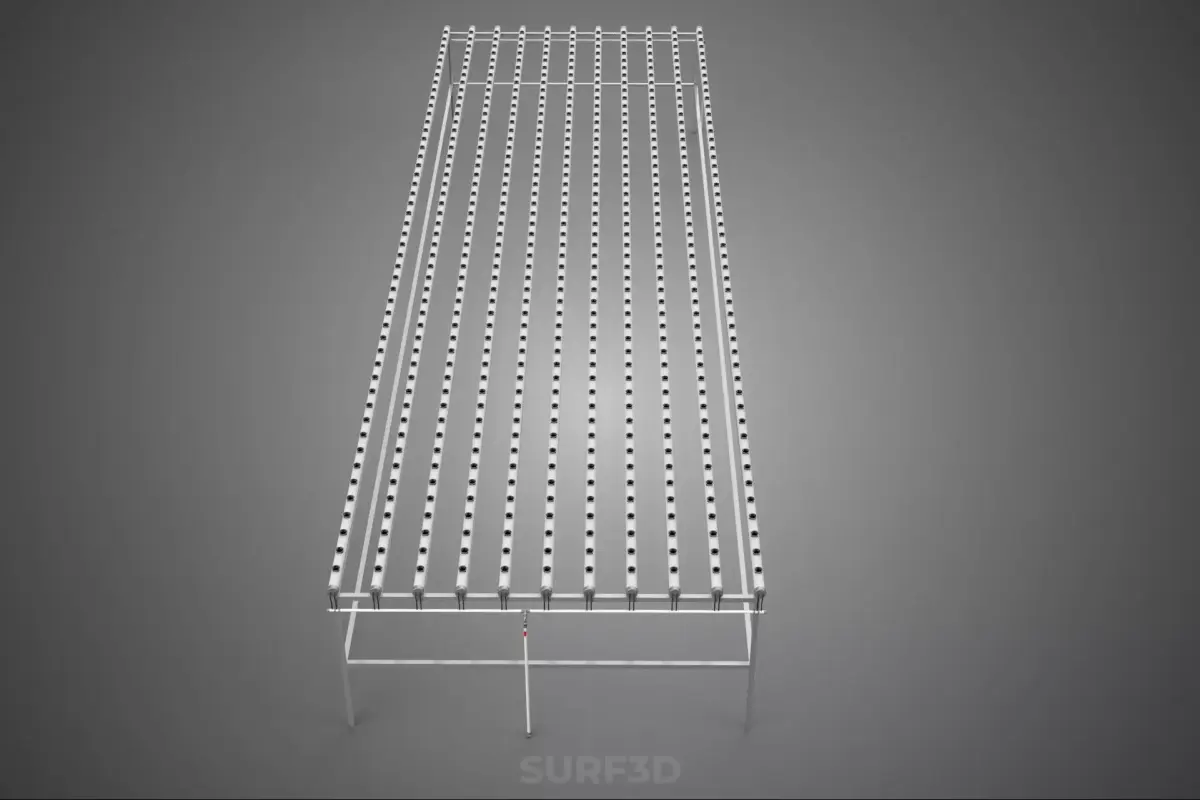
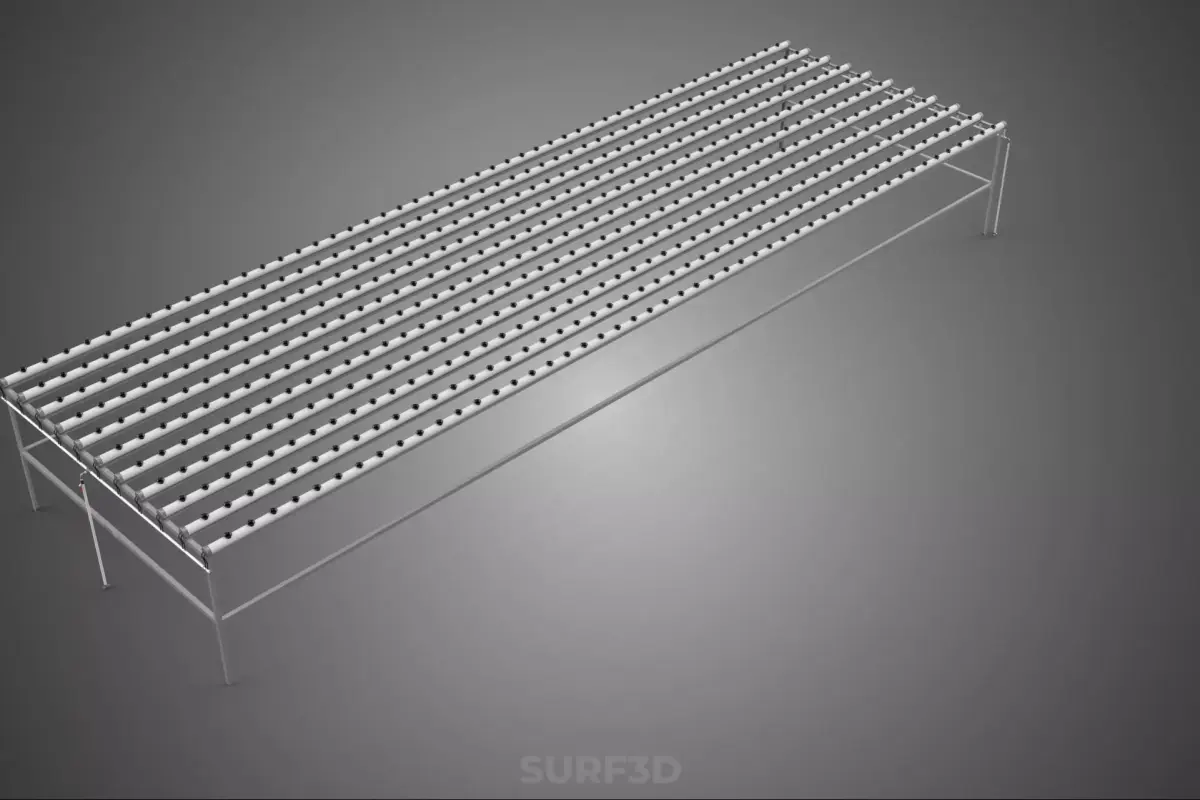
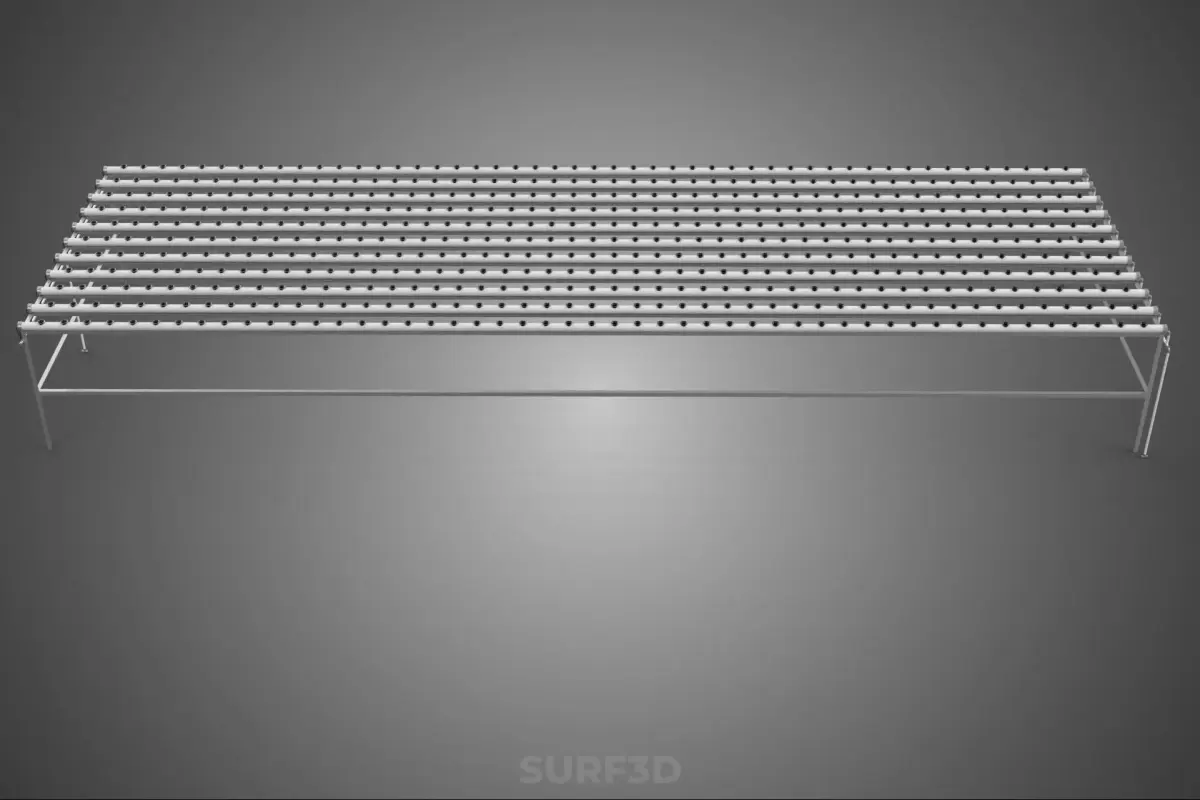
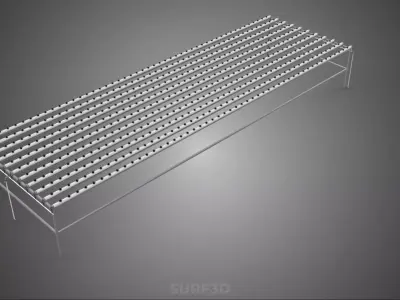
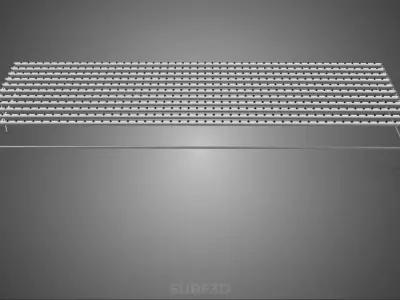
A large hydroponic rack netcup Nutrient Film Technique (NFT) system array represents a highly industrialized and space-efficient methodology for soilless plant cultivation, typically categorized within the domain of Controlled Environment Agriculture (CEA). This integrated system combines the high-density planting capacity of vertical racks with the efficiency of NFT delivery, utilizing netcups as the primary interface between the plants and the recirculating nutrient solution.
Architectural Structure and Scaling
The defining characteristic of this system is its scale and structure. The 'rack array' consists of multi-tiered, often modular, vertical structures constructed from durable, corrosion-resistant materials such as galvanized steel or aluminum. This vertical integration drastically reduces the required floor footprint, maximizing the cultivated surface area within indoor facilities, greenhouses, or dedicated vertical farms.
The 'array' refers to the interconnected matrix of specialized horizontal channels, often called gullies or troughs, mounted upon the vertical racks. These channels are engineered with a specific, slight gradient (typically 1% to 2%) to facilitate the passive flow of the nutrient solution via gravity. Systems labeled 'large' imply commercial or industrial capacity, featuring extensive plumbing infrastructure, large nutrient reservoirs, and automated climate and dosing controls to manage hundreds or thousands of planting sites simultaneously.
Nutrient Film Technique (NFT) Operation
The core function relies on the Nutrient Film Technique. Unlike Deep Water Culture (DWC) or media-based systems, NFT delivers nutrients by flowing a very shallow stream (a ‘film,’ usually 1–3 millimeters deep) of nutrient-rich water down the base of the growing channel. This crucial depth ensures that only the lower portion of the root mass is submerged in the solution.
This partial submersion provides dual benefits:
- Continuous Nutrition: The roots receive consistent access to water and dissolved mineral elements.
- Optimal Aeration: The upper portions of the root structure remain exposed to the air within the channel, ensuring crucial oxygen uptake (aeration). Adequate oxygenation prevents root rot and optimizes metabolic processes, leading to healthier plant growth than systems where roots are fully saturated.
### Role of Netcups and Plant Support
'Netcups' (or net pots) are small, perforated containers used to support the plant structure and the initial inert growing medium (e.g., rockwool cubes, coco coir) used for propagation. The netcup is seated into pre-drilled holes in the NFT channels. As the seedling matures, its roots grow through the perforations of the netcup and extend downward, forming a dense mat that rests directly in the flowing nutrient film below. This system minimizes the need for heavy or expensive substrates, simplifying sanitation and harvesting procedures.
### Commercial Applications and Advantages
Large hydroponic rack NFT arrays are highly favored for fast-cycling, high-density crops, notably leafy greens (e.g., various lettuce types, spinach), culinary herbs (e.g., basil, mint), and small vine crops or strawberries.
The system offers significant resource efficiency:
- Water Conservation: The system is recirculating, capturing and reusing nutrient solution, dramatically reducing water usage compared to conventional field agriculture.
- Precision Dosing: Automation allows precise control over environmental parameters (temperature, humidity) and chemical parameters (pH and Electrical Conductivity, or EC), ensuring optimal plant health and maximizing predictable yields.
- Space Utilization: The vertical configuration enables maximum productivity per square meter of facility space, making it a sustainable choice for urban or land-constrained farming operations.
KEYWORDS: Hydroponics, NFT System, Vertical Farming, Controlled Environment Agriculture, CEA, Rack Array, Soilless Cultivation, Commercial Hydroponics, Netcups, Nutrient Film, Aeration, Grow Channels, Gutter System, Large Scale Farming, Indoor Agriculture, Crop Density, Resource Efficiency, Automation, pH Control, EC Monitoring, Recirculating System, Modular Design, High Yield, Leafy Greens, Urban Farming, Greenhouse Technology, Substrate-Free, Sustainable Farming, Crop Production, Root Zone
STL (Stereolithography, filesize: 199 MB), OBJ (OBJ, filesize: 437 MB), 3DM (Rhinoceros 3D, filesize: 11.8 MB), 3DS (3D Studio, filesize: 138 MB), BLEND (Blender, filesize: 360 MB), DAE (Collada, filesize: 706 MB), DWG (AutoCAD, filesize: 117 MB), FBX (Autodesk FBX, filesize: 120 MB), GLTF (glTF, filesize: 141 MB), SKP (Sketchup, filesize: 5.39 MB), STP (STEP, filesize: 5.05 MB), IGE (IGES, filesize: 9.92 MB), SAT (3D ACIS, filesize: 834 MB), MAX (Autodesk 3ds Max, filesize: 1.16 GB)