
Publication date: 2025-12-25
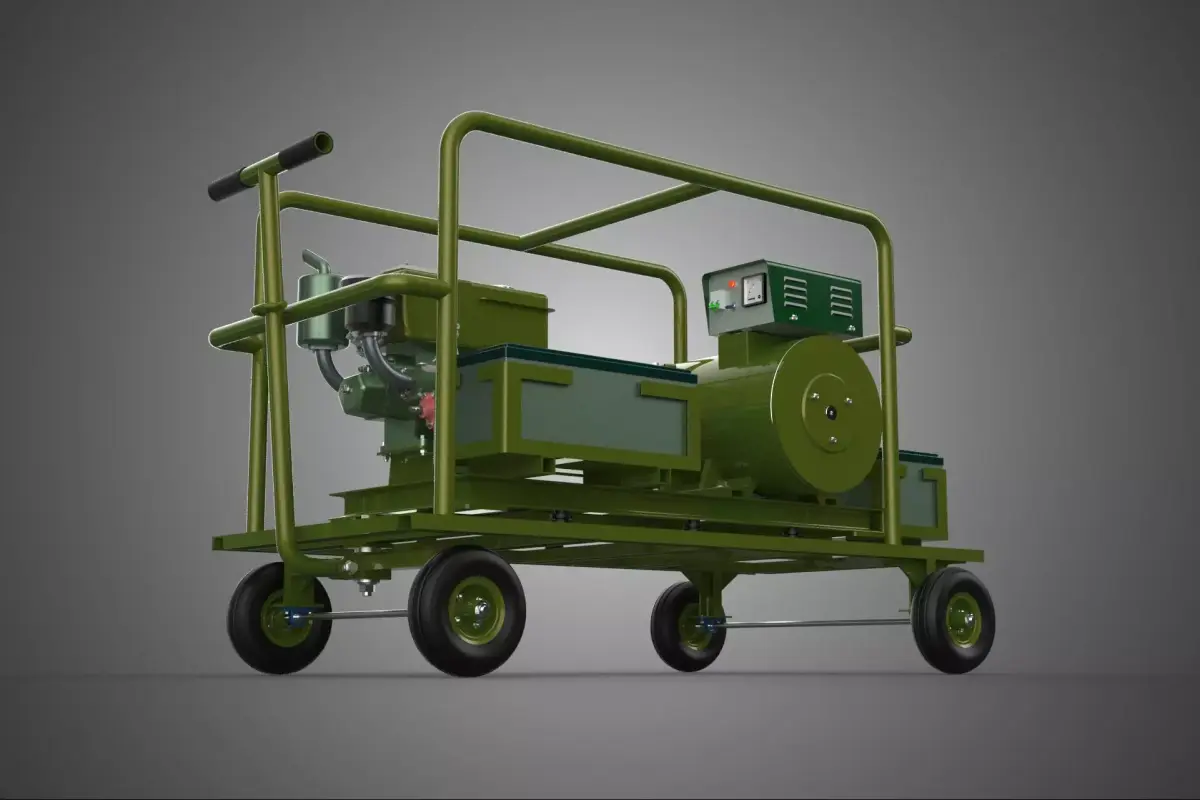
Buy MILITARY FIELD GENERATOR SET TACTICAL BATTLEFIELD WAR SUPPORT KW 3D model
$37
License: Royalty Free
Rigged
PBR
Realtime
Animated
Free

author:
SURF3D
Renders and source materials belong to the author SURF3D.
Specifications
- Platform
- cgtrader
- Animated
- Rigged
- 3D Print ready
- VR / AR / Low-poly
- PBR
- Textures
- Materials
- UV Mapping
- Polygons
- 1095855
- Vertices
- 801222
- Geometry
- No N-gons | No faceted geometry | Manifold geometry |
Usage recommendations
Realtime rendering
✕
PC Game development
✕
Mobile Game Development
✕
VR/AR applications
✕
Visualisation
✓
Cinema
✓
Advertising
✓
3D Printing
✕
CAD Engineering
✕
E-Commerce & Interactive 3D Web
✕
FAQ
Is this a free 3D model?
No, this model costs $37.
How do I download this 3D model?
Click the "Go to purchase" button to buy and download this model.
What license applies to this model?
This model comes with a Royalty Free license. See the seller's page (via "Go to purchase") for the full terms.
Does it include rigging and animation?
This model has no rig or animation. It is a static 3D object.
Does this model have UV mapping?
No, this model does not have UV mapping.
What textures and materials does this 3D model include?
This model has materials, but no textures. See the Specifications block for exact numbers and Additional information for more context.
Can I use it for 3D printing?
No, this model is not intended for 3D printing.
Additional information
High-quality 3D assets at affordable prices — trusted by designers, engineers, and creators worldwide. Made with care to be versatile, accessible, and ready for your pipeline.
Included File Formats
This model is provided in 14 widely supported formats, ensuring maximum compatibility:
• - FBX (.fbx) – Standard format for most 3D software and pipelines
• - OBJ + MTL (.obj, .mtl) – Wavefront format, widely used and compatible
• - STL (.stl) – Exported mesh geometry; may be suitable for 3D printing with adjustments
• - STEP (.step, .stp) – CAD format using NURBS surfaces
• - IGES (.iges, .igs) – Common format for CAD/CAM and engineering workflows (NURBS)
• - SAT (.sat) – ACIS solid model format (NURBS)
• - DAE (.dae) – Collada format for 3D applications and animations
• - glTF (.glb) – Modern, lightweight format for web, AR, and real-time engines
• - 3DS (.3ds) – Legacy format with broad software support
• - 3ds Max (.max) – Provided for 3ds Max users
• - Blender (.blend) – Provided for Blender users
• - SketchUp (.skp) – Compatible with all SketchUp versions
• - AutoCAD (.dwg) – Suitable for technical and architectural workflows
• - Rhino (.3dm) – Provided for Rhino users
Model Info
• - All files are checked and tested for integrity and correct content
• - Geometry uses real-world scale; model resolution varies depending on the product (high or low poly)
• • - Scene setup and mesh structure may vary depending on model complexity
• - Rendered using Luxion KeyShot
• - Affordable price with professional detailing
Buy with confidence. Quality and compatibility guaranteed.
If you have any questions about the file formats, feel free to send us a message — we're happy to assist you!
Sincerely,
SURF3D
Trusted source for professional and affordable 3D models.
More Information About 3D Model :
A Military Field Generator Set (MFGS), frequently designated within military lexicon as a Tactical Quiet Generator (TQG) or Expeditionary Power Unit (EPU), is a specialized, mobile apparatus engineered to provide reliable electrical power in dynamic, austere, or hostile operational environments. These units are integral to modern military doctrine, ensuring the sustainment of critical infrastructure, combat operations, and life support systems independent of existing civilian power grids.
I. Definition and Purpose
The primary function of the MFGS is the generation of alternating current (AC) power, measured in Kilowatts (kW), for deployment in combat zones or support areas. Unlike commercial generators, MFGS units are designed to meet stringent military specifications (MIL-SPECs) regarding durability, environmental tolerance, and operational signatures. Their essential role is providing energy for Command, Control, Communications, Computers, Intelligence, Surveillance, and Reconnaissance (C4ISR) systems, forward operating bases (FOBs), field medical facilities, radar installations, and sophisticated weapons platforms.
II. Tactical Design and Engineering
MFGS engineering prioritizes robustness and tactical stealth, dictating specific design characteristics:
A. Ruggedization and Environmental Tolerance:
The external chassis and internal components are heavily ruggedized to withstand extreme shock, vibration, and rapid temperature fluctuations (typically operational from -32°C to +50°C). Units feature high Ingress Protection (IP) ratings to resist dust, sand, moisture, and chemical contaminants, facilitating operation in diverse global theaters ranging from arctic to desert environments.
B. Signature Management:
A critical tactical requirement is the reduction of detectable signatures. This involves two primary mechanisms:
Acoustic Signature Suppression: Advanced sound attenuation enclosures, specialized mufflers, and vibration-dampening mounts are integrated to minimize noise levels. These Tactical Quiet Generators often operate below 70 dB at 7 meters, significantly reducing the probability of detection by acoustical surveillance systems.
Electromagnetic Compatibility (EMC): MFGS units incorporate specialized shielding and filtering to ensure high Electromagnetic Compatibility (EMC) and limit Electromagnetic Interference (EMI). This prevents the generator’s operation from disrupting sensitive C4ISR electronics and suppresses electromagnetic radiation that could be exploited by adversaries for targeting or electronic warfare purposes.
C. Fuel and Logistics:
To simplify battlefield logistics, MFGS units are predominantly diesel-powered, often utilizing single-fuel policies—specifically, standard military jet fuel (e.g., JP-8). This multi-fuel capability ensures operational continuity using the same fuel source required for tactical vehicles and aircraft. Standardization allows for efficient global deployment and reduced logistical strain.
### III. Operational Deployment and War Support Roles
MFGS units are classified by their operational roles and power output, ranging from less than 5 kW for communication relays and charging dismounted soldier batteries, up to hundreds of kW for brigade-level support:
Command and Control (C2): Powering mobile command posts, data centers, and secure communication uplinks, ensuring continuous situational awareness and decision-making capabilities.
Sustainment and Life Support: Providing electricity for field kitchens, billeting, environmental control units (ECUs), water purification systems, and general lighting within FOBs.
Medical Infrastructure: Essential for field hospitals (Role 2 and Role 3 medical facilities), ensuring uninterrupted power for surgical equipment, diagnostic imaging, and life support apparatus.
Radar and Surveillance: Supplying the high-demand, stable power required for tactical surveillance systems, counter-rocket/artillery/mortar (C-RAM) radar, and drone ground stations.
### IV. Logistics and Maintenance
Logistical requirements for MFGS units emphasize ease of transport and high Mean Time Between Failures (MTBF). They are typically designed for rapid loading onto standard military transport platforms, including Medium Tactical Vehicles (MTVs), Heavy Expanded Mobility Tactical Trucks (HEMTTs), and ISO container platforms. Maintenance intervals are extended, and designs incorporate modular components for expedited field repairs, maximizing operational uptime during prolonged engagements.
KEYWORDS: Generator Set, Tactical, Battlefield Support, War Support, Military Logistics, C4ISR, Forward Operating Base (FOB), Tactical Quiet Generator (TQG), Kilowatt, Electrical Power, MIL-SPEC, Ruggedized, Electromagnetic Compatibility (EMC), Acoustic Signature, Noise Reduction, JP-8 Fuel, Multi-fuel, Field Operations, Deployable, Power Generation, Prime Power, Mobile Power, Sustainment, Command Post, Field Hospital, Signature Management, Reliability, MTBF, Role 2, Expeditionary.
Included File Formats
This model is provided in 14 widely supported formats, ensuring maximum compatibility:
• - FBX (.fbx) – Standard format for most 3D software and pipelines
• - OBJ + MTL (.obj, .mtl) – Wavefront format, widely used and compatible
• - STL (.stl) – Exported mesh geometry; may be suitable for 3D printing with adjustments
• - STEP (.step, .stp) – CAD format using NURBS surfaces
• - IGES (.iges, .igs) – Common format for CAD/CAM and engineering workflows (NURBS)
• - SAT (.sat) – ACIS solid model format (NURBS)
• - DAE (.dae) – Collada format for 3D applications and animations
• - glTF (.glb) – Modern, lightweight format for web, AR, and real-time engines
• - 3DS (.3ds) – Legacy format with broad software support
• - 3ds Max (.max) – Provided for 3ds Max users
• - Blender (.blend) – Provided for Blender users
• - SketchUp (.skp) – Compatible with all SketchUp versions
• - AutoCAD (.dwg) – Suitable for technical and architectural workflows
• - Rhino (.3dm) – Provided for Rhino users
Model Info
• - All files are checked and tested for integrity and correct content
• - Geometry uses real-world scale; model resolution varies depending on the product (high or low poly)
• • - Scene setup and mesh structure may vary depending on model complexity
• - Rendered using Luxion KeyShot
• - Affordable price with professional detailing
Buy with confidence. Quality and compatibility guaranteed.
If you have any questions about the file formats, feel free to send us a message — we're happy to assist you!
Sincerely,
SURF3D
Trusted source for professional and affordable 3D models.
More Information About 3D Model :
A Military Field Generator Set (MFGS), frequently designated within military lexicon as a Tactical Quiet Generator (TQG) or Expeditionary Power Unit (EPU), is a specialized, mobile apparatus engineered to provide reliable electrical power in dynamic, austere, or hostile operational environments. These units are integral to modern military doctrine, ensuring the sustainment of critical infrastructure, combat operations, and life support systems independent of existing civilian power grids.
I. Definition and Purpose
The primary function of the MFGS is the generation of alternating current (AC) power, measured in Kilowatts (kW), for deployment in combat zones or support areas. Unlike commercial generators, MFGS units are designed to meet stringent military specifications (MIL-SPECs) regarding durability, environmental tolerance, and operational signatures. Their essential role is providing energy for Command, Control, Communications, Computers, Intelligence, Surveillance, and Reconnaissance (C4ISR) systems, forward operating bases (FOBs), field medical facilities, radar installations, and sophisticated weapons platforms.
II. Tactical Design and Engineering
MFGS engineering prioritizes robustness and tactical stealth, dictating specific design characteristics:
A. Ruggedization and Environmental Tolerance:
The external chassis and internal components are heavily ruggedized to withstand extreme shock, vibration, and rapid temperature fluctuations (typically operational from -32°C to +50°C). Units feature high Ingress Protection (IP) ratings to resist dust, sand, moisture, and chemical contaminants, facilitating operation in diverse global theaters ranging from arctic to desert environments.
B. Signature Management:
A critical tactical requirement is the reduction of detectable signatures. This involves two primary mechanisms:
Acoustic Signature Suppression: Advanced sound attenuation enclosures, specialized mufflers, and vibration-dampening mounts are integrated to minimize noise levels. These Tactical Quiet Generators often operate below 70 dB at 7 meters, significantly reducing the probability of detection by acoustical surveillance systems.
Electromagnetic Compatibility (EMC): MFGS units incorporate specialized shielding and filtering to ensure high Electromagnetic Compatibility (EMC) and limit Electromagnetic Interference (EMI). This prevents the generator’s operation from disrupting sensitive C4ISR electronics and suppresses electromagnetic radiation that could be exploited by adversaries for targeting or electronic warfare purposes.
C. Fuel and Logistics:
To simplify battlefield logistics, MFGS units are predominantly diesel-powered, often utilizing single-fuel policies—specifically, standard military jet fuel (e.g., JP-8). This multi-fuel capability ensures operational continuity using the same fuel source required for tactical vehicles and aircraft. Standardization allows for efficient global deployment and reduced logistical strain.
### III. Operational Deployment and War Support Roles
MFGS units are classified by their operational roles and power output, ranging from less than 5 kW for communication relays and charging dismounted soldier batteries, up to hundreds of kW for brigade-level support:
Command and Control (C2): Powering mobile command posts, data centers, and secure communication uplinks, ensuring continuous situational awareness and decision-making capabilities.
Sustainment and Life Support: Providing electricity for field kitchens, billeting, environmental control units (ECUs), water purification systems, and general lighting within FOBs.
Medical Infrastructure: Essential for field hospitals (Role 2 and Role 3 medical facilities), ensuring uninterrupted power for surgical equipment, diagnostic imaging, and life support apparatus.
Radar and Surveillance: Supplying the high-demand, stable power required for tactical surveillance systems, counter-rocket/artillery/mortar (C-RAM) radar, and drone ground stations.
### IV. Logistics and Maintenance
Logistical requirements for MFGS units emphasize ease of transport and high Mean Time Between Failures (MTBF). They are typically designed for rapid loading onto standard military transport platforms, including Medium Tactical Vehicles (MTVs), Heavy Expanded Mobility Tactical Trucks (HEMTTs), and ISO container platforms. Maintenance intervals are extended, and designs incorporate modular components for expedited field repairs, maximizing operational uptime during prolonged engagements.
KEYWORDS: Generator Set, Tactical, Battlefield Support, War Support, Military Logistics, C4ISR, Forward Operating Base (FOB), Tactical Quiet Generator (TQG), Kilowatt, Electrical Power, MIL-SPEC, Ruggedized, Electromagnetic Compatibility (EMC), Acoustic Signature, Noise Reduction, JP-8 Fuel, Multi-fuel, Field Operations, Deployable, Power Generation, Prime Power, Mobile Power, Sustainment, Command Post, Field Hospital, Signature Management, Reliability, MTBF, Role 2, Expeditionary.
Similar models
Find the models you need