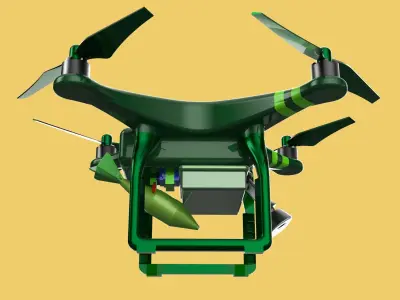
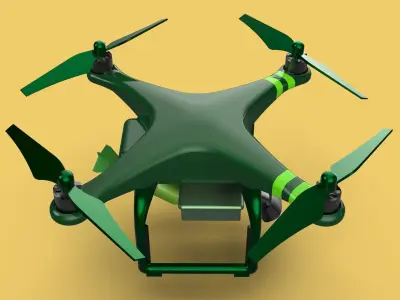
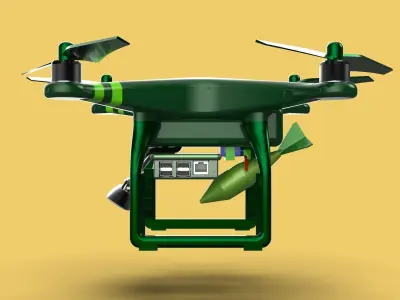
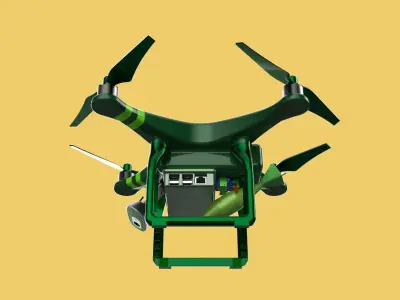
The model contains the most popular formats:
- 3DS MAX: *.max
- Blender: *.blend
- Rhinoceros: *.3dm
- SketchUp: *.skp
- Wavefront OBJ: *.obj *.mtl (Multi Format)
- FBX: *.fbx (Multi Format)
- STEP: *.step *.stp (NURBS)
- IGES: *.iges *.igs (NURBS)
- ACIS: *.sat (NURBS)
- 3DS MAX all ver.: *.3ds (Multi Format)
- Stereolithography: *.stl
- AutoCAD: *.dwg
- Each file was checked for opening and full content by the model.
- The 3D model was created on real base. It’s created accurately, in real units of measurement, qualitatively and maximally close to the original.
- Renders Are made in Luxion Keyshot
- “WE PROVIDE 3D MODEL CHEAP PRICE BUT WITH GOOD QUALITY”
- If you need any other formats we are more than happy to make them for you. Contact me for any question :)
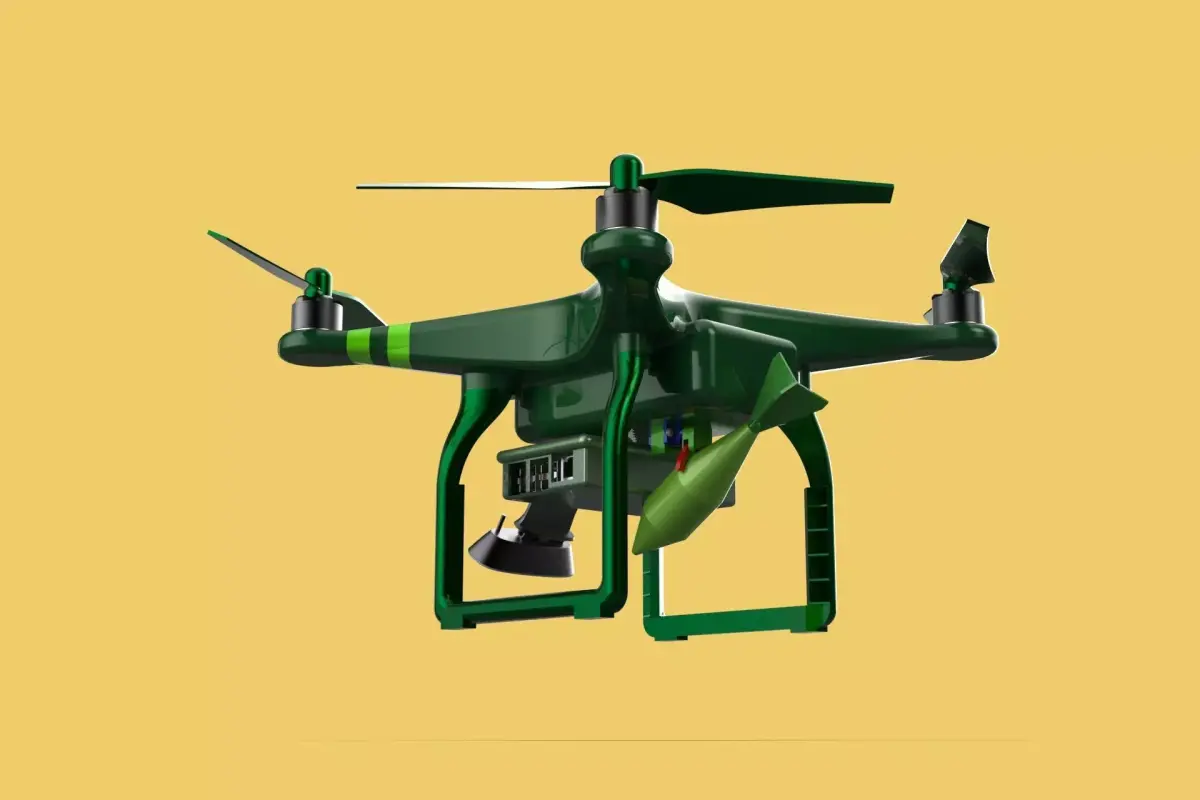
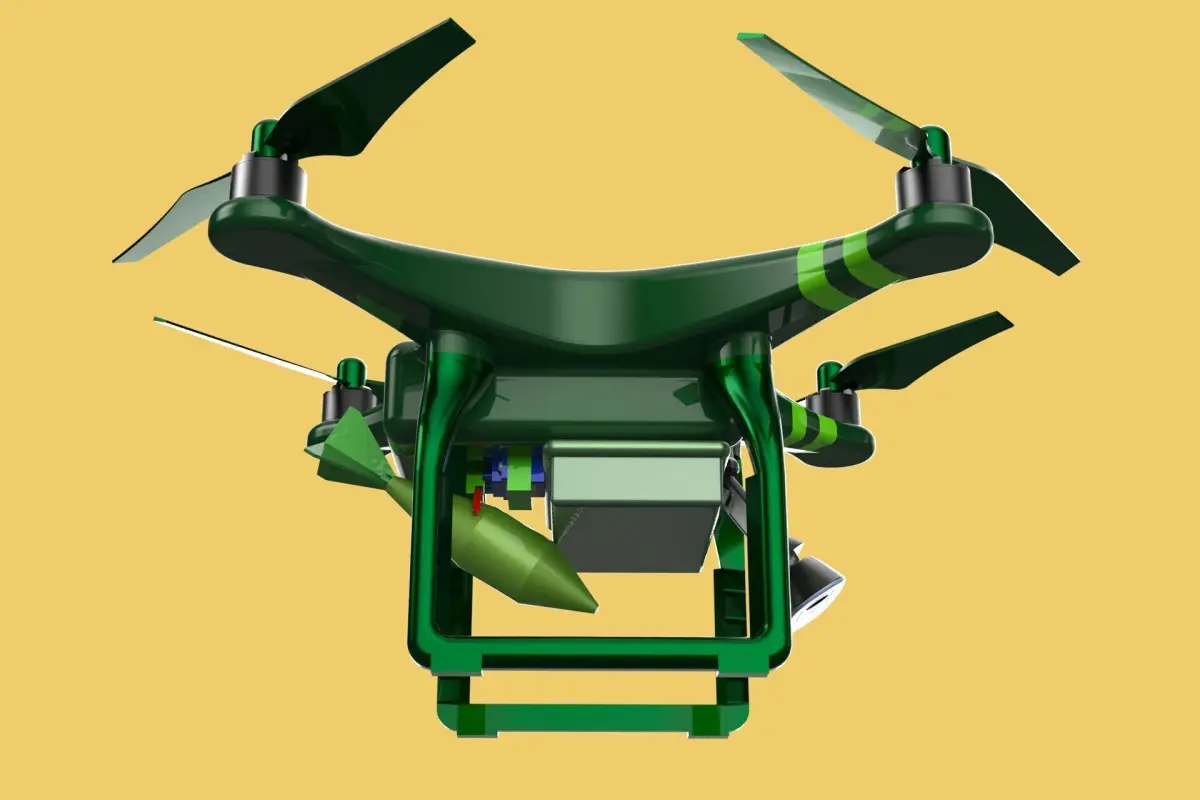
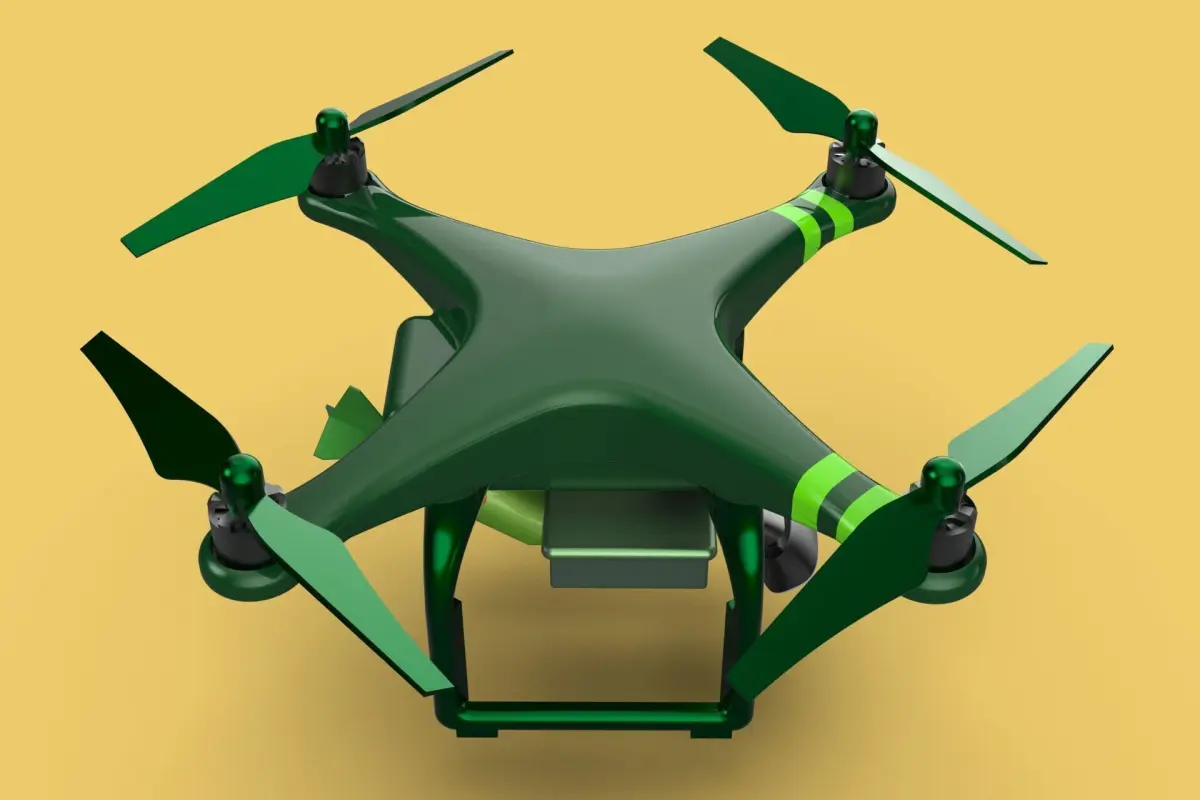
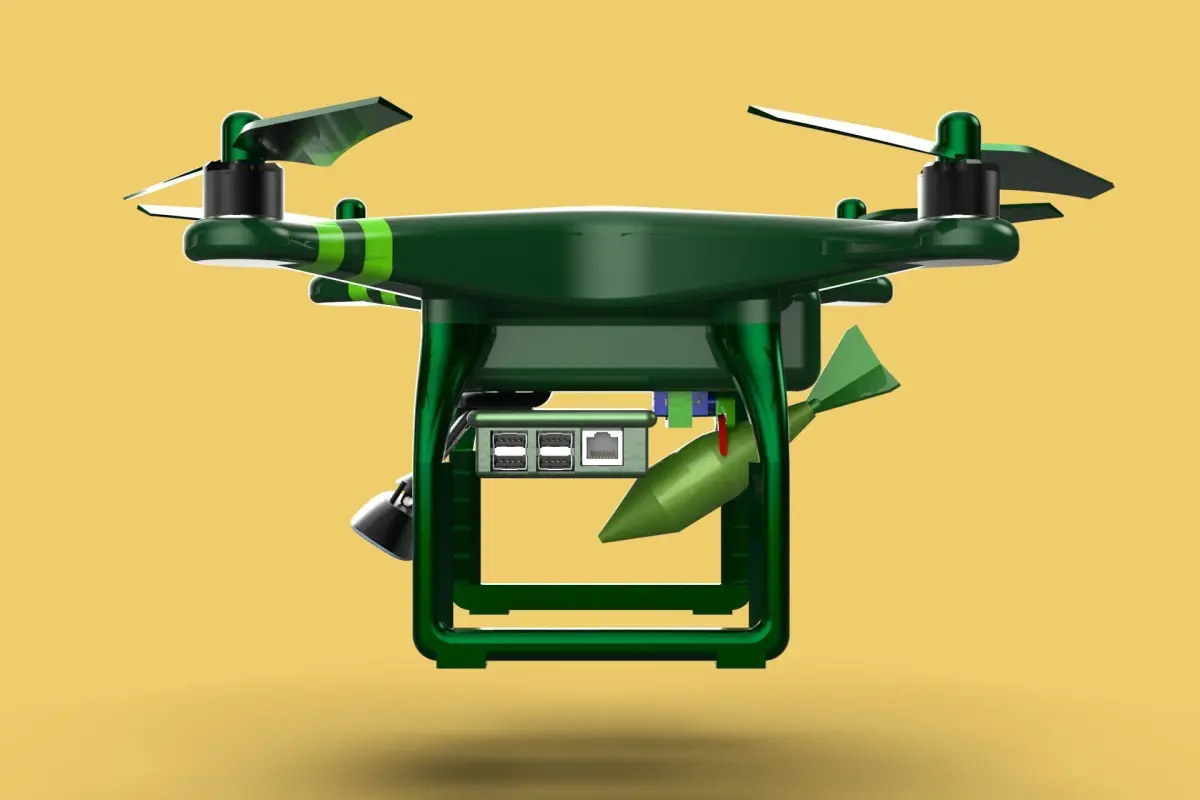
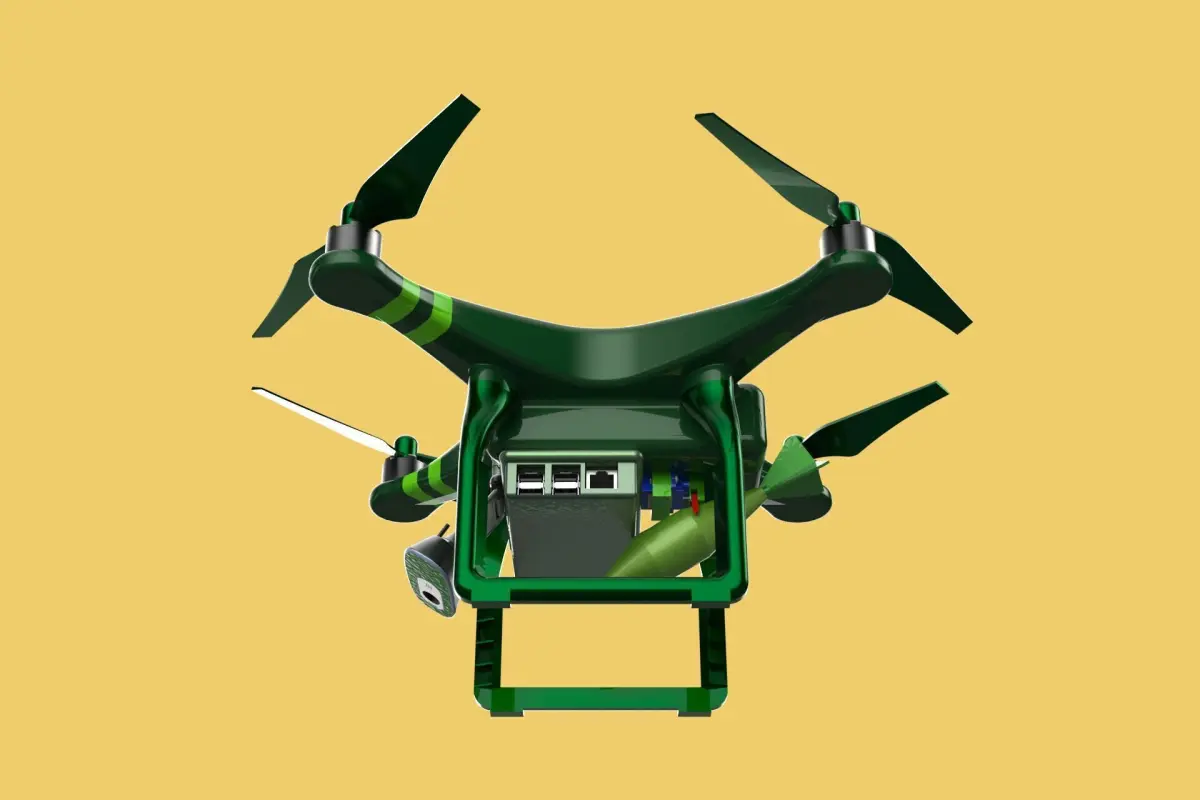
Sincerely Your, SURF3DMORE INFORMATION ABOUT 3D MODELS :Military UAV Drone Quadcopter Missile Torpedo Air Bomb Combat
This describes a scenario involving the use of unmanned aerial vehicles (UAVs) in military operations. Here's a breakdown:
Military UAV Drone Quadcopter: This refers to a military-grade drone equipped with four rotors for flight stability and maneuverability. These drones are designed for various military applications, including reconnaissance, surveillance, and combat. Missile: A guided projectile weapon typically launched from a ground-based launcher, aircraft, or ship. Missiles can be equipped with various warheads, including explosive, anti-tank, and anti-aircraft. Torpedo: A self-propelled underwater missile designed to attack and detonate near or against a target. They are primarily used by naval forces to attack submarines and surface ships. Air Bomb: A bomb designed to be dropped from an aircraft. They come in various types and sizes, with different explosive payloads and target effects. Combat: Military fighting or armed conflict between two or more forces. Scenario:
This phrase describes a military scenario where UAV quadcopters are employed in combat operations. These drones may be used to:
Deliver missiles: Launch missiles at ground targets, enemy vehicles, or even other aircraft. Deploy torpedoes: Drop torpedoes into the water to attack underwater targets. Drop air bombs: Release bombs on ground targets, enemy positions, or infrastructure. Key Aspects:
Unmanned Operation: Drones operate autonomously or with remote control, reducing the risk to human pilots. Precision Targeting: Advanced targeting systems allow for precise strikes on enemy targets, minimizing collateral damage. Versatility: UAVs can be equipped with various payloads, making them adaptable to different combat scenarios. Surveillance & Reconnaissance: Drones can also be used to gather intelligence, conduct reconnaissance, and monitor enemy activity. Note: The use of military drones in combat raises complex ethical and legal considerations, including the potential for civilian casualties and the implications for international law.
This description provides a general overview of the concept. The specific capabilities and applications of military UAVs vary significantly depending on the model, technology, and mission requirements.