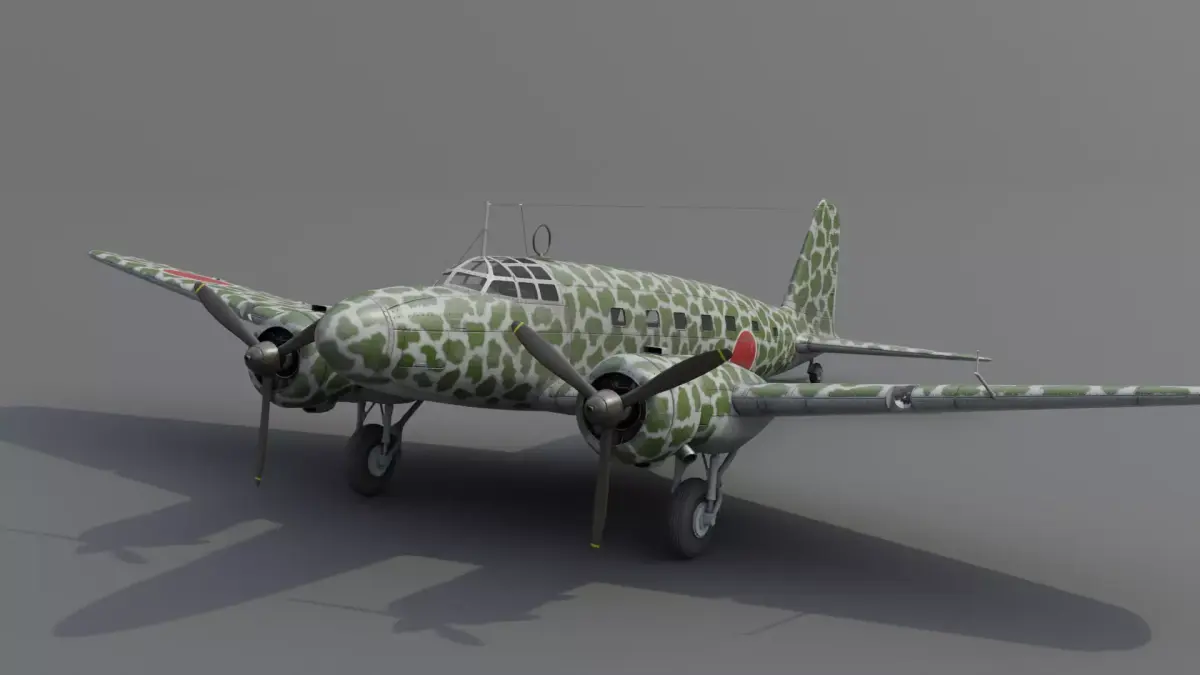
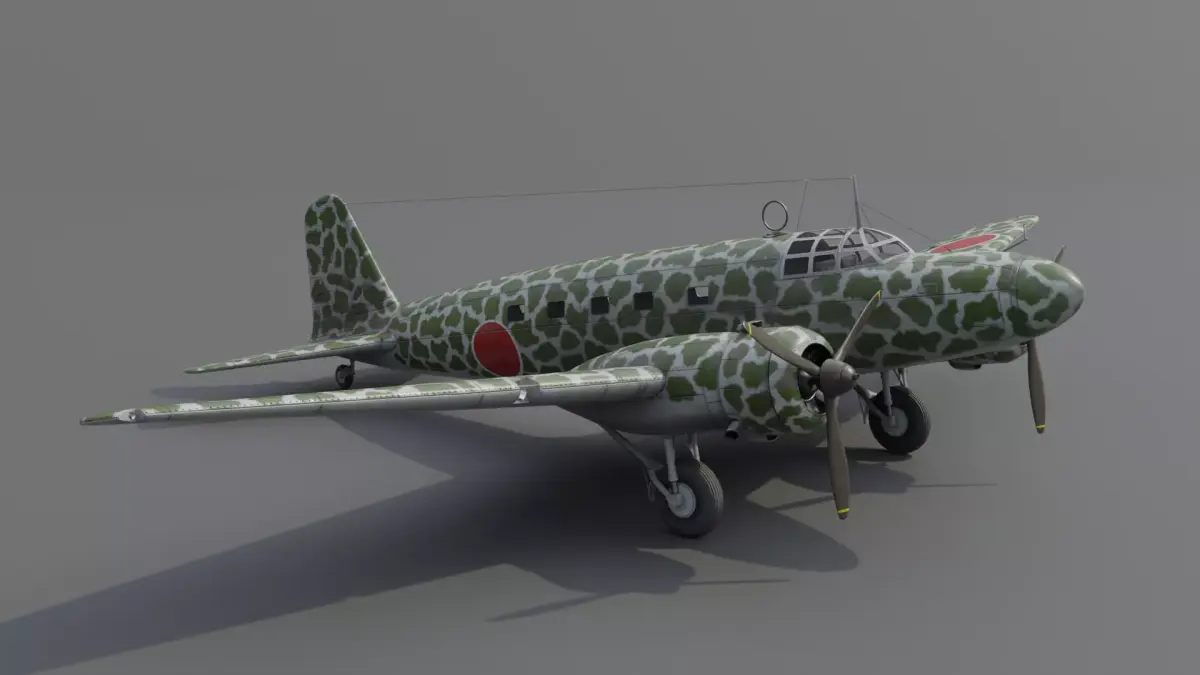
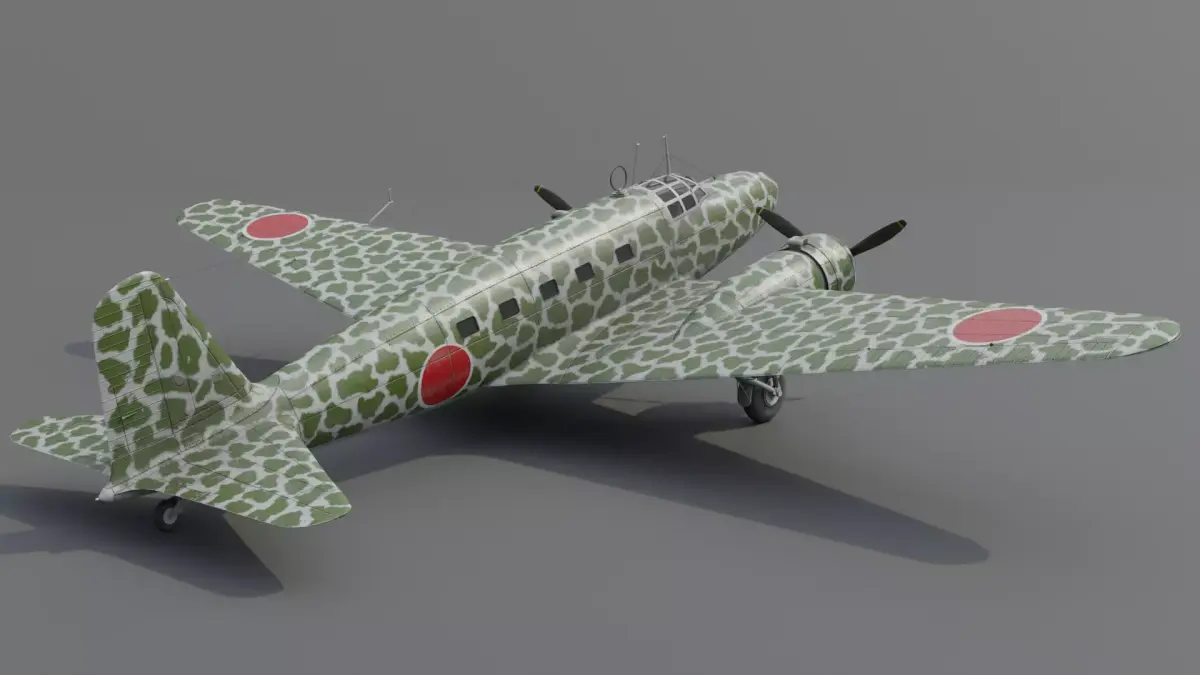
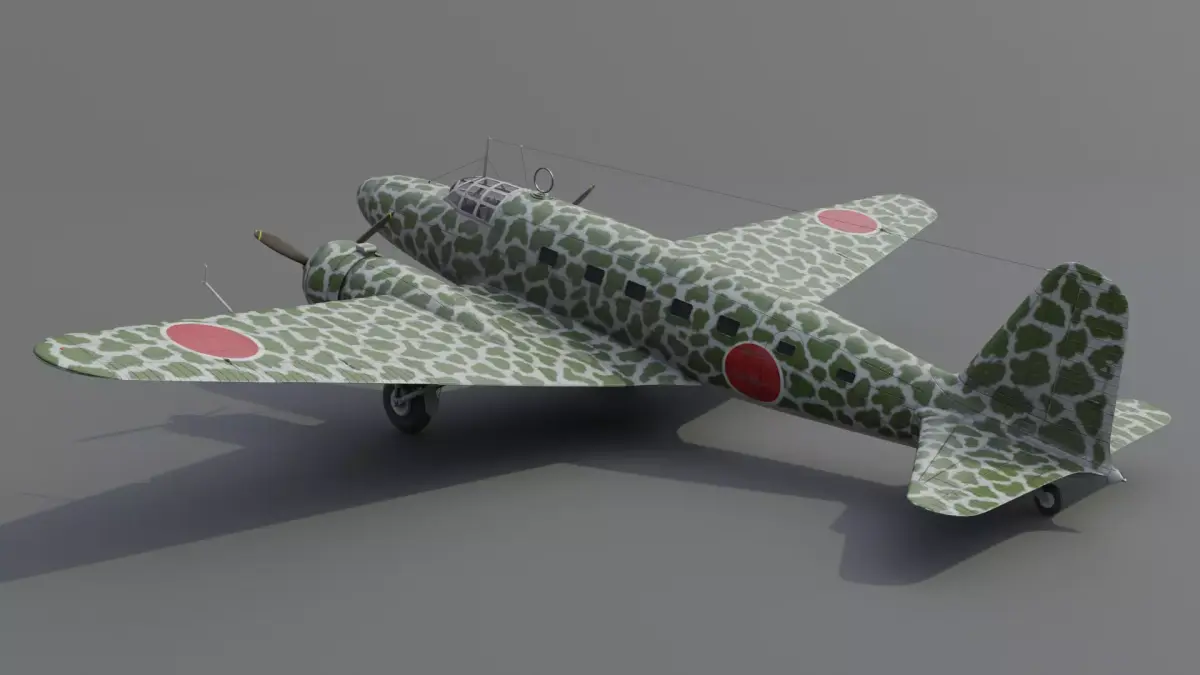
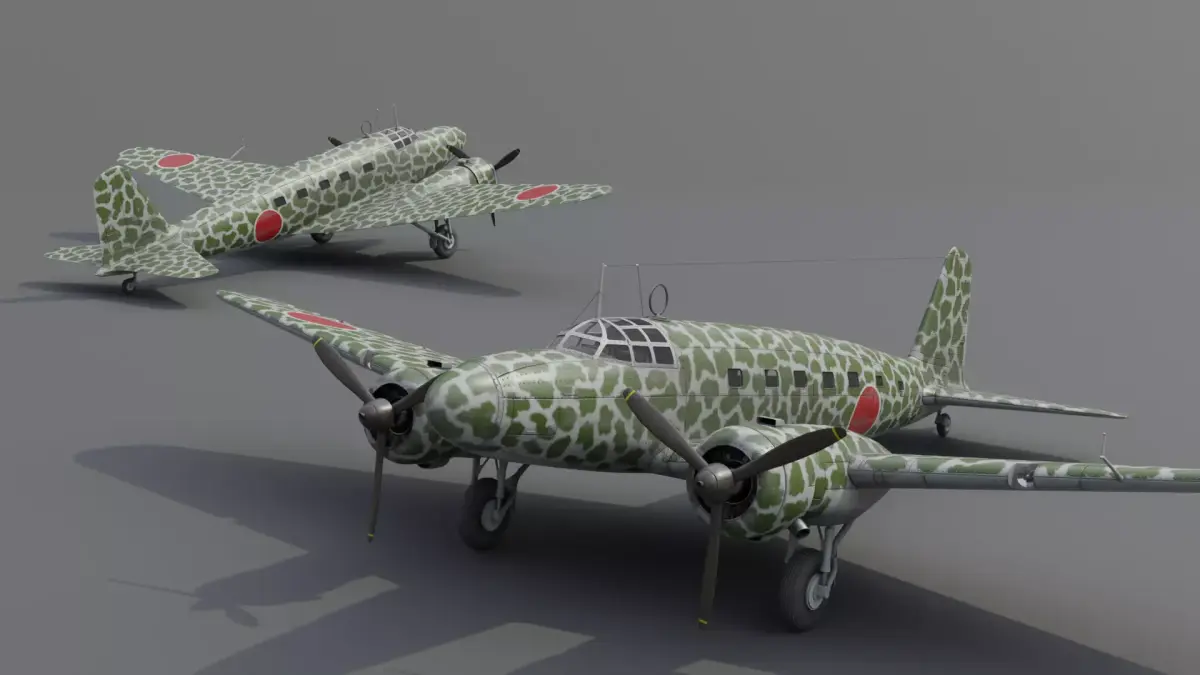
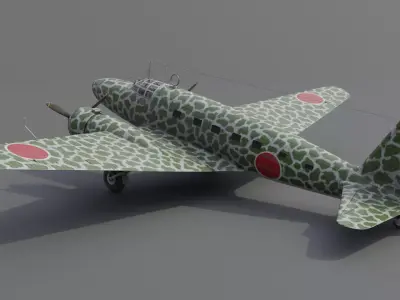
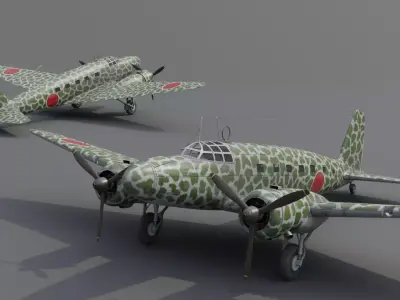
Mitsubishi Ki-57 Transport Aircraft
ZIP file contain Blendfile, Texture folder , FBX , Obj mtl
Centered (in right place) and Seperated parts
Blender 4.0.0
Textured with substance painter (Basecolor , AO , Metalness , Roughness , Normal , Opacity)
3 Set of material and 3 Texture set (P1 , P2 , Burned)
21 Seperated Objects (include rotating propeller)
No interior , 1 door
4k Texture PNG (2k Burned)
Pictures rendered in Cycles engine
Vertices:17,718
Faces:18,993
Tris: 34,436
Description:The Mitsubishi Ki-57 was a Japanese passenger transport aircraft, developed from the Ki-21 bomber, during the early 1940s.In 1938, when the Ki-21 heavy bomber began to enter service with the Imperial Japanese Army, its capability attracted the attention of the Imperial Japanese Airways. In consequence, a civil version was developed, and this, generally similar to the Ki-21-I and retaining its powerplant of two 708 kW (950 hp) Nakajima Ha-5 KAI radial engines, differed primarily by having the same wings transferred from a mid- to low-wing configuration and the incorporation of a new fuselage to provide accommodation for up to eleven passengers. This transport version appealed also to the navy, and, following the flight of a prototype in August 1940 and subsequent testing, the type was ordered into production for both civil and military use.This initial production Ki-57-I had the civil and military designations of MC-20-I and Army Type 100 Transport Model 1, respectively. A total of one-hundred production Ki-57-Is had been built by early 1942, and small numbers of them were transferred for use by the Japanese Navy in a transport role, then becoming redesignated L4M1. After the last of the Ki-57s had been delivered, production was switched to an improved Ki-57-II, which introduced more powerful 805 kW (1,080 hp) Mitsubishi Ha-102 14-cylinder radial engines installed in redesigned nacelles and, at the same time, incorporated a number of detail refinements and minor equipment changes. Civil and military designations of this version were the MC-20-II and Army Type 100 Transport Model 2, respectively. Only 406 were built before production ended in January 1945. Both versions were covered by the Allied reporting name Topsy.
BLEND (Blender, filesize: 119 MB), OBJ (OBJ, filesize: 119 MB), FBX (Autodesk FBX, filesize: 119 MB), PNG (PNG, filesize: 119 MB)