High-quality 3D assets at affordable prices — trusted by designers, engineers, and creators worldwide. Made with care to be versatile, accessible, and ready for your pipeline.
Included File Formats
This model is provided in 14 widely supported formats, ensuring maximum compatibility:
• - FBX (.fbx) – Standard format for most 3D software and pipelines
• - OBJ + MTL (.obj, .mtl) – Wavefront format, widely used and compatible
• - STL (.stl) – Exported mesh geometry; may be suitable for 3D printing with adjustments
• - STEP (.step, .stp) – CAD format using NURBS surfaces
• - IGES (.iges, .igs) – Common format for CAD/CAM and engineering workflows (NURBS)
• - SAT (.sat) – ACIS solid model format (NURBS)
• - DAE (.dae) – Collada format for 3D applications and animations
• - glTF (.glb) – Modern, lightweight format for web, AR, and real-time engines
• - 3DS (.3ds) – Legacy format with broad software support
• - 3ds Max (.max) – Provided for 3ds Max users
• - Blender (.blend) – Provided for Blender users
• - SketchUp (.skp) – Compatible with all SketchUp versions
• - AutoCAD (.dwg) – Suitable for technical and architectural workflows
• - Rhino (.3dm) – Provided for Rhino users
Model Info
• - All files are checked and tested for integrity and correct content
• - Geometry uses real-world scale; model resolution varies depending on the product (high or low poly)
• • - Scene setup and mesh structure may vary depending on model complexity
• - Rendered using Luxion KeyShot
• - Affordable price with professional detailing
Buy with confidence. Quality and compatibility guaranteed.
If you have any questions about the file formats, feel free to send us a message — we're happy to assist you!
Sincerely,
SURF3D
Trusted source for professional and affordable 3D models.
More Information About 3D Model :
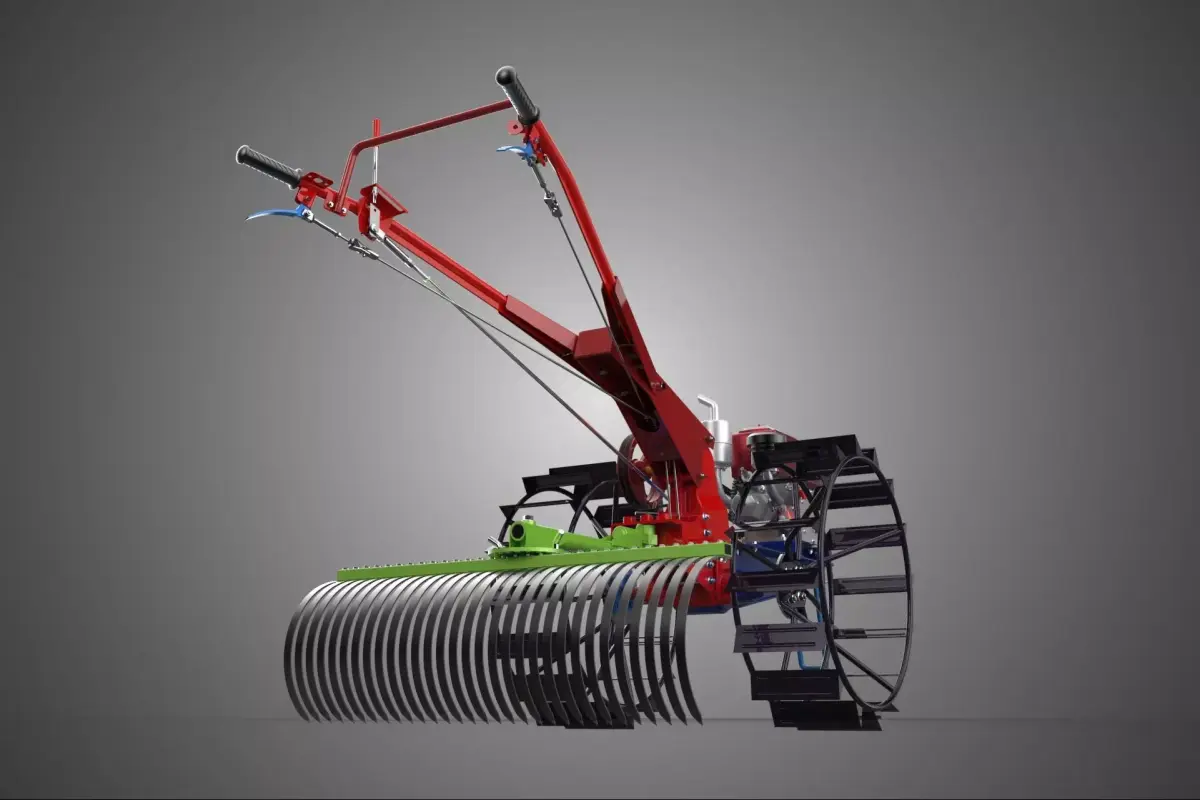
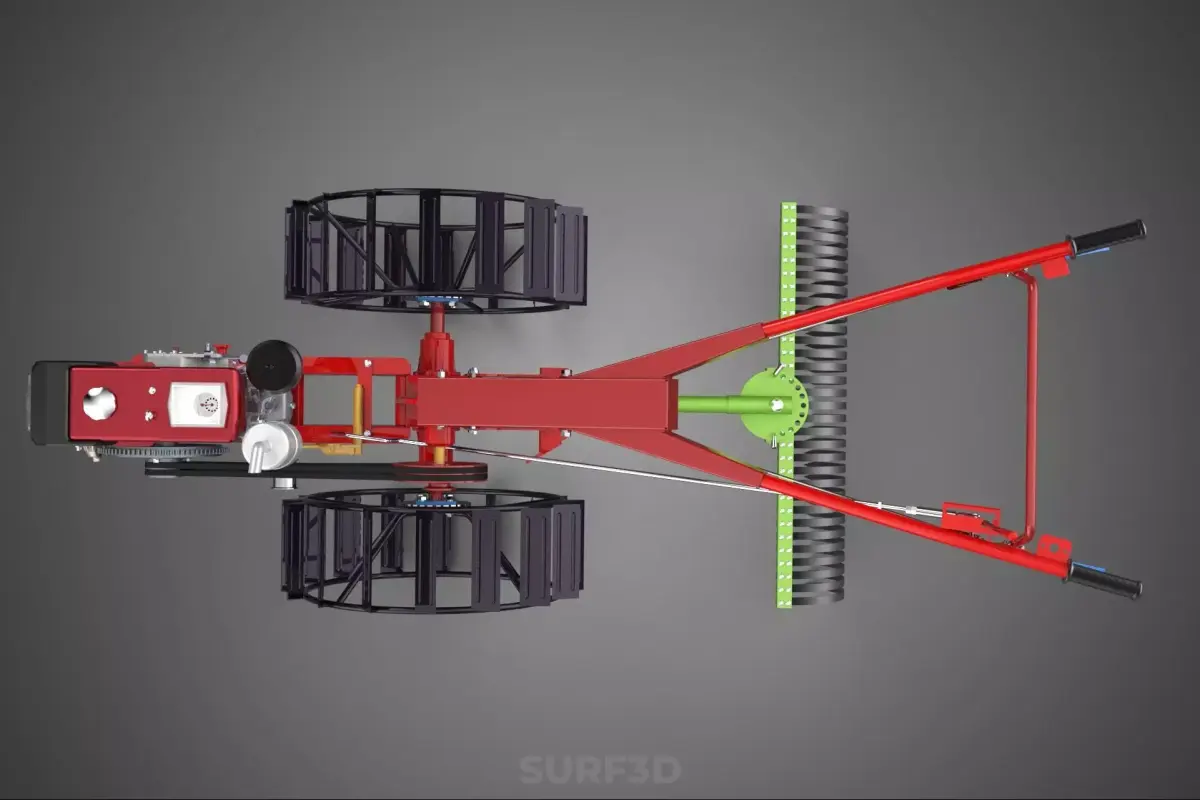
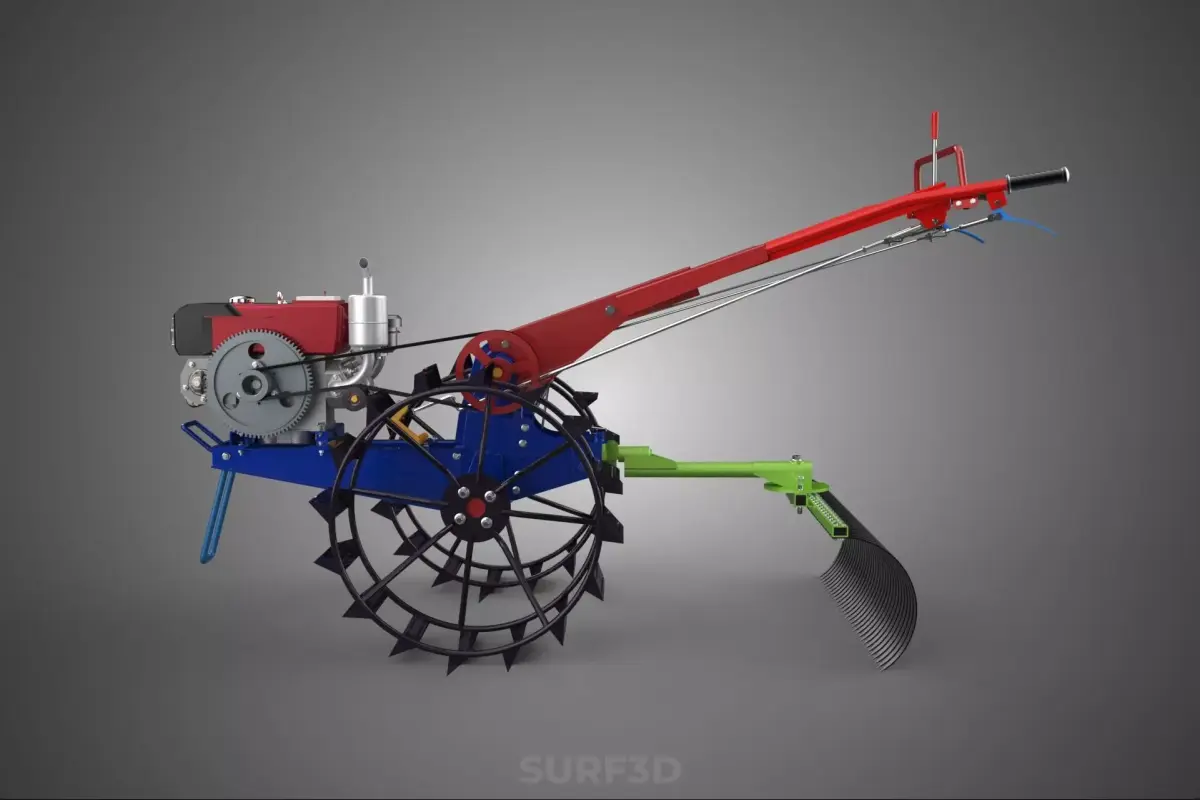
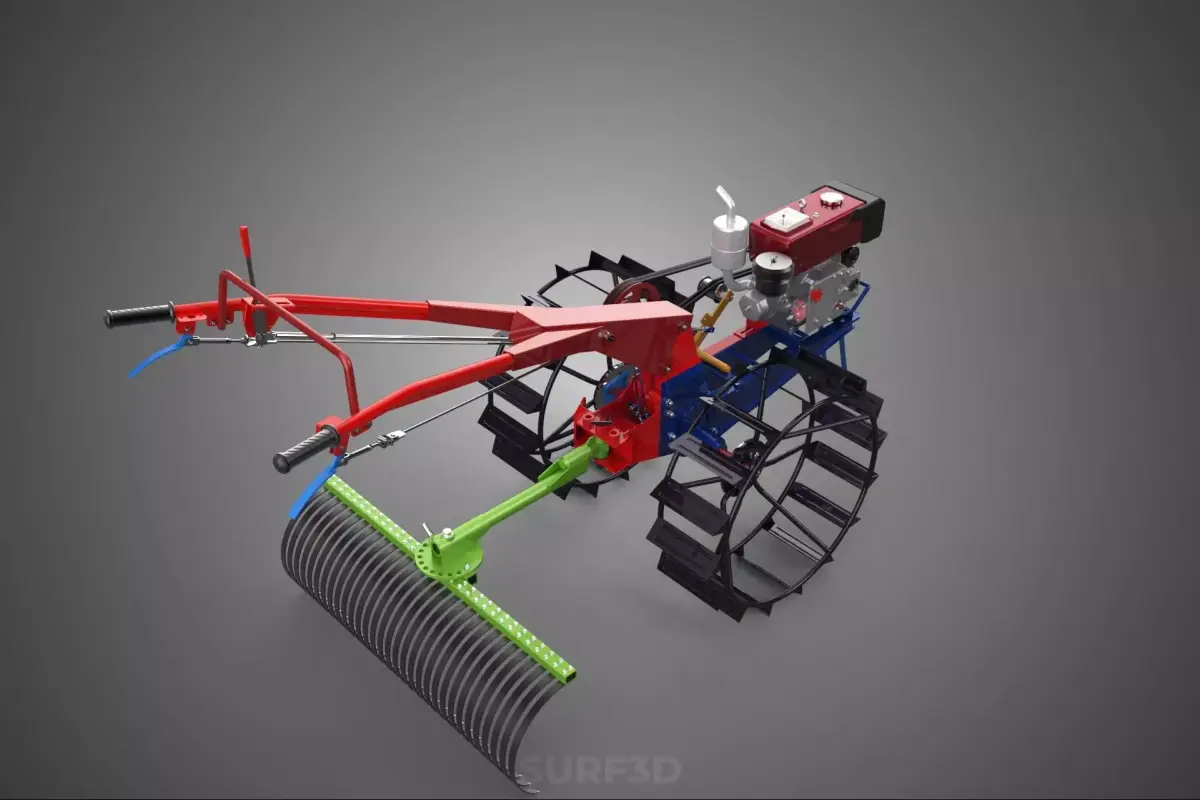
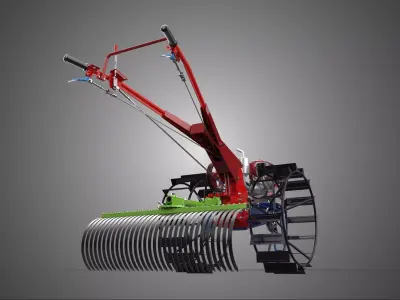
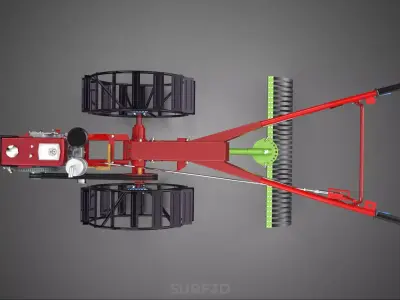
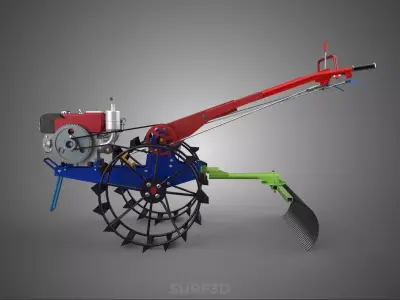
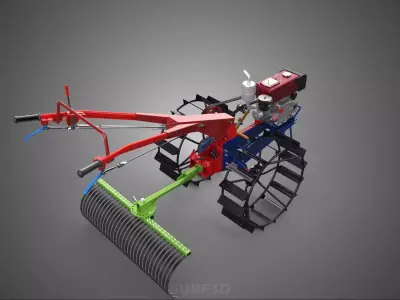
The Mount Raker Harrowing Rake Cage Wheel Walk Behind Tractor Tiller is a specialized agricultural implement designed as an attachment for two-wheel tractors (often referred to as walk-behind tractors, power tillers, or hand tractors). This composite tool is engineered for precision soil finishing and superficial tillage, integrating the functions of raking, light harrowing, and soil leveling in a single operational pass.
Design and Nomenclature
This implement is defined by the integration of two core mechanical systems: a passive or ground-driven raking/harrowing unit and a robust cage wheel assembly. It is mounted directly to the tractor's main transmission axle or, less commonly, driven via the Power Take-Off (PTO) shaft, depending on the specific model and manufacturer's design philosophy.
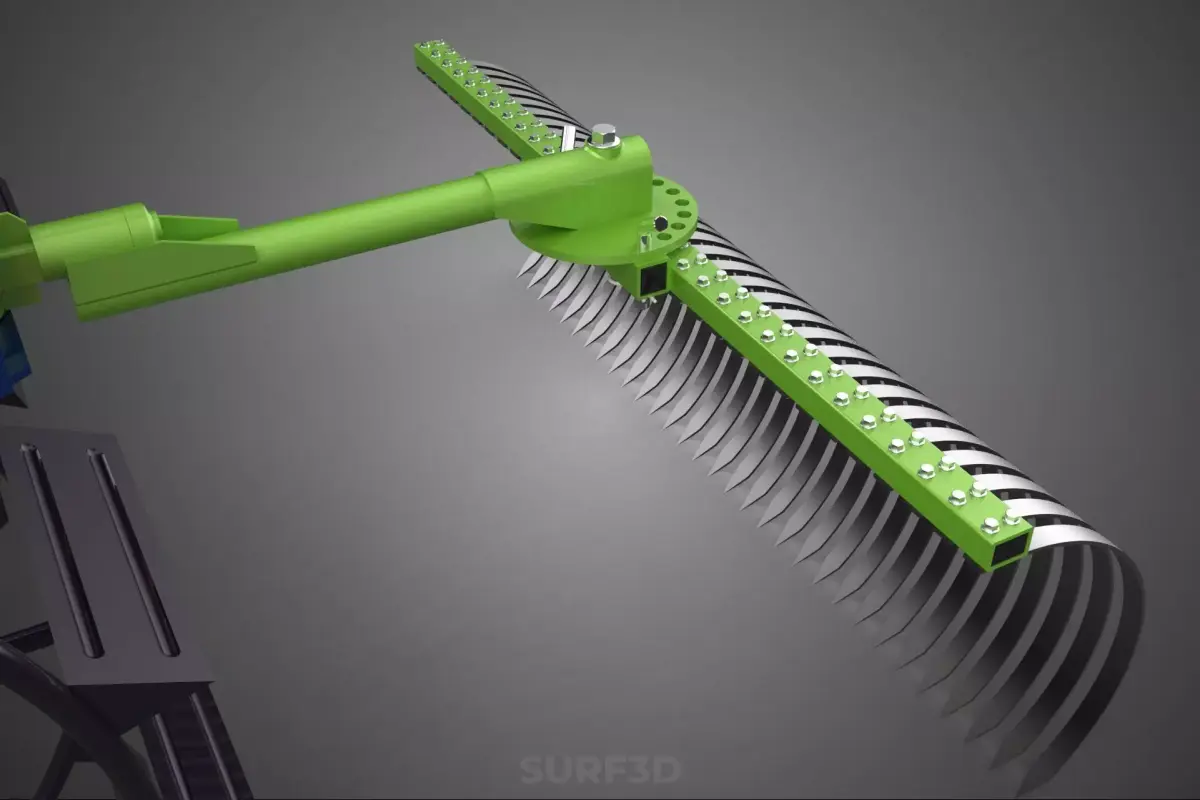
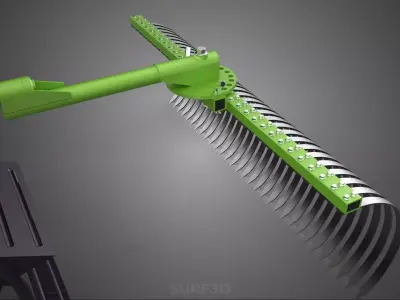
The Raking/Harrowing Unit: This component consists of an adjustable frame supporting one or more rows of rigid or semi-rigid tines (teeth). These tines are designed for superficial engagement with the soil, typically achieving depths of 5 to 10 centimeters. Their primary function is threefold: to lightly break up surface clods remaining after primary tillage; to aerate the top layer of soil; and, critically, to manage surface residue, such as plant stalks, straw, or small stones, often aggregating them into windrows or distributing them evenly across the field.
The Cage Wheel Assembly: The defining characteristic of this attachment is the deployment of large-diameter, open-structure cage wheels, which replace or augment the standard rubber tires of the walk-behind tractor during operation. These wheels are constructed from welded steel bars or angled cleats. The cage wheel system provides superior flotation, minimizing soil compaction and maximizing traction, especially in wet, heavy, or loose soil conditions, such as those encountered in rice paddy cultivation or deeply tilled vegetable beds. Furthermore, the cage wheels actively contribute to the harrowing process by crushing clods and providing a stabilizing ground reference, ensuring the consistent operating depth of the raking tines.
Functional Application
The Mount Raker Harrowing Rake Cage Wheel is classified as a secondary tillage finishing tool. Its operational profile is distinct from aggressive rotary tillers.
- Seedbed Preparation: Its principal use is the final preparation of a finely textured seedbed, providing a uniform, level surface suitable for broadcast seeding or precision planting of small grains, forage crops, or vegetables.
- Residue Management: The raking function is essential for clearing or distributing surface organic matter, preventing planting equipment from clogging and ensuring optimal seed-to-soil contact.
- Weed Control and Aeration: By lightly disturbing the soil surface, the implement effectively uproots emerging weeds (especially those in the white thread stage) and improves soil oxygenation without inverting the soil profile, a benefit often sought in conservation and organic farming systems.
- Flotation in Difficult Conditions: The cage wheel allows the walk-behind tractor unit to operate efficiently in saturated soil where standard pneumatic tires would struggle for traction or cause excessive rutting.
### Operational Characteristics
Due to its design, the Mount Raker typically operates at lower ground speeds than other tillage methods, prioritizing precision and control, which is essential when operating walk-behind machinery. Depth control is achieved either through adjustable gauge wheels/skids integrated into the rake frame or by manipulating the tractor's standard hitch linkage (e.g., the adjustable drag bar or height control). The lightweight nature of the overall system minimizes energy consumption compared to larger mechanized harrow units.
KEYWORDS: Walk-behind Tractor, Power Tiller, Harrowing, Raking, Cage Wheel, Seedbed Preparation, Agricultural Machinery, Two-Wheel Tractor, Soil Cultivation, Shallow Tillage, Residue Management, Ground Engagement, Flotation, Traction, PTO Attachment, Finishing Tool, Soil Pulverization, Clod Breaking, Leveling, Hand Tractor, Intensive Farming, Organic Farming, Gardening, Farm Implement, Tine Harrow, Secondary Tillage, Axle Drive, Inter-row Cultivation, Vegetable Farming, Soil Aeration.
STL (Stereolithography, filesize: 52.8 MB), OBJ (OBJ, filesize: 109 MB), IGE (IGES, filesize: 119 MB), DAE (Collada, filesize: 178 MB), 3DM (Rhinoceros 3D, filesize: 141 MB), MAX (Autodesk 3ds Max, filesize: 212 MB), DWG (AutoCAD, filesize: 22.6 MB), 3DS (3D Studio, filesize: 32.2 MB), BLEND (Blender, filesize: 97.3 MB), FBX (Autodesk FBX, filesize: 32.8 MB), SAT (3D ACIS, filesize: 88.2 MB), GLTF (glTF, filesize: 34.5 MB), SKP (Sketchup, filesize: 68.1 MB), STP (STEP, filesize: 72.3 MB)