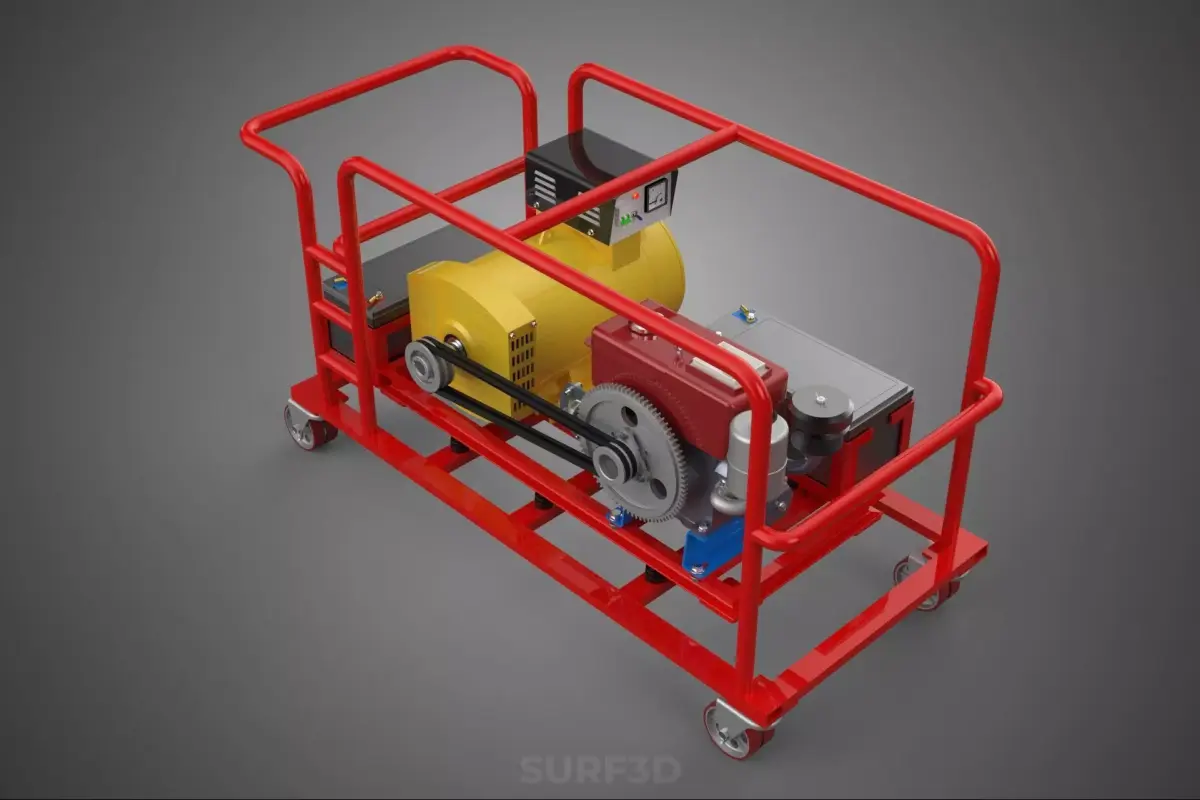
High-quality 3D assets at affordable prices — trusted by designers, engineers, and creators worldwide. Made with care to be versatile, accessible, and ready for your pipeline.
Included File Formats
This model is provided in 14 widely supported formats, ensuring maximum compatibility:
• - FBX (.fbx) – Standard format for most 3D software and pipelines
• - OBJ + MTL (.obj, .mtl) – Wavefront format, widely used and compatible
• - STL (.stl) – Exported mesh geometry; may be suitable for 3D printing with adjustments
• - STEP (.step, .stp) – CAD format using NURBS surfaces
• - IGES (.iges, .igs) – Common format for CAD/CAM and engineering workflows (NURBS)
• - SAT (.sat) – ACIS solid model format (NURBS)
• - DAE (.dae) – Collada format for 3D applications and animations
• - glTF (.glb) – Modern, lightweight format for web, AR, and real-time engines
• - 3DS (.3ds) – Legacy format with broad software support
• - 3ds Max (.max) – Provided for 3ds Max users
• - Blender (.blend) – Provided for Blender users
• - SketchUp (.skp) – Compatible with all SketchUp versions
• - AutoCAD (.dwg) – Suitable for technical and architectural workflows
• - Rhino (.3dm) – Provided for Rhino users
Model Info
• - All files are checked and tested for integrity and correct content
• - Geometry uses real-world scale; model resolution varies depending on the product (high or low poly)
• • - Scene setup and mesh structure may vary depending on model complexity
• - Rendered using Luxion KeyShot
• - Affordable price with professional detailing
Buy with confidence. Quality and compatibility guaranteed.
If you have any questions about the file formats, feel free to send us a message — we're happy to assist you!
Sincerely,
SURF3D
Trusted source for professional and affordable 3D models.
More Information About 3D Model :
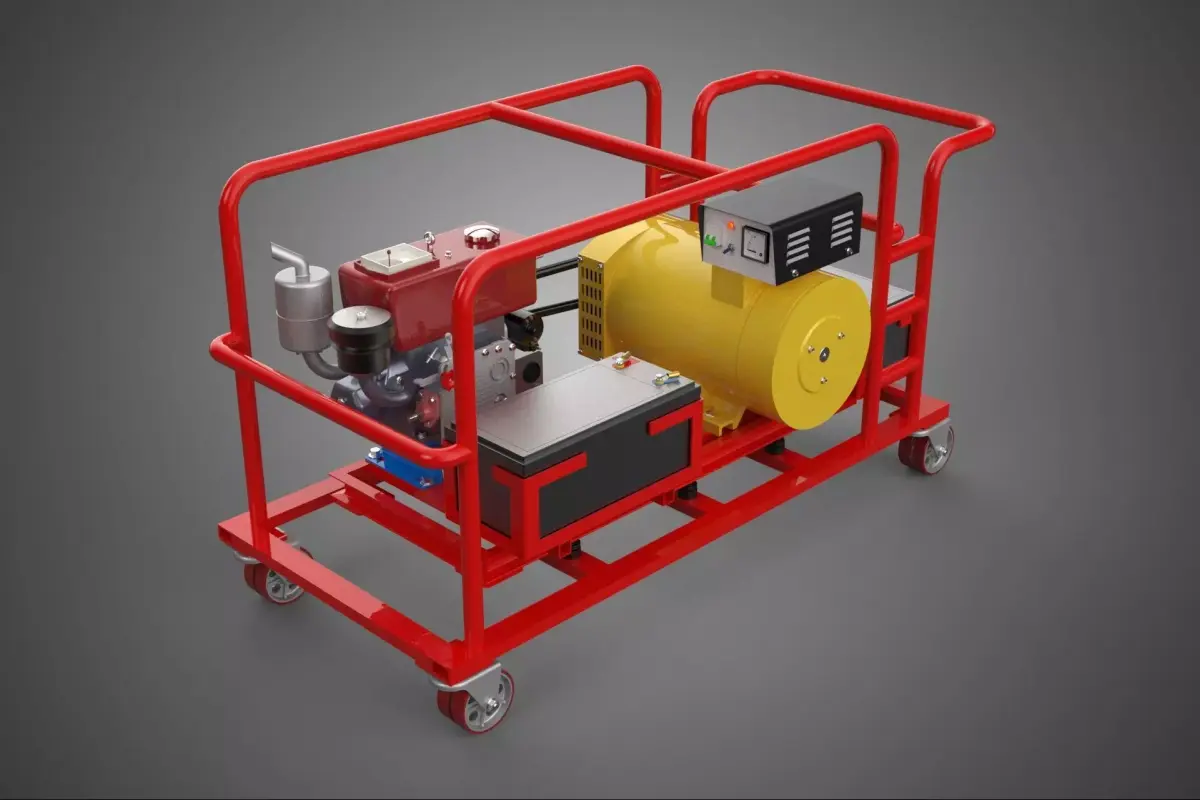
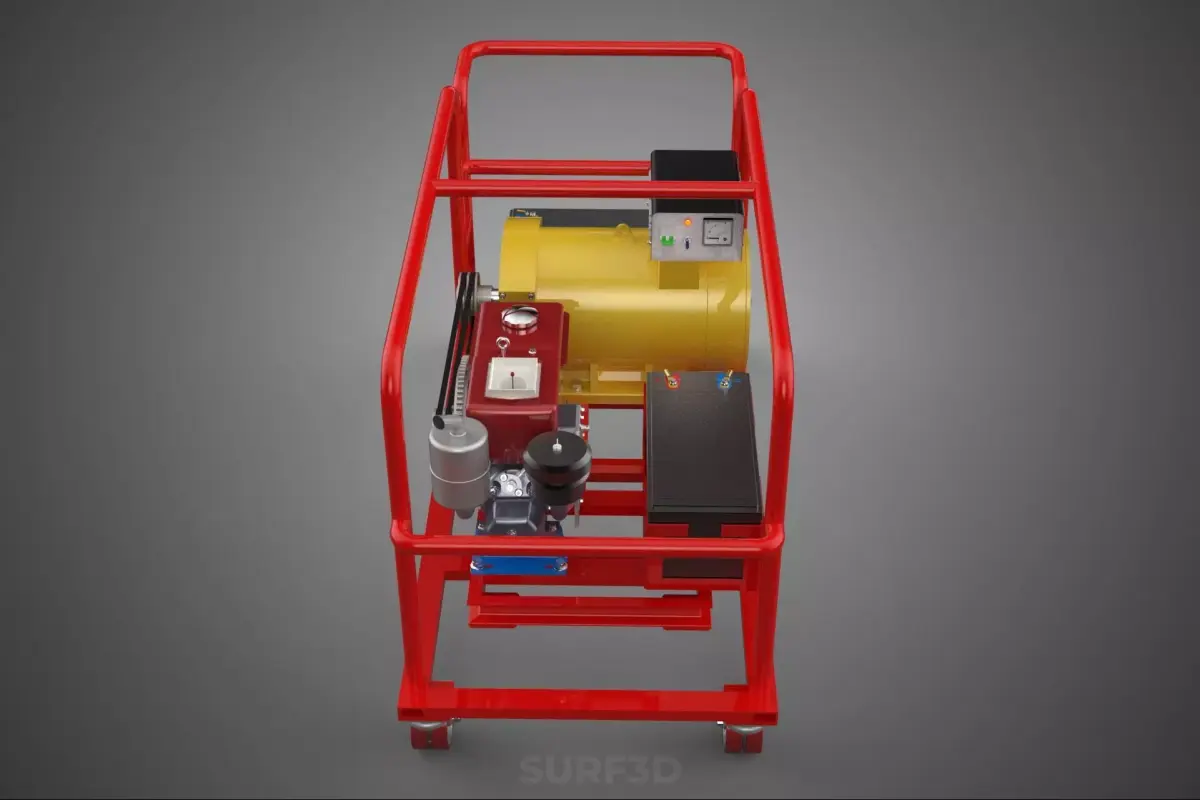
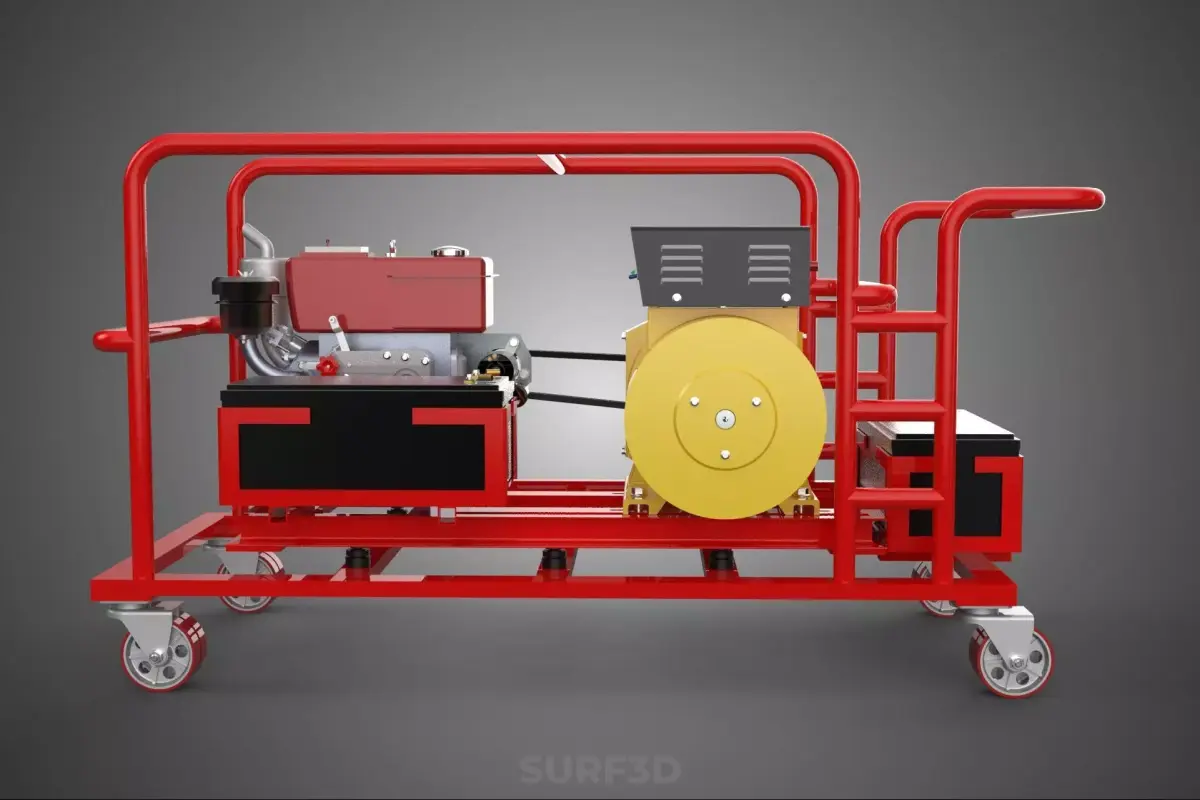
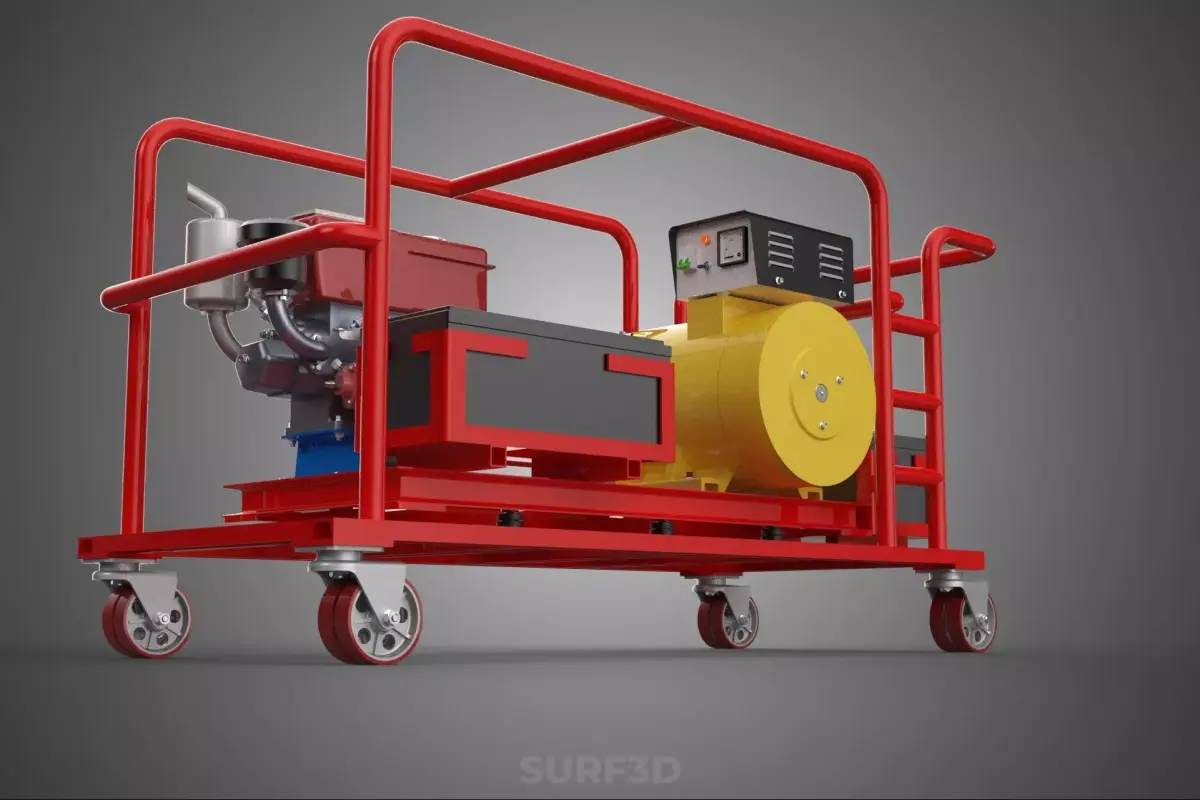
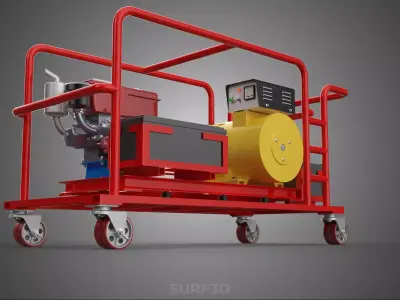
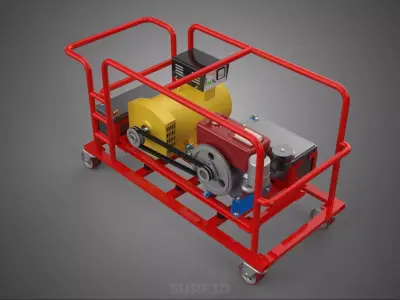
The Portable Power Bank Charging Station Diesel Generator Set (Genset) is an integrated, mobile energy infrastructure apparatus specifically engineered to provide autonomous, large-scale electrical power generation and managed distribution for the simultaneous recharging of multiple portable energy storage devices (power banks). This system merges the robust, long-duration operational capabilities of a diesel generator with a specialized, high-density charging array optimized for consumer-grade electronics.
Functional Architecture and Components
This specialized system is classified as mobile, self-contained power generation equipment (S-CPGE), designed for deployment in remote locations or environments lacking reliable grid access. Its functionality relies on the synergy of two primary modules:
1. Diesel Generator Set (Genset):
The genset serves as the primary power source, typically comprising a compression-ignition diesel engine coupled to an electrical alternator. Diesel fuel is favored over gasoline or liquefied petroleum gas (LPG) due to its superior energy density, lower flammability risk during storage, and prolonged operational intervals between refueling stops. The genset capacity (rated in kVA or kW) is selected based on the total prospective charging load, often incorporating a substantial buffer capacity to manage surge loads and operational inefficiencies. Crucially, the genset includes advanced voltage regulation and frequency control mechanisms to ensure the alternating current (AC) power output is stable and suitable for sensitive electronic equipment, minimizing harmonic distortion that could damage charging circuits.
2. Power Bank Charging Station (Charging Array):
This module is the distribution and conversion interface. It accepts the high-voltage AC input from the genset and converts it into the necessary low-voltage direct current (DC) required by power banks, typically 5V, 9V, 12V, or higher for specialized standards like USB Power Delivery (PD) or Qualcomm Quick Charge (QC).
Key features of the charging array include:
- Multiple Charging Ports: The station features a high density of standardized output ports (e.g., USB-A, USB-C, or proprietary docking slots) allowing for simultaneous connection of dozens or hundreds of devices.
- Integrated Charge Controllers: These controllers manage individual device charging parameters, preventing overcurrent, overvoltage, and thermal runaway, ensuring the longevity and safety of the connected power banks.
- Load Balancing and Management: Sophisticated circuitry distributes the available power capacity dynamically across the connected devices, prioritizing efficient charging cycles and preventing the entire system from overloading or shutting down due to uneven demand.
- Enclosure and Ruggedization: The entire system is housed within a weatherproof, durable enclosure (often mounted on skids or trailers) designed to withstand extreme environmental conditions, vibrations during transport, and rapid deployment cycles.
### Applications and Deployment
The primary utility of the Genset-integrated power bank charging station lies in scenarios demanding immediate, reliable, and scalable personal electronic device charging capabilities where grid power is nonexistent or compromised:
- Disaster Relief and Humanitarian Operations: Following natural disasters (e.g., earthquakes, floods), communication remains vital. These units are deployed to provide charging infrastructure for personal devices used by affected populations and first responders.
- Military and Tactical Field Operations: Providing power assurance for communication gear, drones, and navigation equipment in austere environments.
- Remote Construction and Industrial Sites: Supplying power for tools, data logging devices, and communication links far from established power lines.
- Large-Scale Events and Festivals: Serving as a temporary utility solution to manage the massive, transient charging demand characteristic of public gatherings.
### Operational Considerations
While highly reliable, operation necessitates consideration of diesel logistics (fuel supply and storage), maintenance requirements (engine oil changes, filter replacement), and environmental impact (noise pollution and exhaust emissions). The system’s operational lifespan is directly correlated with the availability of fuel, providing unmatched endurance compared to battery-only solutions in extended off-grid situations.
KEYWORDS: Mobile Charging Station, Diesel Generator Set, Genset, Off-Grid Power, Disaster Relief, Humanitarian Aid, Emergency Power, Power Bank Charging, Field Operations, Portable Energy, Energy Infrastructure, Power Conditioning, Load Management, USB Power Delivery, High-Capacity Charging, Autonomous Power, Remote Deployment, Electrical Apparatus, Standby Power, Fuel Efficiency, Renewable Energy Backup, Power Distribution, Industrial Generator, Tactical Power, Ruggedized Enclosure, Power Utility, Energy Density, Mobile Infrastructure, Communication Support, Voltage Regulation.
STL (Stereolithography, filesize: 37.1 MB), OBJ (OBJ, filesize: 75.9 MB), BLEND (Blender, filesize: 68.8 MB), GLTF (glTF, filesize: 24 MB), 3DS (3D Studio, filesize: 22.5 MB), DWG (AutoCAD, filesize: 16.7 MB), STP (STEP, filesize: 37.2 MB), DAE (Collada, filesize: 125 MB), MAX (Autodesk 3ds Max, filesize: 150 MB), SKP (Sketchup, filesize: 46.6 MB), FBX (Autodesk FBX, filesize: 22.8 MB), IGE (IGES, filesize: 73.5 MB), SAT (3D ACIS, filesize: 56.6 MB), 3DM (Rhinoceros 3D, filesize: 91.1 MB)