High-quality 3D assets at affordable prices — trusted by designers, engineers, and creators worldwide. Made with care to be versatile, accessible, and ready for your pipeline.
Included File Formats
This model is provided in 14 widely supported formats, ensuring maximum compatibility:
• - FBX (.fbx) – Standard format for most 3D software and pipelines
• - OBJ + MTL (.obj, .mtl) – Wavefront format, widely used and compatible
• - STL (.stl) – Exported mesh geometry; may be suitable for 3D printing with adjustments
• - STEP (.step, .stp) – CAD format using NURBS surfaces
• - IGES (.iges, .igs) – Common format for CAD/CAM and engineering workflows (NURBS)
• - SAT (.sat) – ACIS solid model format (NURBS)
• - DAE (.dae) – Collada format for 3D applications and animations
• - glTF (.glb) – Modern, lightweight format for web, AR, and real-time engines
• - 3DS (.3ds) – Legacy format with broad software support
• - 3ds Max (.max) – Provided for 3ds Max users
• - Blender (.blend) – Provided for Blender users
• - SketchUp (.skp) – Compatible with all SketchUp versions
• - AutoCAD (.dwg) – Suitable for technical and architectural workflows
• - Rhino (.3dm) – Provided for Rhino users
Model Info
• - All files are checked and tested for integrity and correct content
• - Geometry uses real-world scale; model resolution varies depending on the product (high or low poly)
• • - Scene setup and mesh structure may vary depending on model complexity
• - Rendered using Luxion KeyShot
• - Affordable price with professional detailing
Buy with confidence. Quality and compatibility guaranteed.
If you have any questions about the file formats, feel free to send us a message — we're happy to assist you!
Sincerely,
SURF3D
Trusted source for professional and affordable 3D models.
More Information About 3D Model :
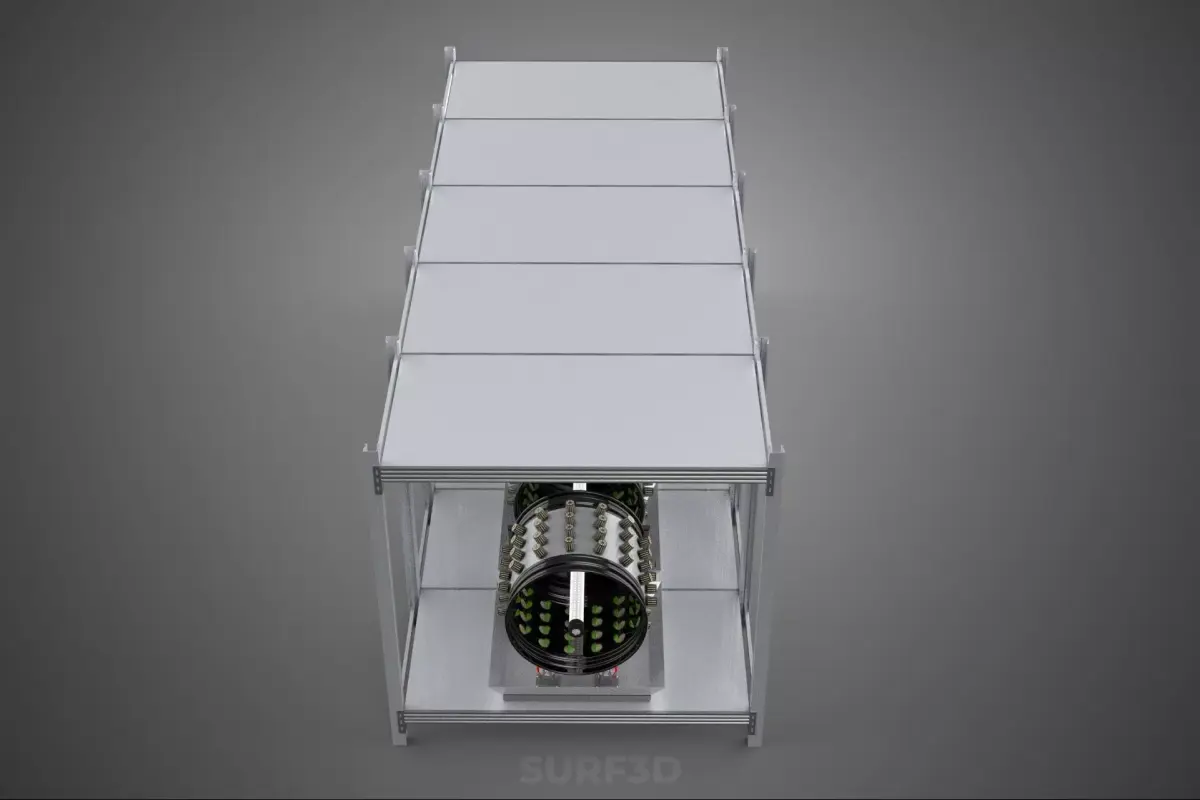
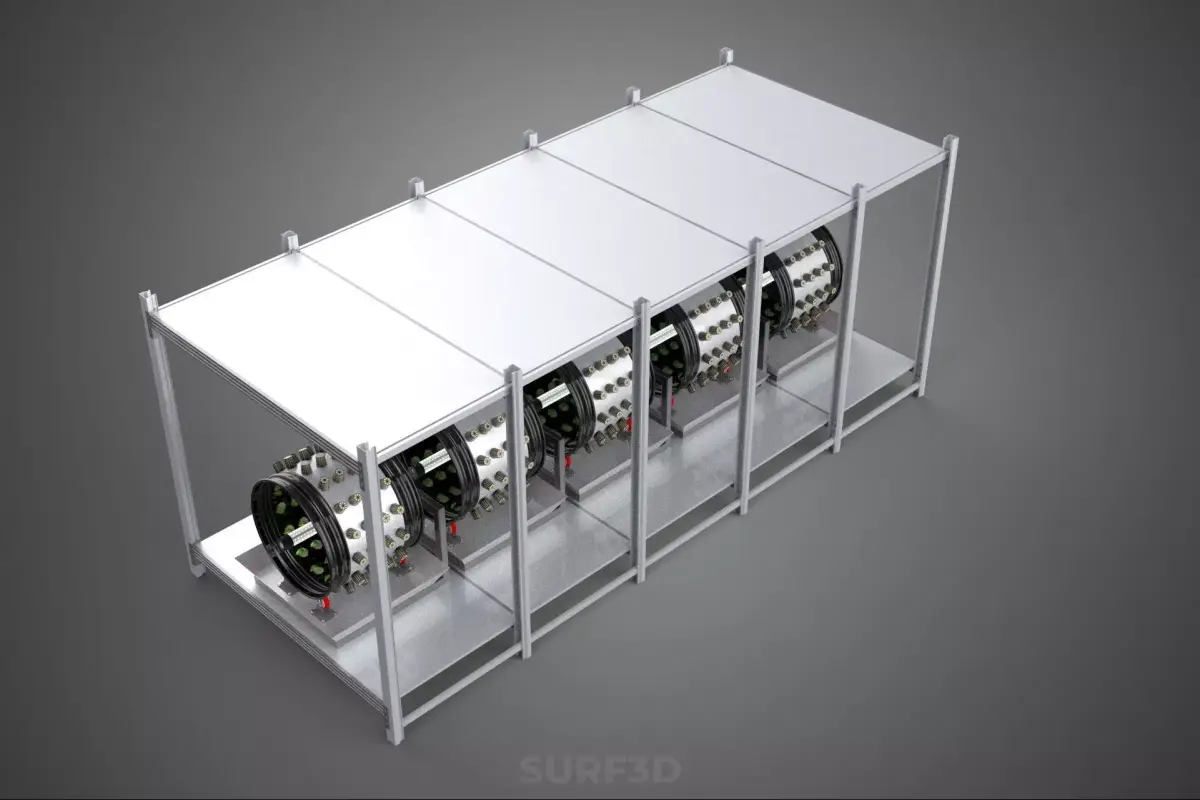
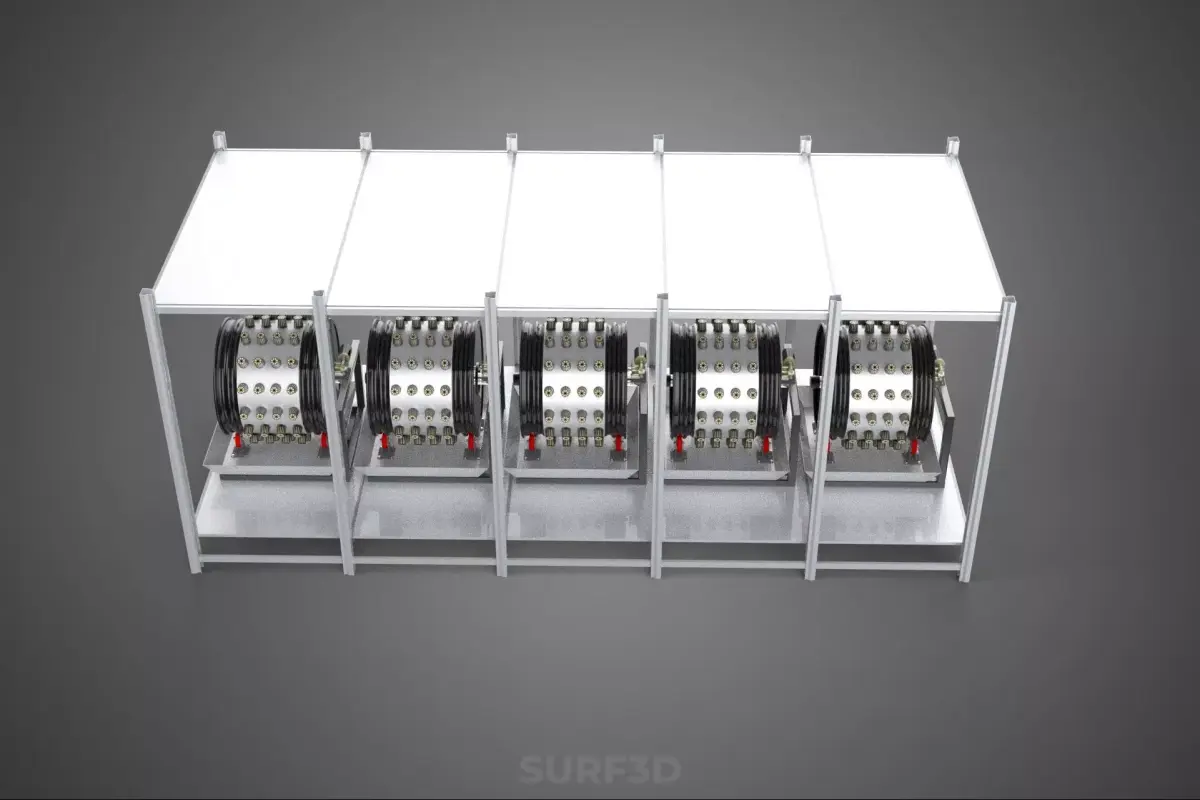
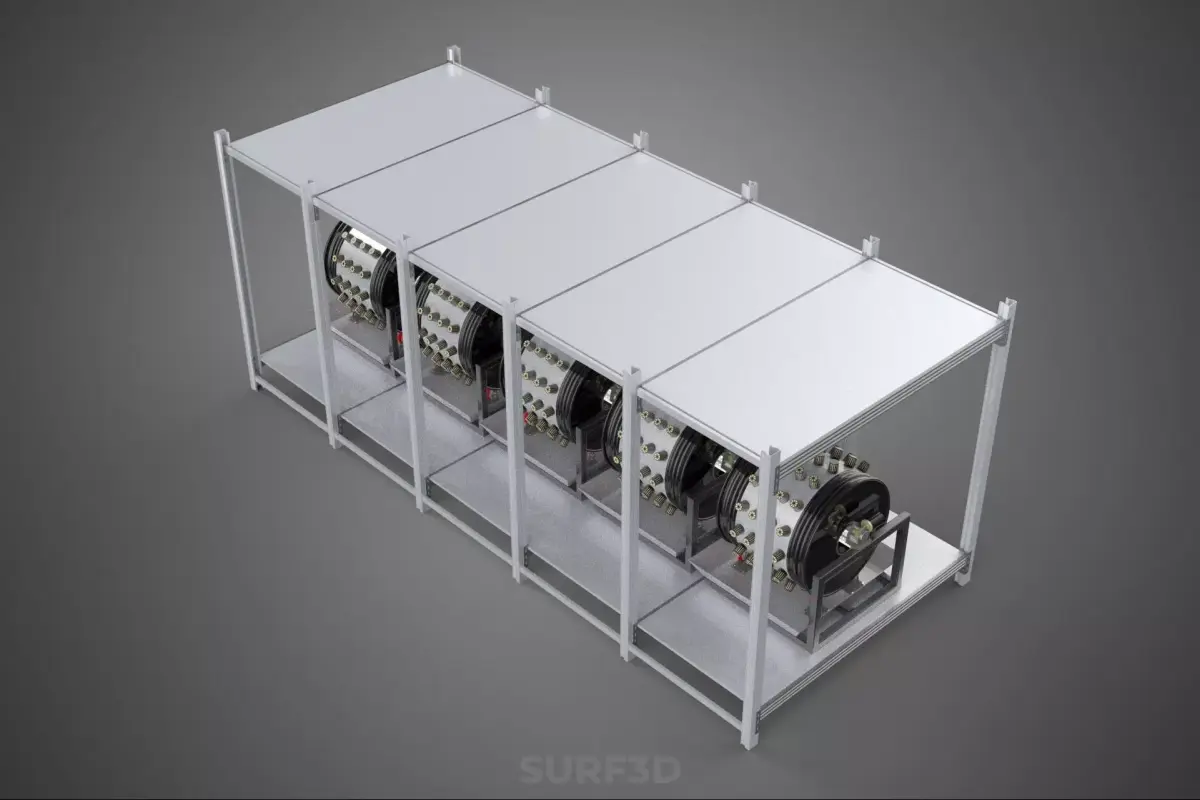
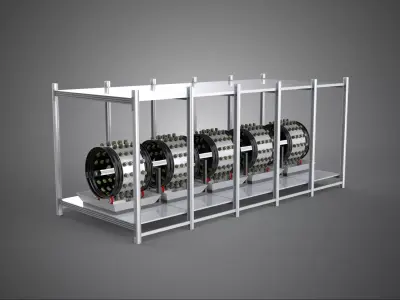
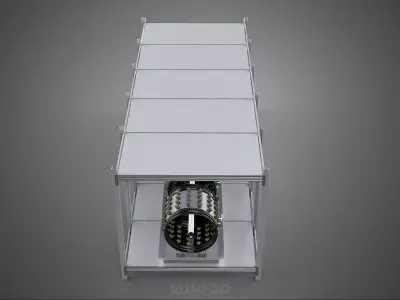
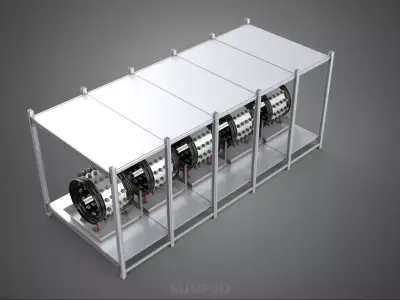
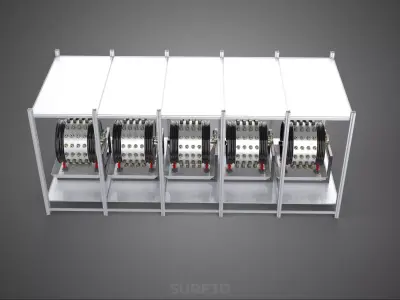
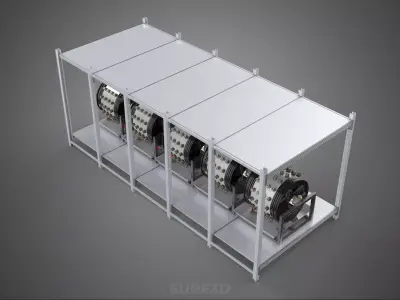
A RACK FRAME ARRAY ROW SHELF TRAY ROTARY HYDROPONIC LED PLANT FARM refers to an advanced, integrated system for controlled environment agriculture (CEA), meticulously engineered to maximize plant growth efficiency, space utilization, and resource conservation. This sophisticated setup combines several cutting-edge agricultural technologies within a cohesive structure, primarily designed for high-density, automated production of various crops, often in urban or resource-limited environments.
Structural Components (Rack, Frame, Array, Row, Shelf, Tray): The system is built upon a robust rack or frame infrastructure, typically constructed from durable, corrosion-resistant materials such as galvanized steel or aluminum. This framework provides the primary support for the entire cultivation unit. Within this frame, plants are organized into arrays or rows of modular shelves and trays. These shelves are multi-tiered, arranged vertically to exploit cubic space rather than just floor area, thereby significantly increasing planting density per unit footprint. Each tray serves as an individual cultivation unit or holds multiple smaller plant containers, facilitating easy management, planting, and harvesting. The modular design allows for scalability and adaptation to different facility sizes and crop types.
Rotary Mechanism: A defining feature of this system is its rotary nature. This mechanism involves the continuous or intermittent movement of the plant shelves or trays. Common configurations include vertical carousel systems, where trays rotate around a central axis, or horizontal conveyor-belt type systems. The primary benefits of rotation are uniform light distribution across all plants, even those on different tiers or positions; enhanced air circulation; and optimized access for automated nutrient delivery, monitoring, and harvesting. Rotation can also reduce the overall number of light fixtures required, as plants are brought into the optimal light zone sequentially.
Hydroponic System: The cultivation method employed is hydroponics, a form of soilless farming where plants are grown in nutrient-rich water solutions. This eliminates the need for traditional soil, reducing the risk of soil-borne diseases and pests, and significantly conserving water through recirculation. The system typically integrates a closed-loop nutrient delivery system that precisely provides plants with an optimized balance of macro and micronutrients. Common hydroponic techniques, such as Nutrient Film Technique (NFT), Deep Water Culture (DWC), or aeroponics, can be implemented within the trays, ensuring efficient uptake and rapid growth.
LED Lighting: Artificial illumination is provided by LED (Light-Emitting Diode) grow lights. LEDs are chosen for their energy efficiency, long lifespan, and ability to emit specific light spectra tailored to different plant growth stages and species. Unlike traditional grow lights, LEDs produce minimal heat, simplifying environmental control and reducing energy consumption for cooling. Programmable LED arrays allow for precise control over light intensity, duration (photoperiod), and spectral composition, optimizing photosynthesis and photomorphogenesis for accelerated growth and improved crop quality.
Integrated Functionality and Advantages: The combination of these elements creates an highly efficient plant farm. The Rotary Hydroponic LED Plant Farm integrates structural integrity with dynamic movement, soil-less cultivation, and energy-efficient, spectrally controlled lighting. This synthesis leads to numerous advantages:
- Space Efficiency: Maximizes yield per square foot through vertical and rotary configurations.
- Resource Optimization: Drastically reduces water consumption (up to 90% less than traditional farming) and precisely controls nutrient delivery.
- Accelerated Growth: Optimal environmental conditions and tailored light spectra lead to faster growth cycles and higher yields.
- Environmental Control: Allows for year-round cultivation independent of climate, pests, or seasonality.
- Automation Potential: The structured and rotary nature lends itself well to automation of planting, feeding, monitoring, and harvesting.
- Local Production: Enables urban farming, reducing transportation costs and carbon footprint, and providing fresh produce close to consumers.
Such systems represent a significant advancement in controlled environment agriculture, addressing challenges of food security, land scarcity, and environmental sustainability in modern food production.
KEYWORDS: Controlled Environment Agriculture, CEA, Vertical Farming, Hydroponics, LED Grow Lights, Rotary System, Plant Cultivation, Indoor Farming, Urban Agriculture, Rack System, Modular Farming, Nutrient Film Technique, Deep Water Culture, Aeroponics, Resource Efficiency, Space Utilization, Crop Yield, Automation, Sustainable Agriculture, Smart Farming, Precision Agriculture, Artificial Lighting, Photoperiod, Nutrient Solution, Water Conservation, Soilless Cultivation, Automated Farm, Plant Factory, Horticultural Technology, Agricultural Innovation.
STL (Stereolithography, filesize: 532 MB), OBJ (OBJ, filesize: 1.03 GB), 3DM (Rhinoceros 3D, filesize: 55.4 MB), BLEND (Blender, filesize: 904 MB), DAE (Collada, filesize: 1.77 GB), FBX (Autodesk FBX, filesize: 324 MB), IGE (IGES, filesize: 54.2 MB), STP (STEP, filesize: 37.7 MB), SKP (Sketchup, filesize: 23.6 MB), SAT (3D ACIS, filesize: 937 MB), MAX (Autodesk 3ds Max, filesize: 2.22 GB), DWG (AutoCAD, filesize: 188 MB), GLTF (glTF, filesize: 326 MB), 3DS (3D Studio, filesize: 322 MB)