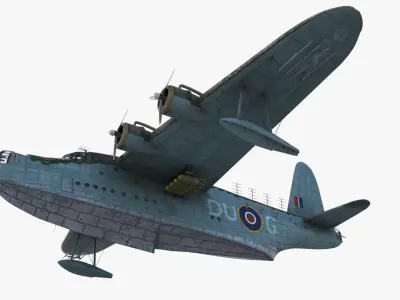
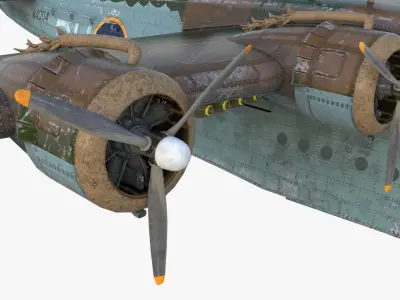
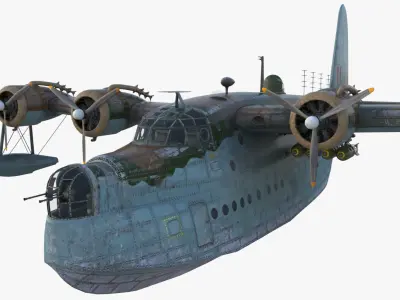
Short S25 Sunderland - Flying Boat WW2 Low-poly 3D model
Home Catalog Short S25 Sunderland - Flying Boat WW2 Low-poly 3D model

Publication date: 2025-03-06

Short S25 Sunderland - Flying Boat WW2 Low-poly 3D model

$89

License: royalty_free_no_ai

author:

vfxsinghbu

All content related to this 3D asset—including renders, descriptions, and metadata — is credited to its original author, «vfxsinghbu». CGhub does not claim copyright ownership over the content used.
  • Description

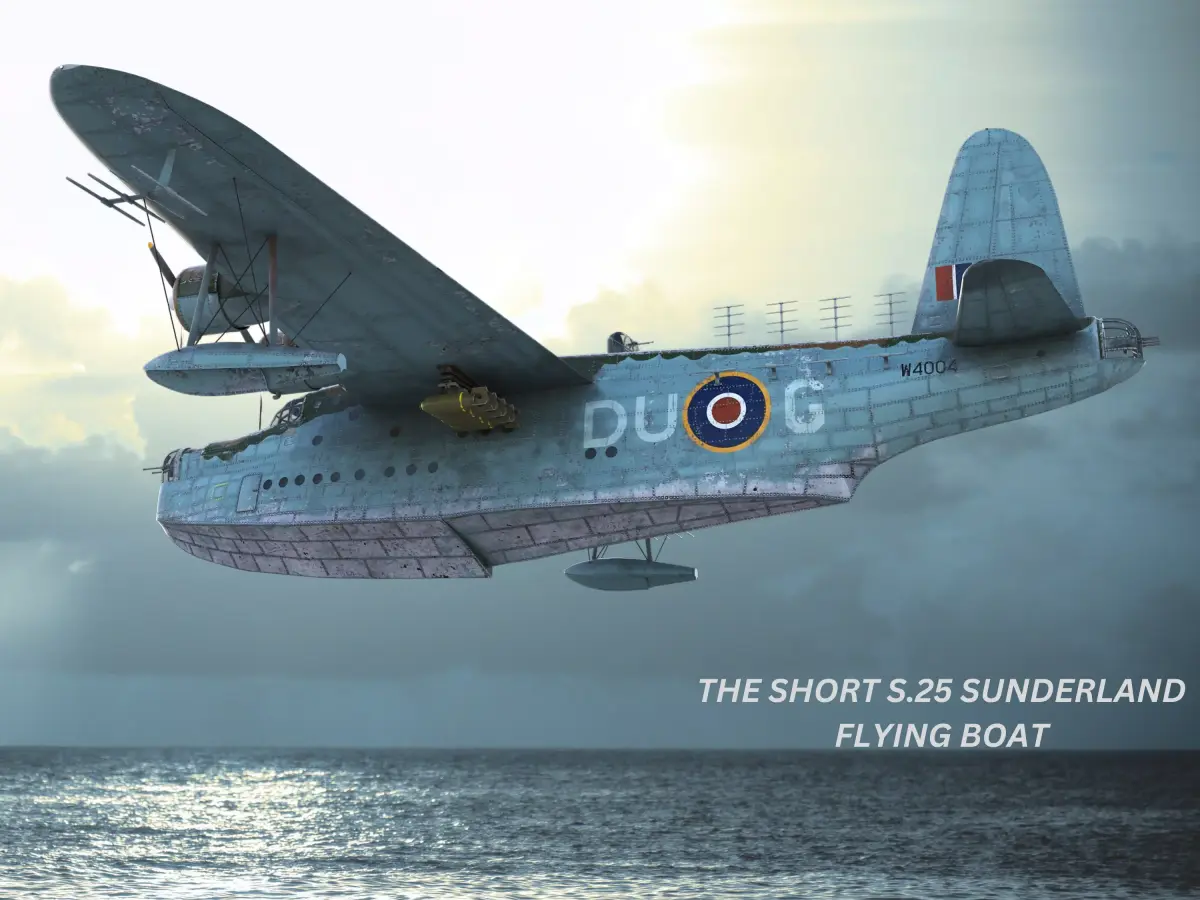
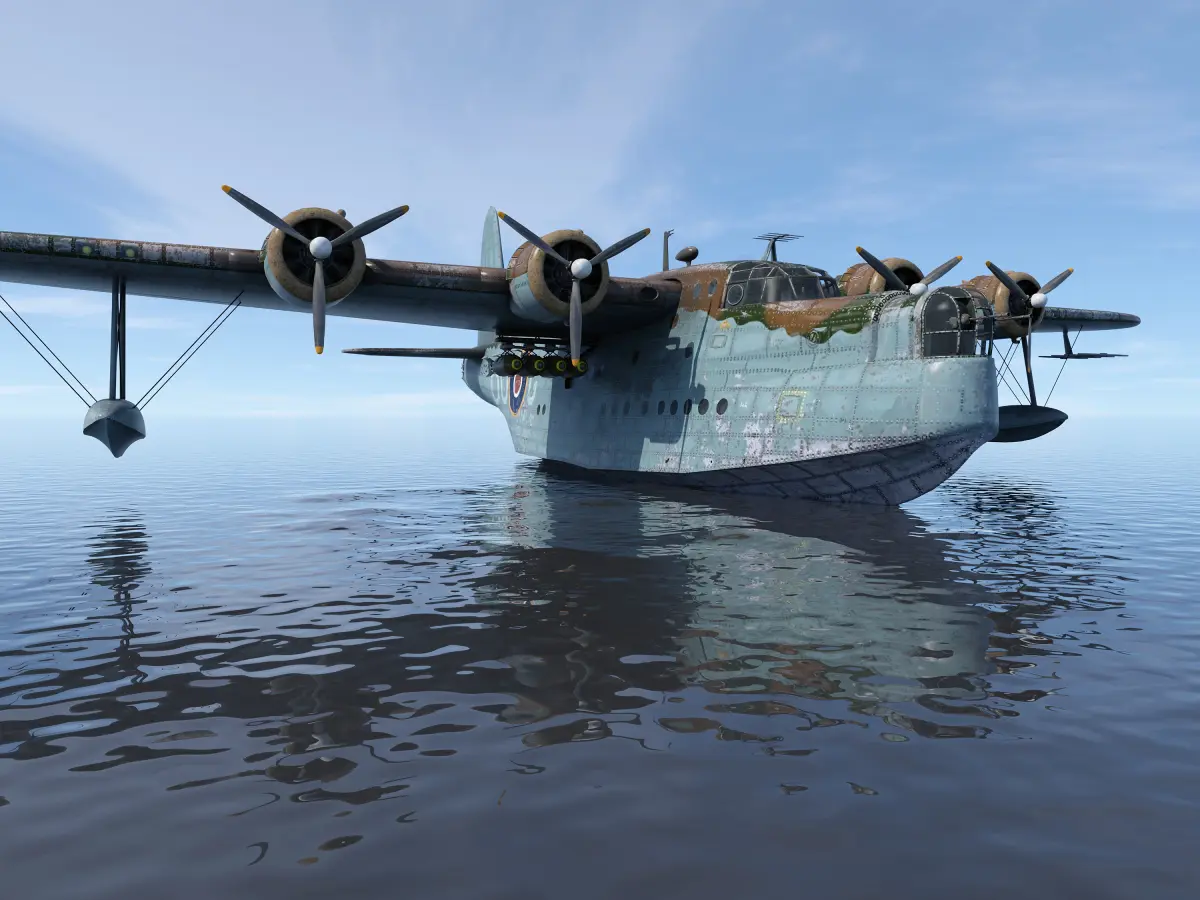
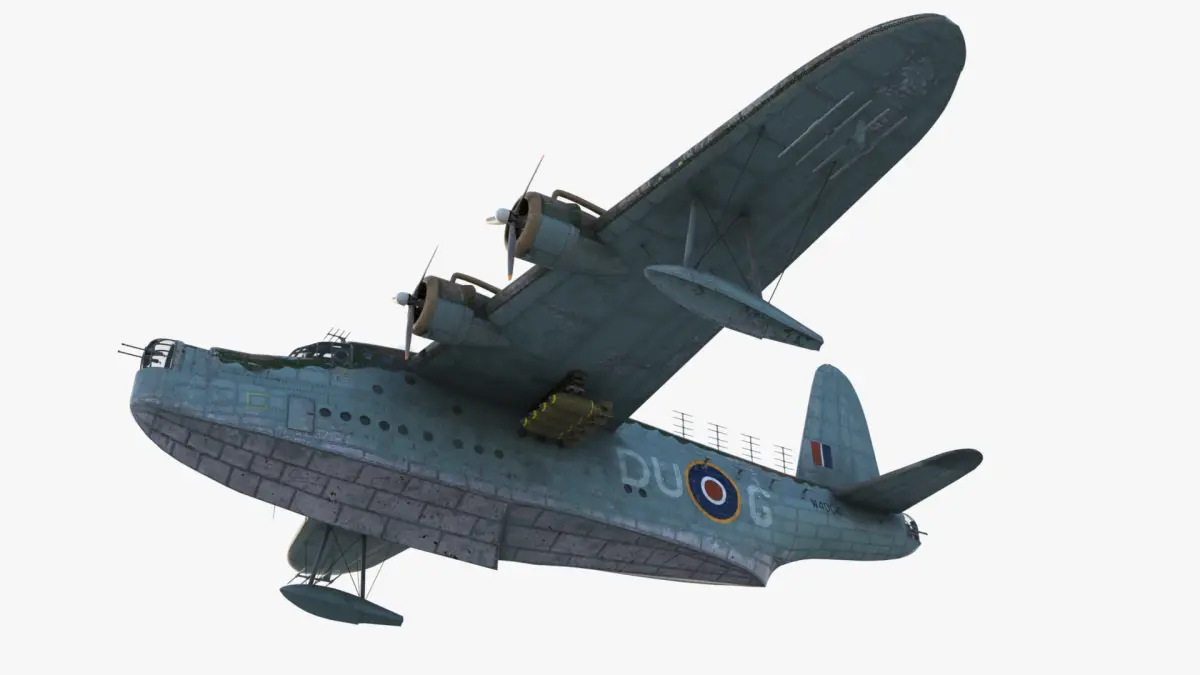
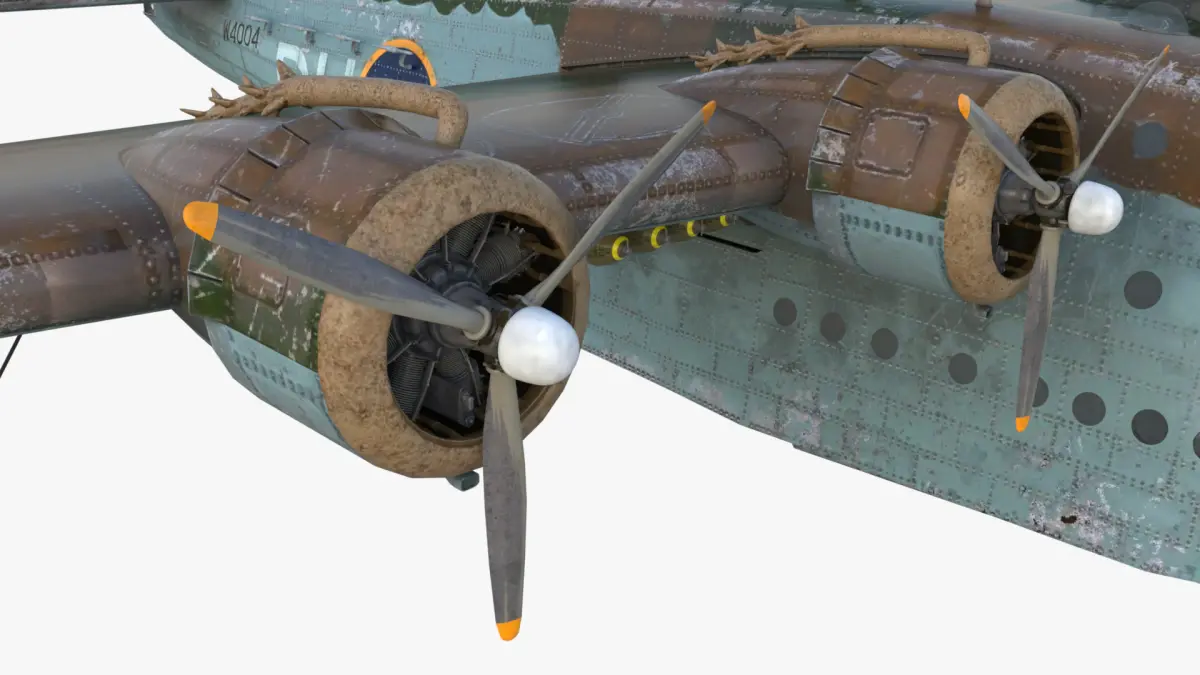
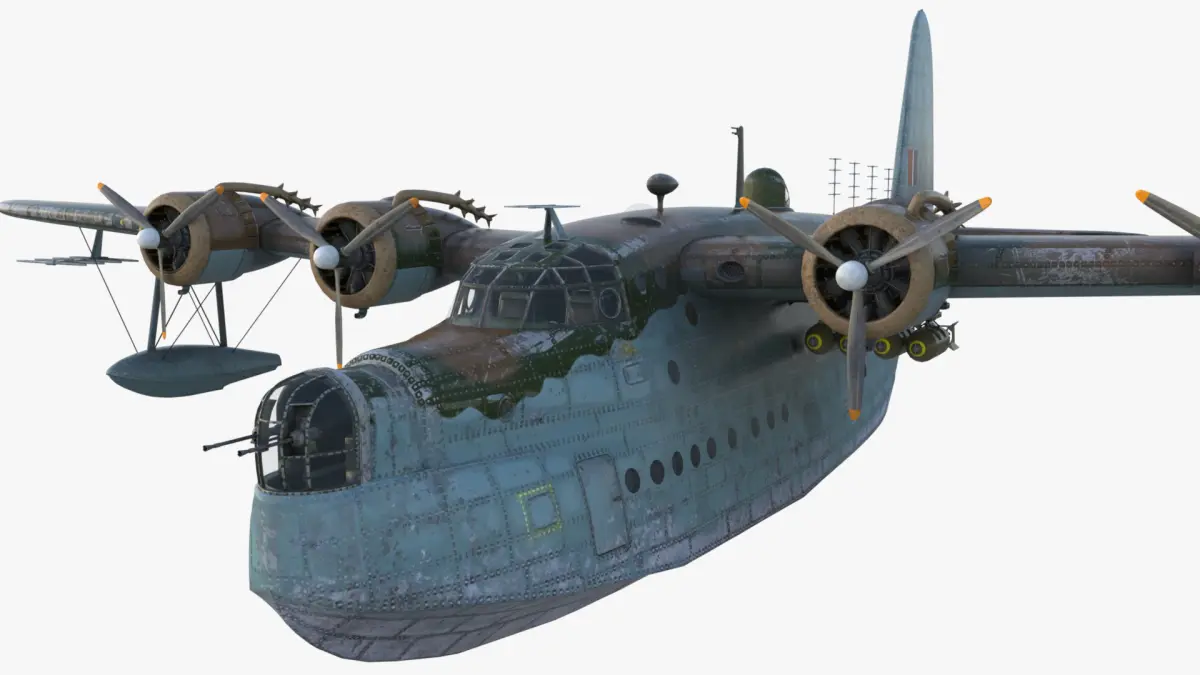
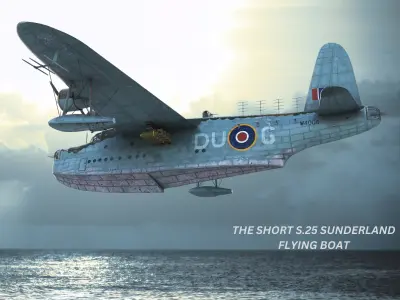
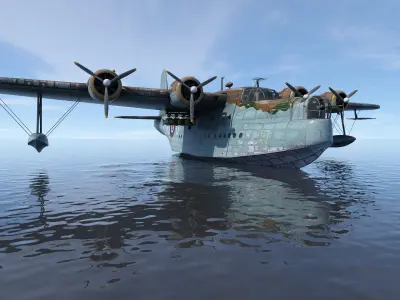
Short S.25 Sunderland - Flying Boat WW2

Photorealistic

Low-poly

PBR/Gameready

4K High Quality Texture Map

POLYGONS - VERTICES

Short Sunderland 700199 vertices, 670224 polygons, 65 bones Bomb R1 3929 vertices, 3880 polygons Dorsal MG_1 22438 vertices, 22811 polygons Front 12442 vertices, 12780 polygons Rear MGS_ 24884 vertices, 25560 polygons

The Short S.25 Sunderland is a British flying boat patrol bomber, developed and constructed by Short Brothers for the Royal Air Force (RAF). The aircraft took its service name from the town (latterly, city) and port of Sunderland in North East England.

Developed in parallel with the civilian S.23 Empire flying boat, the flagship of Imperial Airways, the Sunderland was developed specifically to conform to the requirements of British Air Ministry Specification R.2/33 for a long-range patrol/reconnaissance flying boat to serve with the Royal Air Force. As designed, it served as a successor to the earlier Short Sarafand flying boat. Sharing several similarities with the S.23, it featured a more advanced aerodynamic hull and was outfitted with various offensive and defensive armaments, including machine gun turrets, bombs, aerial mines, and depth charges. The Sunderland was powered by four Bristol Pegasus XVIII radial engines and was outfitted with various detection equipment to aid combat operations, including the Leigh searchlight, the ASV Mark II and ASV Mark III radar units, and an astrodome.

During the early 1930s, there was intense international competition to develop suitable aircraft to operate new long-range intercontinental passenger service between the United Kingdom, the United States, France and Germany. It was recognised that the United Kingdom had no existing equivalent to the new American Sikorsky S-42 flying boats or the German Dornier Do X. Accordingly, in 1934, the British Postmaster General declared that all first-class Royal Mail sent overseas was to travel by air, establishing a subsidy for the development of intercontinental air transport in a fashion similar to the U.S. domestic programme a decade earlier. In response, Imperial Airways announced a competition to design and manufacture a fleet of 28 large flying boats, each weighing 18 long tons (18 tonnes) and having a range of 700 mi (1,100 km) with a capacity for 24 passengers. A corresponding contract was issued to Short Brothers of Rochester for their design, which became the S.23 Empire.

3D Model details

  • cgtrader Platform
  • Animated
  • Rigged
  • Ready for 3D Printing
  • VR / AR / Low-poly
  • PBR
  • Textures
  • Materials
  • UV Mapping
  • Unwrapped UVs: non_overlapping
  • Geometry: Polygon mesh
  • Polygons: 670224
  • Vertices: 700199
  • Plugins used