High-quality 3D assets at affordable prices — trusted by designers, engineers, and creators worldwide. Made with care to be versatile, accessible, and ready for your pipeline.
Included File Formats
This model is provided in 14 widely supported formats, ensuring maximum compatibility:
• - FBX (.fbx) – Standard format for most 3D software and pipelines
• - OBJ + MTL (.obj, .mtl) – Wavefront format, widely used and compatible
• - STL (.stl) – Exported mesh geometry; may be suitable for 3D printing with adjustments
• - STEP (.step, .stp) – CAD format using NURBS surfaces
• - IGES (.iges, .igs) – Common format for CAD/CAM and engineering workflows (NURBS)
• - SAT (.sat) – ACIS solid model format (NURBS)
• - DAE (.dae) – Collada format for 3D applications and animations
• - glTF (.glb) – Modern, lightweight format for web, AR, and real-time engines
• - 3DS (.3ds) – Legacy format with broad software support
• - 3ds Max (.max) – Provided for 3ds Max users
• - Blender (.blend) – Provided for Blender users
• - SketchUp (.skp) – Compatible with all SketchUp versions
• - AutoCAD (.dwg) – Suitable for technical and architectural workflows
• - Rhino (.3dm) – Provided for Rhino users
Model Info
• - All files are checked and tested for integrity and correct content
• - Geometry uses real-world scale; model resolution varies depending on the product (high or low poly)
• • - Scene setup and mesh structure may vary depending on model complexity
• - Rendered using Luxion KeyShot
• - Affordable price with professional detailing
Buy with confidence. Quality and compatibility guaranteed.
If you have any questions about the file formats, feel free to send us a message — we're happy to assist you!
Sincerely,
SURF3D
Trusted source for professional and affordable 3D models.
More Information About 3D Model :
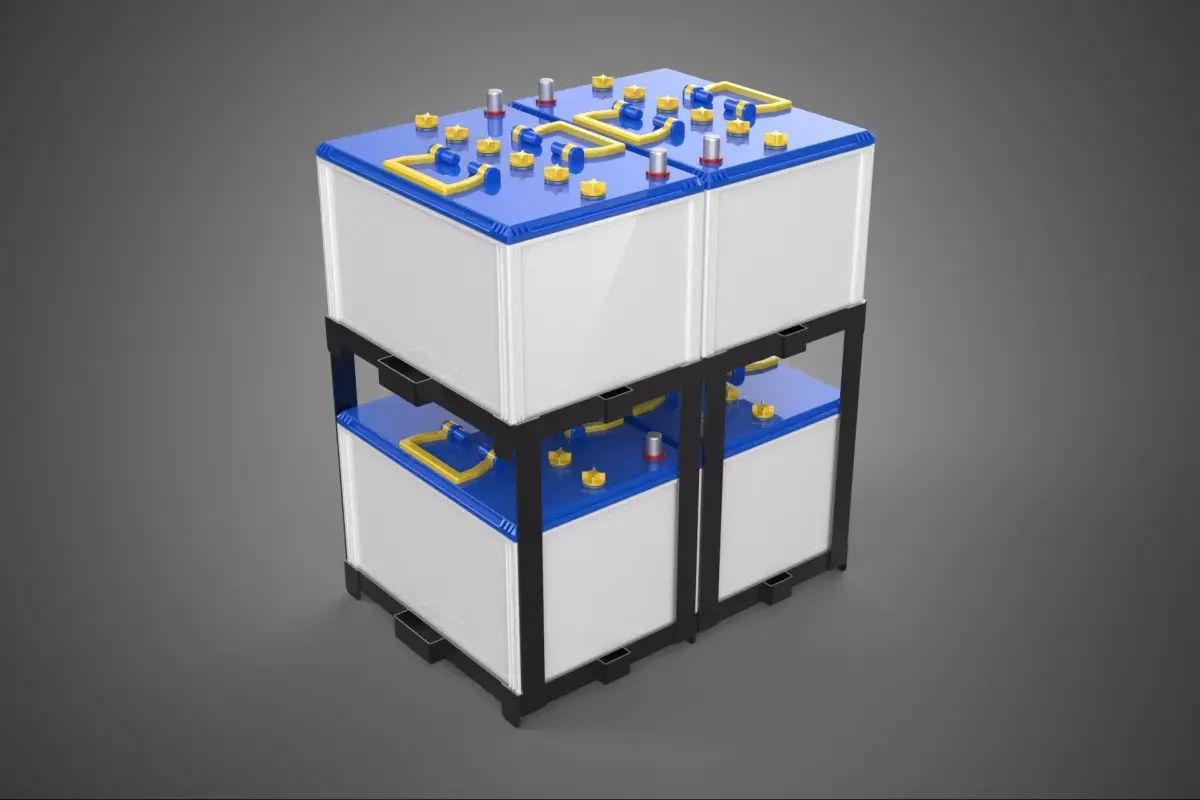
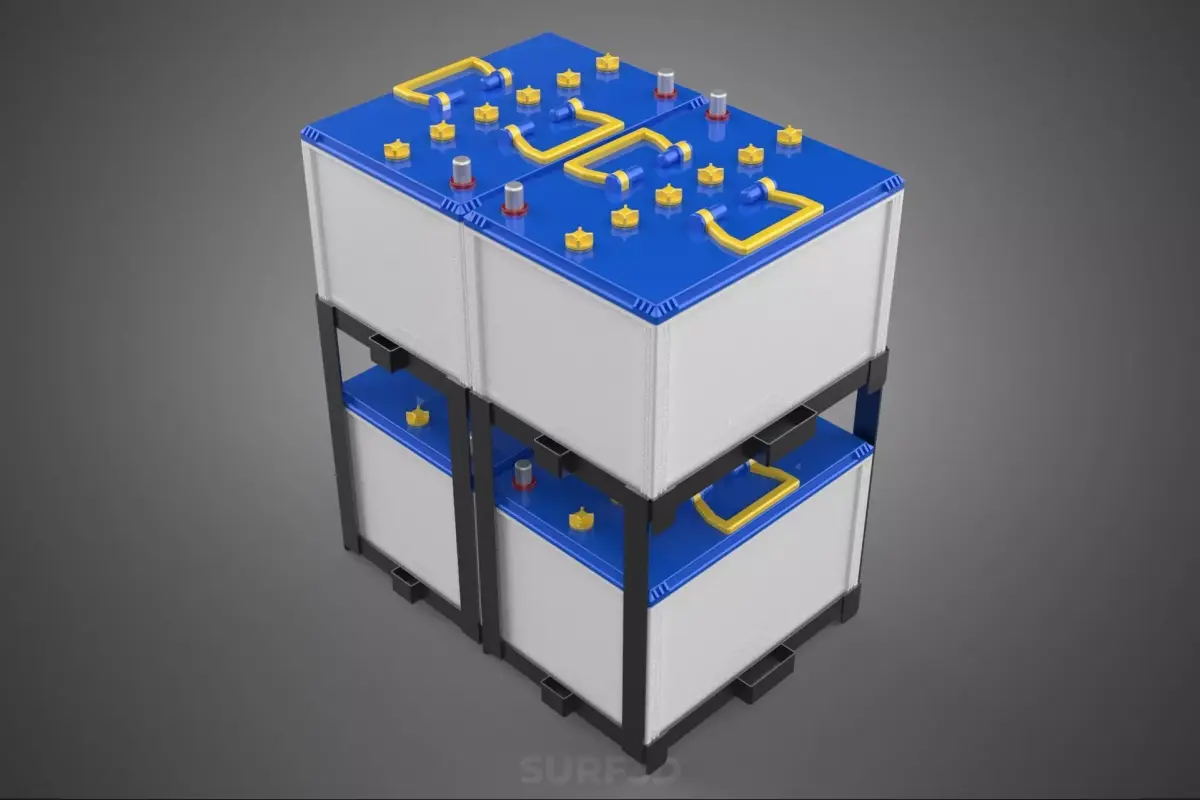
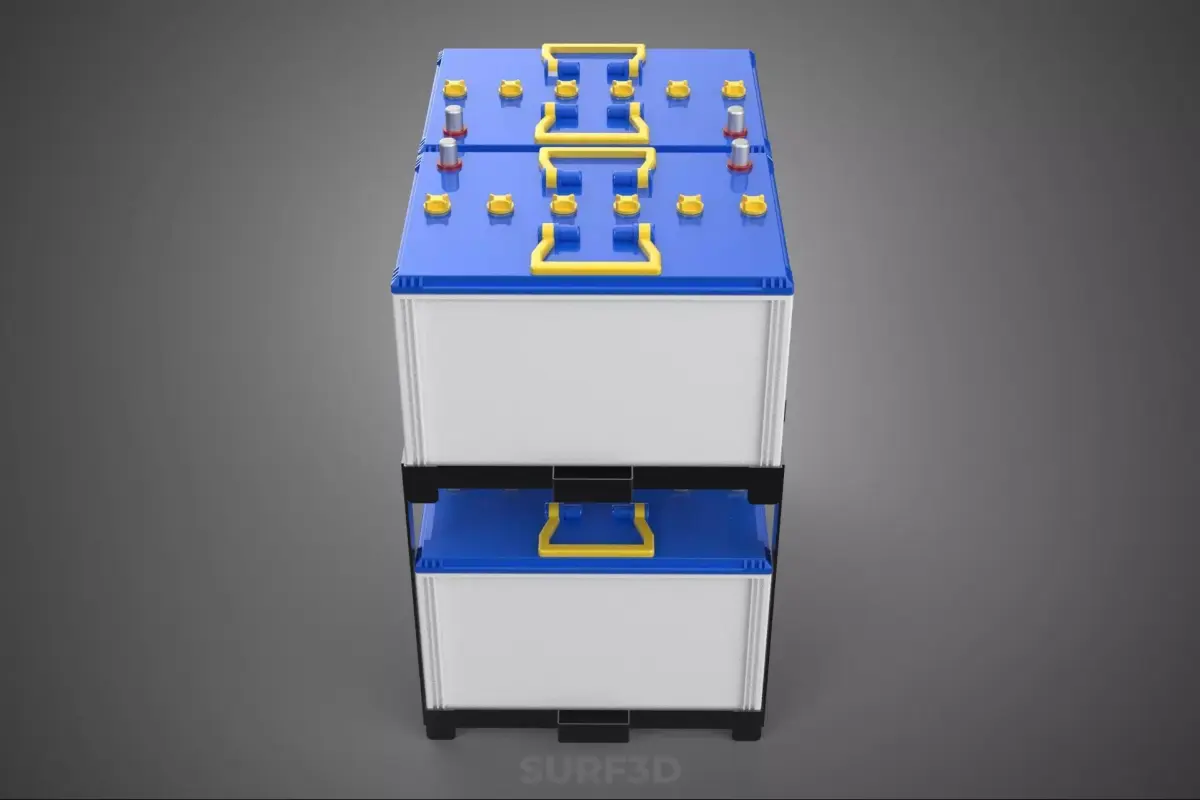
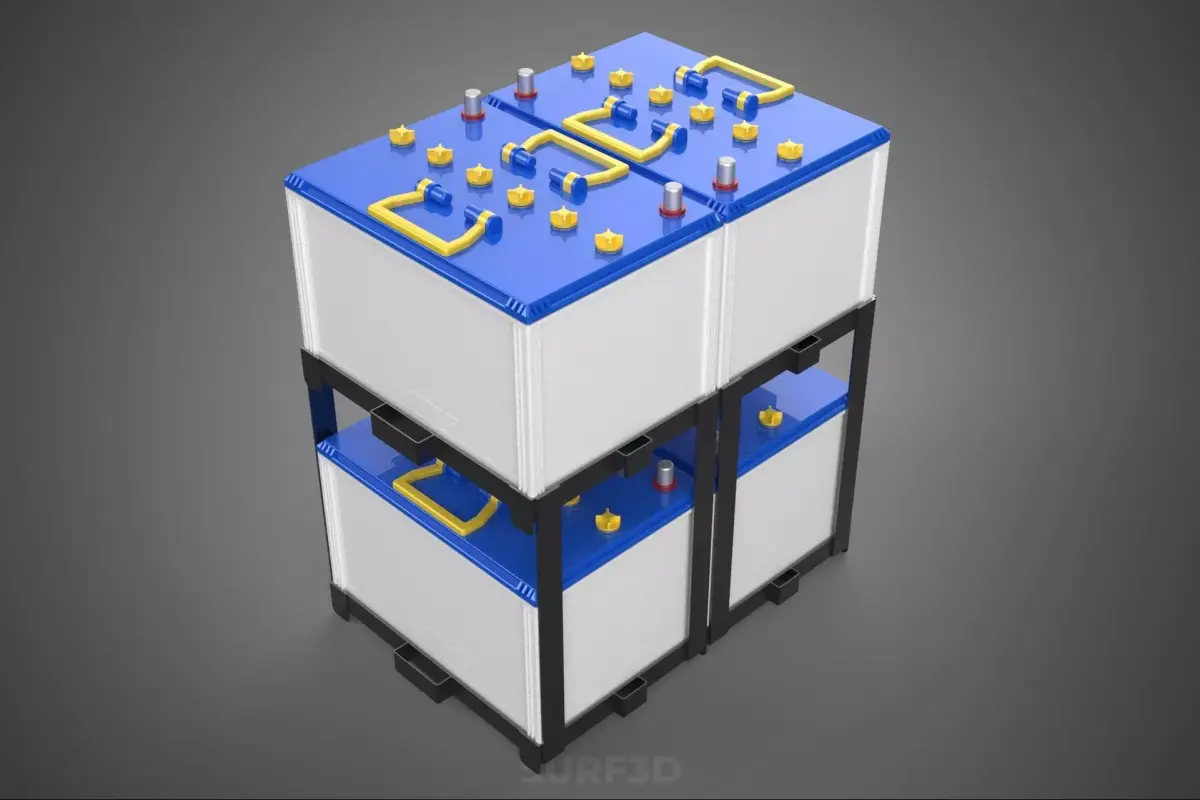
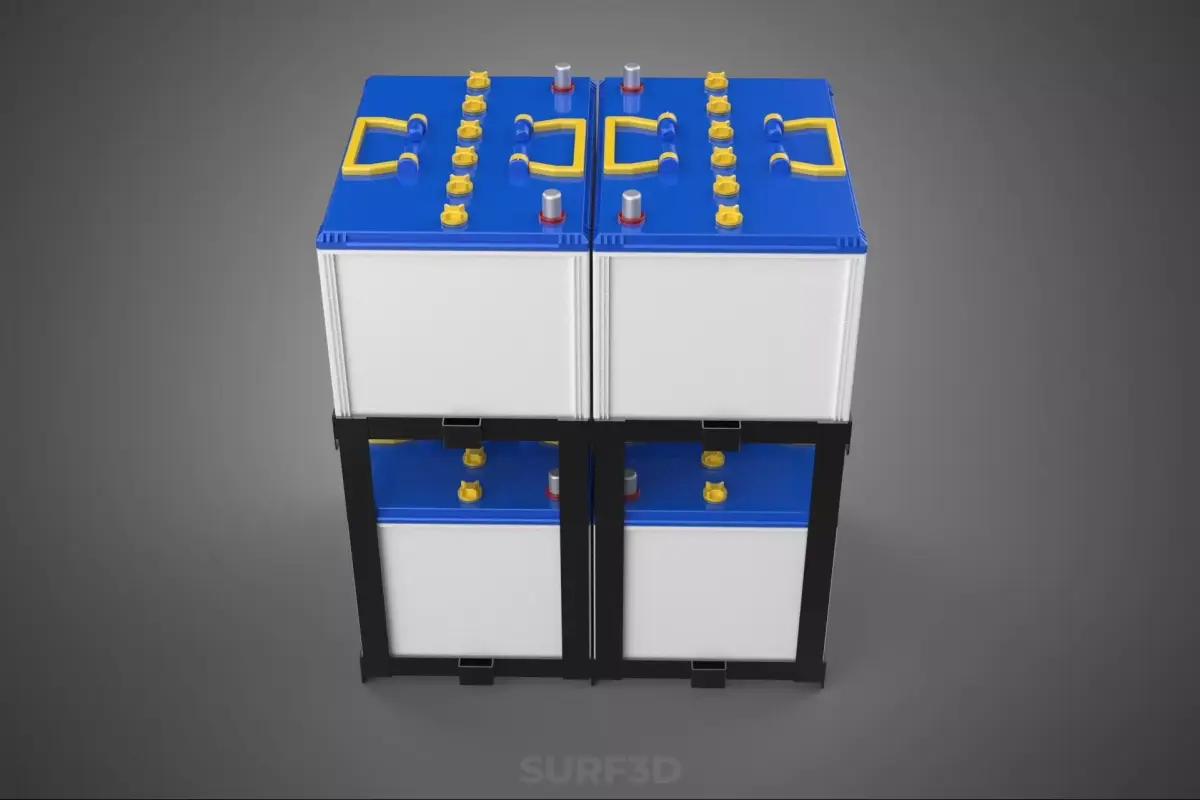
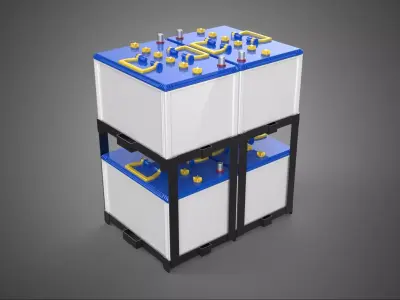
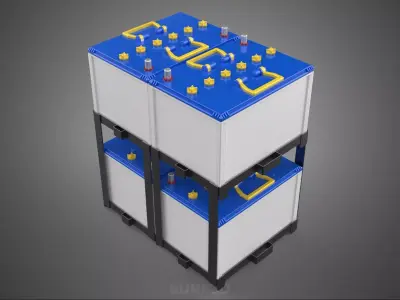
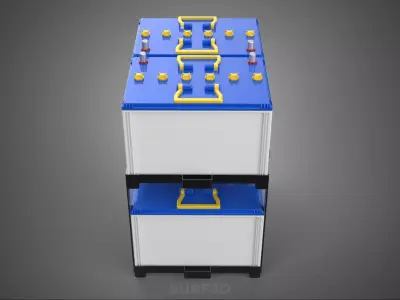
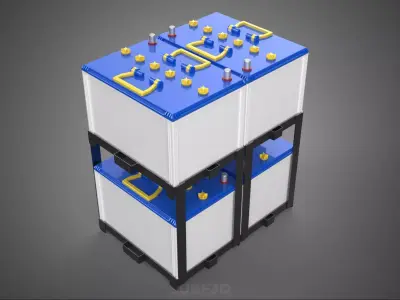
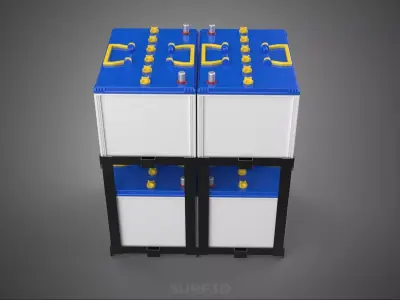
The Stack Tray Rack Bracket Holder Mount for Accumulator Batteries (ACCU BATTERY ACCUMULATOR DC) is a specialized, integrated structural system designed for the safe, organized, and electrically efficient physical management of direct current (DC) electrochemical energy storage units. This apparatus is fundamental to infrastructure requiring reliable, high-capacity standby power, such as telecommunications centers, data centers, electric utility substations, and large-scale uninterruptible power supply (UPS) installations.
Nomenclature and Functionality
The compound title describes the hierarchical functionality of the system:
- ACCU BATTERY ACCUMULATOR DC: Denotes the primary payload—rechargeable electrochemical cells (typically lead-acid, Valve Regulated Lead-Acid (VRLA), or lithium-ion chemistries) that supply Direct Current.
- STACK/RACK: Refers to the main, robust, often standardized skeletal framework designed for vertical organization. The rack provides overall structural integrity and allows for high-density storage, minimizing footprint. Racks are typically constructed from high-strength steel or aluminum, treated for corrosion resistance.
- TRAY/HOLDER: Modular components that interface directly with the rack structure. A tray is a dedicated, individual shelf or drawer designed to cradle one or more specific battery modules. These components ensure even weight distribution, facilitate ease of installation or replacement, and often incorporate features for acid containment (drip lips or catch basins) to mitigate environmental contamination in the event of cell leakage.
- BRACKET/MOUNT: Precision engineered sub-components that serve dual purposes: physical securing and electrical termination. Brackets stabilize the individual battery units within the tray, preventing movement caused by vibration, seismic events, or handling. They also frequently house the DC busbar system, providing dedicated, low-resistance termination points for inter-cell and inter-tray connections necessary for series or parallel configuration required to achieve the necessary system voltage and capacity.
### Structural and Engineering Attributes
The design of a standardized Stack Tray Rack system is governed by stringent safety, environmental, and engineering standards (e.g., IEEE, relevant building codes).
Weight Management: Accumulator batteries, particularly lead-acid variants, are extremely heavy. The rack must possess exceptional load-bearing capacity, with structural design prioritizing uniform load distribution and floor anchoring to prevent tipping or shifting.
Safety and Thermal Management: High-density battery storage generates heat, which can compromise battery life and performance. The tray and rack structure must ensure adequate airflow and ventilation to dissipate thermal energy. Furthermore, systems handling flooded batteries must accommodate venting pathways for hydrogen gas to prevent explosive concentrations, often achieved through specialized flue systems or strategic spacing.
Seismic and Vibration Resilience: In areas prone to seismic activity, the bracket and mounting components are engineered to withstand significant lateral forces. Specialized seismic racks utilize robust anchoring and restraint systems to ensure the batteries remain secured and functional during an event. Vibration dampening materials (e.g., rubber pads or composite isolators) are often employed between the battery unit and the tray to prolong cell life.
Electrical Integration: The system facilitates organized DC power distribution. Busbars and insulated connectors integrate within the mounting structure, simplifying the creation of complex DC circuits while minimizing cable clutter and potential short circuits. Clear access points for voltage monitoring and insulation testing are essential for maintenance protocols.
### Applications
These battery management systems are critical infrastructure components in:
- Telecommunications: Providing backup power for central offices and remote cell sites.
- Data Centers: Supporting mission-critical servers during power transition or sustained outages (UPS backbone).
- Utility Substation Control: Ensuring the reliable operation of circuit breakers, switchgear, and protective relays.
- Industrial Automation: Backup power for critical control processes.
The Stack Tray Rack Bracket Holder Mount system transforms a collection of individual batteries into a unified, scalable, maintainable, and highly reliable DC power source.
KEYWORDS: Battery rack, accumulator mount, DC storage, power infrastructure, energy management, stack system, modular battery, UPS power, standby power, seismic bracket, telecommunications power, switchgear battery, containment system, structural support, thermal management, vibration dampening, electrical terminus, safety enclosure, rechargeable cell, lead-acid battery, VRLA, Li-ion containment, power system integration, battery tray, DC distribution, high-density storage, cell holder, industrial storage, maintenance accessibility, energy resilience.
STL (Stereolithography, filesize: 4.71 MB), OBJ (OBJ, filesize: 8.24 MB), BLEND (Blender, filesize: 9.12 MB), STP (STEP, filesize: 3.94 MB), 3DS (3D Studio, filesize: 3.03 MB), 3DM (Rhinoceros 3D, filesize: 9.96 MB), DAE (Collada, filesize: 16.3 MB), GLTF (glTF, filesize: 3.34 MB), SKP (Sketchup, filesize: 2.27 MB), IGE (IGES, filesize: 8.18 MB), FBX (Autodesk FBX, filesize: 3.02 MB), DWG (AutoCAD, filesize: 2.73 MB), MAX (Autodesk 3ds Max, filesize: 31.1 MB), SAT (3D ACIS, filesize: 8.54 MB)