High-quality 3D assets at affordable prices — trusted by designers, engineers, and creators worldwide. Made with care to be versatile, accessible, and ready for your pipeline.
Included File Formats
This model is provided in 14 widely supported formats, ensuring maximum compatibility:
• - FBX (.fbx) – Standard format for most 3D software and pipelines
• - OBJ + MTL (.obj, .mtl) – Wavefront format, widely used and compatible
• - STL (.stl) – Exported mesh geometry; may be suitable for 3D printing with adjustments
• - STEP (.step, .stp) – CAD format using NURBS surfaces
• - IGES (.iges, .igs) – Common format for CAD/CAM and engineering workflows (NURBS)
• - SAT (.sat) – ACIS solid model format (NURBS)
• - DAE (.dae) – Collada format for 3D applications and animations
• - glTF (.glb) – Modern, lightweight format for web, AR, and real-time engines
• - 3DS (.3ds) – Legacy format with broad software support
• - 3ds Max (.max) – Provided for 3ds Max users
• - Blender (.blend) – Provided for Blender users
• - SketchUp (.skp) – Compatible with all SketchUp versions
• - AutoCAD (.dwg) – Suitable for technical and architectural workflows
• - Rhino (.3dm) – Provided for Rhino users
Model Info
• - All files are checked and tested for integrity and correct content
• - Geometry uses real-world scale; model resolution varies depending on the product (high or low poly)
• • - Scene setup and mesh structure may vary depending on model complexity
• - Rendered using Luxion KeyShot
• - Affordable price with professional detailing
Buy with confidence. Quality and compatibility guaranteed.
If you have any questions about the file formats, feel free to send us a message — we're happy to assist you!
Sincerely,
SURF3D
Trusted source for professional and affordable 3D models.
More Information About 3D Model :
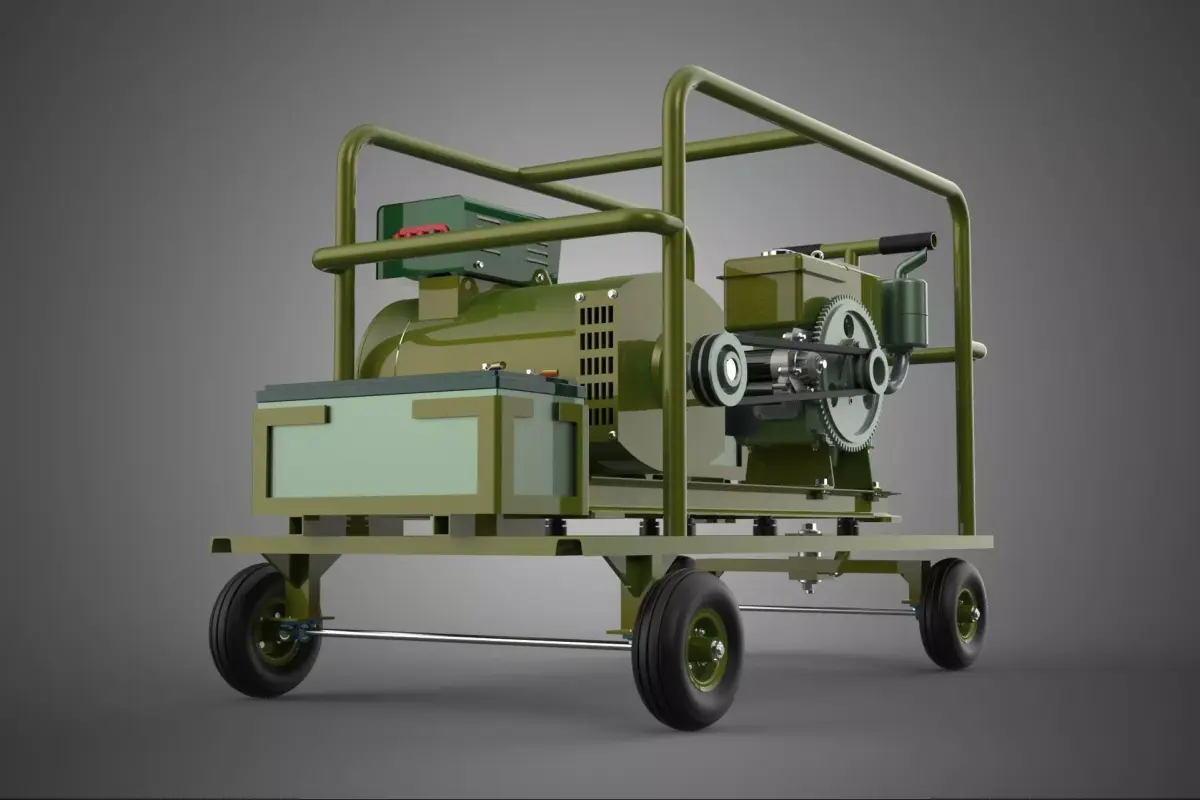
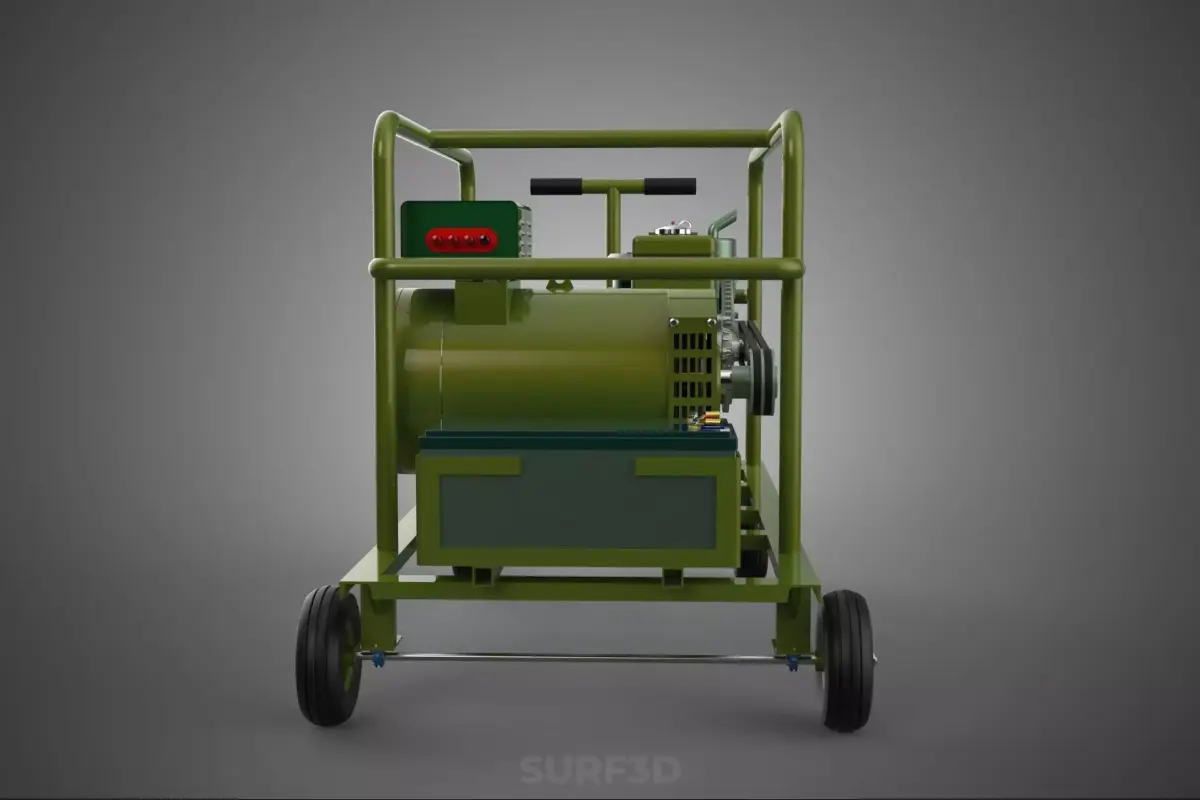
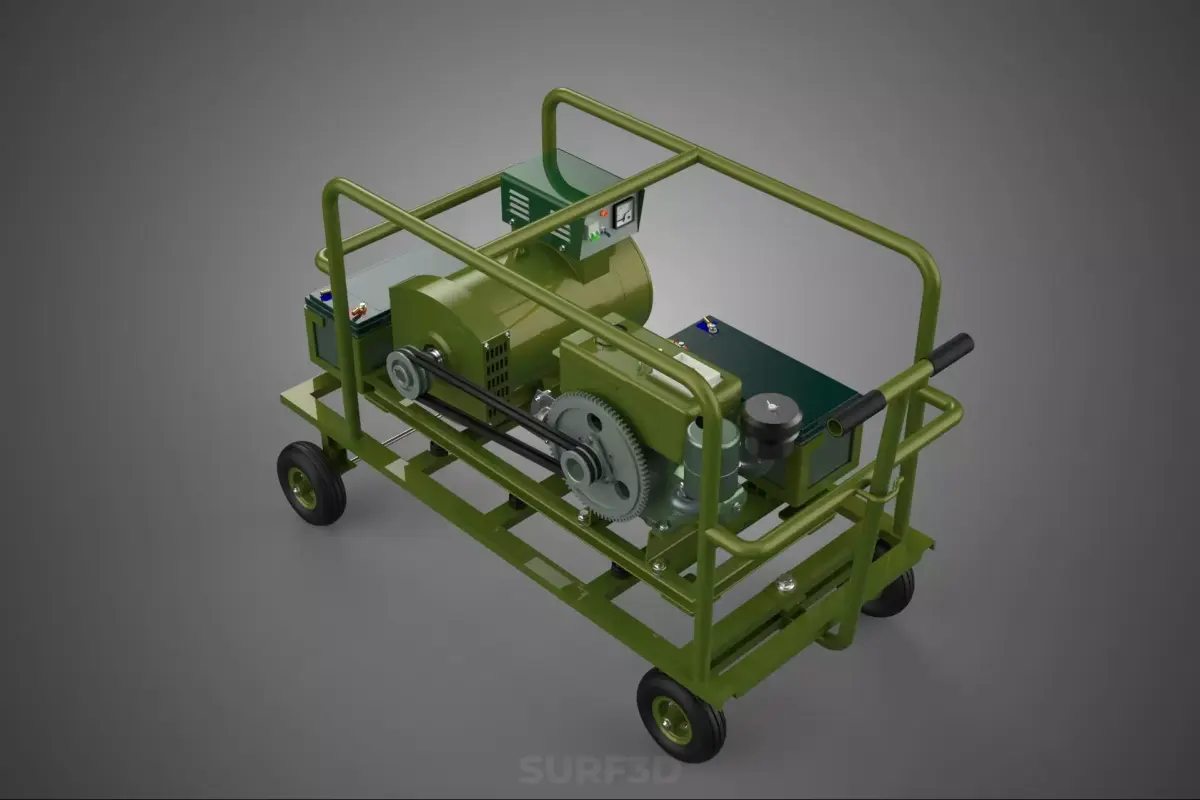
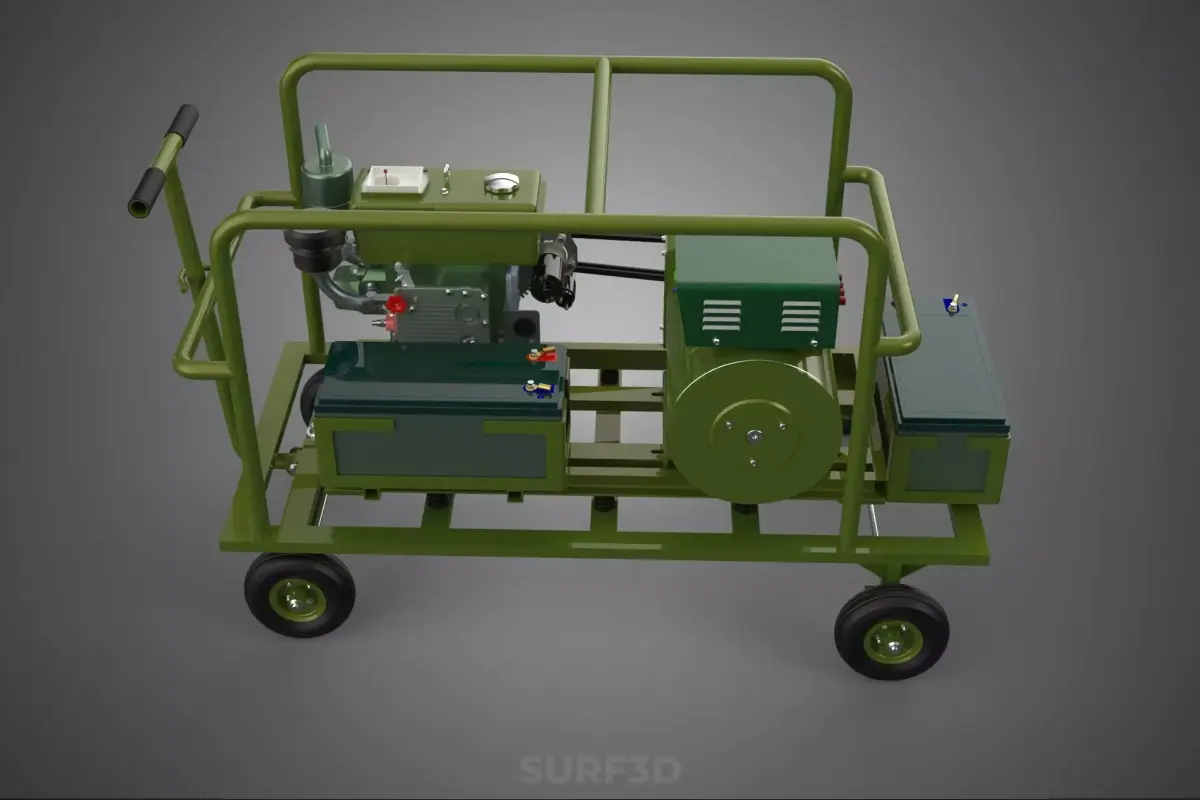
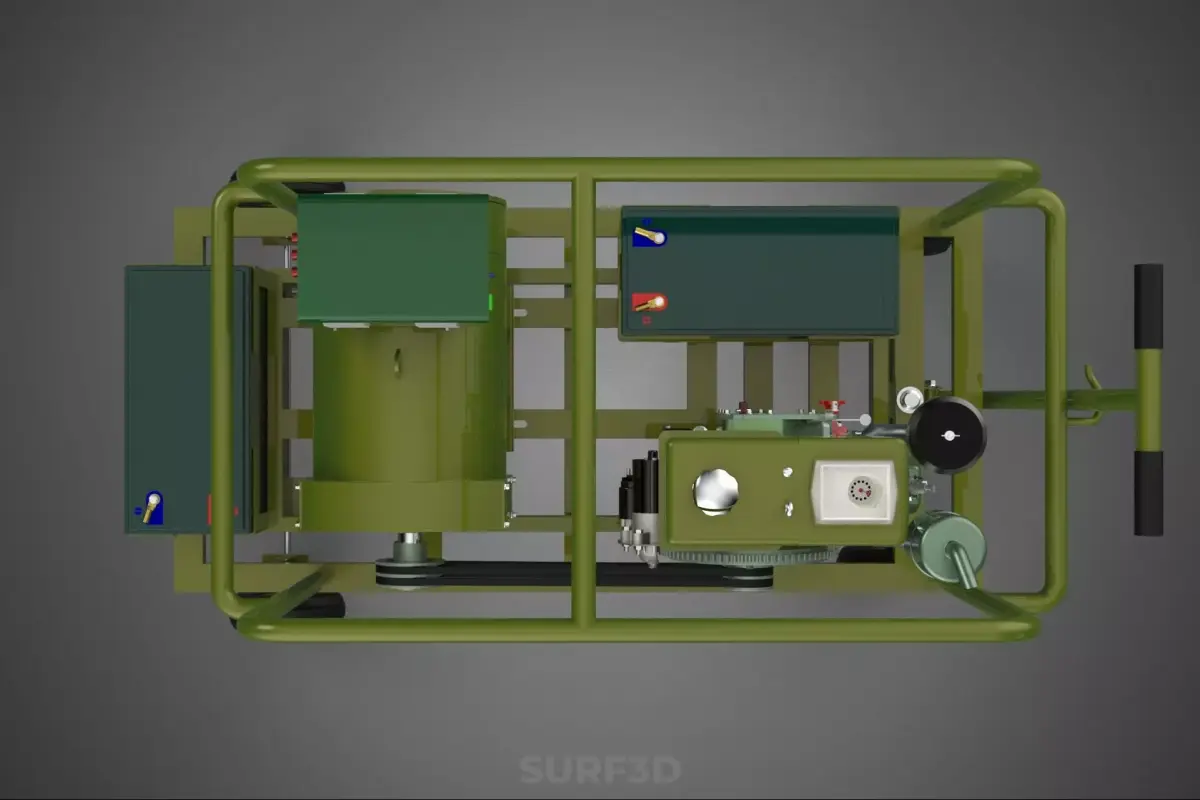
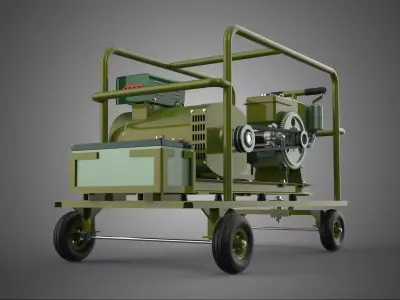
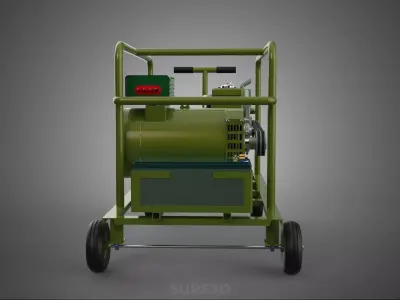
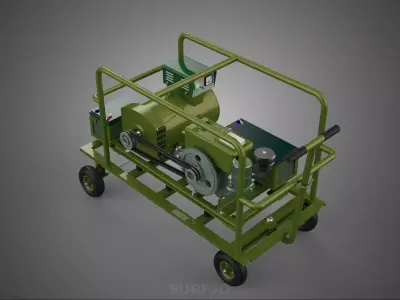
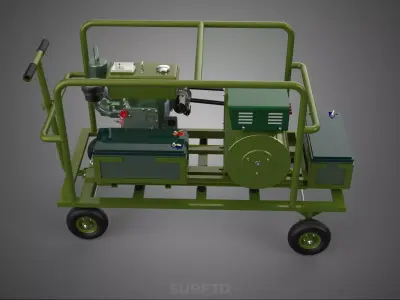
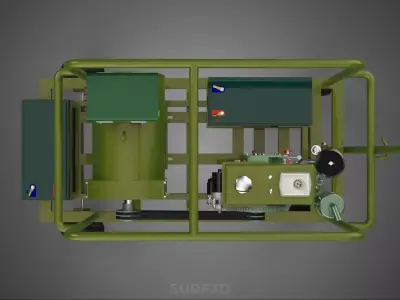
The Standard Green Army Military Genset (Generator Set) Diesel Engine refers to a family of ruggedized, high-reliability electrical power generation systems standardized for use by ground forces globally. These units are critical components of expeditionary and fixed military infrastructure, providing prime power for tactical command, control, communications, computers, intelligence, surveillance, and reconnaissance (C4ISR) systems, field hospitals, maintenance facilities, and radar installations.
I. Standardization and Nomenclature
The designation Standard Green Army signifies adherence to stringent national or coalition military specifications (Mil-Specs), ensuring reliability, interoperability, and logistical commonality across diverse operational theaters. These specifications govern everything from output quality and environmental resilience to noise suppression and electromagnetic compatibility (EMC).
Military gensets are typically categorized by their output capacity, usually ranging from 5 kW (Kilowatts) for small communications nodes up to 150 kW for large forward operating bases (FOBs). Standardized units mandate common physical dimensions, lifting provisions, and connection interfaces (such as standard military quick-connect power receptacles) to facilitate rapid deployment, retrieval, and integration with existing grid infrastructure. Standardization also extends to the physical appearance, commonly featuring non-reflective, highly durable camouflage coatings, typically Olive Drab (OD) or NATO Green.
II. Design and Technical Specifications
Military gensets are structurally distinct from commercial counterparts due to operational requirements demanding extreme durability and environmental tolerance.
A. Engine and Fuel System:
The diesel engine configuration is mandatory due to military logistical policies emphasizing a single fuel on the battlefield doctrine, primarily utilizing Diesel Fuel (DF-2) or Jet Propellant 8 (JP-8). This standardization simplifies supply chains and reduces the risk of fuel incompatibility. The engines are typically four-stroke, turbo-charged, direct-injection units designed for maximum fuel efficiency and high torque output, essential for rapid load acceptance. Standardized features include extreme cold-weather starting capabilities (down to -40°C), usually involving auxiliary coolant heaters or oil pan heaters, and reinforced cooling systems for sustained operation in desert environments (up to 50°C).
B. Alternator and Output Quality:
The synchronous alternator is designed to produce stable, high-quality electrical power, often requiring low harmonic distortion (Total Harmonic Distortion, THD, often below 5%) to safely power sensitive C4ISR electronics. Units typically offer selectable output voltages (e.g., 120/208V, 240/416V) and frequencies (50 Hz, 60 Hz, and sometimes specialized 400 Hz for aviation or radar applications). Modern units utilize sophisticated Digital Voltage Regulators (DVRs) or Automatic Voltage Regulators (AVRs) to maintain voltage stability under fluctuating tactical loads.
C. Ruggedization and Mobility:
The engine and generator assembly are mounted within a robust, skid-mounted, or trailer-integrated enclosure designed to meet MIL-STD-810 criteria for shock, vibration, humidity, and atmospheric pressure. The enclosure provides protection against ballistic fragmentation and severe weather. Mobility is achieved through self-contained trailers (tactical quiet generators, TQGs) or heavy-duty ISO frame mounting for movement via air, sea, or rough terrain ground transportation.
III. Operational and Stealth Characteristics
A. Acoustic and Thermal Signature Management:
A critical requirement for military gensets, particularly those used in forward areas, is acoustic signature suppression. The enclosure incorporates sound-absorbing materials, baffled air inlets/outlets, and specialized low-noise mufflers to achieve low audible signatures, often significantly below 70 dBA at seven meters. Thermal management is also integrated to reduce the infrared (IR) signature, which could otherwise be targeted by enemy sensors.
B. Electromagnetic Compatibility (EMC):
To prevent interference with nearby radio communications, data links, and electronic warfare systems, military gensets must meet rigorous EMC standards (such as MIL-STD-461). This involves internal shielding, grounding systems, and filtered wiring harnesses to mitigate conducted and radiated electromagnetic interference (EMI).
C. Synchronization and Redundancy:
Higher capacity units are often equipped with paralleling or synchronization capabilities, allowing two or more gensets to operate in conjunction to meet increased power demands or provide N+1 redundancy. This ensures uninterrupted power supply, a non-negotiable requirement for critical C2 infrastructure.
KEYWORDS: Genset, Diesel Engine, Military Standard, Tactical Power, Expeditionary, JP-8 Fuel, Mil-Spec, Ruggedized, Generator Set, Standardization, Low Signature, Acoustic Suppression, Synchronization, Prime Power, C4ISR, MIL-STD-810, MIL-STD-461, Automatic Voltage Regulation, Field Operations, Interoperability, Mobile Power, Logistical Support, Forward Operating Base, Thermal Signature, Electromagnetic Compatibility, Trailer-Mounted, Auxiliary Power Unit, Power Generation, Skid-Mounted, Reliability.
STL (Stereolithography, filesize: 52.3 MB), OBJ (OBJ, filesize: 108 MB), 3DM (Rhinoceros 3D, filesize: 90.3 MB), BLEND (Blender, filesize: 95.4 MB), SKP (Sketchup, filesize: 47.9 MB), 3DS (3D Studio, filesize: 30.1 MB), DAE (Collada, filesize: 172 MB), SAT (3D ACIS, filesize: 55.2 MB), DWG (AutoCAD, filesize: 16.3 MB), FBX (Autodesk FBX, filesize: 31.2 MB), IGE (IGES, filesize: 72.4 MB), GLTF (glTF, filesize: 30.5 MB), MAX (Autodesk 3ds Max, filesize: 176 MB), STP (STEP, filesize: 36.4 MB)