High-quality 3D assets at affordable prices — trusted by designers, engineers, and creators worldwide. Made with care to be versatile, accessible, and ready for your pipeline.
Included File Formats
This model is provided in 14 widely supported formats, ensuring maximum compatibility:
• - FBX (.fbx) – Standard format for most 3D software and pipelines
• - OBJ + MTL (.obj, .mtl) – Wavefront format, widely used and compatible
• - STL (.stl) – Exported mesh geometry; may be suitable for 3D printing with adjustments
• - STEP (.step, .stp) – CAD format using NURBS surfaces
• - IGES (.iges, .igs) – Common format for CAD/CAM and engineering workflows (NURBS)
• - SAT (.sat) – ACIS solid model format (NURBS)
• - DAE (.dae) – Collada format for 3D applications and animations
• - glTF (.glb) – Modern, lightweight format for web, AR, and real-time engines
• - 3DS (.3ds) – Legacy format with broad software support
• - 3ds Max (.max) – Provided for 3ds Max users
• - Blender (.blend) – Provided for Blender users
• - SketchUp (.skp) – Compatible with all SketchUp versions
• - AutoCAD (.dwg) – Suitable for technical and architectural workflows
• - Rhino (.3dm) – Provided for Rhino users
Model Info
• - All files are checked and tested for integrity and correct content
• - Geometry uses real-world scale; model resolution varies depending on the product (high or low poly)
• • - Scene setup and mesh structure may vary depending on model complexity
• - Rendered using Luxion KeyShot
• - Affordable price with professional detailing
Buy with confidence. Quality and compatibility guaranteed.
If you have any questions about the file formats, feel free to send us a message — we're happy to assist you!
Sincerely,
SURF3D
Trusted source for professional and affordable 3D models.
More Information About 3D Model :
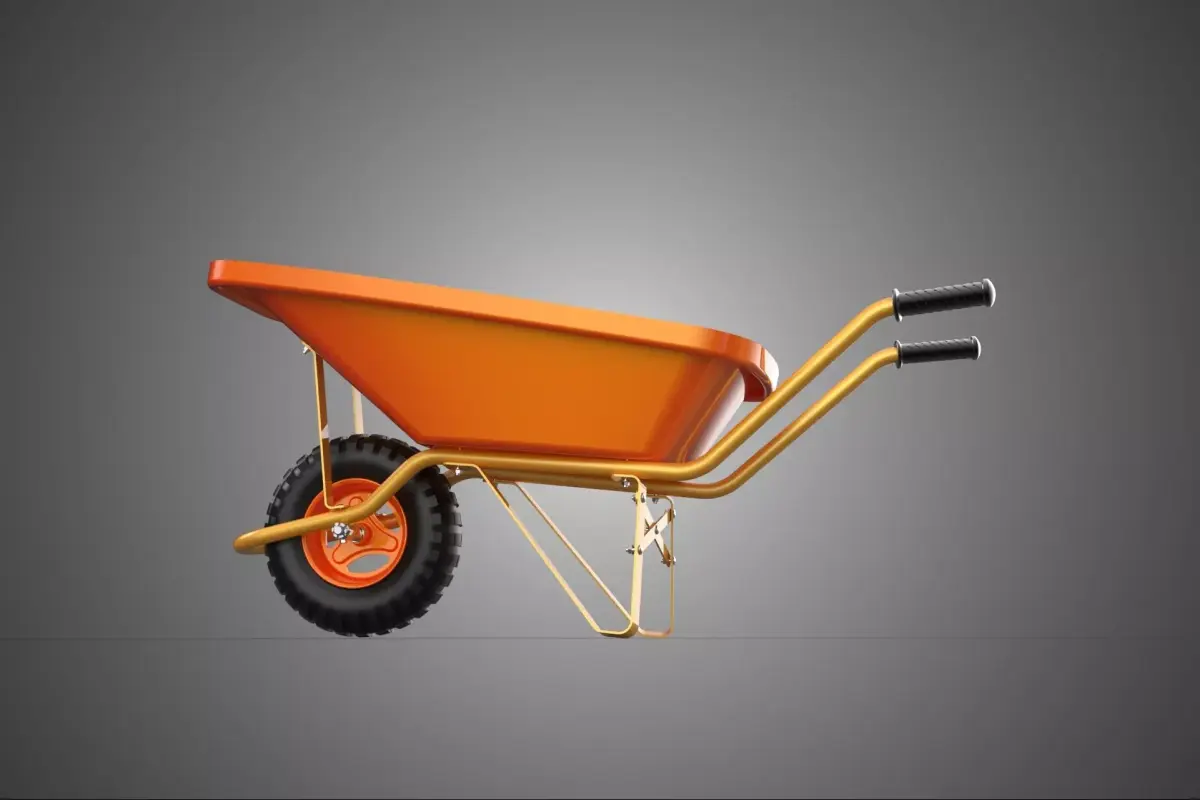
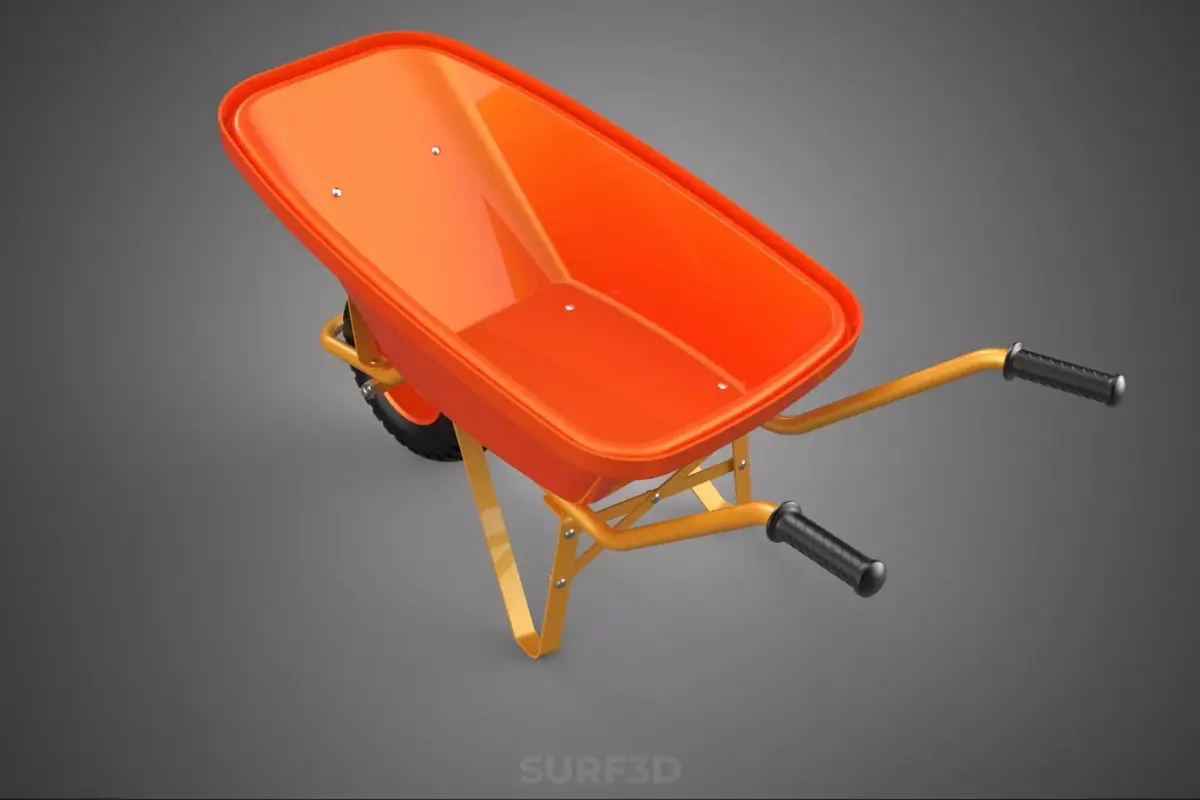
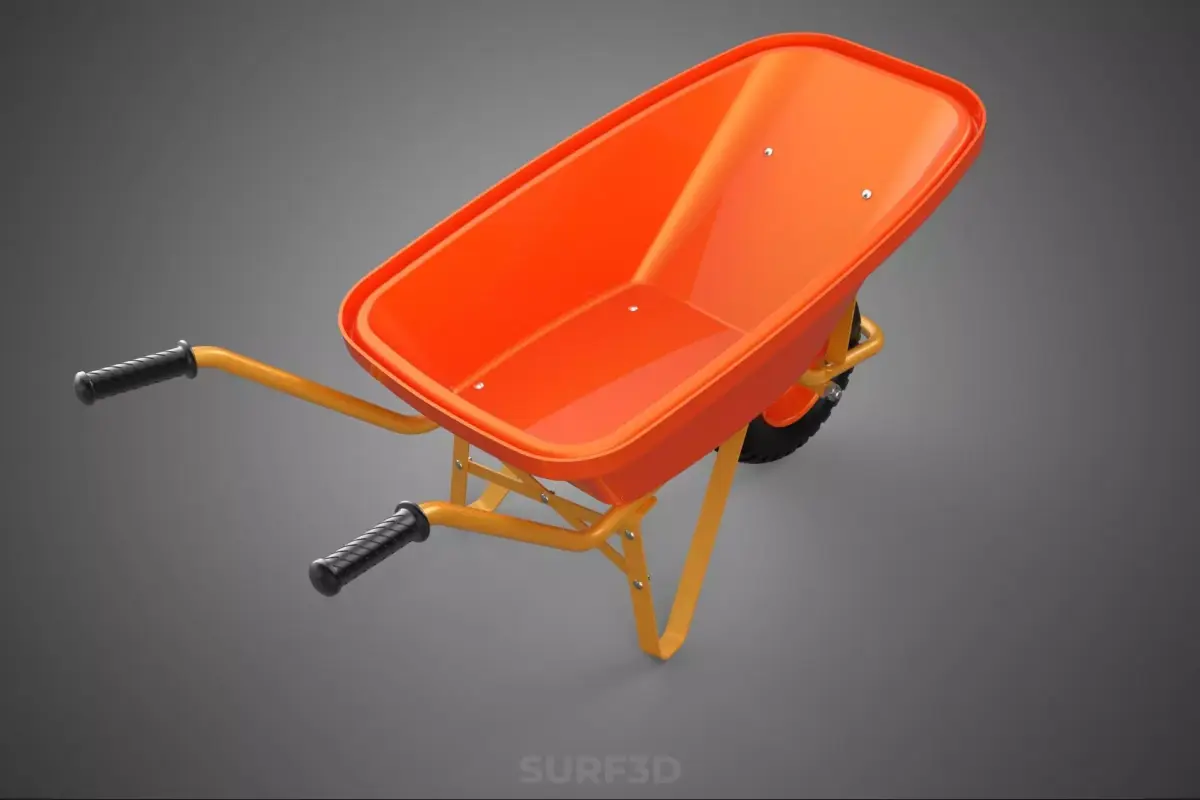
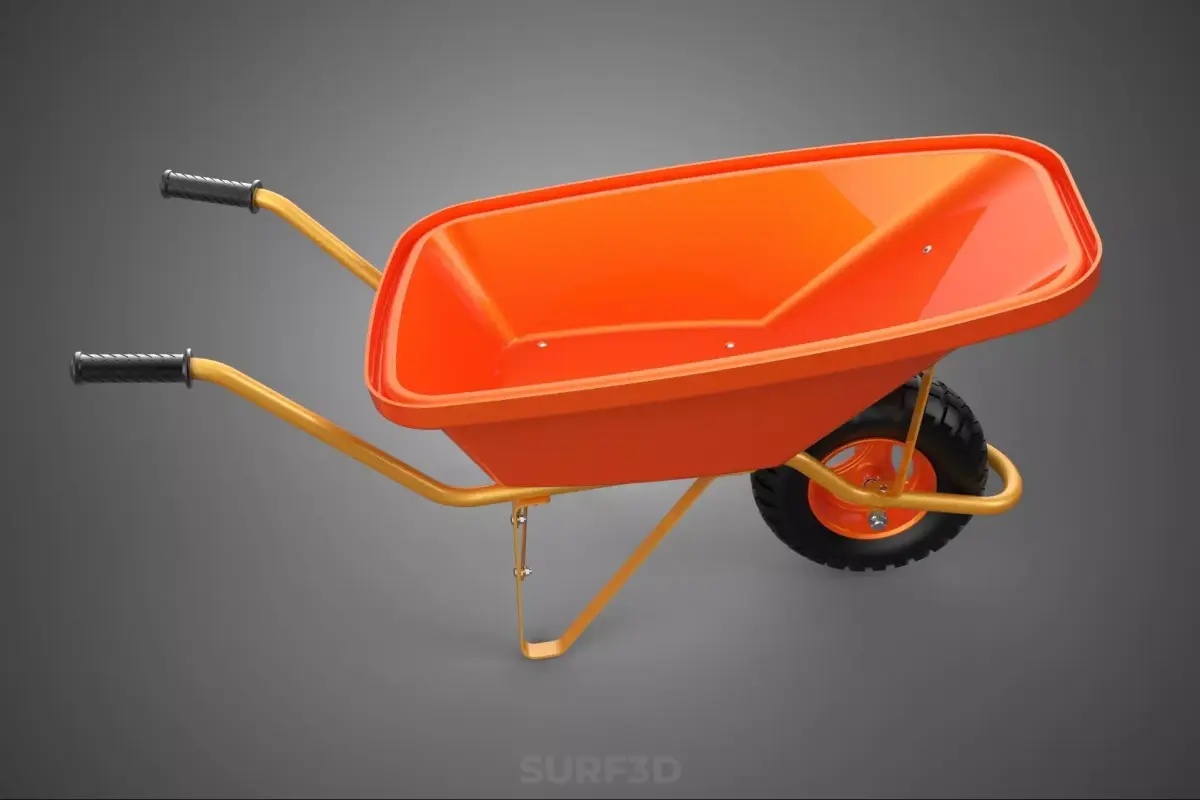
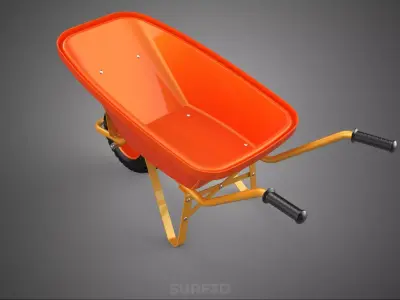
STANDARD WHEELBARROW CART WHEEL BARROW WORKER LABOR BUILDER HAUL
The standard wheelbarrow is a fundamental, manually operated conveyance device classified as a load carrier and essential piece of equipment in construction, agriculture, and general landscaping. Functioning primarily as a class-one lever, the wheelbarrow is ingeniously designed to enable a single individual, the worker or builder, to efficiently haul and transport significantly greater masses of material than could be carried manually.
Nomenclature and Mechanics
Historically, the device is designated as a wheelbarrow, or colloquially a 'barrow' or 'cart,' referring to its essential structure: a body designed to carry a load (the barrow) supported by a wheel. Its utility stems from the application of mechanical advantage. The design positions the fulcrum (the wheel axle) beneath the resistance (the load mass in the tray), while the effort (the labor applied by the worker lifting the handles) is applied at the opposing end. This configuration minimizes the effort required to lift and initiate movement of heavy, inert payloads such as soil, gravel, concrete, or debris.
Standard Anatomy and Components
A standard wheelbarrow comprises four primary structural components, optimized for robustness and operational efficiency:
- The Hopper (or Tray/Pan): This is the primary containment vessel for the materials being hauled. Hoppers are fabricated from either thick-gauge pressed steel (for heavy-duty applications like construction, providing superior resistance to impact and abrasion) or high-density polyethylene (plastic) for general gardening, offering lightweight handling and resistance to corrosion from wet materials like concrete or fertilizers. Standard capacities typically range from 4 to 8 cubic feet.
- The Frame (Chassis): The frame forms the structural backbone, connecting the hopper, the wheel, and the handles. It is typically constructed from tubular steel (often powder-coated for weather resistance) or robust hardwood. The frame extends forward to support the wheel axle and rearward to terminate in the handles and a pair of supporting legs, which stabilize the cart when stationary.
- The Handles: Serving as the direct interface between the worker and the load, the handles are ergonomically designed to allow the builder to achieve the necessary lift and maneuvering control. Handle length is crucial, influencing the leverage ratio and minimizing bending stress on the operator.
- The Wheel Assembly: Integral to the device’s functionality, the single wheel centers the load, allowing the operator to tilt and steer the device effectively. Standard assemblies utilize pneumatic tires, which provide shock absorption, enabling smoother travel over uneven job sites and minimizing load spillage. Solid or foam-filled rubber tires are often utilized in environments where puncture resistance is paramount, such as sites heavily littered with nails or sharp debris.
### Applications and Industrial Context
The wheelbarrow is an indispensable tool across several sectors, defined by its simplicity, durability, and ability to navigate confined spaces inaccessible to motorized dump haul vehicles.
- Construction: Essential for mixing and transporting wet concrete or mortar, moving aggregates (sand and gravel), and clearing demolition debris. The high load capacity and maneuverability make it critical for site logistics and material delivery to masons.
- Landscaping and Horticulture: Used extensively for moving soil, mulch, stones, plants, and felled vegetation. The narrow profile allows passage through gates and tight garden paths.
- Agriculture: Utilized for moving feed, fertilizer, and harvest products, often featuring specialized designs (e.g., deeper trays or dual wheels for softer ground stability).
While historically a single-wheel design is the standard, two-wheeled carts are also common, providing increased stability when traversing extremely uneven ground or when carrying liquids, though they sacrifice some maneuverability inherent in the single-wheel design. The persistent reliance on this device underscores its status as the most efficient unpowered apparatus for manual material hauling performed by labor personnel.
KEYWORDS: Construction, Hauling, Transport, Labor, Manual, Cart, Builder, Worker, Gardening, Landscaping, Material handling, Concrete, Mortar, Material mover, Pneumatic tire, Hopper, Chassis, Leverage, Mechanical advantage, Ergonomics, Single-wheel, Utility, Site preparation, Agriculture, Steel frame, Polyethylene, Barrow, Jobsite, Load bearing, Lever principle.
STL (Stereolithography, filesize: 7.09 MB), OBJ (OBJ, filesize: 13.3 MB), BLEND (Blender, filesize: 13.2 MB), GLTF (glTF, filesize: 4.63 MB), 3DM (Rhinoceros 3D, filesize: 24.5 MB), DAE (Collada, filesize: 24.1 MB), 3DS (3D Studio, filesize: 4.34 MB), IGE (IGES, filesize: 20.1 MB), DWG (AutoCAD, filesize: 6.46 MB), STP (STEP, filesize: 14.6 MB), SKP (Sketchup, filesize: 11.5 MB), FBX (Autodesk FBX, filesize: 4.62 MB), MAX (Autodesk 3ds Max, filesize: 34.1 MB), SAT (3D ACIS, filesize: 22 MB)