High-quality 3D assets at affordable prices — trusted by designers, engineers, and creators worldwide. Made with care to be versatile, accessible, and ready for your pipeline.
Included File Formats
This model is provided in 14 widely supported formats, ensuring maximum compatibility:
• - FBX (.fbx) – Standard format for most 3D software and pipelines
• - OBJ + MTL (.obj, .mtl) – Wavefront format, widely used and compatible
• - STL (.stl) – Exported mesh geometry; may be suitable for 3D printing with adjustments
• - STEP (.step, .stp) – CAD format using NURBS surfaces
• - IGES (.iges, .igs) – Common format for CAD/CAM and engineering workflows (NURBS)
• - SAT (.sat) – ACIS solid model format (NURBS)
• - DAE (.dae) – Collada format for 3D applications and animations
• - glTF (.glb) – Modern, lightweight format for web, AR, and real-time engines
• - 3DS (.3ds) – Legacy format with broad software support
• - 3ds Max (.max) – Provided for 3ds Max users
• - Blender (.blend) – Provided for Blender users
• - SketchUp (.skp) – Compatible with all SketchUp versions
• - AutoCAD (.dwg) – Suitable for technical and architectural workflows
• - Rhino (.3dm) – Provided for Rhino users
Model Info
• - All files are checked and tested for integrity and correct content
• - Geometry uses real-world scale; model resolution varies depending on the product (high or low poly)
• • - Scene setup and mesh structure may vary depending on model complexity
• - Rendered using Luxion KeyShot
• - Affordable price with professional detailing
Buy with confidence. Quality and compatibility guaranteed.
If you have any questions about the file formats, feel free to send us a message — we're happy to assist you!
Sincerely,
SURF3D
Trusted source for professional and affordable 3D models.
More Information About 3D Model :
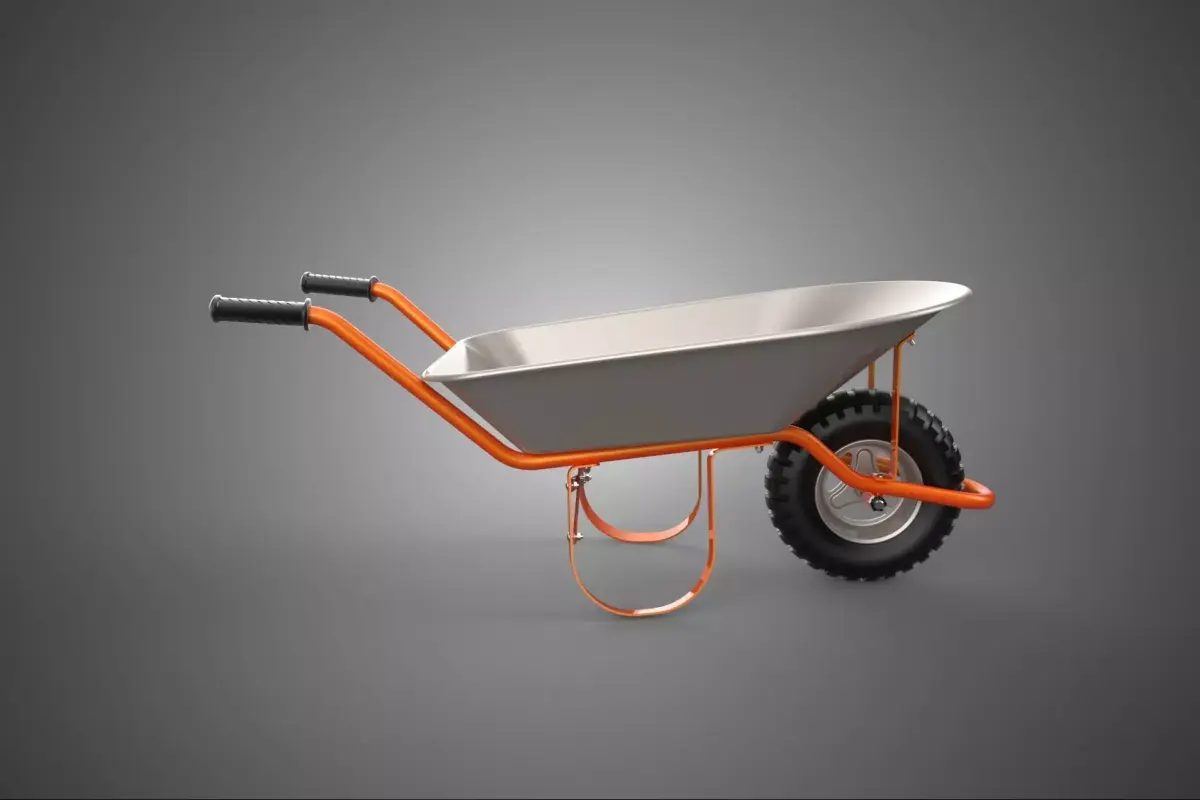
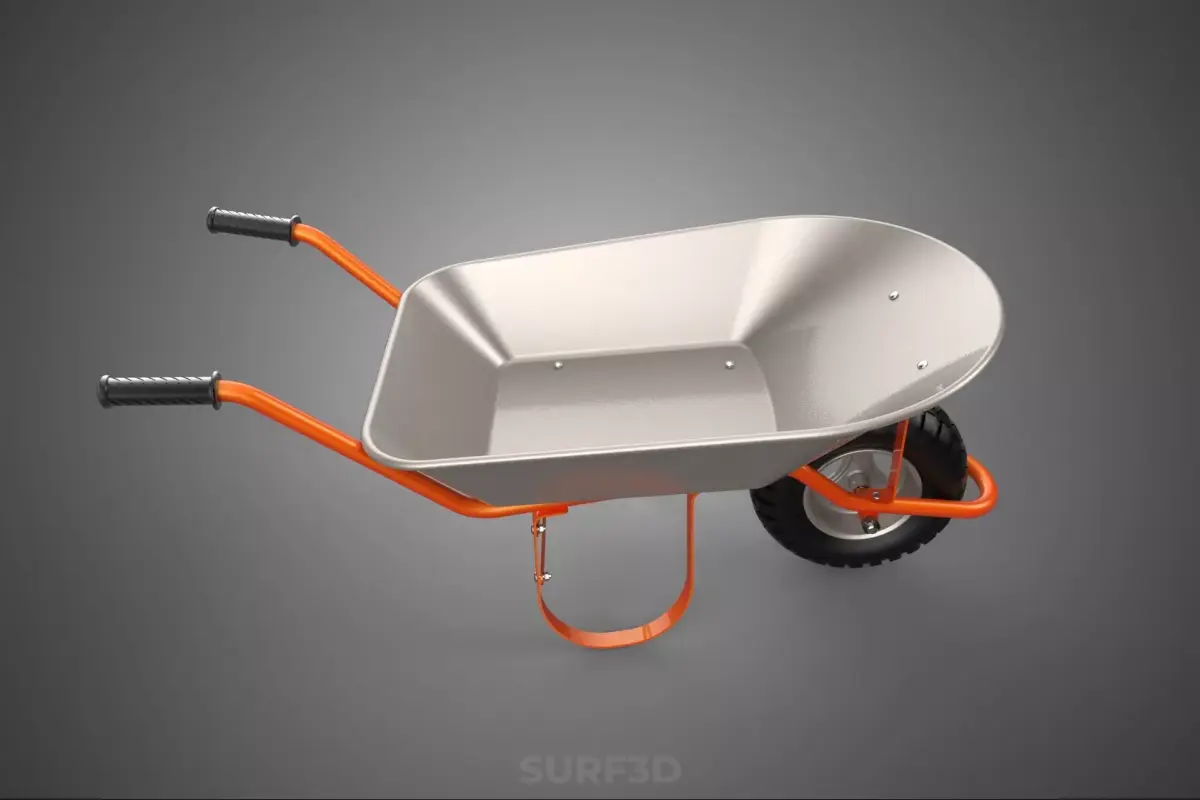
The standard wheelbarrow is a fundamental piece of equipment categorized as a small, hand-propelled vehicular device used for material handling, specifically designed to transport loads, particularly bulk goods, over short distances, often across irregular or difficult terrain.
Definition and Nomenclature
The apparatus is formally defined by its mechanical structure as a Class 2 lever. In this configuration, the fulcrum (the axle of the wheel) is situated at one end, the load (the contents of the tray) rests between the fulcrum and the effort, and the effort (the lifting force applied by the operator at the handles) is applied at the opposing end. This leverage mechanism allows the operator to support and mobilize loads significantly heavier than they could physically carry, with the single wheel bearing the majority of the weight.
While the terms cart and trolley are broad descriptors for wheeled transport devices, the standard wheelbarrow is distinguished by the necessity of active operator stabilization and lifting. The term lift refers to the inherent function where the user temporarily raises the load from the ground supports (legs) onto the wheel to achieve locomotion. Standard nomenclature varies, encompassing wheelbarrow, the hyphenated wheel-barrow, and the archaic wheel barrow.
Design and Mechanics
The typical standard wheelbarrow consists of four primary structural components:
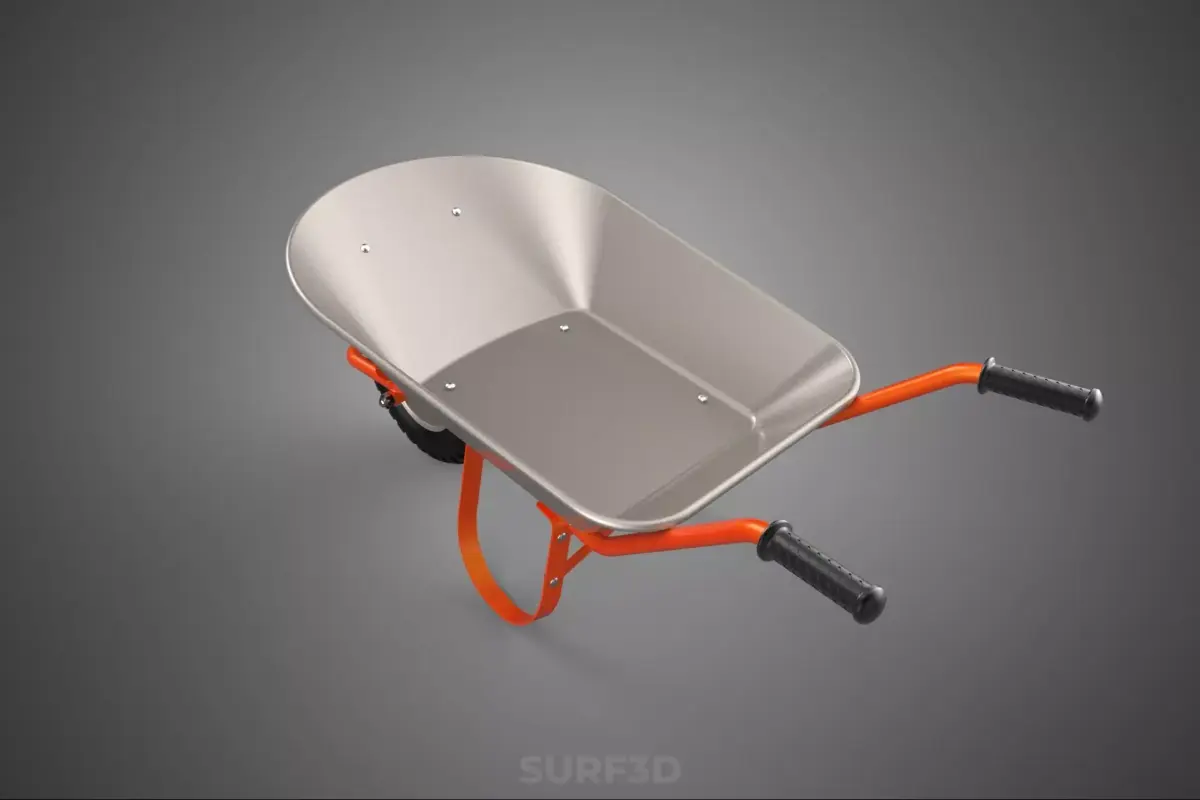
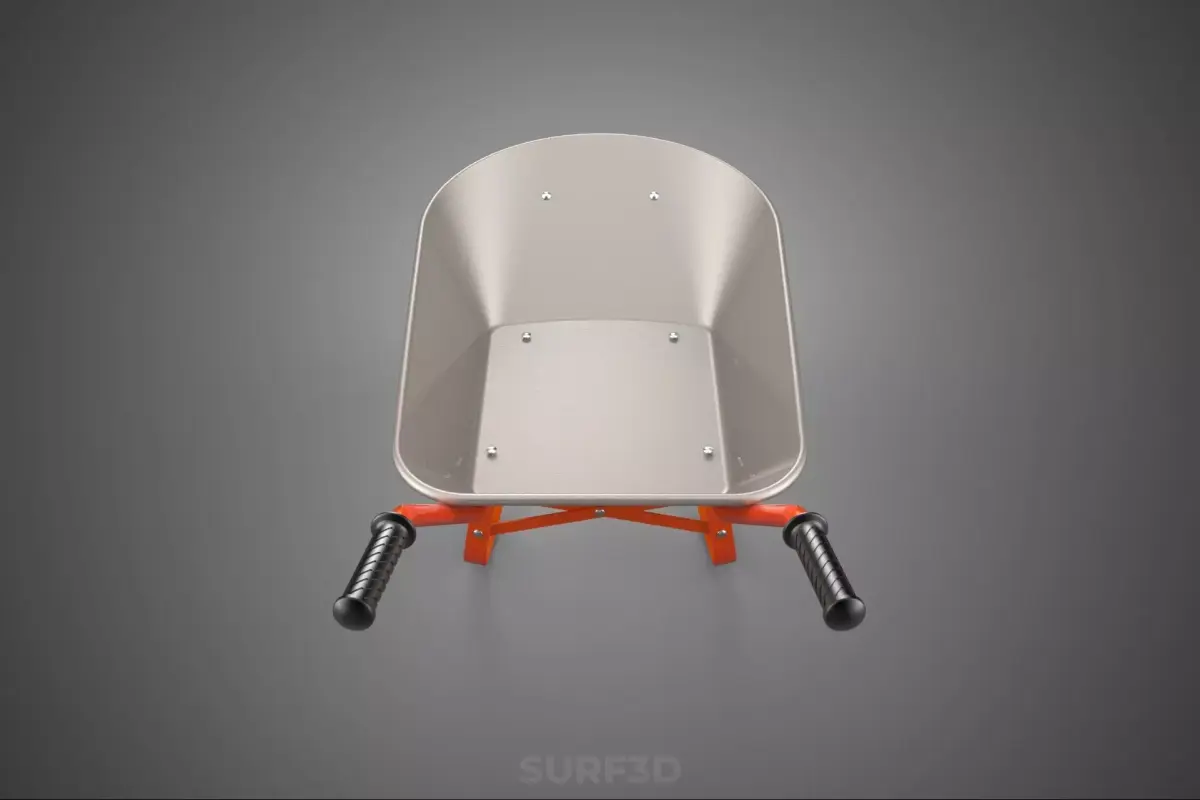
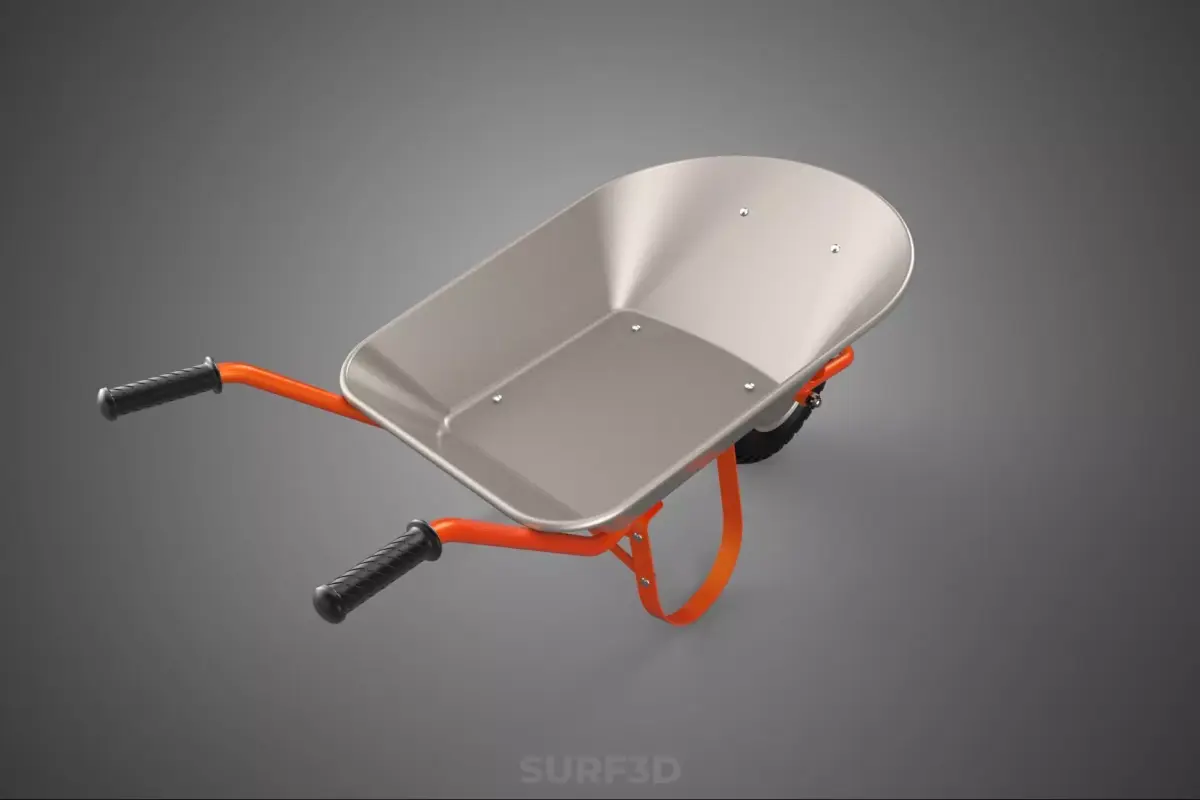
- The Tray (or Hopper): This is the receptacle that contains the material. Standard industrial models typically utilize heavy-gauge sheet steel for durability and capacity (ranging from 5 to 10 cubic feet, or approximately 140 to 280 liters). Residential or horticultural models often use molded high-density polyethylene (poly) plastic trays for lower weight and superior corrosion resistance.
- The Frame (Chassis): Constructed predominantly from tubular steel, the frame connects the handles, supports the tray, and terminates at the wheel assembly. The frame must withstand significant torsional stress during lifting and tipping operations.
- The Wheel Assembly: The single wheel is crucial for enabling superior maneuverability, allowing pivot turns and navigation through narrow pathways often found on construction sites or gardens. Wheels commonly feature pneumatic (air-filled) tires for shock absorption, though solid, puncture-proof wheels are used in environments with high debris hazards.
- The Handles and Legs: Ergonomic handles provide the leverage point for the operator's effort. The legs (or stand supports), typically steel bars or plates, provide stable rest when the wheelbarrow is stationary and the load is being placed or removed.
### Functional Operation and Mechanical Advantage
The primary function of the wheelbarrow is efficient bulk material transport. To initiate movement, the operator grips the handles and applies upward lift, transferring the weight from the legs to the wheel. The mechanical advantage inherent in the Class 2 lever system means the operator only supports the required effort (E), which is significantly less than the total weight of the load (L), calculated by the ratio of the distance between the load and the fulcrum, and the distance between the effort and the fulcrum. This ergonomic efficiency makes the wheelbarrow essential in non-motorized civil engineering, landscaping, and agricultural applications. The design also facilitates controlled tipping for material deposition.
### Variations and Related Devices
While the single-wheel design is the universally recognized standard, variations exist:
- Dual-Wheel Models: These offer enhanced lateral stability, particularly useful when transporting liquid materials or very heavy, stable loads. However, they sacrifice the single-wheel's maneuverability.
- Powered Wheelbarrows (Motorized Carts): Modern counterparts incorporate small engines to assist with propulsion and eliminate the manual lifting effort, though these fall outside the scope of the standard, purely hand-propelled device.
The standard wheelbarrow remains a cornerstone of non-mechanized human utility due to its simple construction, low maintenance requirements, and high mechanical efficiency.
KEYWORDS: Class 2 lever, material handling, transport, gardening, construction, ergonomics, mechanical advantage, single-wheel, poly tray, chassis, bulk material, aggregate, hand-propelled, vehicular, leverage, pneumatic, load distribution, maneuverability, cartage, hopper, standard model, civil engineering, horticulture, utility, portable, freight, tipping, axle, fulcrum, stability.
STL (Stereolithography, filesize: 6.93 MB), OBJ (OBJ, filesize: 12.9 MB), 3DS (3D Studio, filesize: 4.24 MB), DAE (Collada, filesize: 23.5 MB), BLEND (Blender, filesize: 13 MB), GLTF (glTF, filesize: 4.53 MB), 3DM (Rhinoceros 3D, filesize: 21.3 MB), FBX (Autodesk FBX, filesize: 4.51 MB), STP (STEP, filesize: 10.3 MB), IGE (IGES, filesize: 17.5 MB), SKP (Sketchup, filesize: 10.6 MB), SAT (3D ACIS, filesize: 19.1 MB), MAX (Autodesk 3ds Max, filesize: 32.1 MB), DWG (AutoCAD, filesize: 4.62 MB)