High-quality 3D assets at affordable prices — trusted by designers, engineers, and creators worldwide. Made with care to be versatile, accessible, and ready for your pipeline.
Included File Formats
This model is provided in 14 widely supported formats, ensuring maximum compatibility:
• - FBX (.fbx) – Standard format for most 3D software and pipelines
• - OBJ + MTL (.obj, .mtl) – Wavefront format, widely used and compatible
• - STL (.stl) – Exported mesh geometry; may be suitable for 3D printing with adjustments
• - STEP (.step, .stp) – CAD format using NURBS surfaces
• - IGES (.iges, .igs) – Common format for CAD/CAM and engineering workflows (NURBS)
• - SAT (.sat) – ACIS solid model format (NURBS)
• - DAE (.dae) – Collada format for 3D applications and animations
• - glTF (.glb) – Modern, lightweight format for web, AR, and real-time engines
• - 3DS (.3ds) – Legacy format with broad software support
• - 3ds Max (.max) – Provided for 3ds Max users
• - Blender (.blend) – Provided for Blender users
• - SketchUp (.skp) – Compatible with all SketchUp versions
• - AutoCAD (.dwg) – Suitable for technical and architectural workflows
• - Rhino (.3dm) – Provided for Rhino users
Model Info
• - All files are checked and tested for integrity and correct content
• - Geometry uses real-world scale; model resolution varies depending on the product (high or low poly)
• • - Scene setup and mesh structure may vary depending on model complexity
• - Rendered using Luxion KeyShot
• - Affordable price with professional detailing
Buy with confidence. Quality and compatibility guaranteed.
If you have any questions about the file formats, feel free to send us a message — we're happy to assist you!
Sincerely,
SURF3D
Trusted source for professional and affordable 3D models.
More Information About 3D Model :
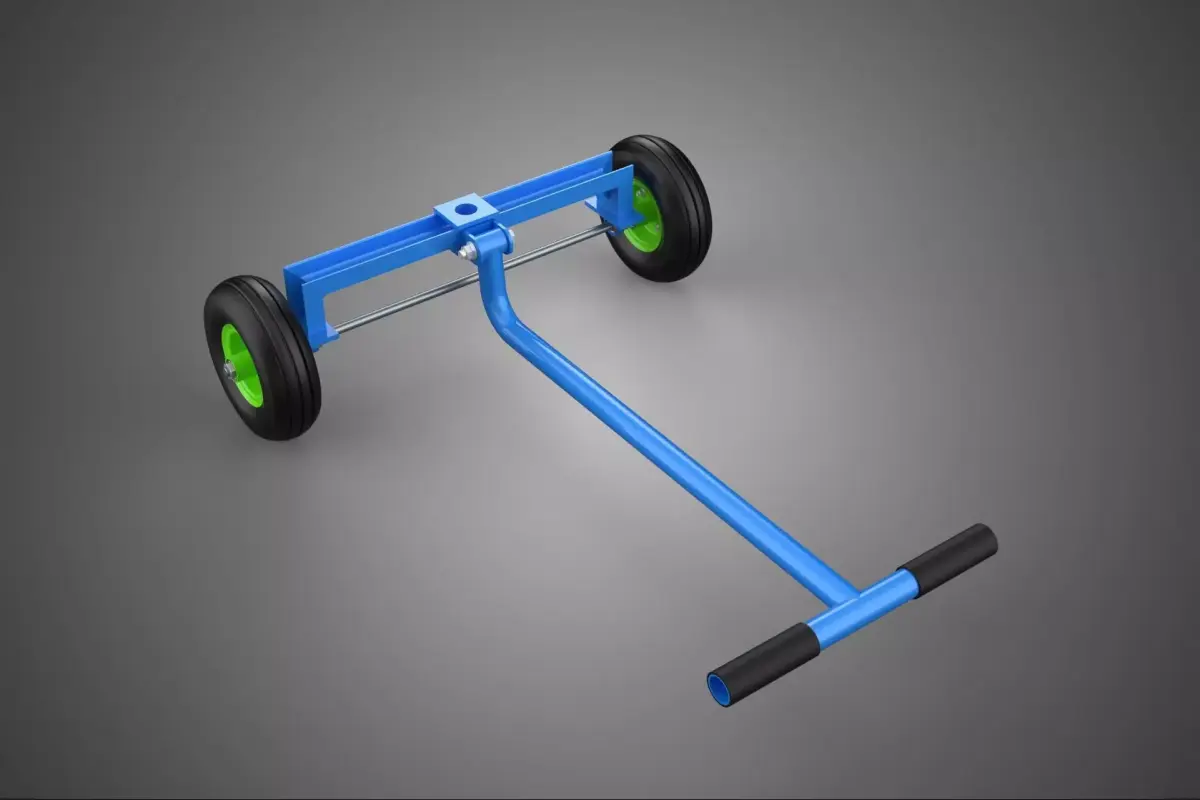
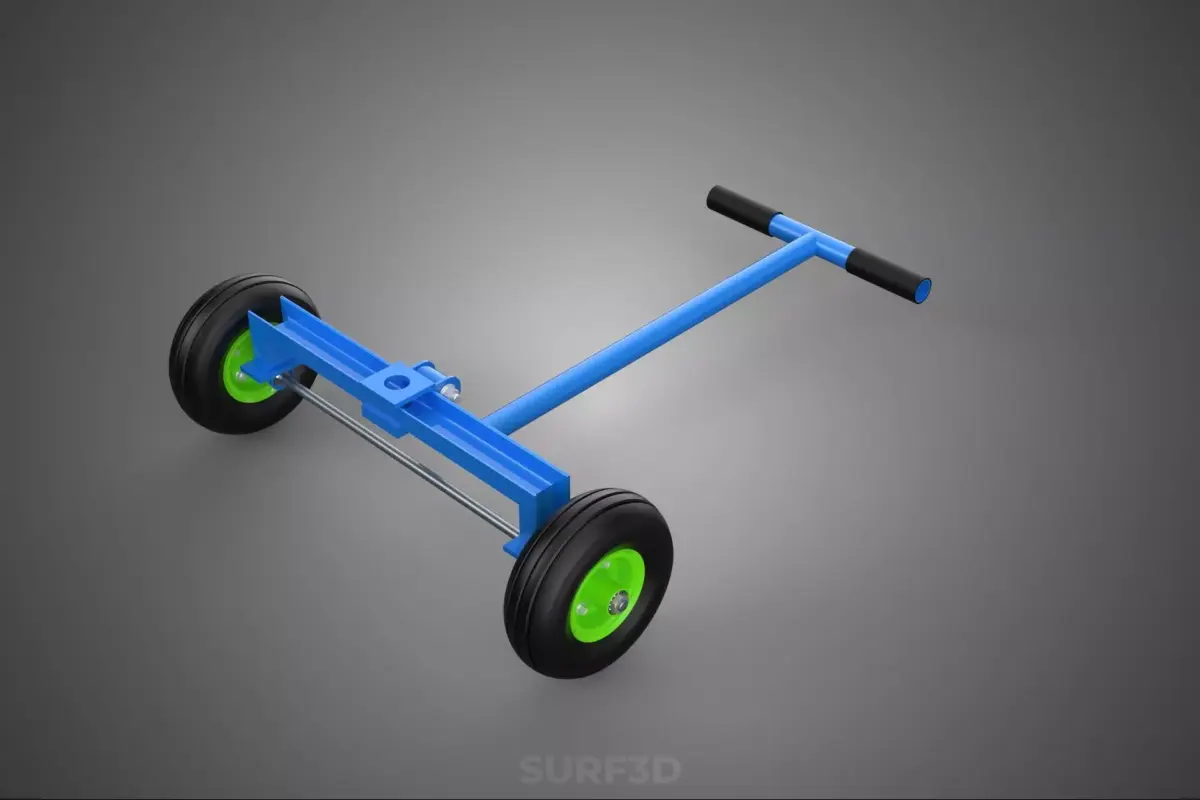
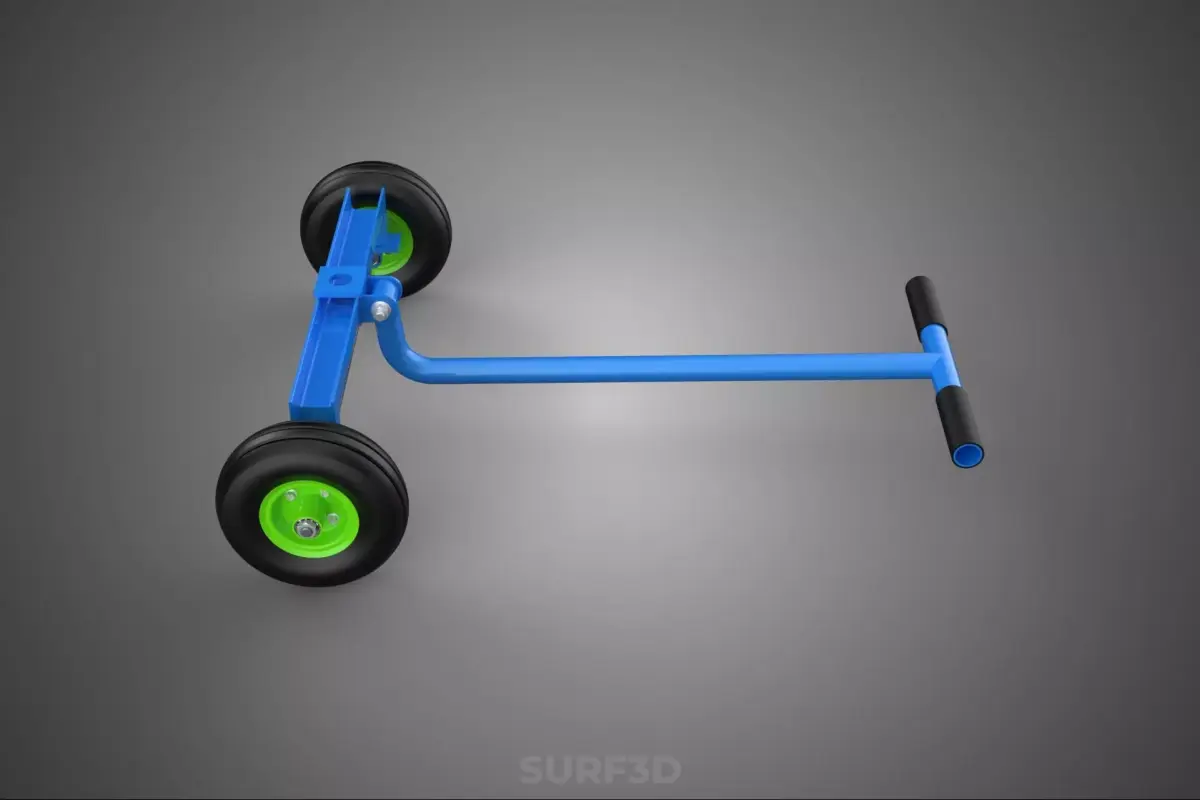
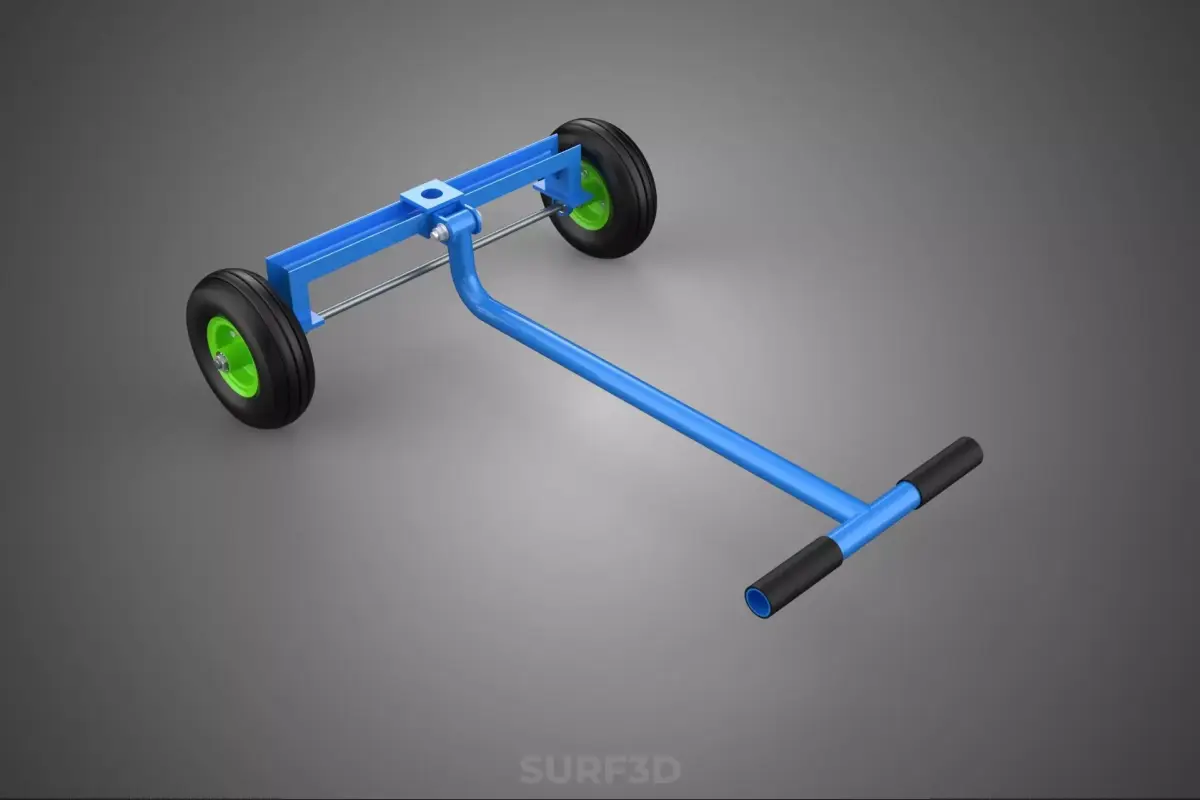
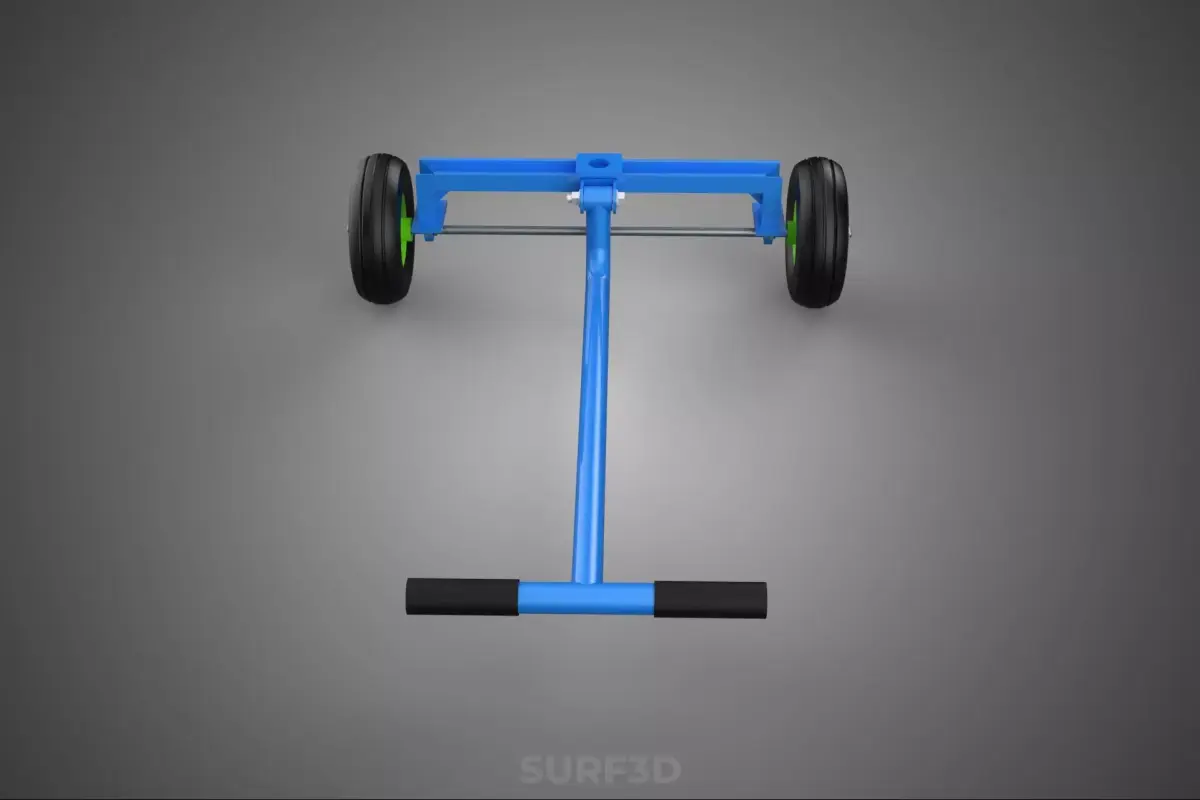
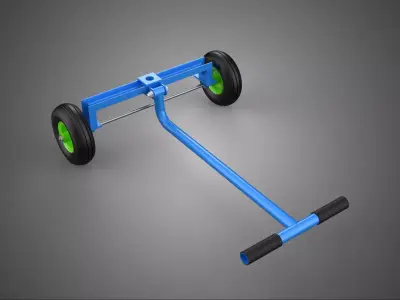
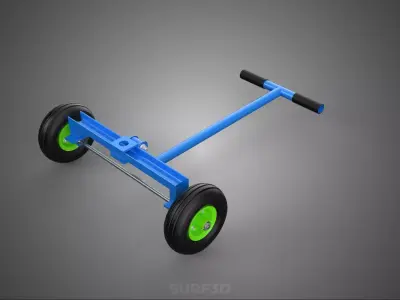
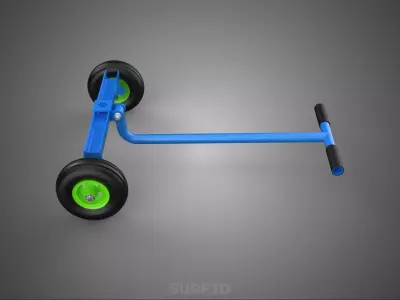
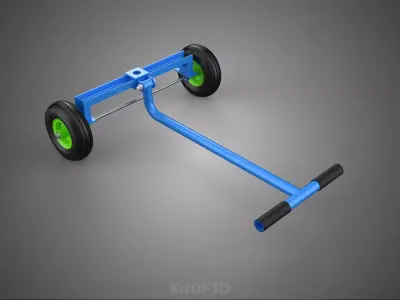
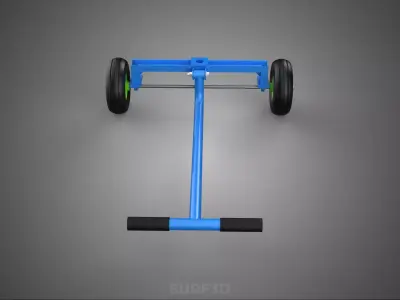
A Cart and Trolley System, defined by the integrated operation of its listed components—Steering, Handle, Lever, Range Control, Axle, Wheel, and Tire—is a fundamental category of non-powered, manually-operated conveyance devices employed for material handling, logistics, and utility transport over short distances. This configuration represents a modular mechanical system where human input is translated into directed movement and load translation.
Structural and Load-Bearing Mechanics
The foundational architecture relies on the Axle, Wheel, and Tire assembly, which collectively converts static load into rolling motion, dramatically reducing the coefficient of friction required to move the payload.
- Axle: The axle is a rigid shaft that serves as the central rotational pivot for one or more wheels. It is the primary structural element responsible for bearing the vertical load applied to the chassis and distributing that weight to the wheels. Depending on the design (e.g., fixed or steering axles), it may facilitate either pure rotational movement or directional articulation.
- Wheel and Tire: The wheel is the circular component that rotates around the axle, providing ground contact. The Tire is the external coating applied to the wheel's rim, providing critical functions: traction, shock absorption, cushioning against uneven surfaces, and protection for the wheel structure. Tire materials (e.g., solid rubber, pneumatic, polyurethane) are selected based on the required load capacity, operational environment (indoor/outdoor), and desired level of floor protection.
### Kinematic and Control Interface
The user interaction with the system is managed through the Steering, Handle, Lever, and Range Control mechanisms, which provide directional input, application of motive force, and speed regulation.
- Handle and Lever: These terms define the ergonomic interface through which the operator grips and exerts force (pushing or pulling) upon the Cart or Trolley. The geometry and placement of the handle are critical for maximizing mechanical advantage and minimizing operator fatigue (ergonomics). In some heavy-duty applications, a Lever may also refer to a pedal or linkage used for activating a braking mechanism or adjusting platform height.
- Steering: The mechanism that permits directional change. Steering can be achieved through differential force application (skidding fixed wheels) or, more commonly, through swiveling or articulating caster wheels. In larger carts, a dedicated steering column or linkage may connect the handle to a front axle assembly, facilitating precision guidance.
- Range Control: This generic term refers to mechanisms that govern the operational parameters or limits of the device. This frequently includes:
- Braking Systems: Mechanisms to retard or stop movement (e.g., wheel locks, dead man brakes activated by the position of the handle lever).
- Positional Locks: Devices used to fix the orientation of steering casters, ensuring straight-line tracking.
- Speed Governors: While rare on purely manual trolleys, on specialized motorized utility carts, range control would define acceleration limits or speed settings.
### Application and Classification
The distinction between a Cart (often four-wheeled, balanced, and pushed) and a Trolley (often two-wheeled, requiring balancing and tilted for transport, such as a hand truck, or an elevated platform cart) generally hinges on the specific geometry and load distribution method. Both are classified as essential tools in manual material handling (MMH), facilitating the movement of goods in logistics chains, retail environments, workshops, and construction sites. The integration of robust axles and control features ensures stable, efficient, and reliable transport of varied payloads.
KEYWORDS: Manual Material Handling, Conveyance System, Ergonomics, Chassis, Load Bearing, Axle Assembly, Wheel Technology, Tire Traction, Steering Mechanism, Directional Control, Push/Pull Operation, Platform Cart, Hand Truck, Utility Trolley, Non-Powered Mobility, Caster Wheel, Swivel Mechanism, Braking System, Safety Lever, Structural Integrity, Rotational Dynamics, Mechanical Advantage, Kinematic Input, Transport Logistics, Warehouse Equipment, Industrial Design, Wheelbase, Payload Capacity, Ground Clearance, Articulation.
STL (Stereolithography, filesize: 12.6 MB), OBJ (OBJ, filesize: 25 MB), 3DM (Rhinoceros 3D, filesize: 8.94 MB), 3DS (3D Studio, filesize: 6.84 MB), SKP (Sketchup, filesize: 7.76 MB), SAT (3D ACIS, filesize: 6.98 MB), DAE (Collada, filesize: 40.3 MB), BLEND (Blender, filesize: 23.1 MB), IGE (IGES, filesize: 5.15 MB), FBX (Autodesk FBX, filesize: 7.43 MB), MAX (Autodesk 3ds Max, filesize: 33.3 MB), DWG (AutoCAD, filesize: 2.1 MB), STP (STEP, filesize: 2.72 MB), GLTF (glTF, filesize: 6.51 MB)