High-quality 3D assets at affordable prices — trusted by designers, engineers, and creators worldwide. Made with care to be versatile, accessible, and ready for your pipeline.
Included File Formats
This model is provided in 14 widely supported formats, ensuring maximum compatibility:
• - FBX (.fbx) – Standard format for most 3D software and pipelines
• - OBJ + MTL (.obj, .mtl) – Wavefront format, widely used and compatible
• - STL (.stl) – Exported mesh geometry; may be suitable for 3D printing with adjustments
• - STEP (.step, .stp) – CAD format using NURBS surfaces
• - IGES (.iges, .igs) – Common format for CAD/CAM and engineering workflows (NURBS)
• - SAT (.sat) – ACIS solid model format (NURBS)
• - DAE (.dae) – Collada format for 3D applications and animations
• - glTF (.glb) – Modern, lightweight format for web, AR, and real-time engines
• - 3DS (.3ds) – Legacy format with broad software support
• - 3ds Max (.max) – Provided for 3ds Max users
• - Blender (.blend) – Provided for Blender users
• - SketchUp (.skp) – Compatible with all SketchUp versions
• - AutoCAD (.dwg) – Suitable for technical and architectural workflows
• - Rhino (.3dm) – Provided for Rhino users
Model Info
• - All files are checked and tested for integrity and correct content
• - Geometry uses real-world scale; model resolution varies depending on the product (high or low poly)
• • - Scene setup and mesh structure may vary depending on model complexity
• - Rendered using Luxion KeyShot
• - Affordable price with professional detailing
Buy with confidence. Quality and compatibility guaranteed.
If you have any questions about the file formats, feel free to send us a message — we're happy to assist you!
Sincerely,
SURF3D
Trusted source for professional and affordable 3D models.
More Information About 3D Model :
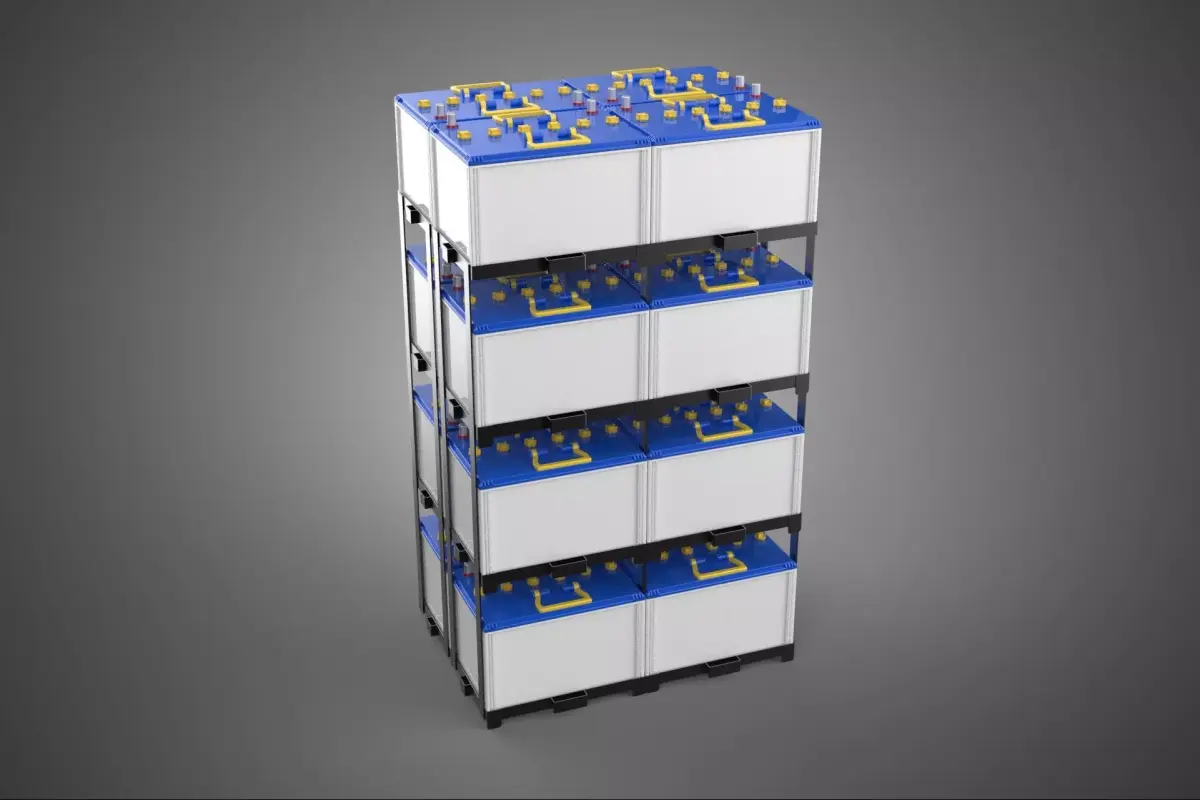
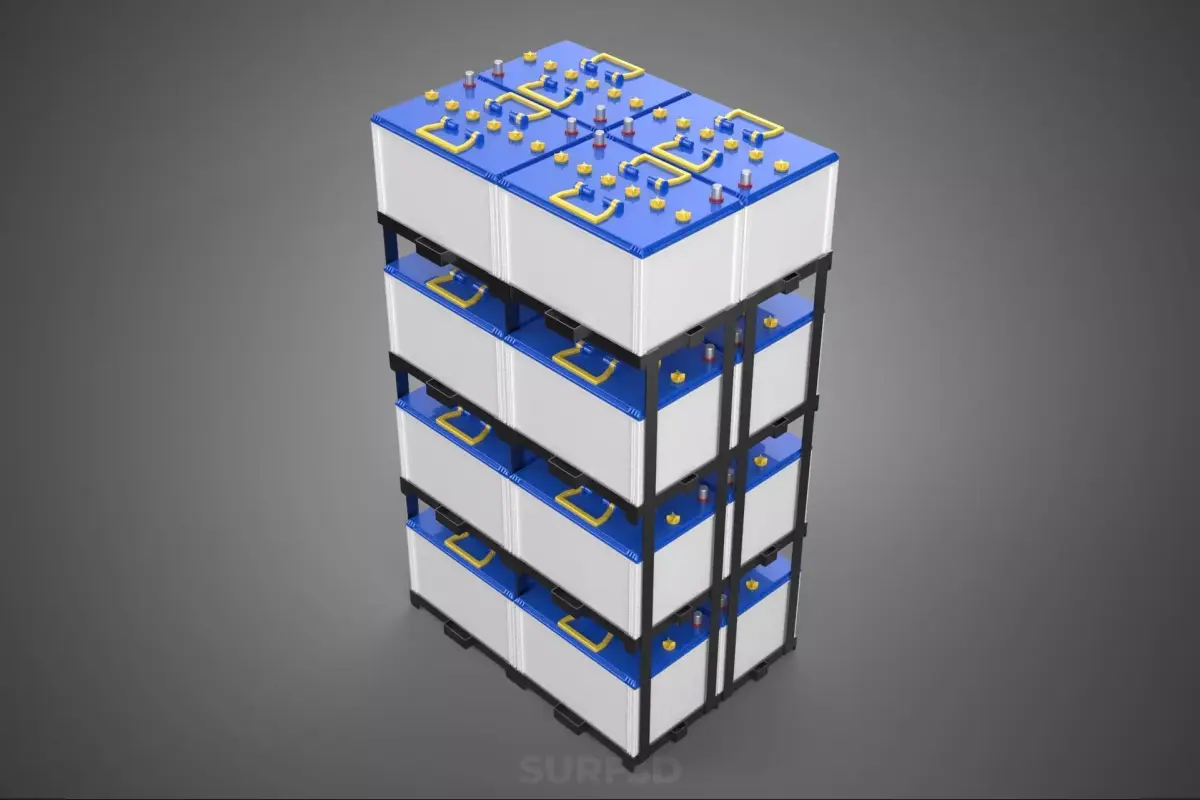
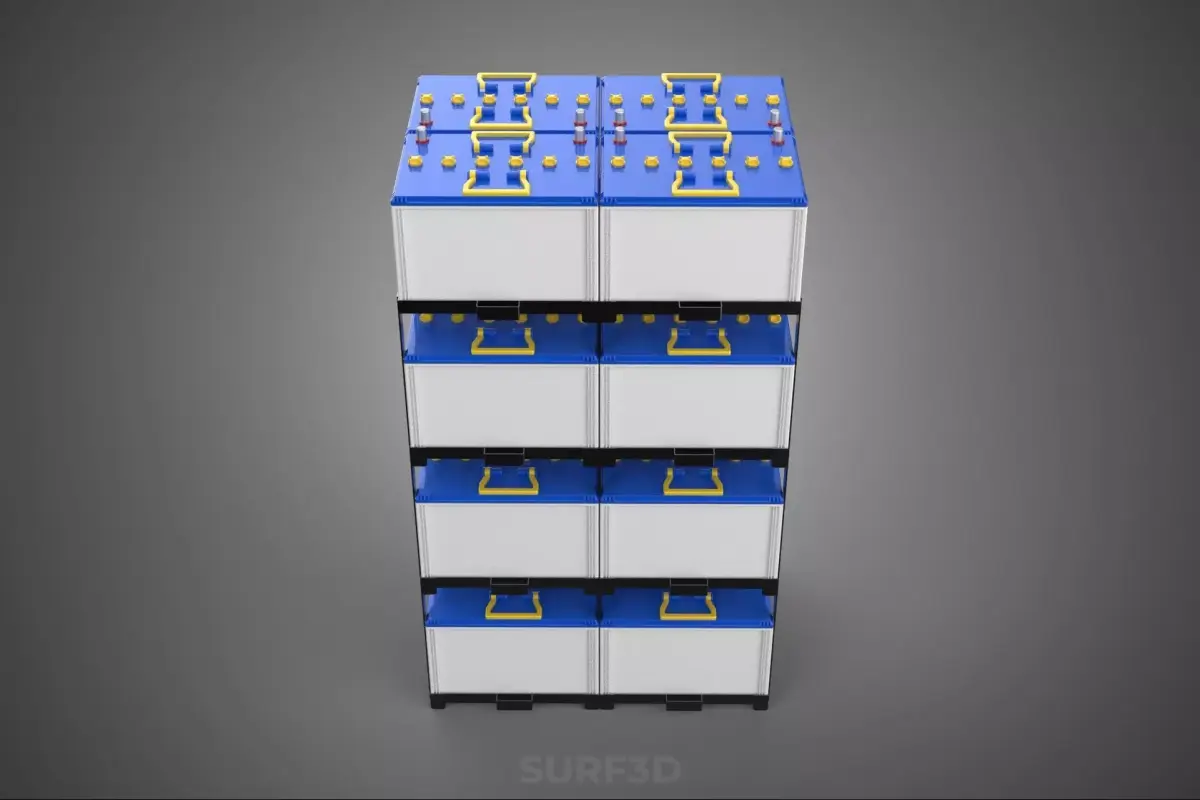
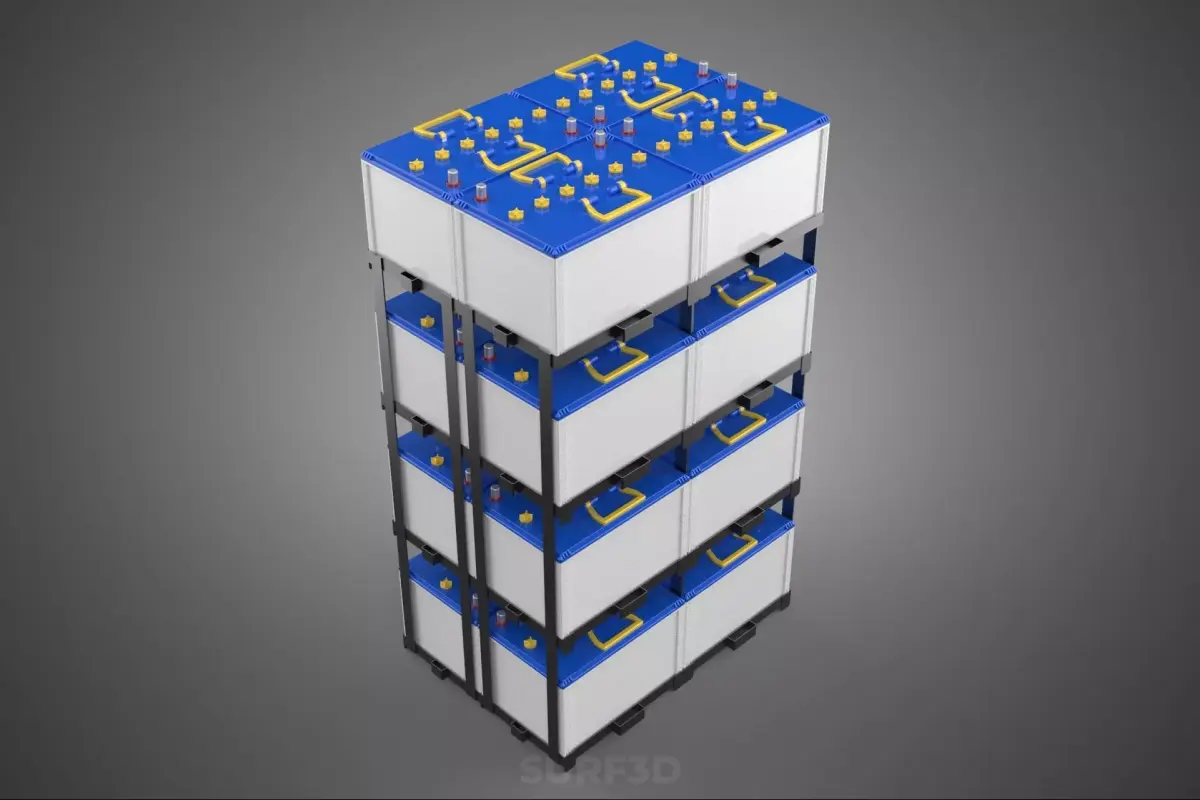
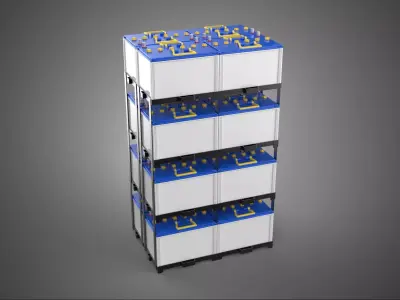
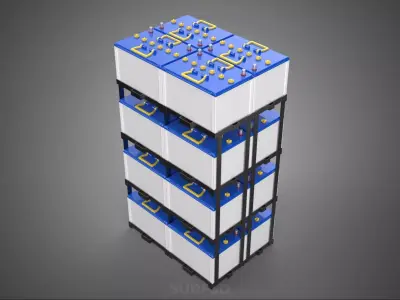
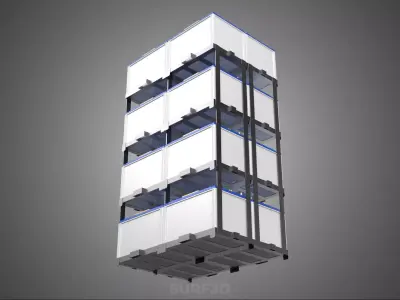
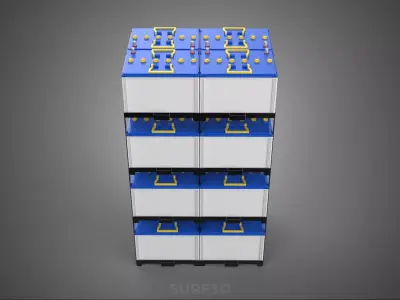
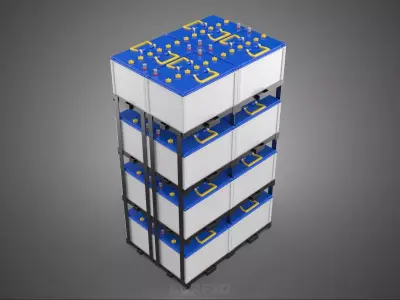
The composite term TOWER ACCU BATTERY GRID STACK TRAY RACK FRAME POWER BANK SUPPLY refers to a comprehensive, high-capacity, engineered infrastructure designed for the physical organization, protection, and operational integration of modular energy storage units. Functioning as the structural core of a large-scale Battery Energy Storage System (BESS) or an industrial Uninterruptible Power Supply (UPS), this assembly facilitates the efficient deployment and management of electrical accumulators (ACCU) used for grid stabilization, peak shaving, or critical backup power delivery.
Nomenclature and Component Hierarchy
The system structure is defined by a hierarchical arrangement designed for scalability, maintenance, and safety:
- ACCU/BATTERY: The fundamental energy storage unit. These are typically high-density lithium-ion cells, flow batteries, or lead-acid batteries, organized into standardized modules.
- TRAY: A specialized sub-enclosure or carrier designed to house one or more battery modules. Trays incorporate internal connections, safety features, and often dedicated cooling surfaces, facilitating easy insertion and removal for maintenance (hot-swapping).
- GRID/STACK: A grouping of multiple trays arranged vertically (stacked) or horizontally (gridded). This configuration ensures optimized current flow paths and thermal management across a localized array of cells.
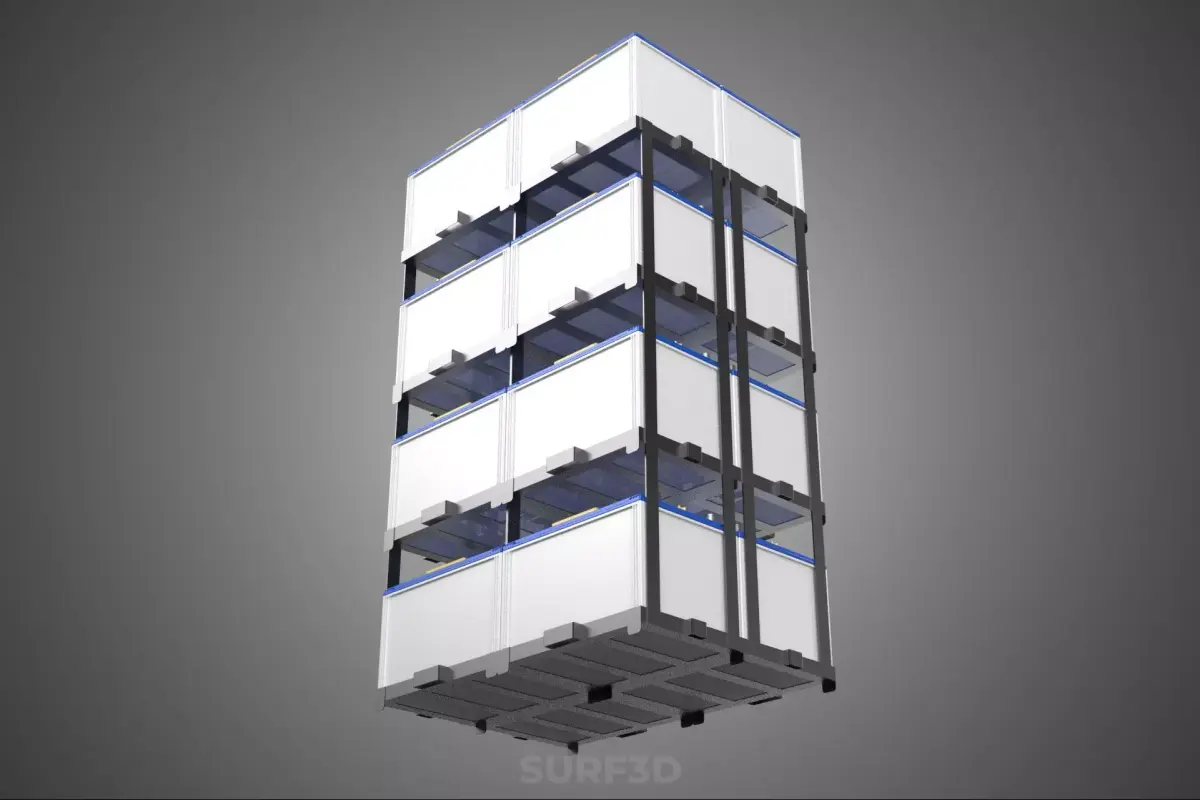
- RACK/FRAME: The intermediate structural element, usually standardized (e.g., 19-inch rack enclosures or custom large-format structures). The rack provides mechanical support for multiple stacks, integrates communication buses (BMS wiring), and routes power cables, serving as the immediate physical boundary for the battery modules.
- TOWER: The overarching, vertically oriented structural enclosure designed to maximize energy density per unit of floor space. The tower frame integrates multiple racks and forms the primary physical boundary for the entire system, offering protection against environmental factors (dust, moisture, seismic activity) and fire containment.
### Engineering and Physical Characteristics
The construction of the frame and tower is critical for operational safety and longevity, typically utilizing heavy-gauge steel (often powder-coated or galvanized) or engineered aluminum alloys. Key design requirements include:
- Structural Integrity: Must withstand the immense weight of the accumulators and meet strict seismic and vibration standards relevant to the installation environment.
- Thermal Management: Due to the high energy density, sophisticated Thermal Management Systems (TMS) are essential. Racks and trays are engineered with dedicated channels or plenums for cooling (forced air, passive convection, or liquid coolant loops) to maintain optimal operating temperature and prevent thermal runaway.
- Electrical Safety: The structure incorporates busbar systems for high-current power transmission, ensuring low-impedance connections to the main output terminals. Robust grounding and protective relay schemes are mandated to isolate faults and manage overcurrent events.
- Modular Expansion: The grid-stack-tray architecture allows for incremental capacity scaling. New racks or towers can be seamlessly added to the existing framework (the POWER BANK SUPPLY) to increase overall energy throughput (kW) or storage capacity (kWh).
### Applications and Functionality
The integrated assembly acts as a secure, regulated POWER BANK SUPPLY, delivering reliable power for critical applications:
- Grid Infrastructure: Used for ancillary services such as frequency regulation, voltage support, and capacity market participation (peak shaving).
- Renewable Energy Integration: Smooths the variable output of solar photovoltaic and wind farms, enabling continuous power injection into the grid.
- Critical Backup: Provides instantaneous, high-power backup (functioning as a massive UPS) for mission-critical facilities like data centers, telecommunications hubs, and hospitals, ensuring operational continuity during grid failures.
The standardized, enclosed Tower approach simplifies deployment, facilitates compliance with stringent fire codes (e.g., utilizing specialized suppression systems within the framework), and centralizes the Balance of System (BOS) components, including the Battery Management System (BMS) and power conversion electronics.
***
KEYWORDS: Battery Energy Storage System, BESS, Accumulator, Industrial UPS, Energy Storage Infrastructure, Rack System, Tray Module, Grid Stabilization, Power Bank, Power Supply, Thermal Management, Battery Management System, BMS, Modular Design, High Capacity, Tower Structure, Energy Density, Critical Power, Data Center Backup, Lithium-Ion Battery, Lead-Acid Battery, Stack Configuration, Seismic Rating, Power Conversion, Electrical Grid, Frequency Regulation, Peak Shaving, Renewable Integration, Enclosure, Busbar.
STL (Stereolithography, filesize: 18.8 MB), OBJ (OBJ, filesize: 35 MB), 3DM (Rhinoceros 3D, filesize: 16.9 MB), DAE (Collada, filesize: 65.1 MB), BLEND (Blender, filesize: 34.4 MB), DWG (AutoCAD, filesize: 8.46 MB), FBX (Autodesk FBX, filesize: 11.8 MB), STP (STEP, filesize: 6.92 MB), SKP (Sketchup, filesize: 3.19 MB), 3DS (3D Studio, filesize: 12.1 MB), IGE (IGES, filesize: 14.9 MB), GLTF (glTF, filesize: 13.3 MB), MAX (Autodesk 3ds Max, filesize: 122 MB), SAT (3D ACIS, filesize: 34.6 MB)