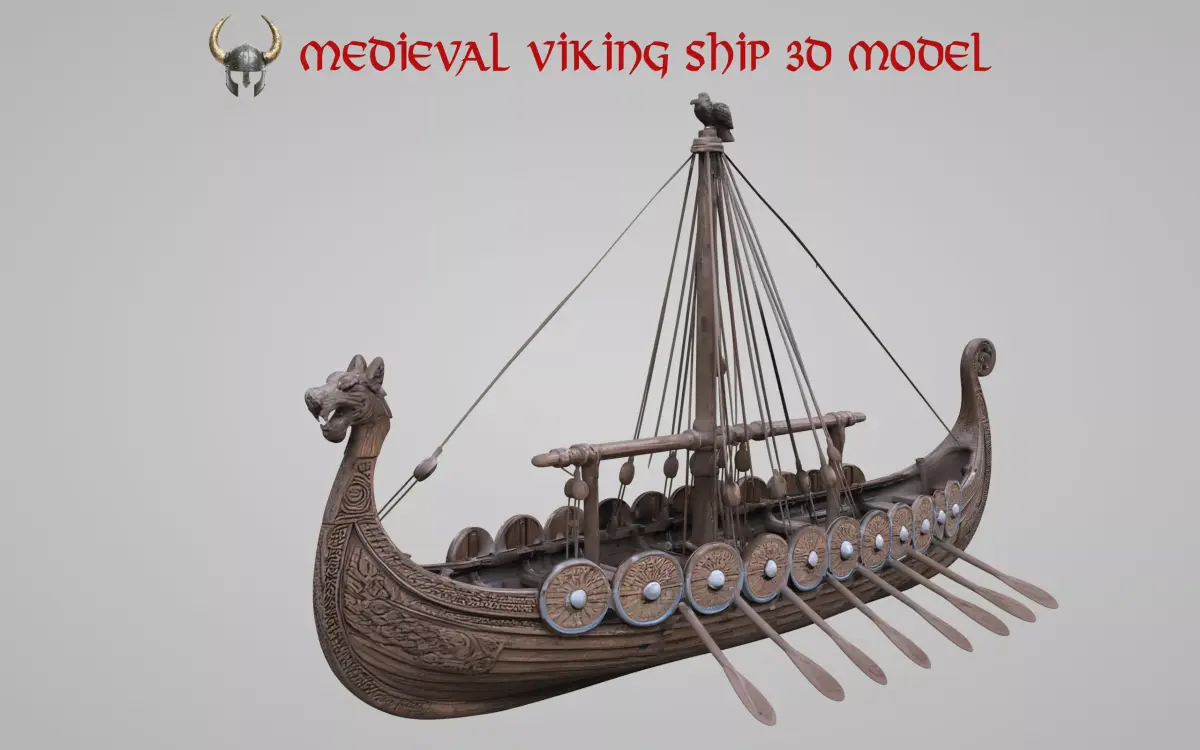
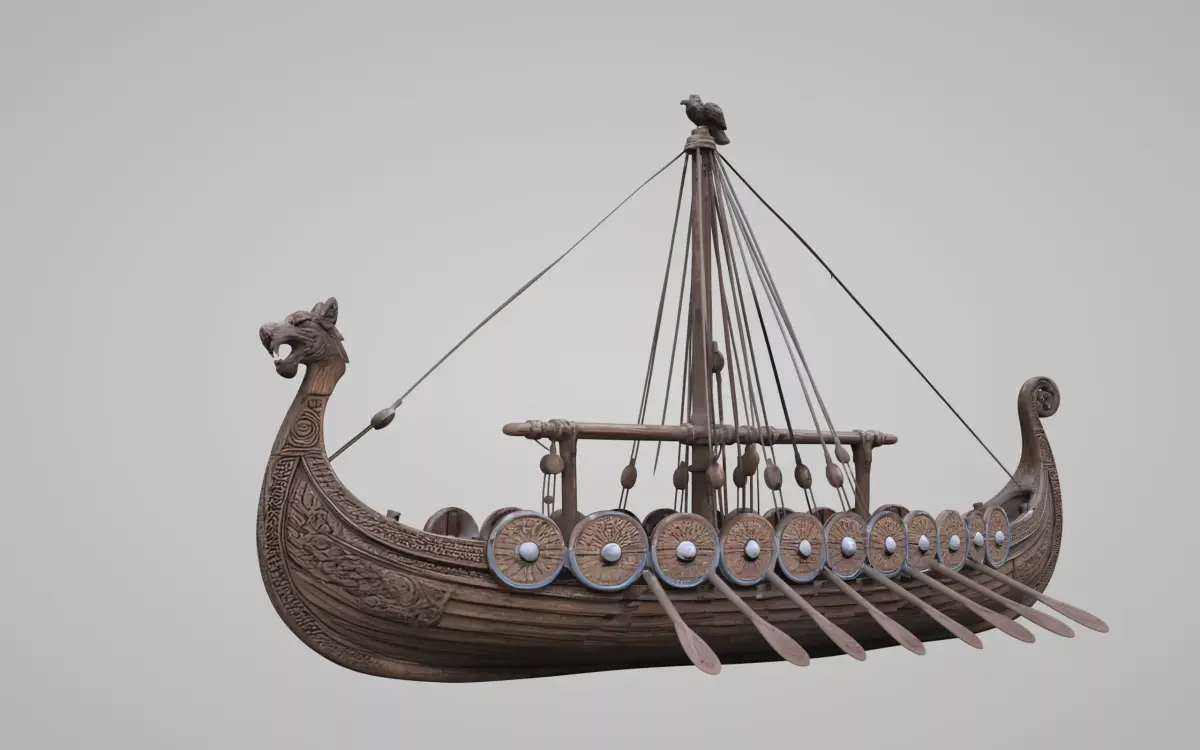
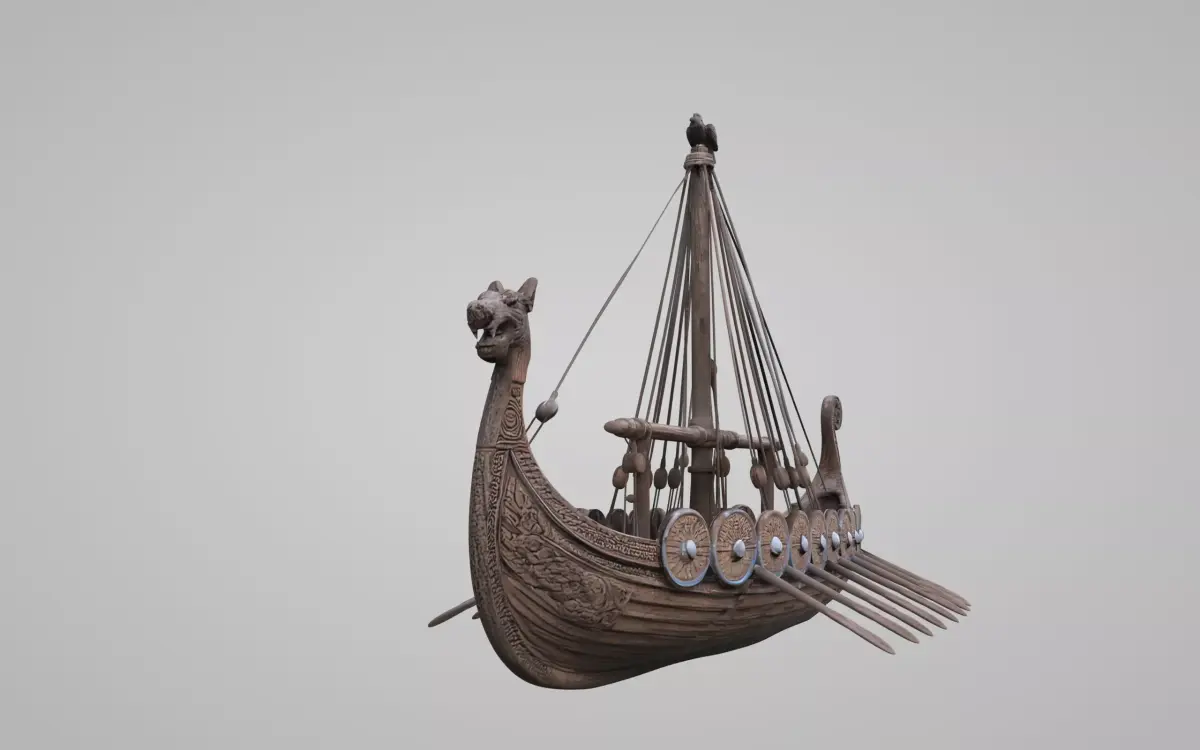
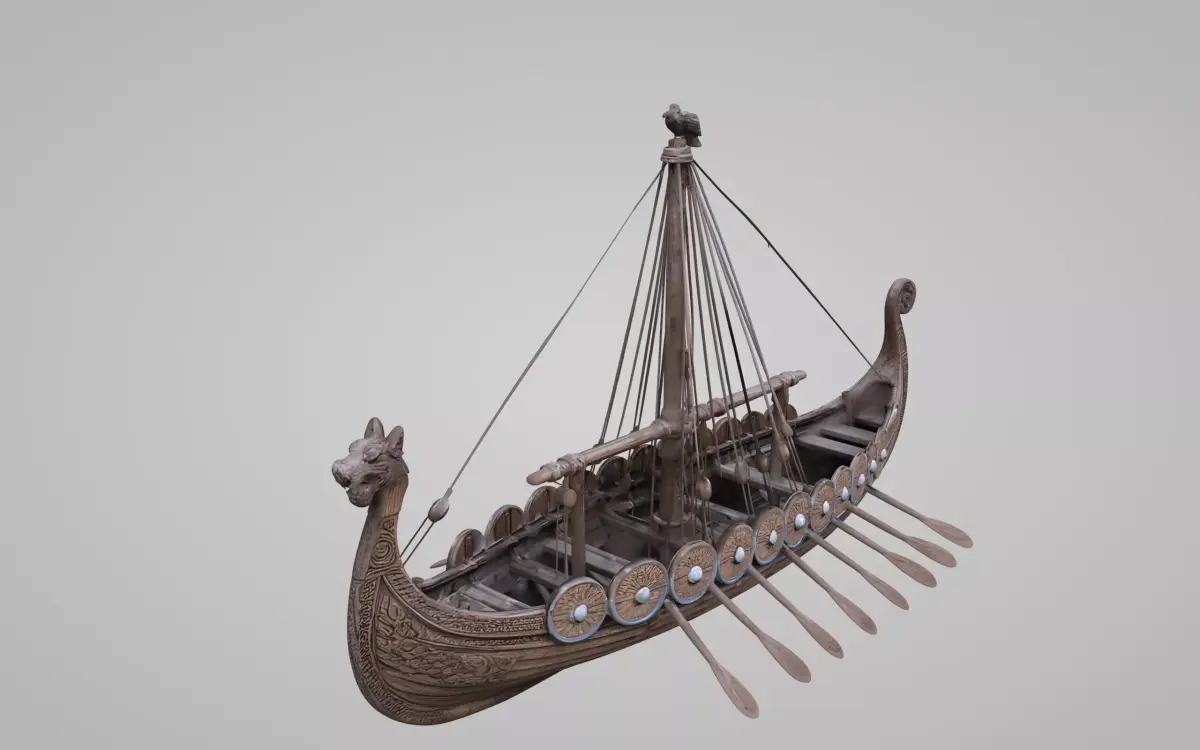
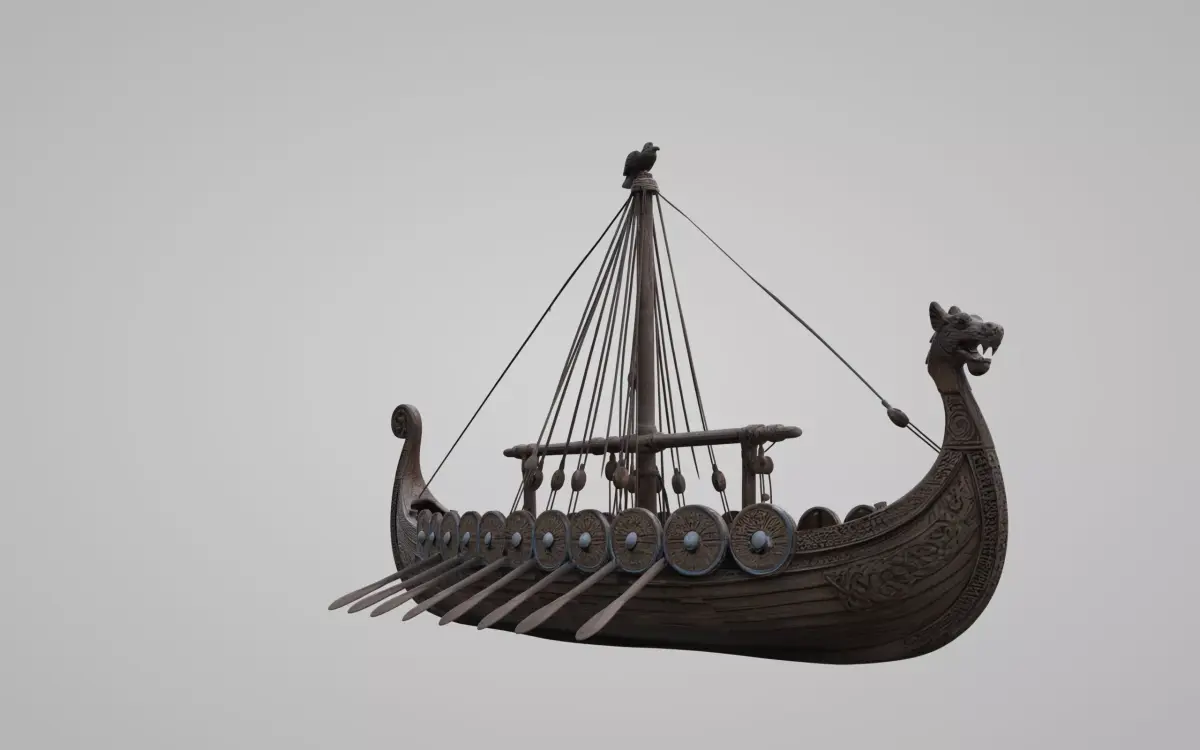
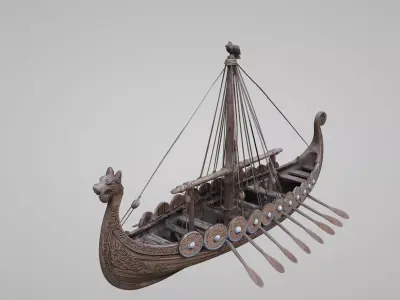
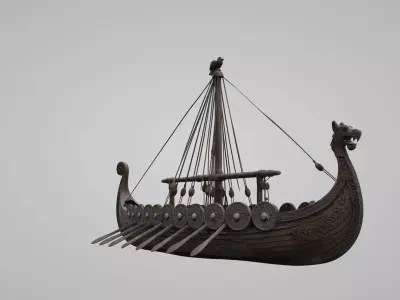
Viking character T-POSE 3D model Low-poly 3D model
Home Catalog Viking character T-POSE 3D model Low-poly 3D model

Publication date: 2026-04-12

Buy Viking character T-POSE 3D model Low-poly 3D model

$69

License: Royalty Free

author:

salimkoc

All content related to this 3D asset—including renders, descriptions, and metadata — is credited to its original author, «salimkoc». CGhub does not claim copyright ownership over the content used.
  • Description
  • Formats
he etymology of the word Viking has been much debated by academics, with many origin theories being proposed.[20][21] One theory suggests that the word's origin is from the Old English wicing 'settlement' and the Old Frisian wizing, attested almost 300 years prior.[22] Another less popular theory is that víking came from the feminine vík 'creek', 'inlet', 'small bay'.[23] The Old Norse word víkingr does not appear in written sources until the 12th century, apart from a few runestones.[24]Another etymology that gained support in the early 21st century derives Viking from the same root as Old Norse vika 'sea mile', originally referring to the distance between two shifts of rowers, ultimately from the Proto-Germanic *wîkan 'to recede'.[25][26][27][28] This is found in the early Nordic verb *wikan 'to turn', similar to Old Icelandic víkja 'to move, to turn', with well-attested nautical usages, according to Bernard Mees.[27] This theory is better attested linguistically, and the term most likely predates the use of the sail by the Germanic peoples of northwestern Europe.[28][27][29]

The Stora Hammars I image stone, showing the saga of Hildr, under what may be the rite of blood eagle, and on the bottom a Viking ship

In the Middle Ages, viking came to refer to Scandinavian pirates or raiders.[30][31][32] The earliest reference to wicing in English sources is from the Épinal-Erfurt glossary (c. 700), about 93 years before the first known attack by Viking raiders in England. The glossary lists the Latin translation for wicing as piraticum 'pirate'.[33][34] In Old English, the word wicing appears in the Anglo-Saxon poem Widsith, probably from the 9th century. The word was not regarded as a reference to nationality, with other terms such as Northmen and Dene 'Danes' being used for that. In Asser's Latin work The Life of King Alfred, the Danes are referred to as pagani 'pagans'; historian Janet Nelson states that pagani became the Vikings in standard translations of this work, even though there is clear evidence that it was used as a synonym, while Eric Christiansen avers that it is a mistranslation made at the insistence of the publisher.[35] The word wicing does not occur in any preserved Middle English texts.The word Viking was introduced into Modern English during the late 18th-century Viking revival, at which point it acquired romanticised heroic overtones of barbarian warrior or noble savage.[36] During the 20th century, the meaning of the term was expanded to refer not only to seaborne raiders from Scandinavia and other places settled by them (like Iceland and the Faroe Islands), but also any member of the culture that produced the raiders during the period from the late 8th to the mid-11th centuries, or more loosely from about 700 to as late as about 1100. As an adjective, the word is used to refer to ideas, phenomena, or artefacts connected with those people and their cultural life, producing expressions like Viking age, Viking culture, Viking art, Viking religion, Viking ship and so on.Vikings were a seafaring people originally from Scandinavia (present-day Denmark, Norway, and Sweden),[3][4][5][6] who from the late 8th to the late 11th centuries raided, pirated, traded, and settled throughout parts of Europe.[7][8][9] They voyaged as far as the Mediterranean, North Africa, the Middle East, Greenland, and Vinland (present-day Newfoundland in Canada, North America). In their countries of origin, and in some of the countries they raided and settled, this period of activity is popularly known as the Viking Age, and the term Viking also commonly includes the inhabitants of the Scandinavian homelands as a whole during the late 8th to the mid-11th centuries. The Vikings had a profound impact on the early medieval history of northern and Eastern Europe, including the political and social development of England (and the English language)[10] and parts of France, and the establishment of Kievan Rus', the ancestor of the later states of Belarus, Russia, and Ukraine.[11][12]Expert sailors and navigators of their characteristic longships, Vikings established Norse settlements and governments in the British Isles, the Faroe Islands, Iceland, Greenland, Normandy, and the Baltic coast, as well as along the Dnieper and Volga trade routes across Eastern Europe where they were also known as Varangians. The Normans, Norse-Gaels, Rus, Faroese, and Icelanders emerged from these Norse colonies. At one point, a group of Rus Vikings went so far south that, after briefly being bodyguards for the Byzantine emperor, they attacked the Byzantine city of Constantinople.[13] Vikings also voyaged to the Caspian Sea and Arabia.[14][15] They were the first Europeans to reach North America, briefly settling in Newfoundland (Vinland). While spreading Norse culture to foreign lands, they simultaneously brought home slaves, concubines, and foreign cultural influences to Scandinavia, influencing the genetic[16] and historical development of both. During the Viking Age, the Norse homelands were gradually consolidated from smaller kingdoms into three larger kingdoms: Denmark, Norway, and Sweden.The Vikings spoke Old Norse and made inscriptions in runes. For most of the Viking Age, they followed the Old Norse religion, but became Christians over the 8th–12th centuries. The Vikings had their own laws, art, and architecture. Most Vikings were also farmers, fishermen, craftsmen, and traders. Popular conceptions of the Vikings often strongly differ from the complex, advanced civilisation of the Norsemen that emerges from archaeology and historical sources. A romanticised picture of Vikings as noble savages began to emerge in the 18th century; this developed and became widely propagated during the 19th-century Viking revival.[17][18] Varying views of the Vikings—as violent, piratical heathens or as intrepid adventurers—reflect conflicting modern Viking myths that took shape by the early 20th century. Current popular representations are typically based on cultural clichés and stereotypes and are rarely accurate—for example, there is no evidence that they wore horned helmets, a costume element that first appeared in the 19th century
STL (Stereolithography, filesize: 23.8 MB), JPG (JPG, filesize: 29.1 MB), PNG (PNG, filesize: 29.1 MB), FBX (Autodesk FBX, filesize: 165 MB), C4D (Cinema 4D, filesize: 28.9 MB), 3DS (3D Studio, filesize: 13 MB), DAE (Collada, filesize: 47.4 MB)

3D Model details

  • cgtrader Platform
  • Animated
  • Rigged
  • Ready for 3D Printing
  • VR / AR / Low-poly
  • PBR
  • Textures
  • Materials
  • UV Mapping
  • Polygons: 500000
  • Vertices: 345999
  • Plugins used
  • Geometry: No N-gons | No faceted geometry | Manifold geometry |