High-quality 3D assets at affordable prices — trusted by designers, engineers, and creators worldwide. Made with care to be versatile, accessible, and ready for your pipeline.
Included File Formats
This model is provided in 14 widely supported formats, ensuring maximum compatibility:
• - FBX (.fbx) – Standard format for most 3D software and pipelines
• - OBJ + MTL (.obj, .mtl) – Wavefront format, widely used and compatible
• - STL (.stl) – Exported mesh geometry; may be suitable for 3D printing with adjustments
• - STEP (.step, .stp) – CAD format using NURBS surfaces
• - IGES (.iges, .igs) – Common format for CAD/CAM and engineering workflows (NURBS)
• - SAT (.sat) – ACIS solid model format (NURBS)
• - DAE (.dae) – Collada format for 3D applications and animations
• - glTF (.glb) – Modern, lightweight format for web, AR, and real-time engines
• - 3DS (.3ds) – Legacy format with broad software support
• - 3ds Max (.max) – Provided for 3ds Max users
• - Blender (.blend) – Provided for Blender users
• - SketchUp (.skp) – Compatible with all SketchUp versions
• - AutoCAD (.dwg) – Suitable for technical and architectural workflows
• - Rhino (.3dm) – Provided for Rhino users
Model Info
• - All files are checked and tested for integrity and correct content
• - Geometry uses real-world scale; model resolution varies depending on the product (high or low poly)
• • - Scene setup and mesh structure may vary depending on model complexity
• - Rendered using Luxion KeyShot
• - Affordable price with professional detailing
Buy with confidence. Quality and compatibility guaranteed.
If you have any questions about the file formats, feel free to send us a message — we're happy to assist you!
Sincerely,
SURF3D
Trusted source for professional and affordable 3D models.
More Information About 3D Model :
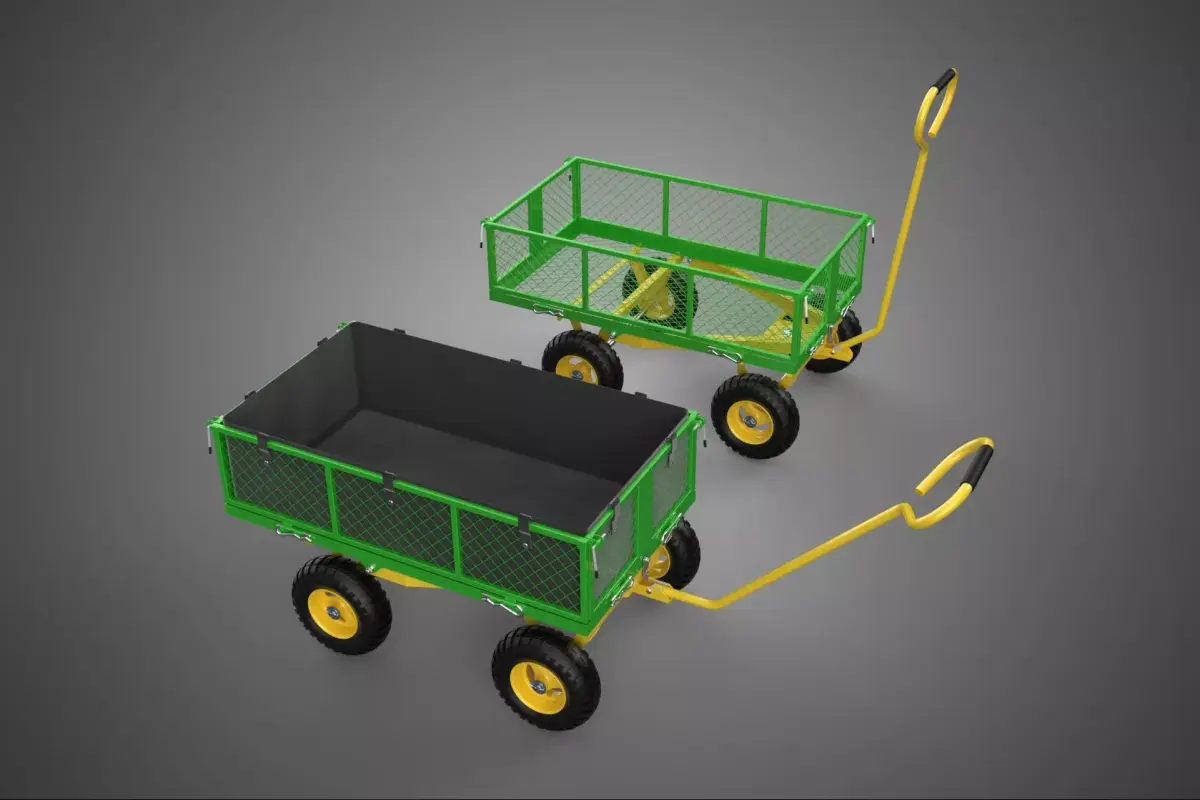
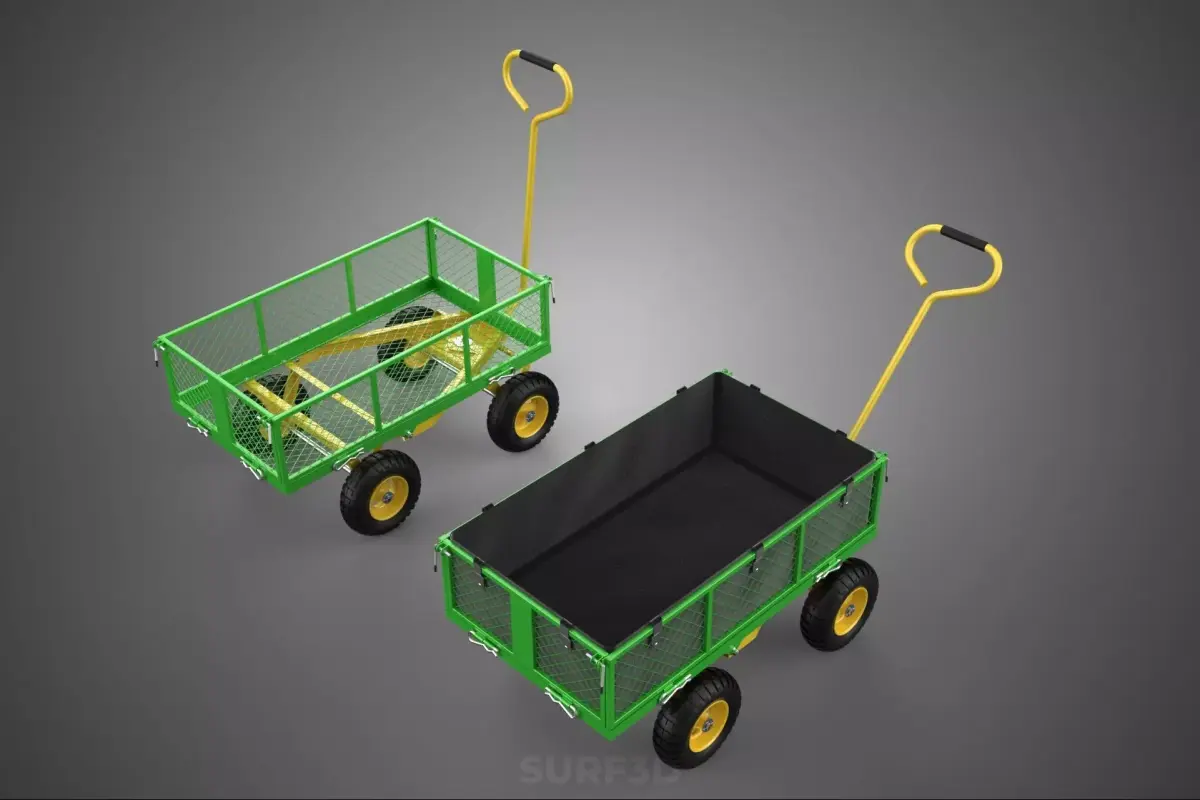
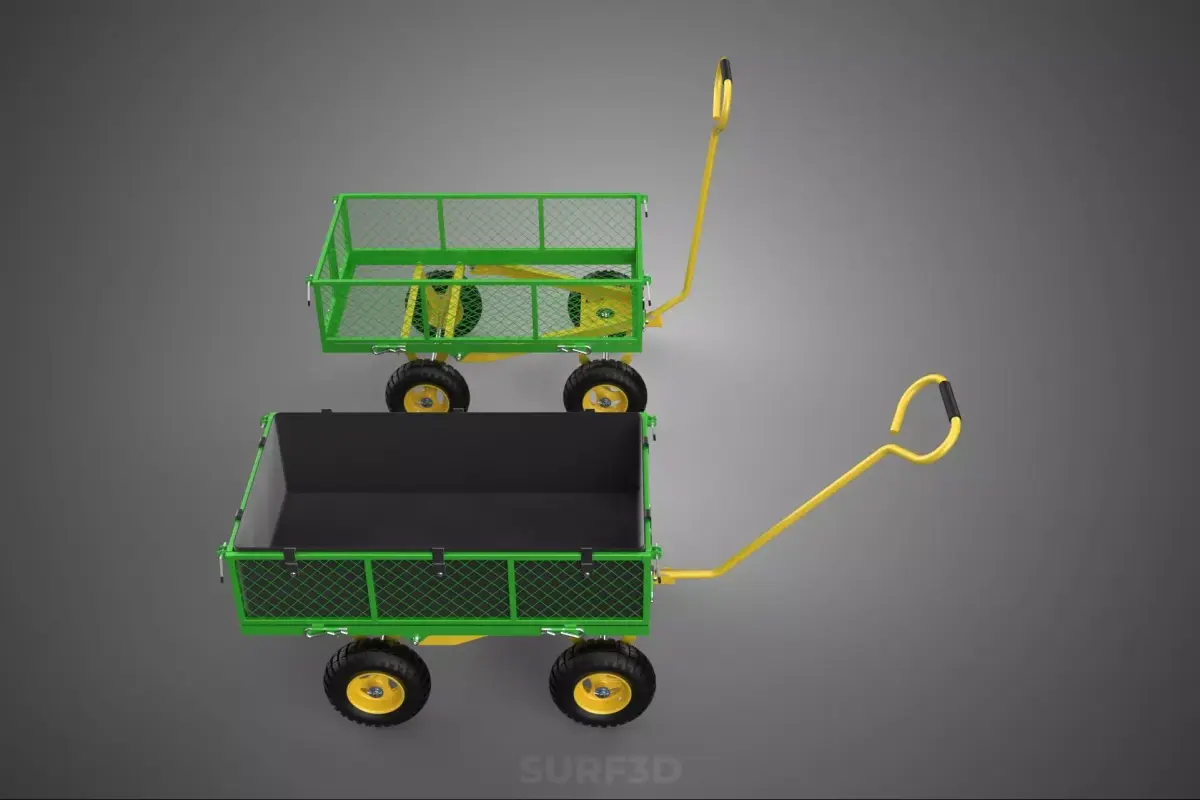
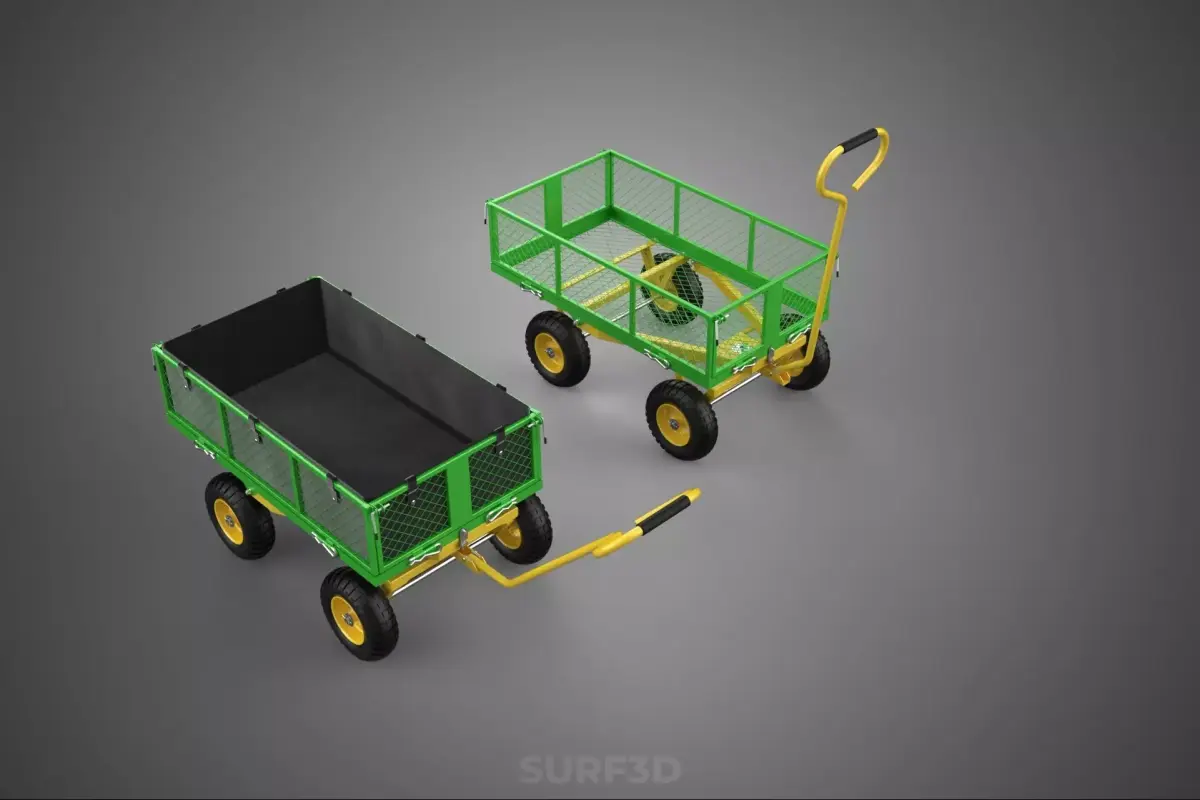
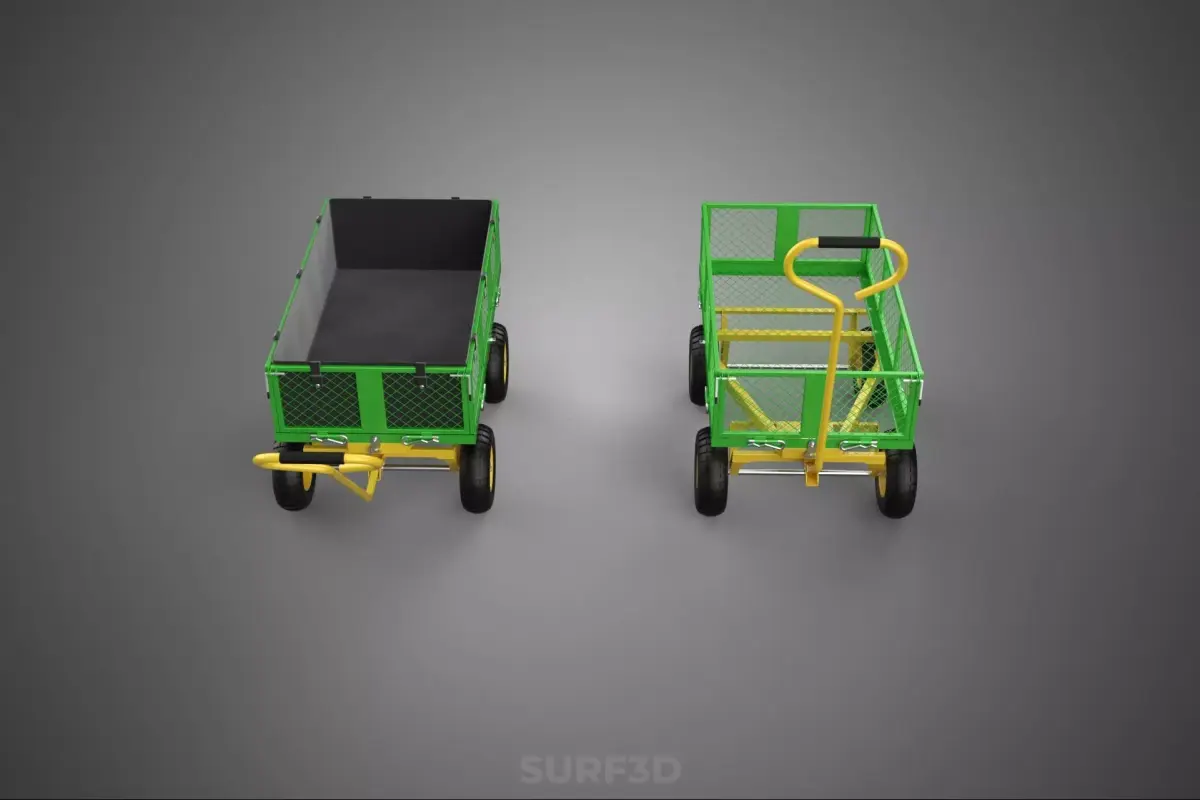
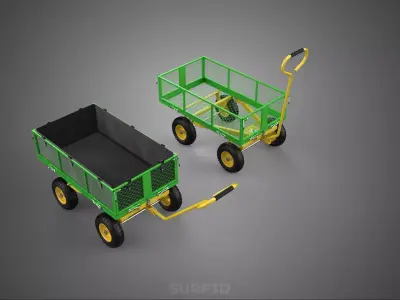
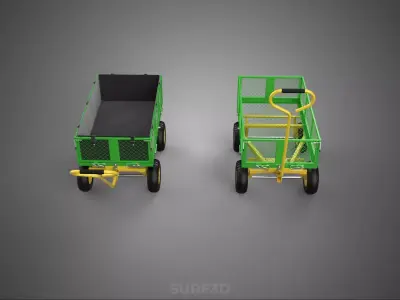
The subject entity, often classified as a convertible utility conveyance, is a specialized hauling device designed for the ergonomic transport of diverse materials across various terrains. It is formally characterized by its highly modular construction, combining fundamental wheeled mobility with a configurable, interchangeable system of detachable cargo containment units.
Nomenclature and Classification
This device occupies a distinct niche within material handling equipment, often overlapping multiple functional classifications. It may be referred to as a Wagon or Cart when utilized for manual pull or push operations, typically featuring an articulated D-handle or straight pull handle. The term Trolley usually applies when the device is designed with a high degree of maneuverability or utilized within controlled environments (e.g., warehouses). Classification as a Trailer is appropriate when the device incorporates a standard hitching mechanism or tow bar enabling attachment to a powered vehicle (such as an ATV or garden tractor), although manual utility trailers are also common.
Its primary defining characteristic is its multi-format cargo system, differentiating it from monolithic, single-purpose carriers.
Structural and Mechanical Components
The core structure consists of a robust chassis, frequently constructed from tubular steel or lightweight aluminum alloy, designed to ensure structural integrity while often incorporating a collapsible or folding mechanism for compact storage and transportation.
- Running Gear: Typically includes four wheels, positioned to maximize stability and load distribution. Wheels may be pneumatic (air-filled) for cushioning on rough terrain, or solid rubber/polyurethane for puncture resistance and smooth surface operation. The axles may be fixed or feature pivotal steering mechanisms controlled via the towing handle.
- Chassis: The frame often includes an open perimeter design equipped with specialized slots, clips, or quick-release fasteners intended to interface directly with the modular storage components.
- Articulation: The drawbar or handle is engineered for ergonomic use and often features a spring-loaded or locking mechanism to secure it in an upright position when not in use.
### Modular Cargo Containment System
The essence of this utility device lies in its adaptable containment units, designed for rapid interchange based on the nature of the load. All components designated as DETACHABLE utilize standardized mounting points on the chassis perimeter.
#### 1. Flexible Containment (Mesh and Cloth)
- Mesh/Cloth Pockets/Liners: These are flexible containment units, usually fabricated from heavy-duty synthetic textiles such as treated polyester, nylon, or PVC-coated fabric. They serve as general-purpose hauling bins.
- Mesh: Specifically refers to woven materials that facilitate drainage and ventilation, often used for items requiring aeration or for applications where soil and water runoff is expected (e.g., wet gardening debris, beach gear).
- Cloth (Fabric Tub): Refers to solid-wall fabric liners, usually treated for water resistance. These are often collapsible and feature integrated pockets or sleeves (POCKETS) along the external perimeter for storing small tools, bottles, or auxiliary items. They are generally secured to the frame via hook-and-loop fasteners or quick-release clips.
#### 2. Rigid Containment (Tray and Tub)
- Tray: A shallow, rigid platform or container, typically molded from High-Density Polyethylene (HDPE) or durable plastic. Trays are utilized for loads requiring a stable, flat base, or for handling materials that might spill over low fabric walls. They can serve as a simple flatbed when other components are removed.
- Tub: A deeper, rigid container, also usually molded plastic, offering superior volume capacity and containment, particularly suitable for bulk materials such as soil, gravel, liquid containers, or fertilizers. The rigid nature facilitates easy cleaning and resistance to puncture or saturation.
### Applications and Utility
The primary utility of this configurable device is its versatility in addressing variable hauling requirements without necessitating multiple dedicated pieces of equipment. Common applications include:
- Gardening and Landscaping: Transporting mulch, soil, tools, plants, and debris, utilizing the rigid tub for wet materials and the mesh liner for yard waste.
- Recreational Use: Serving as a collapsible beach or camping cart, utilizing the large cloth liner for gear and the mesh for items prone to sand or moisture.
- Light Industrial/Domestic Material Handling: Moving boxes, equipment, or supplies in workshops, warehouses, or domestic settings.
The combination of wheeled mobility and the detachable, multi-format cargo system provides an optimized solution for users requiring flexible, space-saving, heavy-duty conveyance.
KEYWORDS: Utility, Wagon, Cart, Trolley, Trailer, Detachable, Modular, Hauling, Collapsible, Storage, Mesh, Cloth, Tub, Tray, Pocket, Conveyance, Material Handling, Versatile, Chassis, Pneumatic, HDPE, Tubular Steel, Folding, Ergonomic, Gardening, Transport, Cargo, Quick-release, Rigging, Multipurpose.
STL (Stereolithography, filesize: 26.4 MB), OBJ (OBJ, filesize: 50.8 MB), IGE (IGES, filesize: 36.8 MB), FBX (Autodesk FBX, filesize: 15.7 MB), DAE (Collada, filesize: 89.9 MB), 3DS (3D Studio, filesize: 16.4 MB), MAX (Autodesk 3ds Max, filesize: 131 MB), BLEND (Blender, filesize: 48.2 MB), 3DM (Rhinoceros 3D, filesize: 43 MB), GLTF (glTF, filesize: 17.6 MB), DWG (AutoCAD, filesize: 19.5 MB), SKP (Sketchup, filesize: 10.1 MB), STP (STEP, filesize: 16.9 MB), SAT (3D ACIS, filesize: 68.8 MB)