High-quality 3D assets at affordable prices — trusted by designers, engineers, and creators worldwide. Made with care to be versatile, accessible, and ready for your pipeline.
Included File Formats
This model is provided in 14 widely supported formats, ensuring maximum compatibility:
• - FBX (.fbx) – Standard format for most 3D software and pipelines
• - OBJ + MTL (.obj, .mtl) – Wavefront format, widely used and compatible
• - STL (.stl) – Exported mesh geometry; may be suitable for 3D printing with adjustments
• - STEP (.step, .stp) – CAD format using NURBS surfaces
• - IGES (.iges, .igs) – Common format for CAD/CAM and engineering workflows (NURBS)
• - SAT (.sat) – ACIS solid model format (NURBS)
• - DAE (.dae) – Collada format for 3D applications and animations
• - glTF (.glb) – Modern, lightweight format for web, AR, and real-time engines
• - 3DS (.3ds) – Legacy format with broad software support
• - 3ds Max (.max) – Provided for 3ds Max users
• - Blender (.blend) – Provided for Blender users
• - SketchUp (.skp) – Compatible with all SketchUp versions
• - AutoCAD (.dwg) – Suitable for technical and architectural workflows
• - Rhino (.3dm) – Provided for Rhino users
Model Info
• - All files are checked and tested for integrity and correct content
• - Geometry uses real-world scale; model resolution varies depending on the product (high or low poly)
• • - Scene setup and mesh structure may vary depending on model complexity
• - Rendered using Luxion KeyShot
• - Affordable price with professional detailing
Buy with confidence. Quality and compatibility guaranteed.
If you have any questions about the file formats, feel free to send us a message — we're happy to assist you!
Sincerely,
SURF3D
Trusted source for professional and affordable 3D models.
More Information About 3D Model :
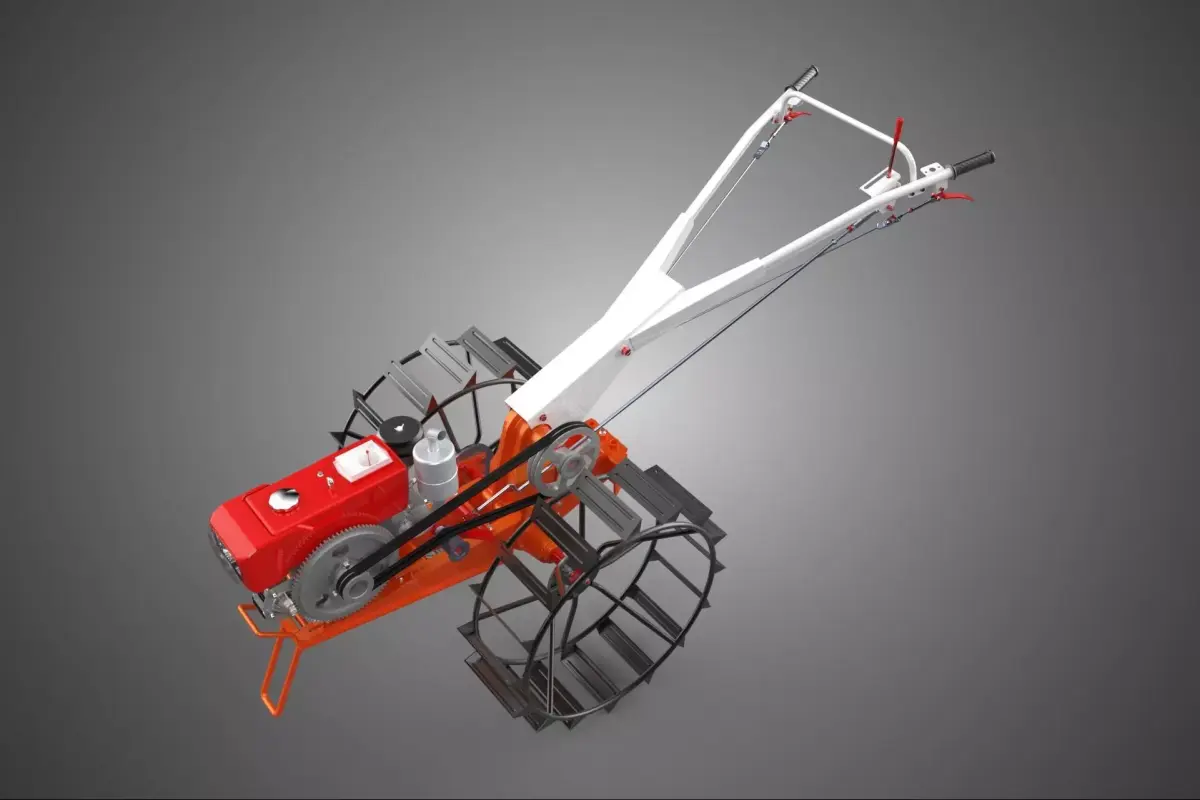
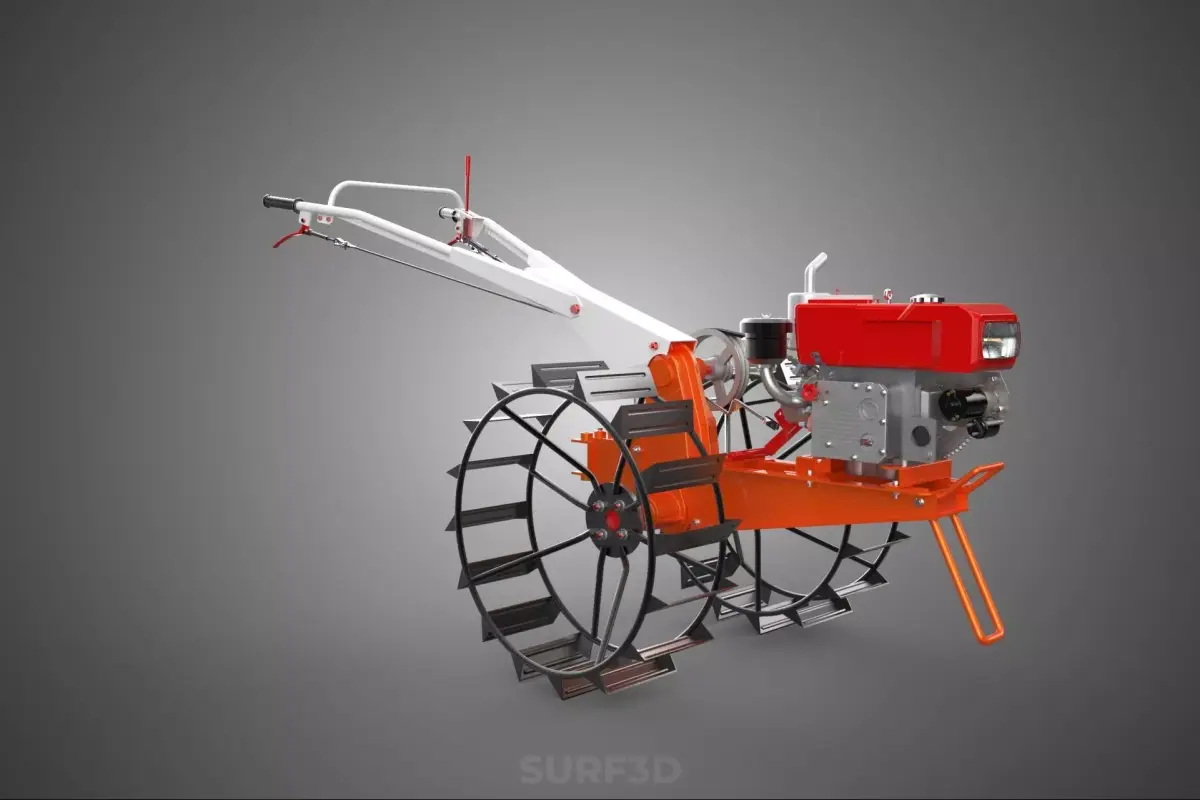
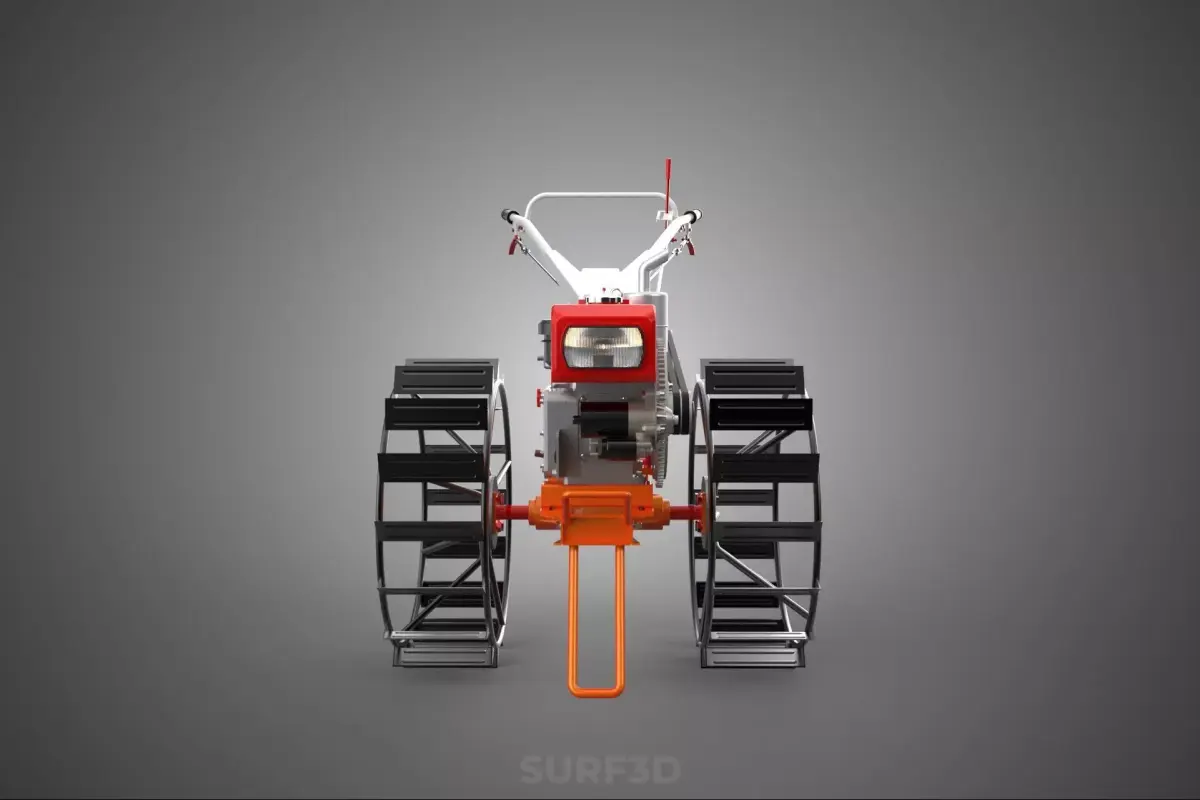
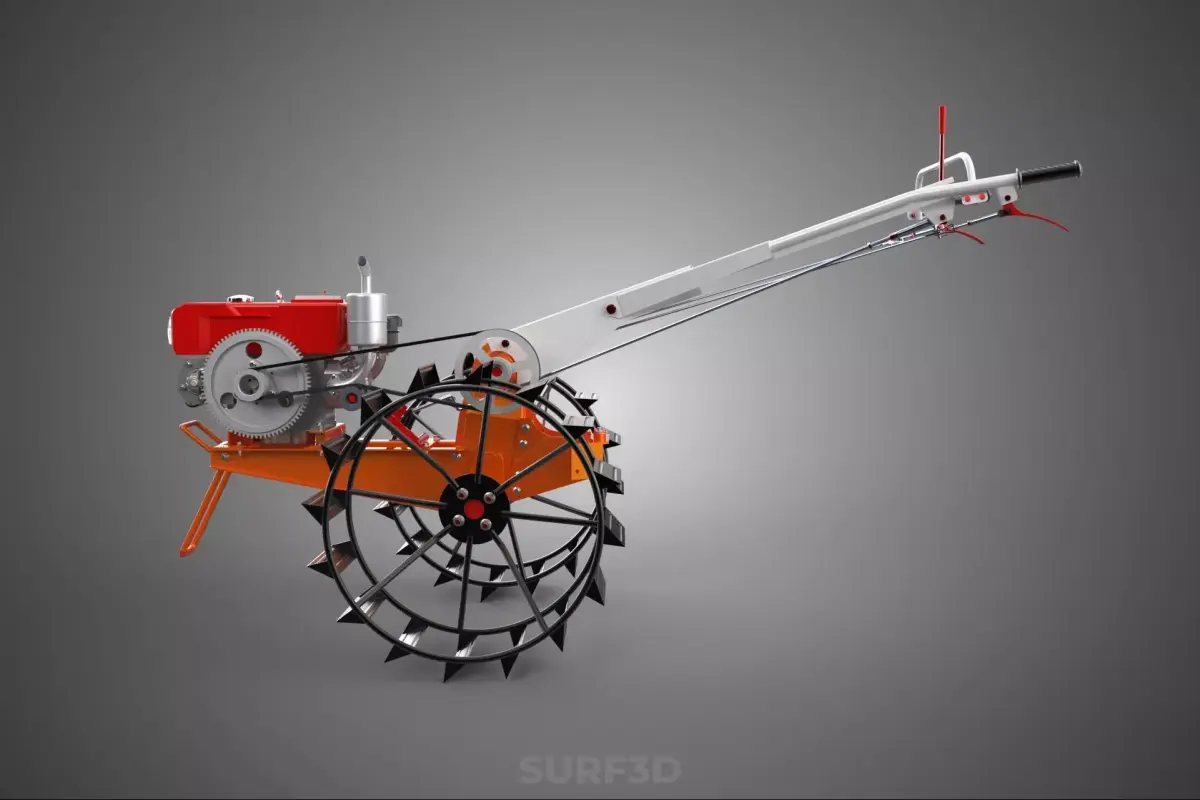
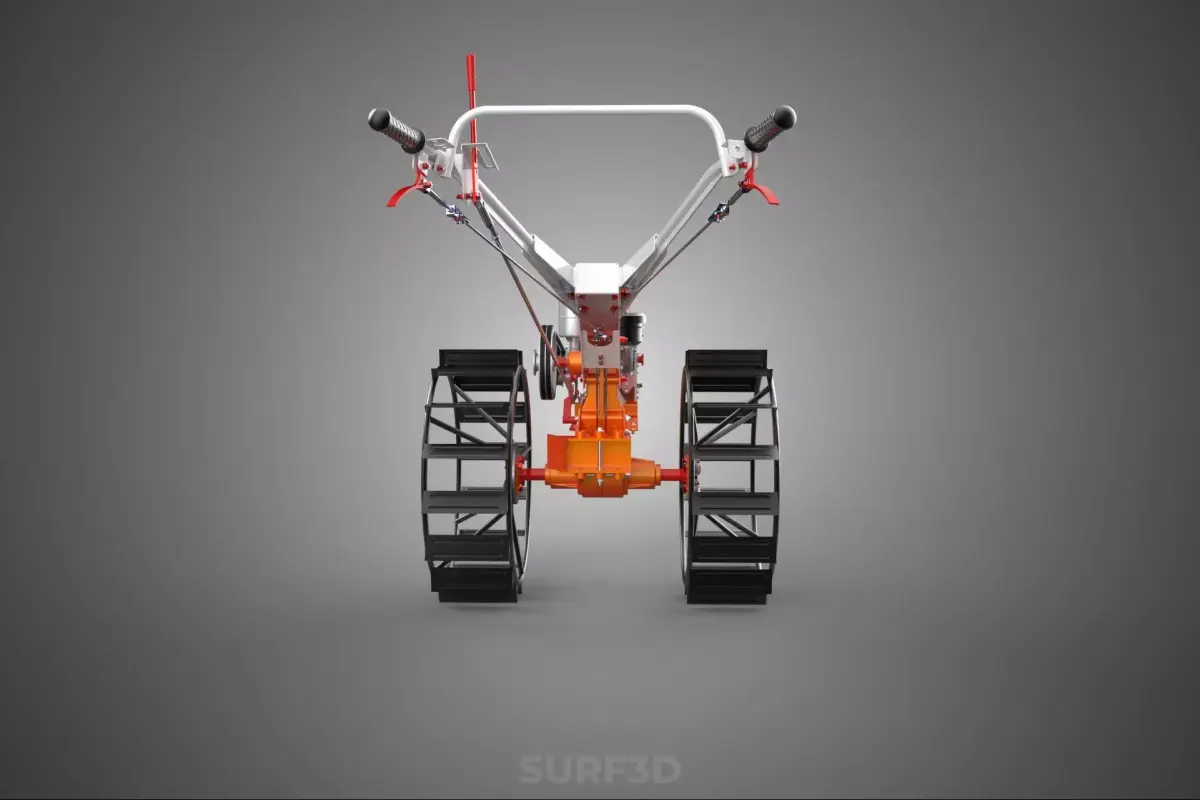
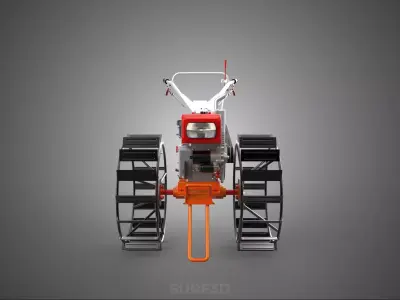
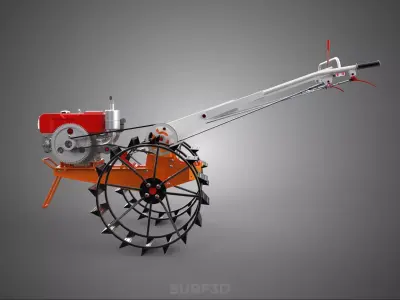
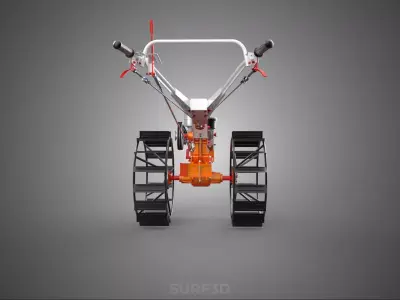
The Walk-Behind Hand Walking Tractor, often formally designated as a Two-Wheel Tractor (2WT) or Power Tiller, is a versatile, self-propelled, single-axle agricultural machine operated by a pedestrian farmer operator. It is characterized by its integral engine unit, robust transmission, and a pair of handles through which the operator steers and controls the machine while walking directly behind it. This category of equipment represents a crucial intermediate level of mechanization, particularly prevalent in small-to-medium-scale agricultural holdings, subsistence farming, and regions with challenging or heterogeneous terrain.
The specification of a diesel engine is highly common in international usage, offering substantial advantages in fuel economy and torque output over gasoline variants. These engines are typically horizontal, single-cylinder, direct-injection compression-ignition units, generally ranging in power from 5 to 20 horsepower (3.7 to 14.9 kW). The robust low-speed torque characteristics of the diesel engine are vital for effective deep tillage and for maintaining speed consistency under heavy loads, especially when operating implements requiring continuous high power draw via the Power Take-Off (PTO) shaft.
The machine's operational efficacy is deeply rooted in its capacity for intensive work in demanding environmental conditions, notably mud and saturated soils. Unlike heavier, four-wheel drive tractors that often cause excessive soil compaction or become immobilized in wetland environments, the Two-Wheel Tractor is designed to utilize specialized, high-traction tires—such as cage wheels or deep-lugged paddy tires—that maximize grip while minimizing flotation issues. This design makes the diesel walk-behind tractor indispensable for the preparation of rice paddies (wet rice cultivation), requiring operations like puddling (churning mud to create a smooth, impermeable layer) and primary tillage in flooded or semi-flooded fields.
Control of the walk-behind tractor requires focused engagement from the operator. The control system typically includes a main clutch, throttle, steering levers (sometimes controlling differential locks or individual wheel brakes), and controls for engagement of the PTO shaft. Due to the operator’s proximity to the rotating implements and the inherent physical demands of maneuvering the machine in soft or muddy ground, specific training and adherence to safety protocols are mandatory.
The versatility of the machine is extended through numerous attachments compatible with the standard PTO, including rotary tillers (rotavators), moldboard plows, disc harrows, seeders, trailers (converting the unit into a small transport vehicle), water pumps, and specialized harvesting equipment. This adaptability underscores its role as a fundamental multipurpose tool in modern intensive smallholder agriculture, especially across Asia, Southeast Asia, and parts of Africa.
KEYWORDS: Two-wheel tractor, Power tiller, Diesel engine, Power Take-Off, Agricultural mechanization, Paddy cultivation, Wetland agriculture, Single-axle tractor, Motoblok, Tillage, Puddling, Farmer operator, Subsistence farming, Rotary tiller, Soil preparation, Compression-ignition, High torque, Walking tractor, Muddy conditions, Farm equipment, Single cylinder, Implement carrier, Smallholder farming, Pedestrian tractor, Field work, Manual operation, Wet rice cultivation, Agricultural technology, Traction, Gearbox.
STL (Stereolithography, filesize: 38.7 MB), OBJ (OBJ, filesize: 77.6 MB), GLTF (glTF, filesize: 25.7 MB), 3DS (3D Studio, filesize: 23.9 MB), DWG (AutoCAD, filesize: 18.5 MB), DAE (Collada, filesize: 131 MB), STP (STEP, filesize: 69 MB), BLEND (Blender, filesize: 71.4 MB), SAT (3D ACIS, filesize: 67.8 MB), SKP (Sketchup, filesize: 64.6 MB), MAX (Autodesk 3ds Max, filesize: 162 MB), 3DM (Rhinoceros 3D, filesize: 133 MB), IGE (IGES, filesize: 113 MB), FBX (Autodesk FBX, filesize: 23.9 MB)