High-quality 3D assets at affordable prices — trusted by designers, engineers, and creators worldwide. Made with care to be versatile, accessible, and ready for your pipeline.
Included File Formats
This model is provided in 14 widely supported formats, ensuring maximum compatibility:
• - FBX (.fbx) – Standard format for most 3D software and pipelines
• - OBJ + MTL (.obj, .mtl) – Wavefront format, widely used and compatible
• - STL (.stl) – Exported mesh geometry; may be suitable for 3D printing with adjustments
• - STEP (.step, .stp) – CAD format using NURBS surfaces
• - IGES (.iges, .igs) – Common format for CAD/CAM and engineering workflows (NURBS)
• - SAT (.sat) – ACIS solid model format (NURBS)
• - DAE (.dae) – Collada format for 3D applications and animations
• - glTF (.glb) – Modern, lightweight format for web, AR, and real-time engines
• - 3DS (.3ds) – Legacy format with broad software support
• - 3ds Max (.max) – Provided for 3ds Max users
• - Blender (.blend) – Provided for Blender users
• - SketchUp (.skp) – Compatible with all SketchUp versions
• - AutoCAD (.dwg) – Suitable for technical and architectural workflows
• - Rhino (.3dm) – Provided for Rhino users
Model Info
• - All files are checked and tested for integrity and correct content
• - Geometry uses real-world scale; model resolution varies depending on the product (high or low poly)
• • - Scene setup and mesh structure may vary depending on model complexity
• - Rendered using Luxion KeyShot
• - Affordable price with professional detailing
Buy with confidence. Quality and compatibility guaranteed.
If you have any questions about the file formats, feel free to send us a message — we're happy to assist you!
Sincerely,
SURF3D
Trusted source for professional and affordable 3D models.
More Information About 3D Model :
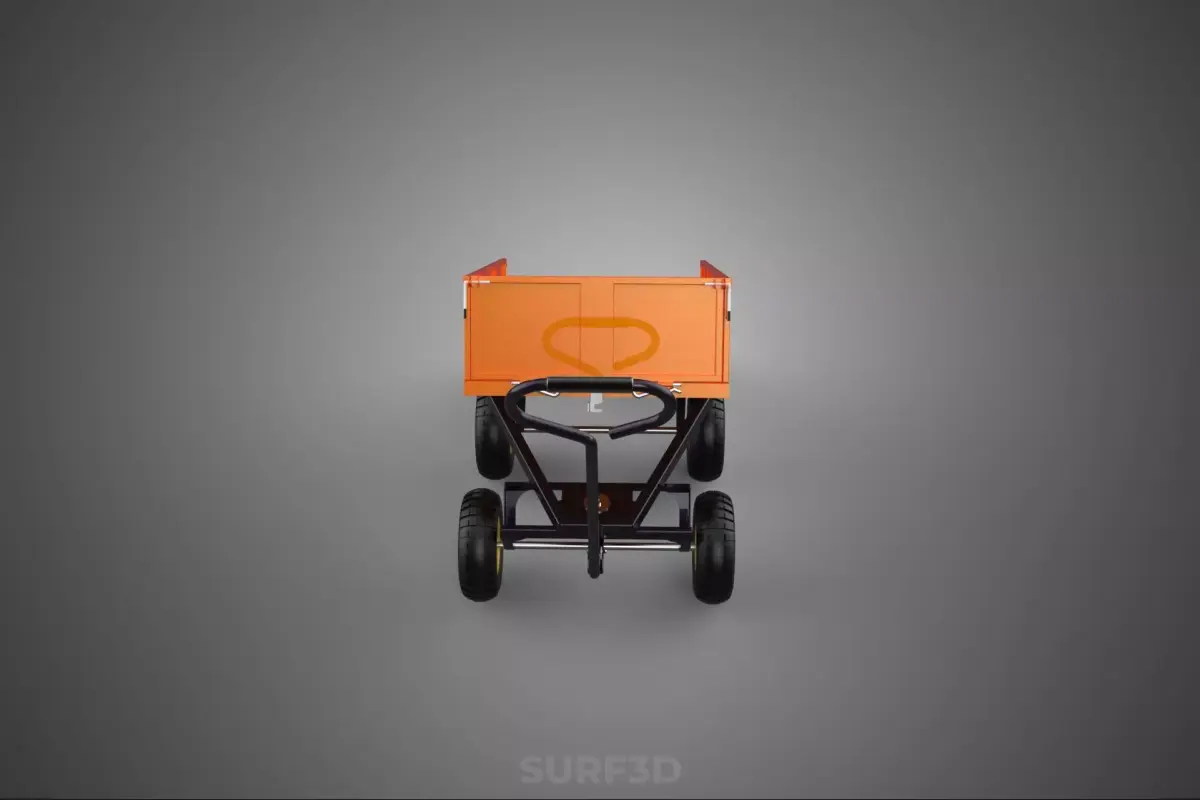
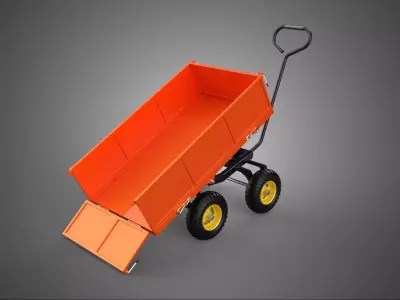
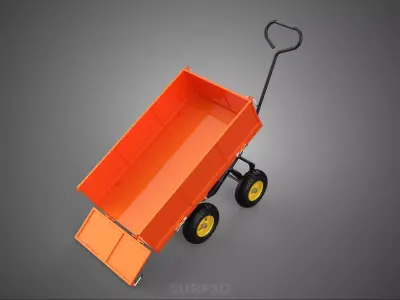
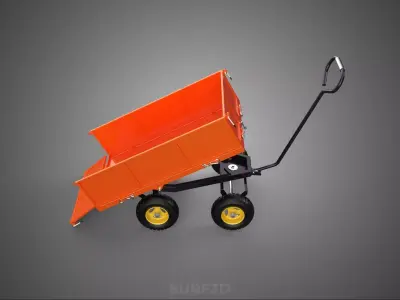
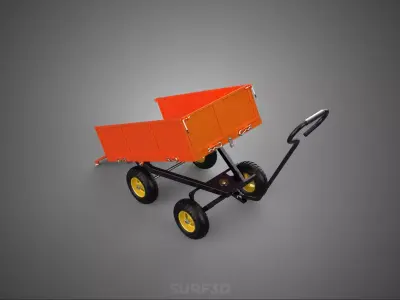
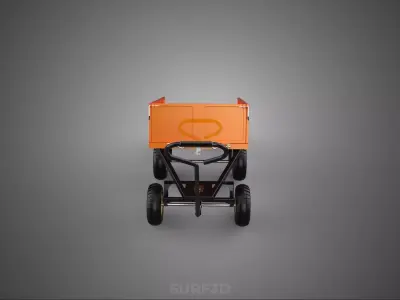
The composite term WASTE GARBAGE RUBBISH TRASH JUNK TRAILER DUMP CART WAGON TROLLEY refers to a diverse category of mobile conveyances designed for the collection, temporary storage, and transportation of discarded materials, commonly known as refuse or waste. This nomenclature encompasses various synonyms for unwanted or unusable items, coupled with an array of wheeled devices utilized in their management and disposal.
Waste Terminology:
The initial elements—Waste, Garbage, Rubbish, Trash, and Junk—collectively denote materials that are discarded as no longer useful or desirable.
- Waste: The broadest term, referring to any material that is not prime product (or co-product) and has no further use for the generator or consumer, encompassing solid, liquid, and gaseous forms. In this context, it primarily refers to solid waste.
- Garbage: Often refers specifically to putrescible food waste and organic matter, particularly in American English, deriving from household activities.
- Rubbish: Predominantly used in British English, this term generally covers non-putrescible solid waste, including paper, plastics, and other dry refuse, often equivalent to trash in American English.
- Trash: In American English, this denotes dry, non-putrescible solid waste from households, commercial establishments, and institutions, such as paper, plastics, glass, and metals, excluding food waste.
- Junk: Typically refers to miscellaneous articles or materials that are old, discarded, or considered of little value, often implying bulkier items, scrap, or general refuse that requires clearing out.
Conveyance Terminology:
The latter part of the title—Trailer, Dump Cart, Wagon, Trolley—describes different types of wheeled vehicles employed for moving these discarded materials. These devices vary significantly in size, capacity, motive power, and intended application.
- Trailer: A non-motorized vehicle designed to be towed by a powered vehicle (e.g., truck, tractor, ATV). When utilized for waste, trailers range from compact utility trailers for household clear-outs to large, specialized dump trailers (e.g., walking floor trailers, tipper trailers with hydraulic mechanisms) capable of transporting significant volumes of municipal solid waste, construction and demolition debris, or industrial scrap to landfills, transfer stations, or recycling facilities.
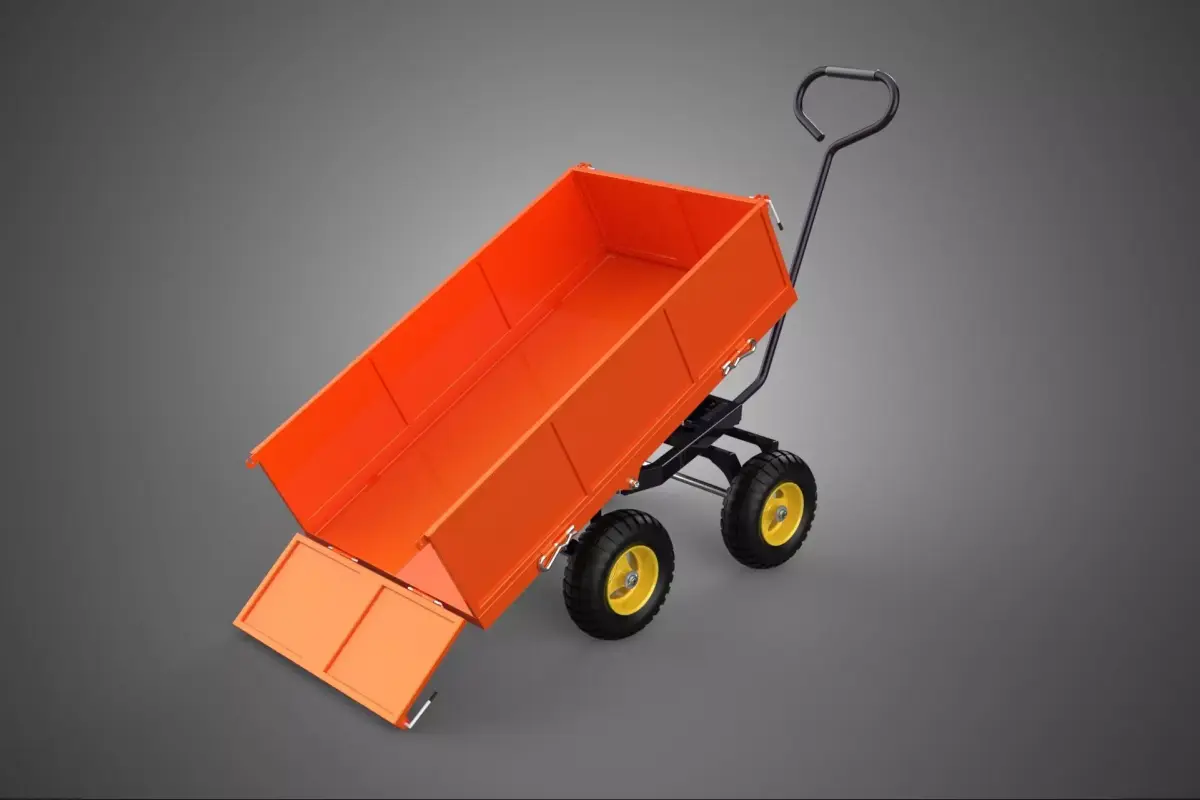
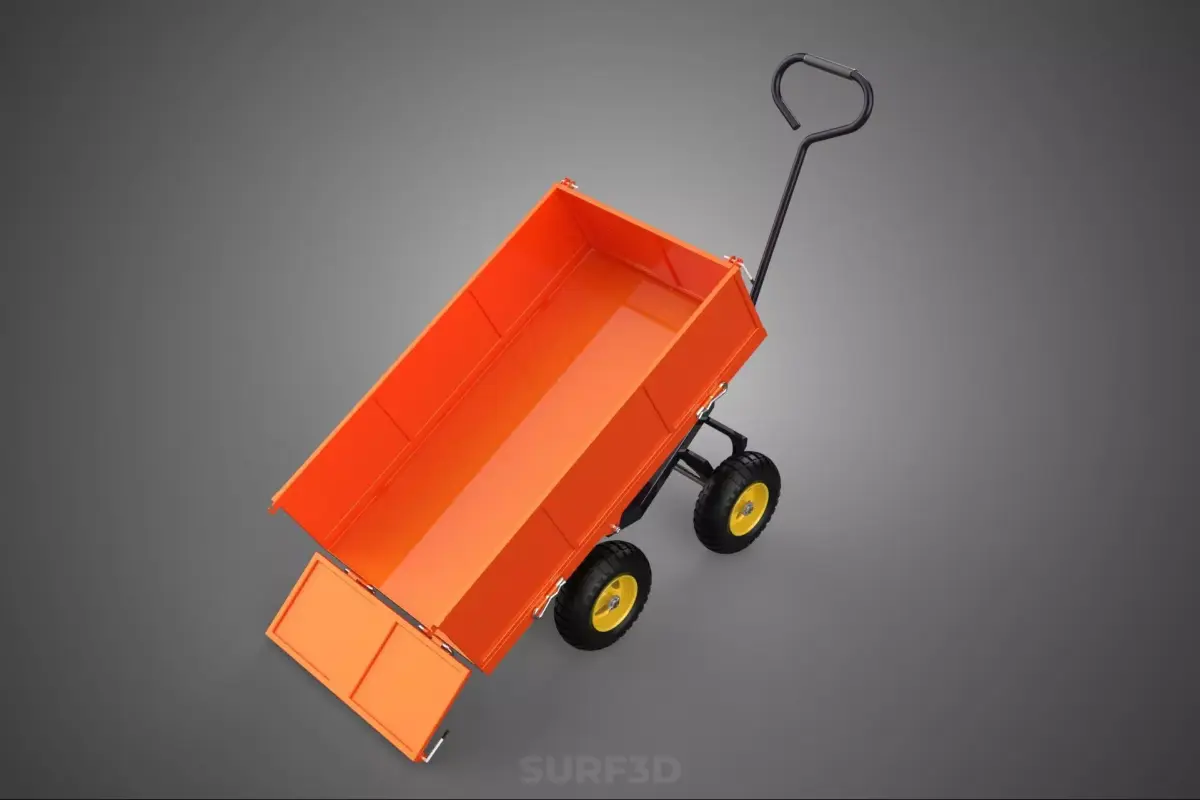
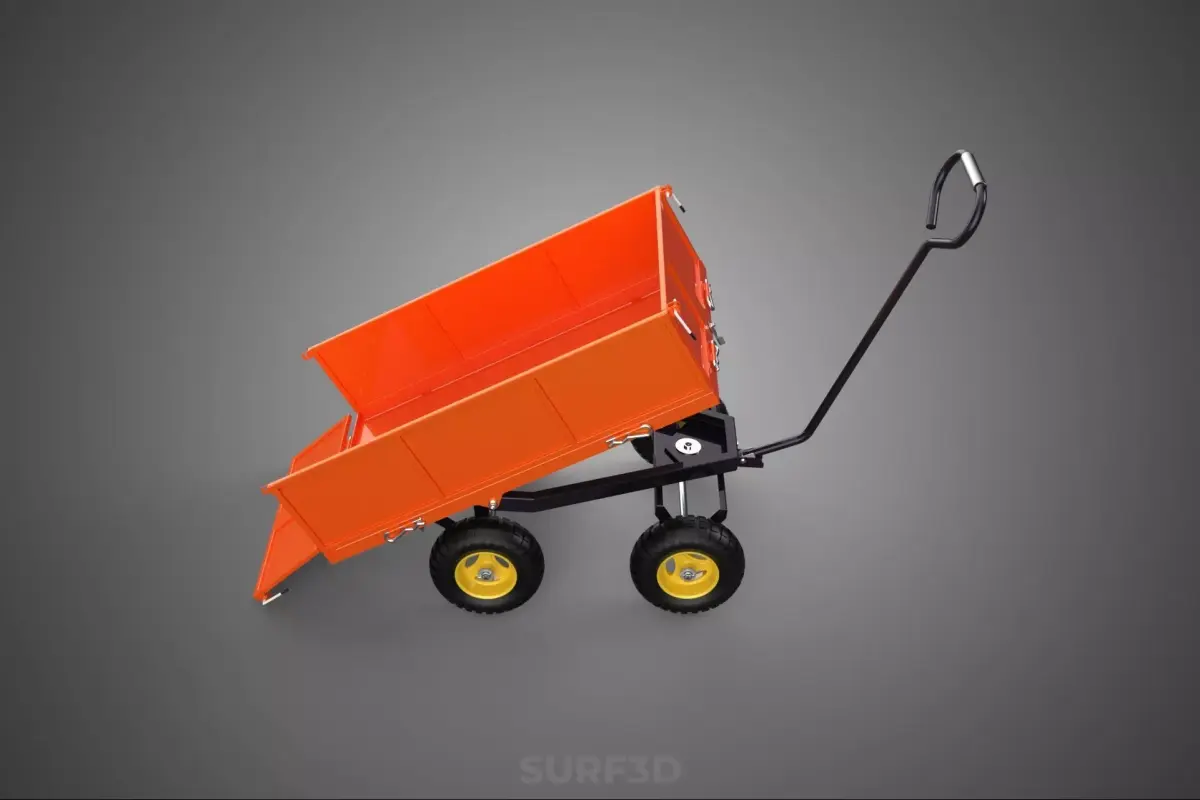
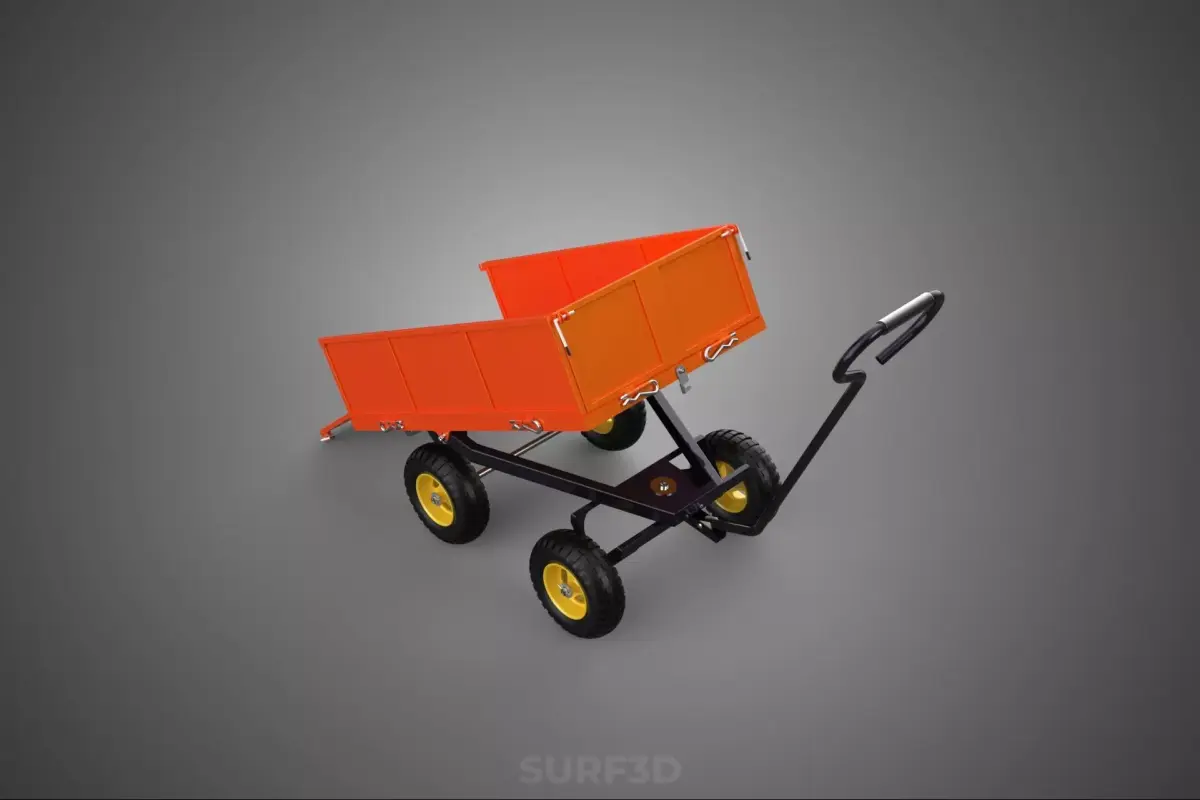
- Dump Cart: A smaller, often two-wheeled or four-wheeled open-top container, typically designed for manual pulling or towing by compact utility vehicles, lawn tractors, or ATVs. Its defining characteristic is a tipping or dumping mechanism that allows for easy discharge of contents. These are commonly used in residential settings for yard waste, gardening projects, or light construction debris, as well as in agricultural and landscaping contexts.
- Wagon: A four-wheeled vehicle primarily designed for transporting goods. Historically drawn by animals or pulled manually, modern wagons for waste management include heavy-duty utility wagons, often vehicle-towed, used for collecting garden waste, bulky refuse, or recyclable materials in parks, campuses, or agricultural environments. Some specialized wagons are designed with enhanced capacities or features for waste collection routes.
- Trolley: A small, wheeled cart, typically hand-pushed or pulled, designed for moving items over shorter distances within a localized area. In the context of waste, trolleys can include small utility carts for transporting refuse bags, bins, or recycling containers within residential complexes, commercial kitchens, or industrial facilities, facilitating internal logistics before collection by larger vehicles. Industrial-grade trolleys may be robustly constructed for heavy-duty waste streams or hazardous materials.
Function and Application:
The combined functionality of these terms highlights their critical role in waste management systems across various scales. These devices serve to:
- Collect: Gather discarded materials from their point of generation.
- Temporarily Store: Hold waste efficiently until further processing or transport.
- Transport: Move waste from collection points to transfer stations, processing facilities (recycling centers, composting plants), or final disposal sites (landfills).
Their design considerations include capacity, material durability (e.g., steel, polyethylene), ease of loading and unloading (e.g., low-profile designs, hydraulic tipping), maneuverability, and specific features for different waste streams (e.g., compartmentalization for recycling, secure lids for hazardous waste). From a residential homeowner clearing garden debris with a dump cart, to a municipal service transporting construction waste via a specialized trailer, these conveyances are fundamental to maintaining public health, environmental cleanliness, and the operational efficiency of waste resource management.
KEYWORDS: Waste management, Refuse transport, Solid waste, Dump trailer, Utility cart, Garbage collection, Rubbish removal, Trash hauling, Junk disposal, Mobile conveyance, Wheeled vehicle, Towed equipment, Manual cart, Hydraulic tipping, Garden waste, Construction debris, Recycling transport, Industrial waste, Agricultural waste, Municipal services, Logistics, Environmental sanitation, Material handling, Bulk transport, Transfer station, Landfill, Collection system, Disposal equipment, Heavy-duty cart, Storage container
STL (Stereolithography, filesize: 11.3 MB), OBJ (OBJ, filesize: 21.2 MB), DAE (Collada, filesize: 38 MB), 3DM (Rhinoceros 3D, filesize: 18.5 MB), MAX (Autodesk 3ds Max, filesize: 49.9 MB), BLEND (Blender, filesize: 21 MB), FBX (Autodesk FBX, filesize: 6.91 MB), 3DS (3D Studio, filesize: 6.83 MB), STP (STEP, filesize: 6.66 MB), DWG (AutoCAD, filesize: 7.8 MB), SKP (Sketchup, filesize: 6.91 MB), GLTF (glTF, filesize: 7.29 MB), IGE (IGES, filesize: 14.1 MB), SAT (3D ACIS, filesize: 22.5 MB)