
Publication date: 2023-10-01
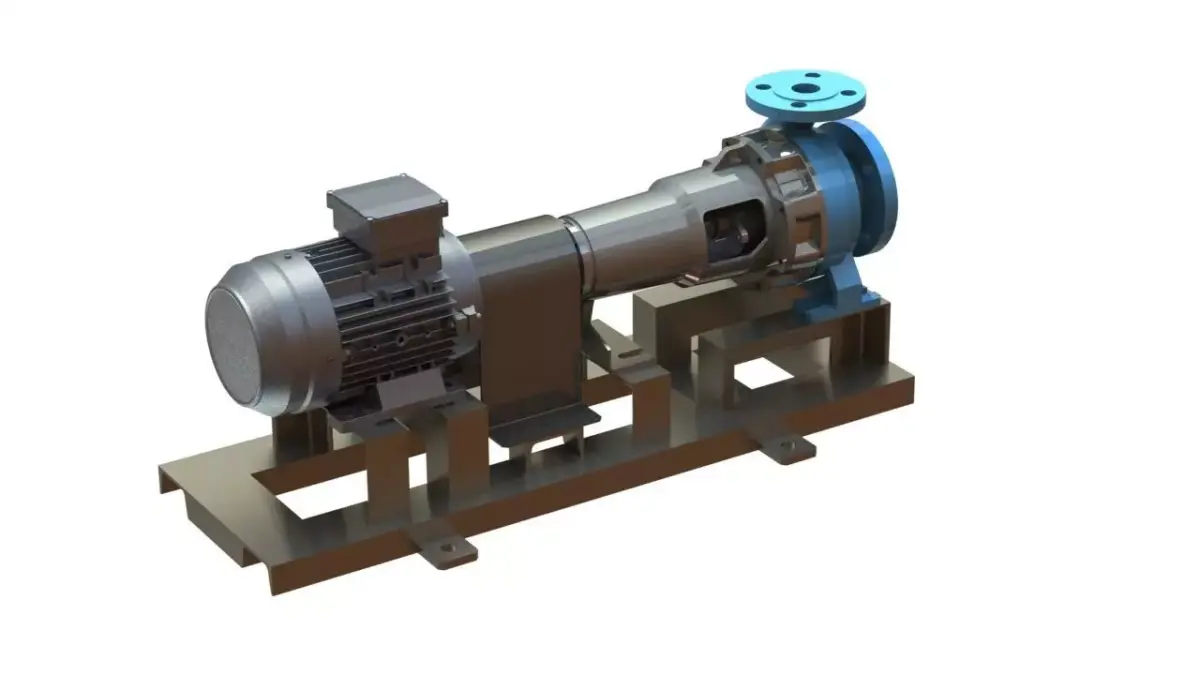
Buy Centrifugal Pump 3D model get
$10
License: Royalty Free
Rigged
PBR
Realtime
Animated
Free

author:
machinedesignshop
Renders and source materials belong to the author machinedesignshop.
Specifications
- Platform
- cgtrader
- Animated
- Rigged
- 3D Print ready
- VR / AR / Low-poly
- PBR
- Textures
- Materials
- UV Mapping
- Polygons
- 0
- Vertices
- 0
- Geometry
- Unknown
Usage recommendations
Realtime rendering
✕
PC Game development
✕
Mobile Game Development
✕
VR/AR applications
✕
Visualisation
✓
Cinema
✓
Advertising
✓
3D Printing
✕
CAD Engineering
✕
E-Commerce & Interactive 3D Web
✕
FAQ
Is this a free 3D model?
No, this model costs $10.
How do I download this 3D model?
This model is available through the "Go to purchase" button on this page.
What license applies to this model?
This model comes with a Royalty Free license. See the seller's page (via "Go to purchase") for the full terms.
Does it include rigging and animation?
No animation, rig only. See the Specifications block for more information.
Does this model have UV mapping?
No, this model does not have UV mapping.
What textures and materials does this 3D model include?
This model has materials, but no textures. See the Specifications block for more information.
Can I use it for 3D printing?
No, this model is not intended for 3D printing.
Additional information
Working Principle: Centrifugal pumps operate based on the principle of centrifugal force. They use a rotating impeller, which is a disk with curved blades, to create a flow of fluid. As the impeller spins, it imparts kinetic energy to the fluid, causing it to move outward due to centrifugal force. This outward movement creates a low-pressure area at the center of the impeller, causing more fluid to be drawn into the pump's inlet.
Components: The main components of a centrifugal pump include the impeller, casing, inlet, outlet, and a motor or engine to drive the impeller. The impeller is typically attached to a shaft connected to the motor or engine.
Types: There are various types of centrifugal pumps, including single-stage and multi-stage pumps. Single-stage pumps have a single impeller and are used for low-pressure applications, while multi-stage pumps have multiple impellers stacked in series to generate higher pressures.
Applications: Centrifugal pumps are widely used in a variety of industries, including agriculture, chemical processing, water supply and distribution, wastewater treatment, oil and gas, power generation, and more. They can handle a wide range of fluids, from water and sewage to corrosive chemicals and abrasive slurries.
Advantages: Some advantages of centrifugal pumps include their simplicity of design, high efficiency, and ability to handle a wide range of flow rates and pressures. They are also generally easy to maintain and repair.
Limitations: Centrifugal pumps are not well-suited for high-viscosity fluids or applications that require high suction lift. They may also experience cavitation, a phenomenon where vapor bubbles form in the pump due to low pressure, which can lead to damage if not addressed.
Maintenance: Regular maintenance is essential to ensure the proper functioning of centrifugal pumps. This includes lubricating bearings, checking for wear and tear, and ensuring that the pump's impeller and casing are in good condition.
Efficiency: Centrifugal pumps are known for their high efficiency, especially when operating near their Best Efficiency Point (BEP). Proper sizing and operation within the BEP range can maximize energy efficiency.
Safety: Safety precautions must be taken when working with centrifugal pumps, especially in industrial settings where they may handle hazardous substances. Operators should be trained in safe operating procedures, and protective measures should be in place to prevent accidents.
Components: The main components of a centrifugal pump include the impeller, casing, inlet, outlet, and a motor or engine to drive the impeller. The impeller is typically attached to a shaft connected to the motor or engine.
Types: There are various types of centrifugal pumps, including single-stage and multi-stage pumps. Single-stage pumps have a single impeller and are used for low-pressure applications, while multi-stage pumps have multiple impellers stacked in series to generate higher pressures.
Applications: Centrifugal pumps are widely used in a variety of industries, including agriculture, chemical processing, water supply and distribution, wastewater treatment, oil and gas, power generation, and more. They can handle a wide range of fluids, from water and sewage to corrosive chemicals and abrasive slurries.
Advantages: Some advantages of centrifugal pumps include their simplicity of design, high efficiency, and ability to handle a wide range of flow rates and pressures. They are also generally easy to maintain and repair.
Limitations: Centrifugal pumps are not well-suited for high-viscosity fluids or applications that require high suction lift. They may also experience cavitation, a phenomenon where vapor bubbles form in the pump due to low pressure, which can lead to damage if not addressed.
Maintenance: Regular maintenance is essential to ensure the proper functioning of centrifugal pumps. This includes lubricating bearings, checking for wear and tear, and ensuring that the pump's impeller and casing are in good condition.
Efficiency: Centrifugal pumps are known for their high efficiency, especially when operating near their Best Efficiency Point (BEP). Proper sizing and operation within the BEP range can maximize energy efficiency.
Safety: Safety precautions must be taken when working with centrifugal pumps, especially in industrial settings where they may handle hazardous substances. Operators should be trained in safe operating procedures, and protective measures should be in place to prevent accidents.
Similar models



Find the models you need