
Publication date: 2024-06-27
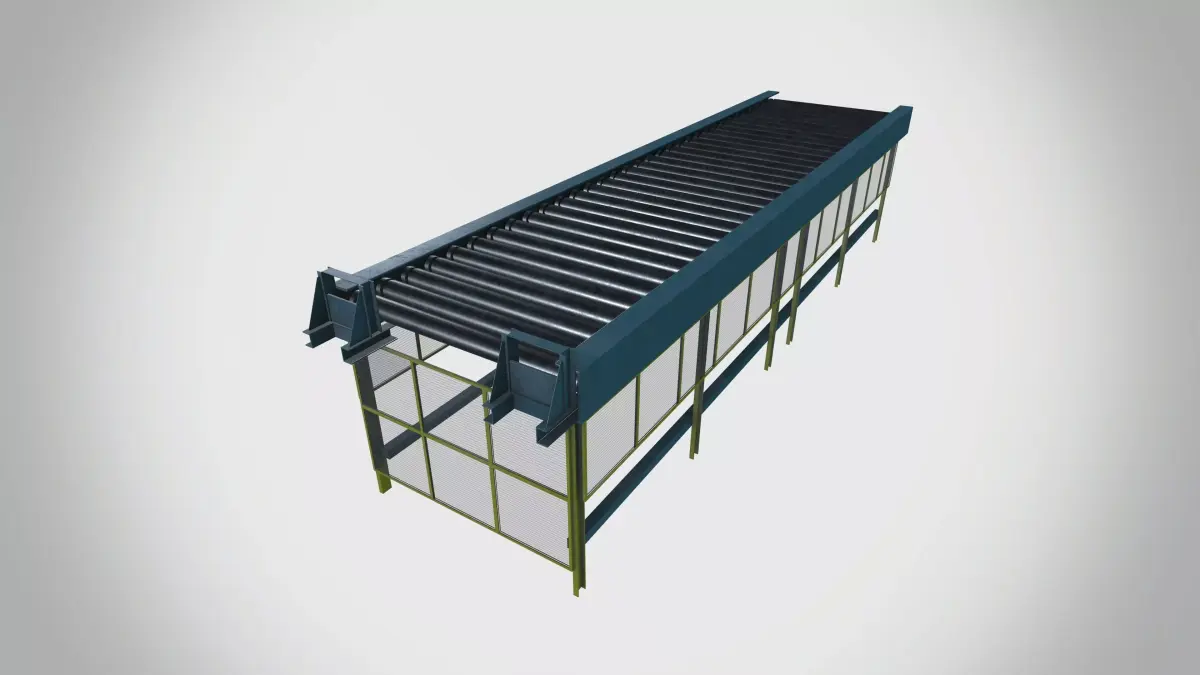
Buy Factory conveyor set up Low-poly 3D model
$20
License: Royalty Free
Rigged
PBR
Realtime
Animated
Free

author:
Asset-World
Renders and source materials belong to the author Asset-World.
Specifications
- Platform
- cgtrader
- Animated
- Rigged
- 3D Print ready
- VR / AR / Low-poly
- PBR
- Textures
- Materials
- UV Mapping
- Polygons
- 7482
- Vertices
- 7350
- Geometry
- No N-gons | No faceted geometry | Manifold geometry |
Usage recommendations
Realtime rendering
✓
PC Game development
✓
Mobile Game Development
✓
VR/AR applications
✓
Visualisation
✕
Cinema
✕
Advertising
✕
3D Printing
✕
CAD Engineering
✕
E-Commerce & Interactive 3D Web
✓
FAQ
Is this a free 3D model?
No, this model costs $20.
How do I download this 3D model?
This model is available through the "Go to purchase" button on this page.
What license applies to this model?
This model is distributed under the Royalty Free license. Click "Go to purchase" for full license details.
Does it include rigging and animation?
This model has no rig or animation. It is a static 3D object.
Does this model have UV mapping?
Yes, this model has UV mapping. Full specs are in the Specifications block, with more background in Additional information.
What textures and materials does this 3D model include?
This model has textures and materials, including PBR. Full specs are in the Specifications block, with more background in Additional information.
Can I use it for 3D printing?
No, this model is not intended for 3D printing.
Additional information
Unroll the belt, PVC coating side up, around the tail pulley and over the idler rollers.
Run belt over the snub roller and around the drive roll.
Align the seam near the center of the conveyor frame. Pull the belt together to engage the lacing and install the pin.
To ensure safe and efficient conveying, it is essential to consider the size, shape, weight, fragility, and orientation of the product being transported.
These factors play a crucial role in determining the type of conveyor and its specifications.
Conveyor systems are a combination of mechanical equipment that transfers materials from one point to another.
They are very popular in construction, material handling, and packaging industries.
The huge advantage of conveyor systems is their ability to transport heavy materials of all kinds in bulk.
Typically, conveyor systems consist of a belt stretched across two or more pulleys.
The belt forms a closed loop around the pulleys so it can continually rotate.
One pulley, known as the drive pulley, drives or tows the belt, moving items from one location to another.
This system allows for quick and efficient transportation of a business's materials and products as well as being able to move heavy items such as cars down a production line which makes them popular in the material handling and packaging industries as well as the manufacturing industries.
There are several types of conveyor systems, including belt, roller, overhead, and pneumatic conveyors.
Each type has unique characteristics and uses across different industries.
Number of Polygons-7482.
Number of Verts-7350.
Number of Tris-14304.
File Type-ma,mb,fbx.
Texture format PNG.
Texture resolution 4K.
Run belt over the snub roller and around the drive roll.
Align the seam near the center of the conveyor frame. Pull the belt together to engage the lacing and install the pin.
To ensure safe and efficient conveying, it is essential to consider the size, shape, weight, fragility, and orientation of the product being transported.
These factors play a crucial role in determining the type of conveyor and its specifications.
Conveyor systems are a combination of mechanical equipment that transfers materials from one point to another.
They are very popular in construction, material handling, and packaging industries.
The huge advantage of conveyor systems is their ability to transport heavy materials of all kinds in bulk.
Typically, conveyor systems consist of a belt stretched across two or more pulleys.
The belt forms a closed loop around the pulleys so it can continually rotate.
One pulley, known as the drive pulley, drives or tows the belt, moving items from one location to another.
This system allows for quick and efficient transportation of a business's materials and products as well as being able to move heavy items such as cars down a production line which makes them popular in the material handling and packaging industries as well as the manufacturing industries.
There are several types of conveyor systems, including belt, roller, overhead, and pneumatic conveyors.
Each type has unique characteristics and uses across different industries.
Number of Polygons-7482.
Number of Verts-7350.
Number of Tris-14304.
File Type-ma,mb,fbx.
Texture format PNG.
Texture resolution 4K.
Similar models

Find the models you need