
Publication date: 2020-09-12
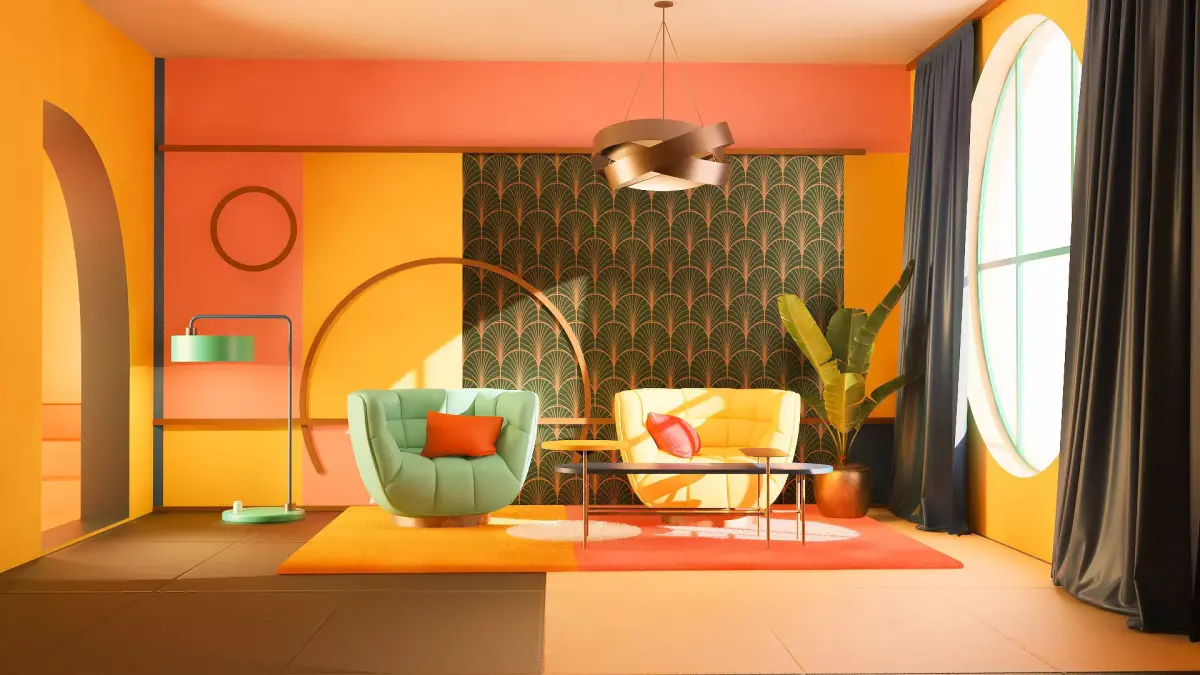
Buy interior design art deco style 3D model
$10
License: Royalty Free
Rigged
PBR
Realtime
Animated
Free

author:
khazalia051
Renders and source materials belong to the author khazalia051.
Specifications
- Platform
- cgtrader
- Animated
- Rigged
- 3D Print ready
- VR / AR / Low-poly
- PBR
- Textures
- Materials
- UV Mapping
- Polygons
- 459125
- Vertices
- 426052
- Geometry
- Polygon mesh
Usage recommendations
Realtime rendering
✕
PC Game development
✕
Mobile Game Development
✕
VR/AR applications
✕
Visualisation
✓
Cinema
✓
Advertising
✓
3D Printing
✕
CAD Engineering
✕
E-Commerce & Interactive 3D Web
✕
FAQ
Is this a free 3D model?
No, this model costs $10.
How do I download this 3D model?
Click the "Go to purchase" button to buy and download this model.
What license applies to this model?
This model comes with a Royalty Free license. See the seller's page (via "Go to purchase") for the full terms.
Does it include rigging and animation?
This model has no rig or animation. It is a static 3D object.
Does this model have UV mapping?
Yes, this model has UV mapping. Technical details are in the Specifications block, and a fuller description is in Additional information.
What textures and materials does this 3D model include?
This model has textures and materials. Technical details are in the Specifications block, and a fuller description is in Additional information.
Can I use it for 3D printing?
No, this model is not intended for 3D printing.
Additional information
Art Deco is a mixture of artistic styles, often contradictory, that sought in its style the simplicity of cubism, but sinned by the excessive use of decorative elements.
Unlike Arts & Crafts and Art Nouveau, Art Deco was not inspired by any social cause or doctrine. His main concern was the decorative essence, marked by luxury and modernity.
It started in 1910, peaked in 1920 and declined in 1939, with the start of the 2nd world war.
The History of Art DecoWith the Industrial Revolution, design was reinvented and began to give prominence and value to products produced in series. In response to this trend, movements like Arts & Crafts and Art Nouveau emerged that tried to prove that human work was much more complete and complex than that which was developed by machines. The workers were encouraged by these movements and associations and groups were created to stimulate the hard work of these artisans. With this, new techniques, specializations and adornments have appeared, each time more detailed, aesthetic, elaborate and luxurious. But that only a few had access: who had money.
In this sense, Art Déco appears, thus, as an artistic style that leaves its marks even in architecture, around the world, see the case of Miami in the USA.
The movement has quite eclectic references. After all, it was influenced by movements such as cubism, represented by geometrization and its abstract forms, by futurism, fauvism and constructivism.
Thus, we can see that Art Déco has influences from movements that preceded it, but it also has an avant-garde character, focused on contemporaneity and the future.
It is also interesting to note that some designers have incorporated exotic cultural elements in their work. Thus, they inserted components in their pieces full of cultural motives, such as ancient Egypt, Mesopotamia and Africa.
Main features of Art DecoThis artistic style combines different trends, materials such as jade, silver and ivory and uses improved techniques that exhibit luxury, glamor, social and technological progress.
It should be noted that this style is often compared with the Bauhaus aesthetic. However, it should be mentioned that the two movements represented important oppositions. After all, Art Deco was characterized by luxury and extravagant ornamentation, Bauhaus brought purist geometric shapes, functionalism and simplicity.
In its beginning, Art Deco used many colors, sparkles, floral prints, geometric shapes and abstract designs. It continued with a cubist style but with more simplistic forms, where cylindrical shapes were particularly valued. He ended his cycle with a slightly different style: more modest, but with still very marked lines of extravagance.
Unlike Arts & Crafts and Art Nouveau, Art Deco was not inspired by any social cause or doctrine. His main concern was the decorative essence, marked by luxury and modernity.
It started in 1910, peaked in 1920 and declined in 1939, with the start of the 2nd world war.
The History of Art DecoWith the Industrial Revolution, design was reinvented and began to give prominence and value to products produced in series. In response to this trend, movements like Arts & Crafts and Art Nouveau emerged that tried to prove that human work was much more complete and complex than that which was developed by machines. The workers were encouraged by these movements and associations and groups were created to stimulate the hard work of these artisans. With this, new techniques, specializations and adornments have appeared, each time more detailed, aesthetic, elaborate and luxurious. But that only a few had access: who had money.
In this sense, Art Déco appears, thus, as an artistic style that leaves its marks even in architecture, around the world, see the case of Miami in the USA.
The movement has quite eclectic references. After all, it was influenced by movements such as cubism, represented by geometrization and its abstract forms, by futurism, fauvism and constructivism.
Thus, we can see that Art Déco has influences from movements that preceded it, but it also has an avant-garde character, focused on contemporaneity and the future.
It is also interesting to note that some designers have incorporated exotic cultural elements in their work. Thus, they inserted components in their pieces full of cultural motives, such as ancient Egypt, Mesopotamia and Africa.
Main features of Art DecoThis artistic style combines different trends, materials such as jade, silver and ivory and uses improved techniques that exhibit luxury, glamor, social and technological progress.
It should be noted that this style is often compared with the Bauhaus aesthetic. However, it should be mentioned that the two movements represented important oppositions. After all, Art Deco was characterized by luxury and extravagant ornamentation, Bauhaus brought purist geometric shapes, functionalism and simplicity.
In its beginning, Art Deco used many colors, sparkles, floral prints, geometric shapes and abstract designs. It continued with a cubist style but with more simplistic forms, where cylindrical shapes were particularly valued. He ended his cycle with a slightly different style: more modest, but with still very marked lines of extravagance.
Similar models

Find the models you need