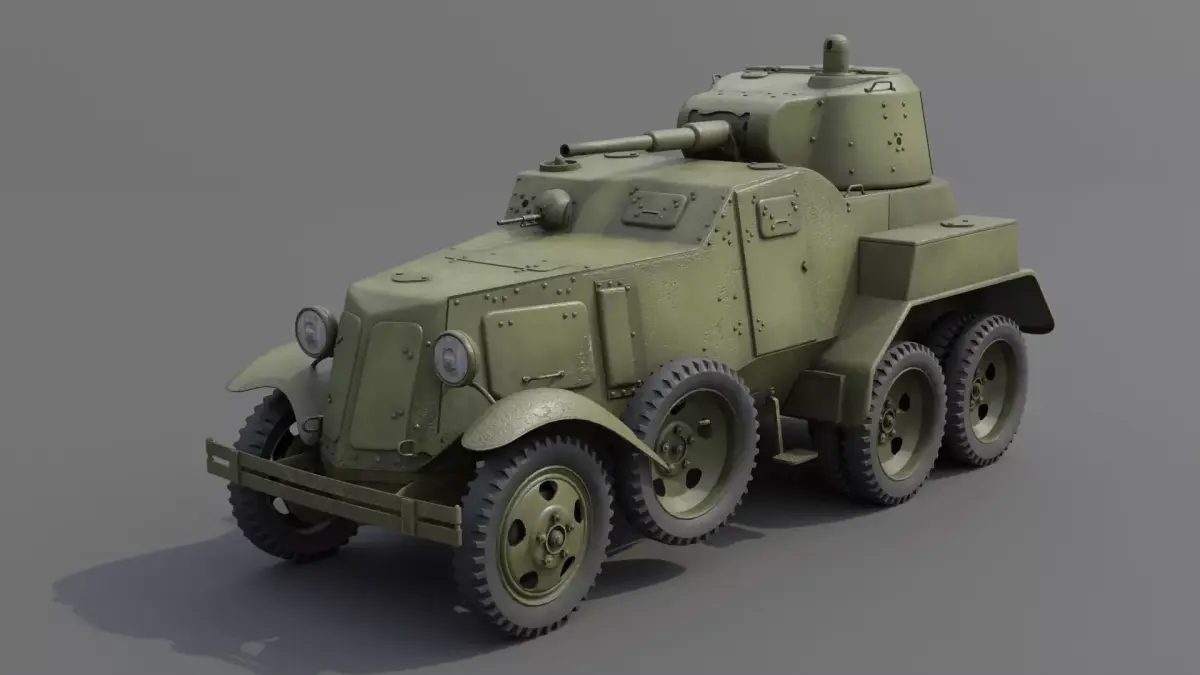
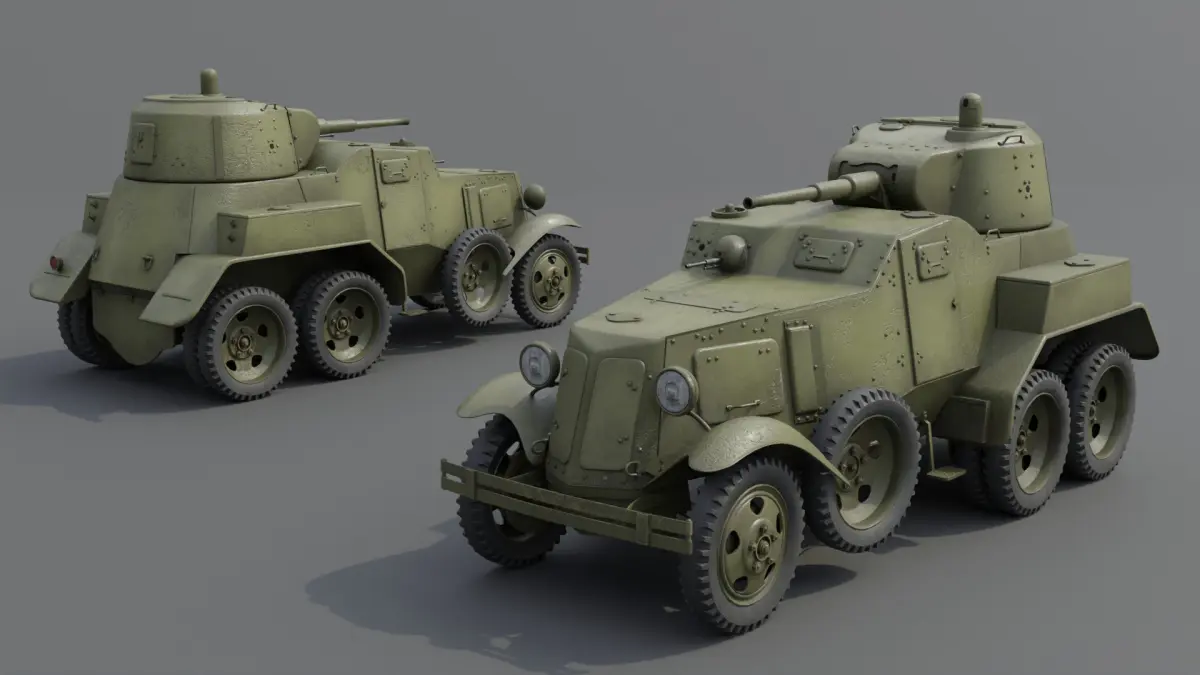
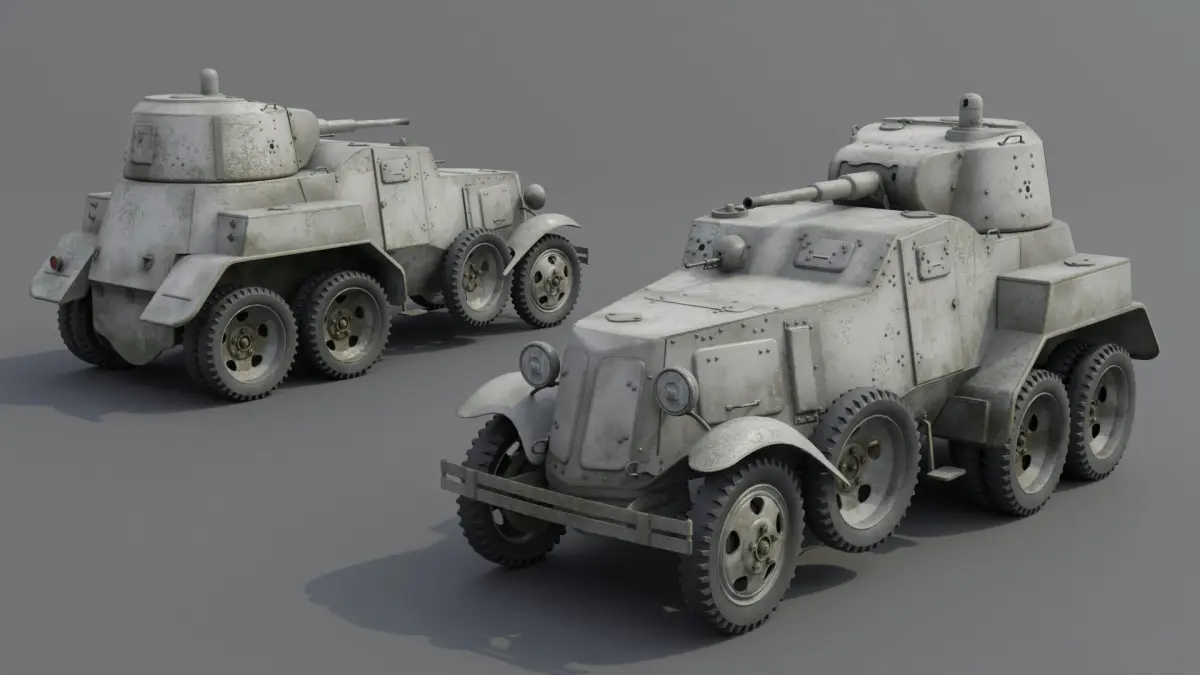
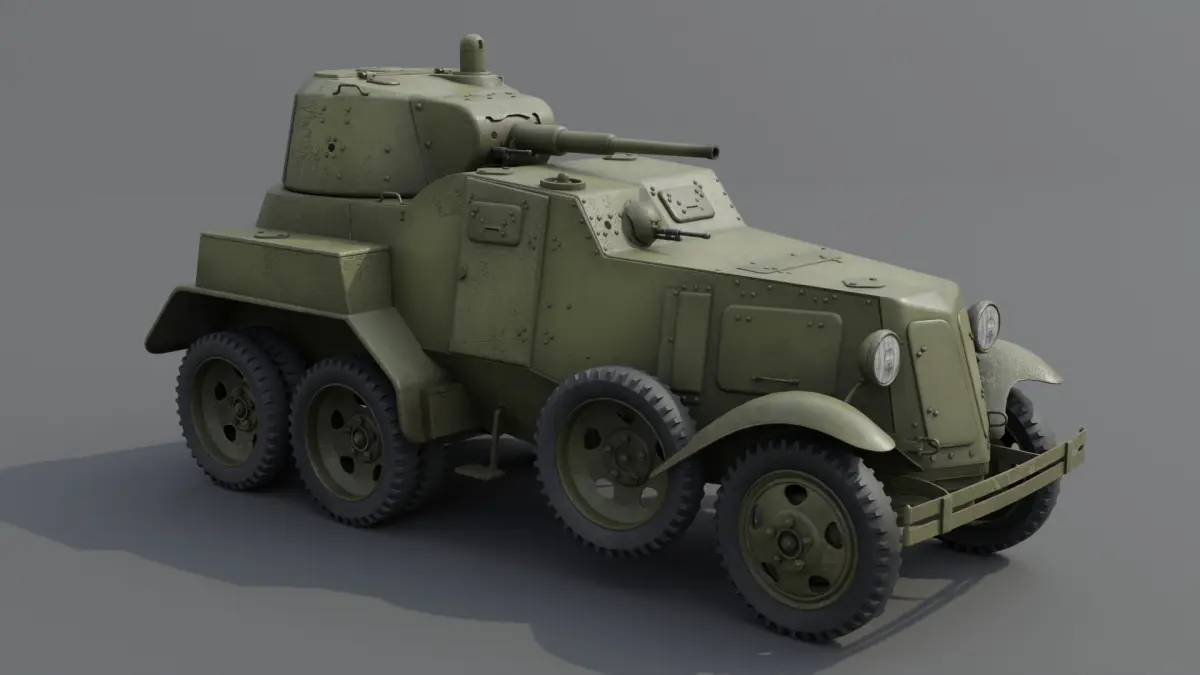
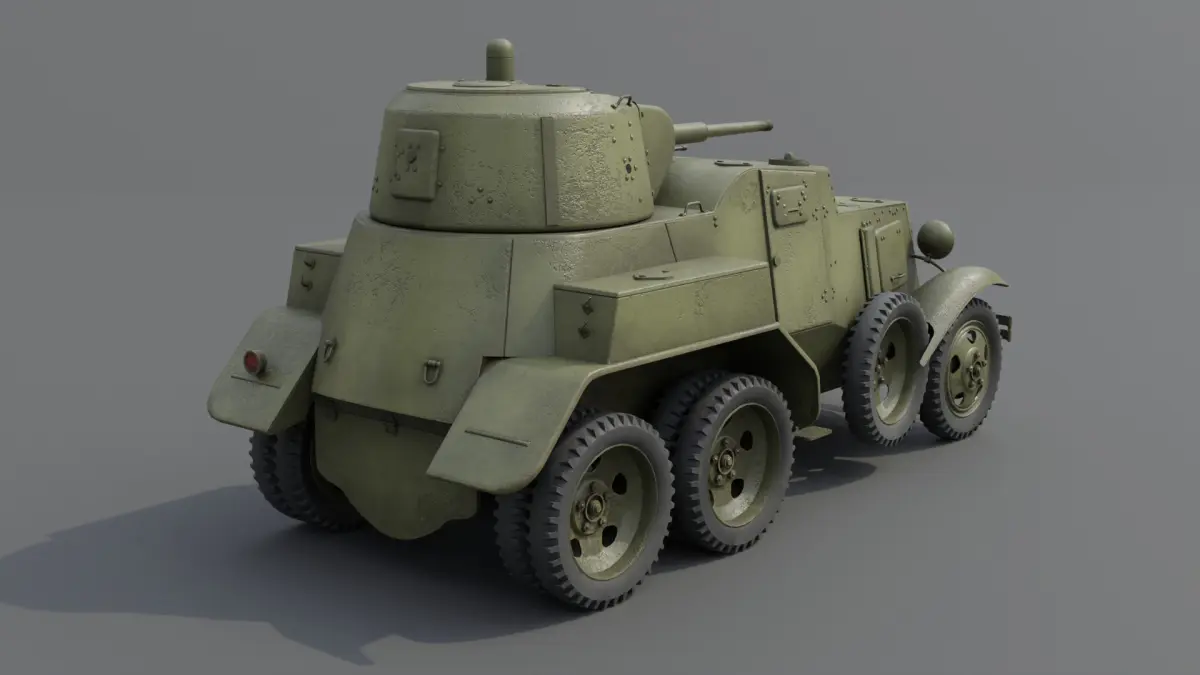
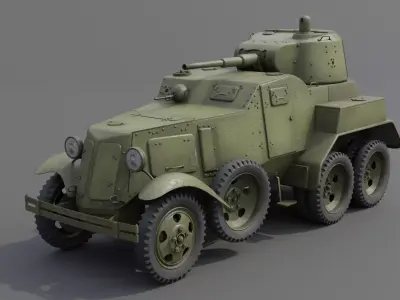
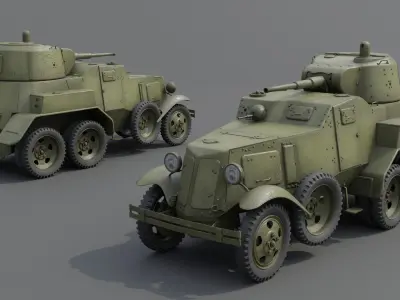
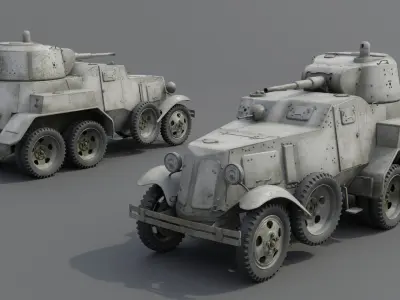
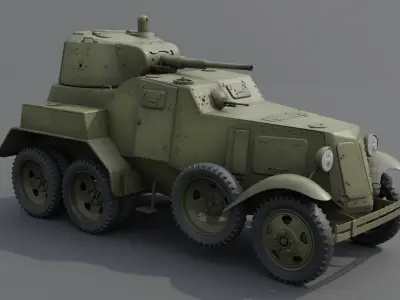
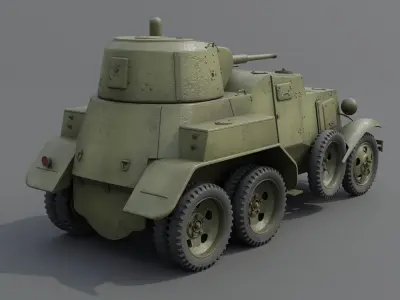
BA-10 Armored car
ZIP file contain Blendfile, Texture folder , FBX , Obj mtl
Centered (in right place) and Seperated parts
Blender 4.0.0
Textured with substance painter (Basecolor , AO , Metalness , Roughness , Normal)
1 Set of material and 3 Texture set (Green , Winter , Burned)
13 Seperated Objects
No interior , Doors and hatches won't open.
4k Texture PNG
Pictures rendered in Cycles engine
Vertices:31,473
Faces:36,931
Tris: 60,898
Description:The BA-10 (Russian: Broneavtomobil 10) was an armored car developed in the Soviet Union in 1938 and produced through 1941. It was the most produced Soviet pre-1941 heavy armored car – 3311 were built in three versions. These versions were the BA-10, the BA-10M (improved version with new radio), and the BA-10ZhD (equipped for dual railway/road use). The basic BA-10 design was developed from the BA-3 and BA-6 heavy armored cars. It had an improved GAZ-AAA chassis and improved armor (up to 15mm at front and turret). It was intended that the BA-10 would be replaced in 1941 by the BA-11 with diesel engine and more sophisticated armor design, but the outbreak of war prevented BA-11 production. The BA-10 was in Red Army service until 1945. Significant numbers of captured BA-10s were used by Finland (at least 24, 3 of which were sold to Sweden), Germany and other Axis powers in Europe.During the late 1930s, Soviet armoured fighting vehicle designers incorporated sloped armor into all their new designs, and redesigned some existing vehicles to take advantage of it. The BA-10 used a slightly smaller, better-sloped armor layout than that of the BA-6, thus improving protection while saving weight. The greater engine power (50 hp (37 kW), compared to 40 hp (30 kW) on the BA-6) made the vehicle more reliable.Like its predecessors, the BA-10 could be converted to a half-track by fitting auxiliary tracks to the rear pair of dual tandem wheels. On early BA-10s, these tracks were stowed strapped on top of the fenders. Later vehicles had an enclosed stowage box for the tracks in the same location. The tracks were often fitted when the vehicle needed to move across snow or soft ground.